1. Resumé
CF8M stainless steel is the cast equivalent of wrought 316 stainless steel and is widely specified for corrosion-resistant, pressure-containing parts produced by investment casting.
Its molybdenum-bearing austenitic chemistry gives CF8M improved pitting and crevice corrosion resistance versus 304/CF8, while retaining good ductility, weldability and formability.
Producing high-quality CF8M investment castings requires integrated control of alloy chemistry, Smelt praksis, Shell System, gating/feeding strategy and post-cast heat treatment;
when these controls are applied the process reliably delivers complex, near-net shapes with superior corrosion performance for marine, chemical and process-industry applications.
2. Alloy chemistry and commercial variants
316 is an austenitic Cr-Ni stainless alloy alloyed with molybdenum (nominally ~2–3% Mo) to improve pitting and crevice corrosion resistance versus 304.
Common commercial casting designations include CF8M (analogous to 316/316L chemistry in cast form) and CF3M (low-carbon cast equivalent often used where reduced carbide precipitation is desirable).
The “L” designation (316L) denotes lower carbon for better resistance to sensitization during thermal cycles.
These compositional differences are critical because carbon and impurity levels strongly affect solidification mode, carbide formation, and corrosion behaviour after casting.

3. Fundamentals of CF8M Stainless Steel: Composition and Core Properties
CF8M is an austenitic, molybdenum-bearing stainless cast alloy engineered for a balance of corrosion resistance, toughness and castability;
imidlertid, small shifts in composition, microsegregation during solidification or inappropriate thermal histories can materially change performance.
Chemical composition of CF8M stainless steel
Typical compositional ranges for CF8M used in investment-casting specifications are shown below.
Exact limits should be taken from the applicable purchase standard (for cast grades commonly referenced to ASTM A351 / A743 or equivalent).
| Element | Typisk rækkevidde (WT%) | Primær rolle |
| C | ≤ 0.08 | Styrkelse; higher C increases risk of carbide precipitation (Sensibilisering) |
| Og | 0.4 – 1.5 | Deoxidation; increases fluidity at elevated levels |
| Mn | 0.5 – 2.0 | Deoxidizer and residual from charge; influences hot-workability |
| S | ≤ 0.04 | Impurity — controlled to maintain toughness |
| S | ≤ 0.03–0.04 | Improves machinability in cast grades but reduces toughness if excessive |
Cr |
18.0 – 21.0 | Forms passive oxide — primary general corrosion resistance |
| I | 9.0 – 12.0 | Austenite stabilizer — improves ductility and toughness |
| Mo | 2.0 – 3.0 | Forbedrer pitting og spalte korrosionsbestandighed |
| N | Spor - 0.10 (if present) | Strengthener and pitting resistance enhancer (controlled in cast grades) |
| Fe | balance | Matrix balance and economy |
Core Properties of CF8M Stainless Steel Relevant to Investment Casting
CF8M stainless steel—the cast equivalent of wrought 316 stainless steel—is widely used in investment casting due to its excellent corrosion resistance, Mekanisk styrke, and service reliability in aggressive environments.
Imidlertid, these advantageous properties also introduce specific metallurgical and processing considerations during casting. The most relevant characteristics are outlined below.
Korrosionsmodstand
CF8M stainless steel contains approximately 16–18% chromium, 10–14% nikkel, and 2–3% molybdenum, forming a stable passive oxide layer that provides outstanding resistance to corrosion.
The presence of molybdenum significantly improves resistance to pitting and crevice corrosion in chloride-containing environments such as seawater, saltlage, and chemical process media.
This makes CF8M particularly suitable for marine equipment, ventiler, pumper, and chemical processing components.
During investment casting, imidlertid, defects such as porosity, indeslutninger, or surface discontinuities can compromise the integrity of the passive film, making strict control of mold quality, pouring conditions, and solidification behavior essential.
Mekaniske egenskaber
CF8M exhibits a balanced combination of strength and ductility, typically with a tensile strength of approximately 485–655 MPa, a yield strength of around 205 MPa or higher, and elongation exceeding 35% in the solution-annealed condition.
These mechanical properties ensure reliable structural performance in load-bearing and pressure-containing components such as pump housings, Ventillegemer, and structural fittings.
Ikke desto mindre, the fully austenitic microstructure characteristic of CF8M can create challenges during solidification, including shrinkage porosity and segregation,
which must be mitigated through appropriate gating design, fodringssystemer, and controlled cooling.
Stabilitet med høj temperatur
CF8M maintains good mechanical strength and corrosion resistance at elevated temperatures, typically up to approximately 800–870 °C depending on service conditions.
This capability allows its use in equipment exposed to high-temperature process environments, including heat exchangers, ovnkomponenter, and certain aerospace or power-generation applications.
During investment casting, imidlertid, the high pouring temperatures required for stainless steel can promote oxidation, grain coarsening, and thermal stresses if the mold design and process parameters are not carefully optimized.
Fluidity and Castability
Compared with carbon steels, CF8M demonstrates moderate fluidity in the molten state.
The addition of molybdenum, mens fordelagtig for korrosionsbestandighed, slightly increases melt viscosity and can reduce the metal’s ability to fill extremely thin or intricate sections.
Som et resultat, investment casting of CF8M often requires optimized gating systems, controlled pouring temperatures, and precise mold permeability to ensure complete cavity filling and to prevent misruns or cold shuts in complex geometries.
Biocompatibility and Chemical Stability
Like wrought 316 Rustfrit stål, CF8M is considered chemically stable and non-toxic, offering good biocompatibility.
These characteristics make it suitable for certain medical, Farmaceutisk, and food-processing equipment where material cleanliness and corrosion resistance are critical.
In such applications, strict control of impurities, inclusion content, and surface finish during casting and post-processing is necessary to meet relevant industry standards and regulatory requirements.
Samlet set, the combination of corrosion resistance, Mekanisk pålidelighed, and thermal stability makes CF8M stainless steel an excellent candidate for investment casting.
Achieving optimal performance, imidlertid, requires careful management of casting parameters and metallurgical quality to fully leverage these material advantages.
4. Principles of CF8M Stainless Steel Investment Casting
Investeringsstøbning of CF8M follows the standard lost-wax sequence (pattern production, shell buildup, dewax, Shell fyring, smelte & hælde, størkning, shell removal and finishing) but with several CF8M-specific emphases:

- Charge and melt control: Use clean charge materials with controlled chemistry; induction or vacuum-induction melting with fluxing, skimming and degassing is common practice to minimize inclusions and dissolved gases.
- Superheat management: Maintain sufficient superheat for fluidity while limiting excessive oxidation and grain coarsening.
Typical foundry practices for 316/CF8M recommend careful control of melt and pour temperatures tailored to equipment and section thickness. - Shell formulation & thermal robustness: Shell systems and stucco must withstand higher pouring temperatures and thermal shock; shell thickness and burnout schedules are optimized to support dimensional fidelity and avoid shell cracking.
- Fodring & gating for directional solidification: Proper riser sizing, placement and gating reduce shrinkage porosity; ceramic filters in runners are commonly used to trap non-metallic inclusions.
- Efterstøbt varmebehandling: Løsning af annealing (often in the 1,040–1,175 °C range depending on standards and section size) followed by rapid cooling refines microstructure and restores corrosion resistance; low-carbon CF3M/CF3 grades reduce the risk of sensitization.
These principles are implemented with design-for-casting analysis (Simulering), documented process windows and traceable quality control.
5. Key Challenges in CF8M Stainless Steel Investment Casting
- Gas porosity and dissolved gases: Austenitic stainless steels can trap hydrogen and other gases during solidification.
Gas porosity reduces mechanical performance and tightness — common mitigation includes dry charge practice, smelteafgasning (Argon), controlled pouring and, hvor det er muligt, vakuum eller lavtrykshældning. - Shrinkage porosity and directional feeding: Due to appreciable solidification shrinkage, inadequate feeder design or poor directional solidification causes internal shrinkage cavities;
this is addressed through optimized gating and riser strategies supported by solidification simulation. - Inclusions and slag entrapment: Improper slag management or contaminated charge introduces oxide and non-metallic inclusions; ceramic filtration and strict melt cleanliness reduce this risk.
- Shell cracking and distortion: The higher pour temperatures and thermal gradients can induce shell cracks or dimensional distortion;
this is mitigated through shell engineering, controlled dewax and firing cycles, and careful handling. - Sensitization and carbide precipitation: For parts exposed to elevated service temperatures, chromium carbide precipitation at grain boundaries can reduce corrosion resistance.
Choosing low-carbon variants (CF3M / 316L) or applying solution anneal treatments prevents sensitization. - Surface finish and micro-pitting: Surface oxidation and local contamination during melting/pouring can lead to surface anomalies that require finishing;
control of atmosphere, fluxing and pouring practice helps minimize finishing costs.
Each challenge requires both upstream (design/melt practice) and downstream (inspection/heat treatment) countermeasures to ensure a conforming casting.
6. Advanced Optimization Strategies for CF8M Stainless Steel Investment Casting
- Melt and atmosphere control: Adopt vacuum-induction melting (Vim) or argon-stir degassing to improve melt cleanliness and reduce dissolved gases.
Melt-covering fluxes and proper skimming reduce oxide formation. - Filtration and inclusion trapping: Use ceramic filters (F.eks., aluminiumoxid) in gating runners for critical castings to remove slag and oxides prior to cavity entry.
- Computer simulation: Apply coupled mold-filling and solidification CFD/thermal simulation to locate hot spots, optimize feeder placement and minimize turbulence and entrapment.
Simulation routinely lowers trial-and-error tooling cycles. - Shell system tailoring: Specify shell binders and stucco grain sizes that balance permeability, strength and thermal expansion to reduce cracking risk.
Multi-layer shells with graded binders improve resistance to thermal shock. - Process traceability and statistical process control (SPC): Record melt chemistry, furnace logs, pour temperature, shell lot,
and inspection results to build process capability indices and enable root-cause analysis for non-conformances. - Heat-treatment optimization: Specify solution anneal and quench regimes based on section thickness to dissolve segregated constituents and restore homogeneity;
where stress relief is necessary, follow with controlled cooling to preserve corrosion resistance. - Ikke-destruktiv test (Ndt): Use radiography, Ct, dye-penetrant and ultrasonic inspection per acceptance criteria to detect subsurface defects in safety-critical components.
These optimization strategies combine metallurgy, process engineering and quality management to raise first-pass yield and lower lifecycle costs.
7. Industrial Applications of CF8M Stainless Steel Investment Casting
CF8M stainless steel investment castings are widely used in industries that require excellent corrosion resistance, reliable mechanical performance, and the ability to manufacture complex geometries with high dimensional accuracy.
Kemisk og petrokemisk industri
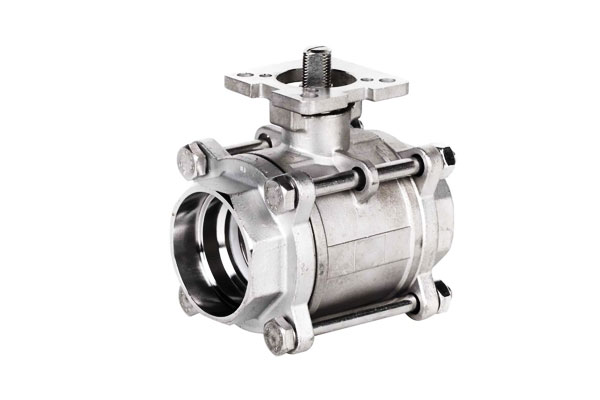
One of the largest application sectors for CF8M investment castings is chemical and petrochemical processing.
Components in these environments are frequently exposed to corrosive media such as acids, chlorider, and high-temperature process fluids.
CF8M’s resistance to pitting and crevice corrosion makes it suitable for manufacturing:
- Valve bodies and valve trim
- Pumpehuse og skader
- Pipe fittings and manifolds
- Reactor and processing equipment components
These parts often operate under pressures exceeding 10–20 MPa and temperatures above 300 ° C., requiring both corrosion resistance and structural reliability.
Marine og offshore Engineering
Marine environments contain high concentrations of chloride ions, which can rapidly degrade many metallic materials.
CF8M stainless steel, with its molybdenum-enhanced corrosion resistance, performs well in seawater and coastal environments.
Investment casting is commonly used to produce marine components such as:
- Seawater pump components
- Marine valves and flanges
- Propulsion system fittings
- Offshore platform hardware
The alloy’s resistance to seawater corrosion and good fatigue performance make it suitable for long-term service in marine structures.
Fødevareforarbejdning og farmaceutisk udstyr
CF8M stainless steel is frequently used in sanitary and hygienic equipment because it offers good corrosion resistance and can achieve smooth surface finishes after casting and polishing.
Investment casting enables the production of complex shapes that meet strict sanitary design requirements. Typiske applikationer inkluderer:
- Food processing valves and pump components
- Mixing and processing equipment parts
- Pharmaceutical fluid transfer components
- Sanitary fittings and connectors
These industries often require strict compliance with hygiene standards and corrosion resistance in environments involving cleaning chemicals and sterilization processes.
Power Generation and Energy Systems
In power plants and energy systems, CF8M castings are used in fluid-handling systems where high temperatures and corrosive media are present.
Investment casting allows manufacturers to produce complex components used in:
- Steam and cooling-water valves
- Pump components for thermal and nuclear power plants
- Varmevekslerkomponenter
- Energy system fittings and housings
The alloy’s combination of corrosion resistance and mechanical stability supports reliable operation in demanding energy infrastructure.
Medical and Precision Equipment
Although more commonly associated with wrought stainless steels, CF8M castings are also used in certain medical devices and precision equipment components.
When strict impurity control and surface finishing processes are applied, the alloy can meet biocompatibility and corrosion resistance requirements.
Ansøgninger inkluderer:
- Surgical instrument components
- Medical device housings
- Laboratory equipment parts
Investment casting allows manufacturers to produce small, complex parts with tight tolerances and minimal machining.
Industrial Machinery and General Engineering
CF8M investment castings are also widely used in general industrial machinery where components must resist corrosion while maintaining dimensional accuracy.
Eksempler inkluderer:
- Chemical pump impellers
- Industrial valve components
- Corrosion-resistant brackets and housings
- Precision mechanical parts exposed to harsh environments
I mange tilfælde, investment casting reduces manufacturing costs by integrating multiple features—such as ribs, chefer, and internal channels—into a single casting.
8. Konklusioner
The versatility of CF8M stainless steel, combined with the design freedom of investment casting, enables the production of high-performance components for a wide range of industries.
Its excellent corrosion resistance, Mekanisk pålidelighed, and ability to form complex shapes make it a preferred material for chemical processing, Marine Engineering, food and pharmaceutical equipment, energy systems, og præcisionsmaskiner.
As industrial systems continue to demand higher durability and efficiency, CF8M investment castings remain an essential solution for manufacturing corrosion-resistant, Komponenter med høj integritet.