1. 介绍
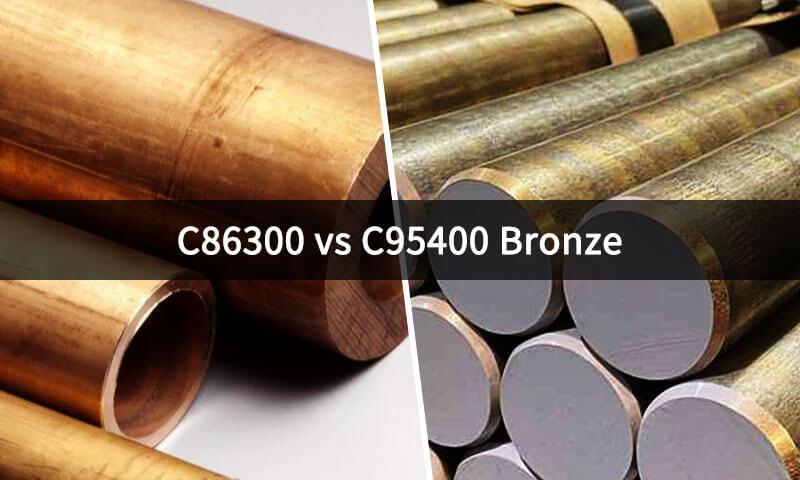
UNS C86300 and UNS C95400 are both cast copper alloys used in demanding mechanical service, but they are built around very different design philosophies.
C86300 is a manganese bronze, formally classified as a high-strength yellow brass, while C95400 is an 铝青铜.
That difference is not just taxonomic; it affects strength, 可加工性, 腐蚀行为, casting response, heat-treatment options, and the kinds of components each alloy is best suited to carry.
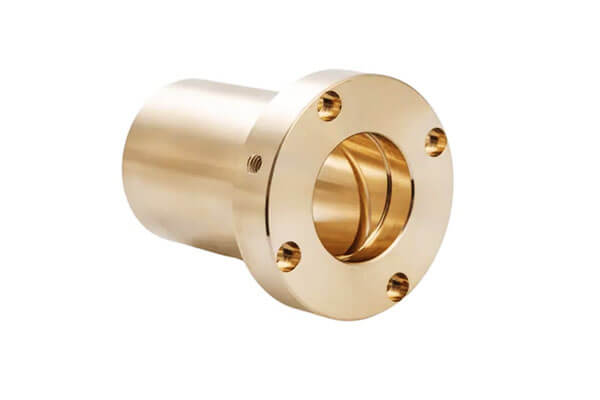
This comparison matters because the two alloys often compete in the same functional space: 轴承, 衬套, 齿轮, 阀成分, 海洋硬件, and heavy-duty machine parts.
Yet one is more of a load-first, low-machinability structural bronze, while the other is a more balanced structural and wear bronze with much better machinability and greater thermal-processing flexibility.
The right choice depends on whether the design is driven more by mechanical loading or by manufacturing efficiency and process versatility.
2. What Is C86300 Manganese Bronze?
UNS C86300 是一个 manganese bronze developed for demanding mechanical service where strength, 戴阻力, and corrosion resistance must work together.
在工业领域, it is often treated as a high-strength yellow brass rather than a conventional bronze in the narrow sense, because its chemistry includes a substantial zinc content alongside copper, 锰, 铝, 和铁.
That composition gives the alloy a very distinctive engineering profile: it is not designed for electrical conductivity or easy machining, but for durable performance under heavy load, slow speed, and repeated surface contact.
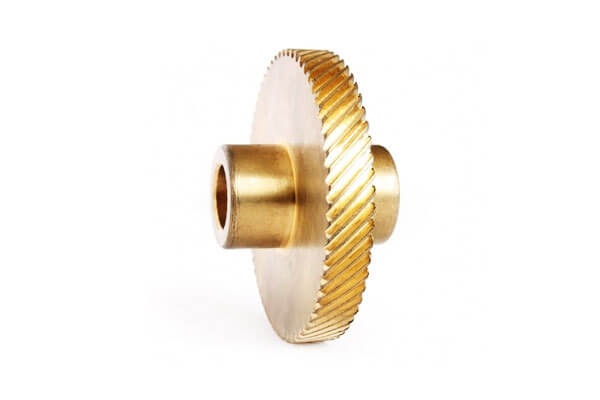
C86300 is widely used in parts such as bridge pins, 衬套, 凸轮, 齿轮, 阀杆, 液压缸成分, 螺旋桨, and slow-speed bearings.
These applications reveal its core identity clearly: it is a severe-service alloy, chosen when a component must carry load, 抵抗磨损, and remain reliable in harsh operating environments.

特征
High strength and load-bearing capability
C86300 is one of the stronger copper-based cast alloys used in mechanical service.
Its strength level makes it suitable for parts that experience steady loading, 冲击载荷, or significant compressive stress.
It is especially useful when the component must perform as a structural bronze rather than as a simple wear insert.
出色的耐磨性
The alloy is well suited to slow-speed, high-load contact conditions.
That makes it valuable in bearings, 衬套, 齿轮, 凸轮, and similar components where sliding contact and surface durability are more important than easy fabrication.
Its wear resistance is one of the main reasons it has remained a standard material for heavy-duty bronze applications.
良好的耐腐蚀性
C86300 performs well in marine and industrial environments, including many applications where moisture, salt exposure, or general atmospheric corrosion would be a concern.
It is used in boat hardware, 海洋配件, and other service parts that must survive exposure while still carrying mechanical load.
Limited machinability
C86300 is not a free-machining bronze. It can be machined, but the process is significantly more demanding than with leaded bronzes or free-cutting brass grades.
This means it is better suited to applications where performance matters more than shop convenience.
Process-disciplined manufacturing
This alloy is best understood as a production material for serious foundry and machining environments.
It rewards controlled casting practice, careful feeding design, and appropriate secondary machining, but it is not a forgiving alloy for casual fabrication.
3. What Is C95400 Aluminum Bronze?
美国C95400 is a classic 铝青铜 and one of the most widely used structural copper alloys in heavy-duty service.
It is designed to deliver a stronger balance of 力量, 戴阻力, 耐腐蚀性, 和可加工性 than many other bronzes.
Compared with C86300, it is less focused on extreme load-bearing alone and more focused on overall engineering balance.
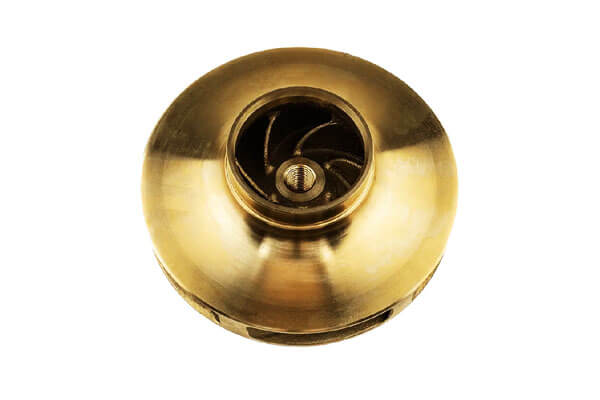
C95400 is used in a very broad range of components, 包括轴承, 衬套, 齿轮, 泵零件, 阀体, 起落架零件, 夹具, 紧固件, weld-gun components, and shipbuilding hardware.
That broad application range reflects its versatility. It is not just a bearing bronze or just a marine bronze; it is a multi-purpose structural bronze for demanding service.

特征
平衡的力量和韧性
C95400 offers strong mechanical performance without becoming excessively difficult to process.
It is not as load-focused as C86300, but it provides enough strength for many structural and wear applications while still remaining comparatively practical to manufacture.
Better machinability than many high-strength bronzes
One of C95400’s major advantages is that it is far easier to machine than C86300.
That makes it attractive in parts that need precise finish machining after casting.
In production environments, that difference can translate directly into lower tooling cost, better throughput, and fewer manufacturing headaches.
耐腐蚀性强
C95400 has excellent corrosion resistance in many environments, which is one reason it is used in marine, 造船, and industrial fluid-handling applications.
It is especially valuable where corrosion resistance must coexist with mechanical strength and wear resistance.
Good heat-treatment flexibility
Unlike C86300, C95400 can be solution treated and thermally processed in ways that help tune its properties.
That gives designers and manufacturers more flexibility when balancing strength, 延性, 和维稳定性.
Broad industrial applicability
C95400 sits in a very practical middle ground. It is strong enough for heavy-duty parts, corrosion resistant enough for marine and industrial exposure, and machinable enough to be used efficiently in production.
That combination is what makes it one of the most versatile aluminum bronzes in engineering practice.
4. 化学组成: C86300 vs C95400 Bronze
The chemical split between C86300 和 C95400 is the fundamental reason the two alloys behave so differently in service.
| 元素 | UNS C86300 | 美国C95400 |
| 铜 (铜) | 60.0–66.0% | 83.0% 最小. |
| 锌 (Zn) | 22.0–28.0% | - |
| 铝 (al) | 5.0–7.5% | 10.0–11.5% |
| 锰 (Mn) | 2.5–5.0% | 0.50% 最大限度. |
| 铁 (铁) | 2.0–4.0% | 3.0–5.0% |
| 镍 (在) | 1.0% 最大限度. (Ni includes Co) | 1.50% 最大限度. (Ni includes Co) |
| 带领 (pb) | 0.20% 最大限度. | - |
| 锡 (sn) | 0.20% 最大限度. | - |
| 铜 + 命名元素 | 99.0% 最小. | 99.5% 最小. |
5. Physical and Mechanical Performance: C86300 vs C95400 Bronze
Representative values below are for 连铸 material at 68°f (20°C) unless otherwise noted.
| 性能特性 | UNS C86300 | 美国C95400 |
| 熔点 – 液体 | 1693°f | 1900°f |
| 熔点——固相线 | 1625°f | 1880°f |
| 密度 | 0.283 lb/in³ | 0.269 lb/in³ |
| 比重 | 7.83 | 7.45 |
| 电导率 | 8% IACS | 13% IACS |
| 导热率 | 20.5 Btu·ft/(hr·ft²·°F) | 33.9 Btu·ft/(hr·ft²·°F) |
| 热膨胀系数 | 12 × 10⁻⁶ /°F | 9 × 10⁻⁶ /°F |
| 比热容 | 0.09 Btu/lb·°F | 0.10 Btu/lb·°F |
| 弹性模量 | 14,200 KSI | 15,500 KSI |
| 磁导率 | 1.09 | 1.27 铸造; 1.2 in TQ50 |
| 抗拉强度 | 110 KSI | 85 KSI |
| 产生强度 | 62 KSI | 32 KSI |
| 伸长 | 14% | 12% |
| 布氏硬度 | 223 BNN | 170 BNN |
| 机械加工性能等级 | 8 | 60 |
6. Processing and Manufacturing Behavior

铸件
Both alloys are castable, but neither behaves like an “easy” commodity metal.
C86300 shows 低的 铸件 屈服, high drossing, low gassing, 中等流动性, low effect of section size, and high shrinkage in solidification.
C95400 also shows 铸件成品率低, high drossing, 中等流动性, medium gassing, low effect of section size, and high shrinkage in solidification.
换句话说, both require disciplined foundry practice, but C95400 is somewhat less punishing in gassing and considerably more forgiving in later machining.
加工
This is the most dramatic difference in shop-floor behavior. C86300 has a machinability rating of 8, which places it in the difficult-machining class.
C95400 has a machinability rating of 60, which makes it substantially more production-friendly.
For parts that require significant finish machining, C95400 can reduce tool wear, 时间, and cost very materially.
Joining and fabrication
C86300 is poor in most joining categories: 焊接, 悬挂, oxyacetylene welding, and gas shielded arc welding are all rated poor, while coated metal arc welding is the one acceptable route listed.
C95400 is much more flexible: soldering and brazing are good, gas-shielded arc welding and coated metal arc welding are good, and oxyacetylene welding is not recommended.
That makes C95400 far more adaptable in real fabrication and repair workflows.
热处理
C86300 has only 压力缓解 listed, with no meaningful strengthening solution-treatment cycle.
C95400, 相比之下, 支持 solution treatment at 1600–1675°F for one hour, 水淬火, and annealing at 1150–1225°F, which gives engineers a real thermal-processing lever.
That alone is a major differentiator: C95400 can be tuned after casting in ways C86300 generally cannot.
7. 耐腐蚀性: C86300 vs C95400 Bronze
C86300 offers good corrosion resistance and is repeatedly used in marine hardware, boat parts, 夹具, 封面, and rudders, including salt-water-exposed service.
It is therefore a legitimate marine alloy, but its identity remains rooted in high-load mechanical service rather than broad corrosion specialization.
C95400 has a broader corrosion-oriented profile in the published uses.
Its application list includes weld guns, 轴承, 衬套, 齿轮, pickling hooks, 泵零件, 阀体, 造船, 和海洋硬件,
and many of those uses are tied to corrosion resistance, including excellent corrosion resistance and resistance to numerous environments.
That makes C95400 the stronger choice when corrosion is important but not so extreme that a more specialized nickel-aluminum bronze is required.
8. 典型的应用: C86300 vs C95400 Bronze

UNS C86300 manganese bronze is the better fit for slow-speed, heavy-load, wear-prone mechanical parts:
bridge pins, 衬套, 凸轮, 齿轮, hydraulic cylinder parts, large valve stems, 螺旋桨, slow-speed bearings, and marine boat parts.
Its application profile is explicitly centered on high strength and wear resistance.
UNS C95400 aluminum bronze is the better fit for high-strength but more manufacturable structural bronze parts:
weld guns, 紧固件, bearing segments, 轴承, 衬套, 齿轮, high-strength clamps, 起落架零件, 机器零件, 泵零件, 阀体, valve guides, 阀座, 阀, 蠕虫齿轮, and shipbuilding hardware.
Its application profile is broader because its material balance is broader.
9. Selection Logic: Which Alloy Should Be Used Where?
Start with the real engineering priority
选择之间 C86300锰青铜 和 C95400 aluminum bronze should never be reduced to a simple “which one is better?” question.
The correct choice depends on what the component must do in service. If the design problem is dominated by load capacity, 戴阻力, and slow-speed mechanical durability, C86300 is usually the stronger candidate.
If the design problem is dominated by 制造业, machining efficiency, corrosion balance, and broader fabrication flexibility, C95400 is usually the more practical answer.
That distinction is the core of the selection logic: C86300 is the specialist; C95400 is the generalist.
Use C86300 when strength and wear are the primary mission
C86300 is the better choice when the part must carry heavy load and survive prolonged surface contact under demanding conditions.
Its much higher tensile strength, 产生强度, and hardness make it especially suitable for components such as:
- slow-speed, heavy-load bearings
- bushings under high unit pressure
- bridge pins and structural wear parts
- cams and gears with strong contact stress
- large valve stems and hydraulic cylinder components
- marine hardware where mechanical durability matters more than ease of machining
在这些情况下, the alloy’s higher strength is not just a number on a datasheet. It directly translates into better resistance to deformation, better wear life, and stronger service reliability.
Use C95400 when manufacturing practicality matters more
C95400 becomes the better choice when the part still needs a bronze’s strength and corrosion resistance, but the production route must also remain efficient.
Its significantly better machinability, 较低的密度, and more flexible fabrication behavior make it more attractive for parts that require substantial finishing after casting.
Typical C95400 applications include:
- bearing segments and bushings
- pump parts and valve bodies
- fasteners and clamps
- gears and industrial wear parts
- landing gear-related components
- weld gun parts and shipbuilding hardware
If the design needs a material that can be cast, 加工, and integrated into a production line with less trouble, C95400 often provides the better total-cost outcome.
Consider the service environment, not just the strength
A common mistake is to choose C86300 simply because it is stronger. That is not always the best decision.
If the component operates in an environment where 耐腐蚀性, 热稳定性, and dimensional practicality are equally important, C95400 may be the better engineering answer even though it is weaker than C86300 in the standard cast condition.
同样地, if the component is exposed to heavy wear and contact stress but does not require extensive post-cast machining, C86300 may offer the better lifetime value because its strength and hardness directly support the service conditions.
10. 结论
UNS C86300 and UNS C95400 are both serious cast copper alloys, but they are optimized for different engineering priorities.
C86300 manganese bronze is the heavier-duty, 更强, and far less machinable option, built for slow-speed load-bearing and wear service.
C95400 aluminum bronze is lighter, 更容易机加工, thermally more conductive, and more flexible in fabrication and heat treatment, while still offering high strength and excellent corrosion performance.
The right choice depends on where the risk sits. If the risk is mechanical overload, C86300 is compelling.
If the risk is 制造复杂性, C95400 is the safer and more efficient option.
That is the real difference between the two alloys: one is built to endure harder service, the other is built to deliver a better overall engineering balance.