1. Introdução
Ligas de alumínio são amplamente lançados na areia, molde permanente, morrer, gravidade ou processos de investimento para automóveis, Aeroespacial, aplicações de consumo e industriais.
Comparado com peças fundidas ferrosas, o alumínio apresenta comportamentos metalúrgicos específicos – alta condutividade térmica, Solidificação rápida, sensibilidade significativa à absorção de hidrogênio e uma forte tendência para formar filmes de óxido – que criam modos de defeito únicos.
Compreender os mecanismos de defeito e controlar o derretimento, o canal e a solidificação são essenciais para produzir peças fundidas confiáveis com propriedades mecânicas previsíveis.
2. Impacto de defeitos em peças de alumínio fundido
Defeitos em alumínio fundido peças não são apenas problemas cosméticos – elas degradam diretamente o desempenho, encurtar a vida útil, aumentar o custo e pode criar exposições de segurança e responsabilidade.
Defeitos internos e superficiais, como porosidade, encolhimento, inclusões, rachaduras, e a distorção reduzem a área de suporte de carga efetiva, criar concentradores de estresse, e degradar significativamente a vida em fadiga, estanqueidade à pressão, precisão dimensional, e resistência à corrosão.
Em aplicações críticas, esses defeitos podem levar a falhas prematuras ou catastróficas, riscos de segurança, e exposição regulatória ou de responsabilidade.
De uma perspectiva de fabricação, defeitos aumentam a complexidade da inspeção, taxas de sucata e retrabalho, custo de produção, e incerteza de entrega, ao mesmo tempo que introduz grande variabilidade nas propriedades mecânicas que força margens de projeto conservadoras.
Consequentemente, o controle eficaz de defeitos de fundição não é apenas uma questão de qualidade, mas um requisito estratégico, exigente projeto de processos orientados para a prevenção, rigoroso controle de fusão e molde, engenharia orientada por simulação, e critérios de inspeção e aceitação baseados em risco.
3. Classificação de defeitos comuns
Amplamente, defeitos de fundição se enquadram em dois grupos:
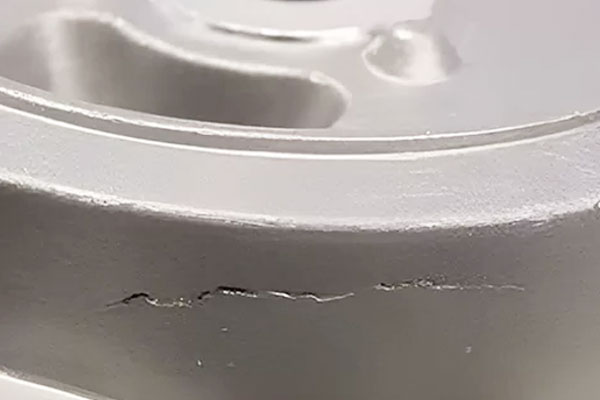
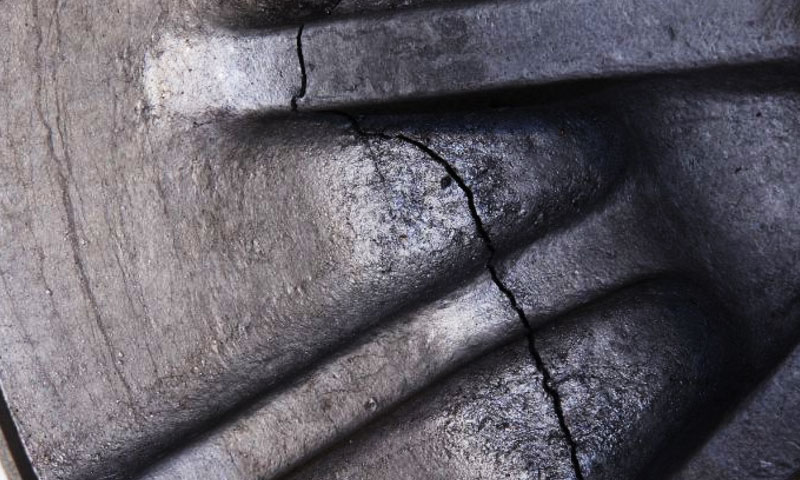
- Superfície / defeitos visíveis - facilmente aparente em peças acabadas: nadadeiras/flash, Cold Fechs, Misruns, cavidades de contração visíveis na superfície, inclusões de areia, porosidade superficial, lágrimas quentes, sobreposição, e distorções dimensionais.
- Interno / defeitos ocultos — incorporado na peça e muitas vezes crítico para a resistência: porosidade do gás, cavidades internas de contração, inclusões de óxido e escória, aprisionamento de escória, segregação, e rachaduras internas.
Ambos os grupos podem reduzir a vida em fadiga, menor resistência à tração, causar caminhos de vazamento em peças de pressão, ou levar à rejeição total em componentes críticos para a segurança.
4. Descrições detalhadas de defeitos
A tabela abaixo resume os defeitos mais comuns encontrados em peças fundidas de alumínio, suas causas raízes, como eles se manifestam, e contramedidas práticas.
| Defeito | Causa(s) | Como isso afeta parte | Métodos de detecção | Prevenção / remediação |
| Porosidade do gás (Bolas, microporosidade) | Hidrogênio dissolvido em Al líquido; ar arrastado devido ao vazamento turbulento; umidade em moldes/núcleos | Vazios internos reduzindo a resistência estática e à fadiga; caminhos de vazamento | Radiografia (Raio-X/Ct), ultrassônico, seccionamento | Desgaseificação (rotativo, gás inerte), fluindo, minimizar a turbulência, núcleos/moldes pré-secos, controlar a temperatura de fusão, elenco de vácuo, portão melhorado |
| Cavidades de contração / porosidade de encolhimento | Encolhimento volumétrico na solidificação com alimentação insuficiente; pobre posicionamento do riser; amplas faixas de congelamento em liga | Grandes vazios, frequentemente interdendrítico; redução severa na capacidade de carga | raio X, Ct, seccionamento, visual se a superfície quebrar | Solidificação direcional, risers/calafrios, sistemas de alimentação, uso de comedouros e resfriadores, seleção de liga com faixa de congelamento mais estreita |
| Fechado a frio / volta fria | Baixa temperatura do metal ou fluxo lento, resultando na não fusão de dois fluxos | Descontinuidade de superfície, concentrador de estresse, força local reduzida | Inspeção visual, corante penetrante para fissuras superficiais | Aumentar a temperatura de vazamento, melhorar o design de bloqueio, reduzir mudanças abruptas na seção transversal, aumentar a velocidade do metal |
Lágrima quente (rachadura quente) |
Contração térmica restringida durante a solidificação final; alta contenção; liga pobre ou design de molde | Rachaduras se formam durante a solidificação – geralmente em cantos ou seções finas | Visual, penetrante, seccionamento | Reduza a restrição, redesenhar geometria (evite cantos afiados), modificar caminho de solidificação, usar refinadores de grãos, controlar a temperatura de vazamento |
| Arrastamento de filme de óxido / escória / inclusões | Óxidos de superfície dobrados em líquido por turbulência; arrastamento de escória; Pobre limpeza de fusão | Inclusões internas atuando como locais de iniciação de fissuras; porosidade adjacente às inclusões | Radiografia, metalografia, seccionamento | Escória desnatada, use filtros cerâmicos, enchimento laminar, vazamento controlado, fluindo, prática adequada do forno |
| Inclusão de areia/escória | Fraca integridade do molde, areia degradada, lavagem insuficiente do núcleo, transferência de escória | Elevadores de estresse, Defeitos de superfície, potencial início de corrosão | Visual, raio X, seccionamento | Melhorar a qualidade e o manuseio da areia, melhor preparação do molde/núcleo, filtração de fusão |
Egito / preenchimento incompleto |
Baixa temperatura de vazamento, portão bloqueado, caminho de fluxo excessivamente longo | Recursos ausentes, seções fracas, sucata | Visual, CMM para geometria | Aumentar a temperatura de vazamento, otimizar o gate, aumentar o tamanho do canal/canal, reduzir seções transversais finas |
| Rugosidade da superfície / golpe de areia / crosta de gás | Evolução de gás na superfície do molde (umidade, decomposição do ligante), má ventilação | Mau acabamento superficial, início precoce do crack | Inspeção visual | Controlar a umidade do molde, melhorar a ventilação, use ligantes e secagem adequados |
| Volta fria / voltas / dobras | Velocidade de fluxo muito baixa, fazendo com que o metal se dobre | Rachadura superficial, mau comportamento de fadiga | Visual, penetrante | Aumentar a temperatura/velocidade do metal, alterar portão, reduzir mudanças abruptas de geometria |
Distorção dimensional (Vareira, desvio) |
Resfriamento irregular, espessura de parede não uniforme, ferramentas ruins | Peças fora da tolerância, problemas de montagem | Cmm, 3Digitalização D | Espessura uniforme da parede, refrigeração equilibrada, condicionamento adequado, projeto para tolerâncias de fundição |
| Segregação (falta de homogeneidade química) | Microssegregação durante a solidificação, ampla gama de congelamento, resfriamento lento | Variações locais de propriedades mecânicas, resistência à corrosão reduzida | Metalografia, testes químicos pontuais | Escolha de liga otimizada, mexendo (onde aplicável), solidificação controlada, tratamento térmico de homogeneização |
| Rachaduras internas (fissuração retardada) | Hidrogênio, estresse residual, envelhecimento excessivo, tratamento térmico inadequado | Falha catastrófica no serviço | Ultrassônico, corante penetrante para superfície, FRACTOGRAFIA | Reduzir o hidrogênio, alívio do estresse, tratamento térmico controlado, eliminar transições bruscas |
5. Métodos avançados de detecção para defeitos em peças de alumínio fundido
A detecção precisa e eficiente de defeitos é a principal garantia para peças de alumínio fundido qualificadas.
Visando diferentes tipos e locais de defeitos, a indústria adota uma combinação de múltiplas tecnologias de detecção para obter controle de qualidade de cobertura total:
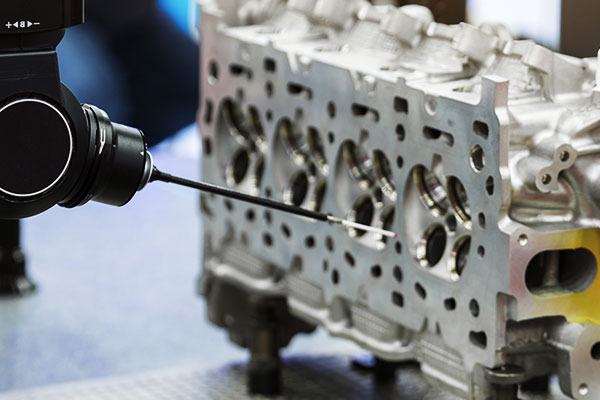
Inspeção visual
Defeitos aplicáveis: Buracos superficiais, cavidade/porosidade de contração superficial, inclusão de escória superficial, Inclusão de areia, rachaduras óbvias, fechado a frio, Egito, flash/rebarbas de superfície, excesso de material, perda material.
Características técnicas: Conduzido por inspetores de qualidade experientes com lupas (5–10× ampliação) para observação detalhada; simples, baixo custo e eficiente, servindo como método de triagem de qualidade de primeira linha.
Padrão de detecção: Em conformidade com ASTM E186, com tolerância de tamanho de defeito de superfície controlada dentro 0.05 mm para fundições de precisão.
Inspeção de raios-X
Defeitos aplicáveis: Buracos internos, cavidade/porosidade interna de contração, inclusão interna de escória e fissuras internas ocultas.
Características técnicas: Usa penetração de raios X para formar imagens de estruturas internas; defeitos aparecem como escuros (vazios) ou brilhante (inclusões) manchas na imagem.
Principais vantagens: Testes não destrutivos (Ndt), alta precisão de detecção (tamanho do defeito ≥0,02 mm pode ser identificado), visualização clara da distribuição e forma do defeito interno.
Padrão de conformidade: Atende ASTM E94, obrigatório para componentes críticos nas indústrias aeroespacial e automotiva.
Inspeção penetrante fluorescente (FPI)
Defeitos aplicáveis: Microfissuras subterrâneas e superficiais, fechamento a frio e pequena porosidade que são invisíveis a olho nu.
Características técnicas: Penetrante com alta fluorescência é aplicado na superfície da peça fundida; penetrante penetra nas lacunas do defeito, e o excesso de penetrante é limpo; a irradiação de luz ultravioleta faz com que os defeitos emitam fluorescência brilhante.
Principais vantagens: Alta sensibilidade, capaz de detectar microfissuras com largura <0.01 mm e profundidade <0.05 mm; adequado para fundições de formatos complexos.
Padrão de conformidade: Em conformidade com ASTM E1417, essencial para detectar trincas sensíveis à tensão em peças fundidas de liga de alumínio de alta resistência.
Inspeção de Endoscópio
Defeitos aplicáveis: Flash da cavidade interna, inclusão de escória na superfície interna e desvio dimensional de cavidades internas complexas.
Características técnicas: Endoscópios flexíveis ou rígidos com câmeras de alta definição são inseridos na cavidade interna da peça fundida para capturar imagens em tempo real da superfície interna.
Principais vantagens: Não destrutivo, pode detectar estruturas internas complexas que são inacessíveis a outros métodos; suporta posicionamento preciso de defeitos internos.
Cenário de aplicação: Obrigatório para peças de alumínio fundido com cavidades internas complexas (Por exemplo, cabeças de cilindro do motor, corpos de válvulas hidráulicas).
3Tecnologia de digitalização D
Defeitos aplicáveis: Mudança central, incompatibilidade, deformação de fundição e desvio dimensional além da tolerância do projeto.
Características técnicas: Usa scanners 3D de luz estruturada ou laser para coletar dados de nuvem de pontos de peças fundidas em toda a superfície; compara com modelos de projeto 3D para analisar desvios dimensionais com alta precisão.
Principais vantagens: Alta precisão de medição (± 0,005 mm), detecção tridimensional, saída de dados digitalizados; pode quantificar o grau de deformação e a posição das peças fundidas.
Padrão de conformidade: Atende ISO 10360, crítico para peças de alumínio fundido de precisão que exigem tolerâncias dimensionais restritas (± 0,01-0,05 mm).
6. Principais medidas de prevenção para defeitos comuns em peças de alumínio fundido
Abaixo está um compacto, conjunto de medidas preventivas orientadas para a engenharia e ligadas aos mecanismos de defeito dominantes na fundição de alumínio.
Qualidade de fusão & tratamento de metais
- Desgaseificação: use desgaseificação rotativa ou a vácuo e monitore a eficácia (índice de densidade ou equivalente). Almeje níveis consistentemente baixos de gás dissolvido antes de despejar.
- Fluxo & deslizando: remover escória e películas de superfície oxidadas rotineiramente; usar química de fluxo apropriada e práticas de escumação para minimizar inclusões não metálicas.
- Filtração: instale filtros de cerâmica/espuma no sistema de comporta (classificação de poros apropriada para liga e fluxo) para reter escórias e inclusões.
- Controle de temperatura & superaquecimento: manter temperaturas repetíveis de fusão e vazamento com limites de controle estreitos (superaquecimento apropriado acima do liquidus para a liga) portanto, o enchimento e a fusão são confiáveis, sem captação excessiva de gás.
- Controle químico da liga: manter a composição dentro dos limites de especificação para evitar amplas faixas de congelamento e comportamento de solidificação indesejável; realize análises frequentes de amostras e mantenha a rastreabilidade térmica.
Bloqueio, riser & projeto de enchimento de molde
- Enchimento laminar: projete portões e corredores para promover suavidade, fluxo laminar (entradas inferiores ou bem projetadas, corredores cônicos) para evitar dobramento de óxido e aprisionamento de ar.
- Velocidade de preenchimento controlada: evite respingos turbulentos que arrastam ar; usar modelagem de fluxo para definir dimensões do canal e taxas de vazamento.
- Solidificação direcional: coloque risers/alimentadores e resfriadores para estabelecer uma frente de solidificação previsível e evitar encolhimento interno.
- Subida adequada: dimensionar e localizar os alimentadores para garantir cabeça de metal e alimentação suficientes durante o estágio final de solidificação; considere risers isolados ou mangas exotérmicas quando for benéfico.
Moldes, prática de núcleos e padrões
- Seco, núcleos/moldes bem curados: manter baixa umidade e cura adequada do aglutinante para evitar a evolução de gases (golpe de areia) e crostas.
- Ventilação & permeabilidade: fornecer respiradouros e canais de ventilação em zonas com alto teor de gás, e controlar a permeabilidade da areia para se adequar à espessura da liga e da seção de fundição.
- Limpe as superfícies do molde & Revestimentos: use lavagens/revestimentos apropriados para controlar as reações do molde metálico e melhorar o acabamento superficial; verificar a compatibilidade dos revestimentos com a temperatura do tarugo e a prática de vazamento.
- Manutenção de ferramentas: substitua padrões ou matrizes desgastados para evitar defeitos excessivos de flash/linha divisória.
Enchimento & prática de derramamento
- Enchimento de fundo ou fundo controlado: onde aplicável, use canais inferiores ou submersos para reduzir o arrasto de óxido na superfície.
- Minimize a turbulência nos pontos de fluidez: use entradas de portão cônico, copos bem projetados e técnicas de vazamento constantes.
- Evite re-derreter a escória: não despeje a camada superficial da superfície no molde; posicione as conchas e bata para retirar do metal limpo.
- Procedimentos consistentes do operador: aplicar procedimentos operacionais padrão (POPS) para forno, concha, e despeje isso inclui verificação da lista de verificação (desgaseificação concluída, filtro instalado, para temperatura registrada).
Controle de solidificação & Gerenciamento térmico
- Calafrios e controles térmicos: aplique calafrios para promover a solidificação direcional; coloque-os com base na saída da simulação.
- Reduza as variações de espessura da seção: projetar componentes com espessura de parede uniforme e filetes generosos para evitar pontos quentes e concentrações de tensão.
- Controle as taxas de resfriamento: sempre que possível, use acessórios ou moldes de resfriamento controlado para reduzir gradientes térmicos e tensões residuais que levam a rasgos e distorções a quente.
Medidas metalúrgicas e específicas de liga
- Refinamento de grãos / inoculação: use refinadores ou modificadores de grãos apropriados (Por exemplo, Sr para sistemas Al-Si) para melhorar a alimentação e reduzir a suscetibilidade ao lacrimejamento.
- Controle de hidrogênio: use desgaseificação e cadinhos/revestimentos secos para minimizar fontes de hidrogênio; controlar a umidade em fluxos, revestimentos e núcleos.
- Homogeneização / solucionando: para peças fundidas que permitem tratamento térmico, aplicar ciclos de homogeneização ou recozimento em solução para reduzir a segregação e dissolver fases prejudiciais.
Simulação de processo, design para moldabilidade & DFCAST
- Simulação de preenchimento de molde e solidificação: execute modelos de CFD/solidificação no início do projeto para identificar zonas de risco (pontos frios, regiões de turbulência, pontos quentes de encolhimento) e iterar o gate, layouts de alimentação e resfriamento.
- Design para moldabilidade (DFCAST): incorporar espessura de seção uniforme, raios generosos, evitar mudanças bruscas de seção, e recursos moldáveis (rascunhos, subsídio de usinagem acessível) na fase de projeto.
Prática de fundição, Inspeção & controles em processo
- Registro de parâmetros de processo: gravar química de fusão, métricas de desgaseificação, temperatura de derramamento, uso de filtro/fluxo e status de secagem do molde para cada calor/turno.
- Estratégia END em camadas: definir níveis de inspeção com base na criticidade da peça — visual → corante penetrante para trincas superficiais → radiografia/TC ou UT phased array para defeitos volumétricos internos.
- Critérios de aceitação vinculados à função: especifique o tamanho de porosidade permitido, localização e fração de volume em relação às cargas de serviço (não apenas contagens de superfície “aprovado/reprovado”).
- Monitoramento on-line: sempre que possível, usar monitoramento de hidrogênio em linha, índices de limpeza de fusão e alarmes de temperatura de vazamento para impedir vazamentos não conformes.
Remediação pós-elenco & verificação
- Prensagem Isostática a Quente (QUADRIL): especifique HIP para peças fundidas de alto valor ou críticas à fadiga para fechar a porosidade interna quando permitido.
- Procedimentos de reparo qualificados: reparos de solda ou brasagem somente com procedimentos controlados e subsequente END e verificação mecânica.
- Usinagem final & Teste funcional: remover defeitos superficiais usinando onde for aceitável; aplicar testes de pressão/vazamento para peças sob pressão.
7. Conclusão
Defeitos de fundição de alumínio surgem de processos metalúrgicos, interações térmicas e de processo.
Controle proativo – começando com a prática de derretimento limpo, projeto cuidadoso de gate e riser, secagem e ventilação de moldes/núcleos, e estratégias de END bem definidas — reduz substancialmente a incidência de defeitos.
Para peças de missão crítica, investir em inspeção avançada (Ct, UT de matriz faseada), simulação de processos e, quando garantido, HIP pós-fundição para garantir integridade estrutural e longa vida útil.
Perguntas frequentes
Qual é a causa raiz mais comum da porosidade interna em peças fundidas de alumínio?
Absorção e aprisionamento de hidrogênio durante a solidificação, exacerbado por enchimento turbulento e desgaseificação inadequada, é a causa mais comum de porosidade interna de gás.
Toda a porosidade pode ser removida por tratamento térmico??
Não. O tratamento térmico convencional não elimina gases ou porosidade de contração. Pressionamento isostático quente (QUADRIL) pode fechar a porosidade interna para peças de alto valor.
Qual END é melhor para detectar pequenos poros internos?
Ct (tomografia computadorizada) fornece a melhor sensibilidade 3D e precisão de dimensionamento; radiografia e UT phased-array também são eficazes e mais econômicas dependendo do tamanho do defeito e da acessibilidade.
Como devo especificar critérios de aceitação para porosidade?
A aceitação deve ser orientada pelo aplicativo: especifique o tamanho máximo permitido do defeito, fração volumétrica, ou limites de localização crítica (Por exemplo, sem porosidade através da parede nas superfícies de vedação), e determinar o método de inspeção usado para verificar.
A fundição de alumínio é sempre mais propensa a defeitos do que a fundição de aço??
Não inerentemente – cada metal tem seus próprios mecanismos de defeito dominantes.
A sensibilidade do alumínio ao hidrogênio, filmes de óxido e sua ampla faixa de congelamento exigem controles específicos; com disciplina de processo adequada, as taxas de defeito podem ser tão baixas quanto outras ligas.
Referências: Visão geral do guia de assunto de alumínio e ligas de alumínio