1. Pengenalan
3D percetakan, juga dikenali sebagai pembuatan bahan tambahan, telah merevolusikan pengeluaran moden dengan membolehkan prototaip pantas, penyesuaian, dan pembuatan kos efektif.
Tidak seperti pembuatan tolak tradisional, yang mengeluarkan bahan daripada bongkah pepejal, 3Percetakan D membina objek lapisan demi lapisan berdasarkan model digital.
Pada mulanya dibangunkan untuk prototaip, ia kini telah berkembang menjadi aplikasi perindustrian berskala besar, daripada aeroangkasa hinggalah kepada penjagaan kesihatan.
Artikel ini meneroka asas percetakan 3D, teknologi utama, pilihan bahan, aplikasi industri, kelebihan, cabaran, dan inovasi masa depan yang membentuk teknologi transformatif ini.
2. Asas Percetakan 3D
3D percetakan, juga dikenali sebagai pembuatan bahan tambahan, telah mengubah cara produk direka, prototaip, dan dikilangkan.
Tidak seperti pembuatan tolak tradisional, di mana bahan dikeluarkan daripada bongkah pepejal, 3Percetakan D membina objek lapisan demi lapisan berdasarkan model digital.
Pendekatan ini membolehkan geometri kompleks, mengurangkan sisa bahan, dan membolehkan pengeluaran atas permintaan.
Apa itu Pencetakan 3D?
3Percetakan D ialah sebuah proses pembuatan aditif yang mencipta objek fizikal daripada reka bentuk digital dengan menambahkan bahan secara berturut-turut dalam lapisan.
Proses ini dipandu oleh mesin kawalan komputer yang mengikut arahan daripada a 3model D.
Aliran Kerja Asas Pencetakan 3D
Proses pencetakan 3D mengikut aliran kerja piawai:
- 3D Modeling – Objek direka menggunakan CAD (Reka Bentuk Berbantukan Komputer) perisian.
- Menghiris – Model ditukar kepada lapisan dan arahan menggunakan perisian penghirisan.
- Mencetak – Pencetak 3D mengikut arahan untuk membina objek.
- Pasca pemprosesan – Objek bercetak menjalani pembersihan, menyembuhkan, atau menyelesaikan rawatan.
3. Teknologi Teras dalam Percetakan 3D
3D teknologi percetakan telah berkembang dengan ketara, menawarkan penyelesaian yang pelbagai untuk pelbagai industri.
Setiap kaedah mempunyai kelebihan yang berbeza dari segi ketepatan, keserasian bahan, kelajuan pengeluaran, dan skop aplikasi.
Teknologi yang paling banyak digunakan termasuk Pemodelan Pemendapan Bercantum (FDM), Stereolitografi (SLA), Pensinteran Laser Terpilih (SLS),
Sintering laser logam langsung (DMLS) / Lebur rasuk elektron (Ebm), Jetting Pengikat, dan Jetting Bahan.
Pemodelan Pemendapan Bercantum (FDM) – Mampu Milik dan Serbaguna
Proses:
FDM, juga dikenali sebagai Fabrikasi Filamen Bercantum (FFF), menyemperit filamen termoplastik melalui muncung yang dipanaskan, mendepositkan bahan lapisan demi lapisan untuk mencipta objek.
Pencetak bergerak mengikut model digital yang dihiris, membina struktur secara beransur-ansur.

Ciri -ciri utama:
- Bahan biasa: PLA, Abs, PETG, Nylon, TPU
- Resolusi: 50–400 mikron
- Kekuatan: Kos rendah, mesra pengguna, prototaip pantas
- Batasan: Garis lapisan yang boleh dilihat, kualiti permukaan terhad, kekuatan yang lebih rendah berbanding kaedah perindustrian
Wawasan Industri:
Mengikut analisis pasaran, Akaun FDM lebih 50% aplikasi pencetakan 3D desktop, menjadikannya teknik yang paling banyak digunakan di seluruh dunia.
Stereolitografi (SLA) – Pencetakan Resin Resolusi Tinggi
Proses:
SLA menggaji seorang ultraungu (Uv) laser untuk memejal resin cecair, membentuk lapisan yang tepat. Laser secara selektif menyembuhkan fotopolimer, secara beransur-ansur membentuk objek akhir.

Ciri -ciri utama:
- Bahan biasa: resin standard, damar yang keras, damar gigi
- Resolusi: 25–100 mikron
- Kekuatan: Ketepatan tinggi, kemasan permukaan licin, perincian halus
- Batasan: Memerlukan pemprosesan selepas (mencuci, menyembuhkan), bahan rapuh
Pensinteran Laser Terpilih (SLS) – Bahagian Kuat dan Tahan Lama
Proses:
SLS menggunakan a laser berkuasa tinggi untuk mencantumkan bahan serbuk, biasanya nilon atau termoplastik, ke dalam lapisan pepejal.
Memandangkan SLS tidak memerlukan struktur sokongan, ia membolehkan penciptaan geometri kompleks.

Ciri -ciri utama:
- Bahan biasa: Nylon, TPU, serbuk komposit
- Resolusi: 50-120 mikron
- Kekuatan: Kuat, bahagian tahan lama dengan reka bentuk yang kompleks, tiada struktur sokongan diperlukan
- Batasan: Pencetak gred industri yang mahal, kemasan permukaan kasar
Wawasan Industri:
SLS digunakan secara meluas untuk aplikasi industri, dengan Nylon 12 menjadi bahan bercetak yang paling biasa disebabkan olehnya kekuatan tegangan dan fleksibiliti yang tinggi.
Sintering laser logam langsung (DMLS) & Lebur rasuk elektron (Ebm) – Percetakan 3D Logam untuk Aplikasi Perindustrian
Proses:
DMLS dan EBM ialah teknologi pembuatan aditif logam yang gunakan sumber tenaga tinggi (laser atau pancaran elektron) untuk menggabungkan serbuk logam menjadi bahagian pepejal.
Perbezaan utama ialah DMLS menggunakan laser dalam persekitaran gas lengai, manakala EBM menggunakan rasuk elektron dalam kebuk vakum.

Ciri -ciri utama:
- Bahan biasa: Titanium, aluminium, keluli tahan karat, Cobalt-Chrome
- Resolusi: 20–100 mikron
- Kekuatan: Bahagian logam berkekuatan tinggi, sifat mekanikal yang sangat baik, struktur ringan
- Batasan: Mahal, kelajuan percetakan perlahan, diperlukan pasca pemprosesan yang meluas
Wawasan Industri:
Oleh 2030, The industri percetakan 3D logam diunjurkan untuk mengatasi $20 bilion, didorong oleh kemajuan aeroangkasa dan perubatan.
Jetting Pengikat – Pengilangan Pantas dan Berskala
Proses:
Semburan jet pengikat a agen pengikat cecair ke lapisan bahan serbuk, mengikat mereka bersama.
Tidak seperti SLS atau DMLS, jet pengikat tidak menggunakan laser, membuatnya lebih cepat dan lebih menjimatkan kos Untuk pengeluaran volum tinggi.

Ciri -ciri utama:
- Bahan biasa: Logam, pasir, Seramik, polimer penuh warna
- Resolusi: 50–200 mikron
- Kekuatan: Kelajuan pengeluaran yang cepat, keupayaan pelbagai bahan, percetakan penuh warna
- Batasan: Memerlukan pemprosesan selepas (sintering, penyusupan), Kekuatan mekanikal yang lebih rendah
Wawasan Industri:
Jetting pengikat semakin menarik untuk bahagian logam yang menghasilkan besar-besaran, Tawaran 50–100 kali lebih cepat kelajuan pencetakan daripada DMLS.
Jetting Bahan – Pencetakan Warna Penuh dan Pelbagai Bahan
Proses:
Pancaran bahan memendapkan titisan cecair fotopolimer, yang kemudiannya diawetkan lapisan demi lapisan menggunakan cahaya UV.
Ini membolehkan pencetakan resolusi tinggi dengan pelbagai warna dan kombinasi bahan.

Ciri -ciri utama:
- Bahan biasa: Fotopolimer, lilin, Seramik
- Resolusi: 16–50 mikron
- Kekuatan: Ketepatan yang tinggi, keupayaan penuh warna, permukaan licin
- Batasan: Mahal, bahan rapuh, kekuatan terhad
Wawasan Industri:
Pancutan bahan membolehkan percetakan pelbagai bahan dengan lebih 500,000 variasi warna, menjadikannya pilihan utama untuk prototaip produk mewah.
4. Bahan yang Digunakan dalam Pencetakan 3D
Pemilihan bahan adalah faktor penting dalam percetakan 3D, mempengaruhi sifat mekanikal, ketahanan, kos, dan skop aplikasi bahagian bercetak.
Secara umum, 3Bahan cetakan D boleh dikategorikan kepada polimer, logam, Seramik, dan komposit.
Setiap kategori mempunyai ciri unik yang menjadikannya sesuai untuk aplikasi tertentu.
4.1 Polimer – Serbaguna dan Kos-Efektif
Polimer adalah bahan yang paling biasa digunakan dalam percetakan 3D kerana kemampuannya, kemudahan pemprosesan, dan julat aplikasi yang luas. Bahan-bahan ini boleh didapati di filamen, Resin, atau bentuk serbuk, bergantung kepada proses pencetakan 3D.
Thermoplastics (FDM, SLS)
Termoplastik menjadi lembut apabila dipanaskan dan memejal apabila disejukkan, menjadikan mereka sesuai untuk Pemodelan Pemendapan Bercantum (FDM) dan Pensinteran Laser Terpilih (SLS).
| Bahan | Sifat utama | Aplikasi biasa |
|---|---|---|
| PLA (Asid Polilaktik) | Boleh terbiodegradasi, mudah dicetak, melengkung rendah | Prototaip, model hobi |
| Abs (Akrilonitril Butadiena Stirena) | Sukar, tahan terhadap kesan, tahan haba | Bahagian automotif, barang pengguna |
| PETG (Polietilena Tereftalat Glikol) | Kuat, tahan kimia, selamat makanan | Peranti perubatan, botol air |
| Nylon (Poliamida) | Fleksibel, tahan tahan, tahan lama | Gear, bahagian mekanikal |
Fotopolimer (SLA, Dlp)
Fotopolimer ialah resin sensitif cahaya digunakan dalam Stereolitografi (SLA) dan Pemprosesan Cahaya Digital (Dlp) percetakan.
Mereka menawarkan resolusi tinggi dan kemasan permukaan licin, tetapi cenderung rapuh.
| Bahan | Sifat utama | Aplikasi biasa |
|---|---|---|
| Resin Standard | Perincian tinggi, kemasan lancar | Prototaip, patung-patung |
| Resin Tegar | Tahan kesan, lebih kuat daripada resin biasa | Bahagian berfungsi |
| Resin Fleksibel | macam getah, sifat elastik | Peranti boleh pakai, genggaman |
| Resin Pergigian | Biokompatibel, tepat | Penjajaran gigi, mahkota |
Polimer berprestasi tinggi (MENGINTIP, Ultem)
Digunakan dalam aplikasi perindustrian dan aeroangkasa, pameran polimer berprestasi tinggi sifat mekanikal dan haba yang unggul.
| Bahan | Sifat utama | Aplikasi biasa |
|---|---|---|
| MENGINTIP (Polyether Ether Ketone) | Panas tinggi & rintangan kimia, kuat | Aeroangkasa, implan perubatan |
| Ultem (Polyetherimide – PEI) | Kekuatan tinggi, tahan api | Bahagian dalam pesawat, automotif |
4.2 Logam – Kekuatan Tinggi dan Aplikasi Perindustrian
Percetakan 3D logam membolehkan penciptaan kompleks, bahagian kekuatan tinggi untuk industri yang menuntut seperti aeroangkasa, perubatan, dan automotif.
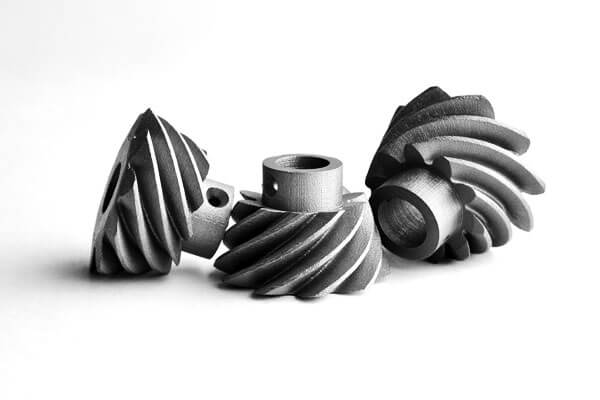
Bahan-bahan ini biasanya digunakan dalam Sintering laser logam langsung (DMLS), Lebur rasuk elektron (Ebm), dan Jetting Pengikat.
| Bahan | Sifat utama | Aplikasi biasa |
|---|---|---|
| Titanium (Ti-6al-4v) | Ringan, kuat, tahan kakisan | Aeroangkasa, implan perubatan |
| Keluli tahan karat (316L., 17-4 Ph) | Tahan lama, tahan tahan | Alat perindustrian, instrumen pembedahan |
Aluminium (Alsi10mg) |
Ringan, kekonduksian terma yang baik | Automotif, elektronik |
| Kobalt-Chrome (CoCr) | Biokompatibel, tahan suhu tinggi | Implan pergigian, bilah turbin |
| Aloi nikel (Inconel 625, 718) | Tahan panas dan kakisan | Enjin jet, loji kuasa |
4.3 Seramik – Rintangan Haba dan Haus
Bahan seramik digunakan dalam aplikasi yang memerlukan rintangan suhu tinggi, Kestabilan kimia, dan kekerasan.
Bahan-bahan ini dicetak menggunakan jet pengikat, SLA, atau kaedah berasaskan penyemperitan.
| Bahan | Sifat utama | Aplikasi biasa |
|---|---|---|
| Silicon Carbide (Sic) | Kekuatan tinggi, tahan haba | Aeroangkasa, elektronik |
| Alumina (Al2O3) | Keras, Kimia tidak aktif | Implan biomedikal, Komponen Perindustrian |
| Zirkonia (Zro2) | Sukar, tahan tahan | Mahkota gigi, Alat pemotongan |
4.4 Komposit & Bahan Termaju – Prestasi Dipertingkat
Komposit bergabung polimer, logam, atau seramik dengan gentian penguat untuk mempertingkatkan kekuatan mekanikal, kekonduksian, atau fleksibiliti.
Komposit Bertetulang Gentian
Gentian karbon dan gentian kaca adalah tertanam ke dalam termoplastik untuk meningkatkan kekuatan dan mengurangkan berat badan.
| Bahan | Sifat utama | Aplikasi biasa |
|---|---|---|
| Serat karbon Nilon Bertetulang | Nisbah kekuatan-ke-berat yang tinggi | Drone, Robotik, automotif |
| PLA Diperkukuh Gentian Kaca | Tegar, tahan terhadap kesan | Komponen struktur |
Bahan Pintar dan Terbiodegradasi
Inovasi dalam bahan berasaskan bio dan penyembuhan diri sedang mengembangkan kemungkinan pencetakan 3D.
| Bahan | Sifat utama | Aplikasi biasa |
|---|---|---|
| Polimer Konduktif | Kekonduksian elektrik | Elektronik bercetak, sensor |
| Polimer penyembuhan diri | Membaiki kerosakan kecil | Wearables, Komponen Aeroangkasa |
| Campuran PLA Terbiodegradasi | Mesra alam, boleh kompos | Pembungkusan yang mampan, implan perubatan |
5. Cetakan 3D Selepas Pemprosesan
Pasca pemprosesan ialah langkah kritikal dalam percetakan 3D yang meningkatkan sifat mekanikal, kualiti permukaan, dan kefungsian bahagian bercetak.
Oleh kerana objek cetakan 3D mentah sering dipamerkan garisan lapisan, kekasaran permukaan, dan bahan sisa, pelbagai teknik pasca pemprosesan diaplikasikan berdasarkan jenis bahan, proses percetakan, dan aplikasi yang dimaksudkan.

Pemilihan kaedah pasca pemprosesan bergantung kepada faktor seperti keperluan estetik, ketepatan dimensi, Integriti struktur, dan keadaan alam sekitar bahagian itu akan terdedah kepada.
Di bawah ialah a analisis menyeluruh daripada teknik pasca pemprosesan yang paling biasa untuk teknologi pencetakan 3D yang berbeza.
Mengapa Pemprosesan Pasca Penting?
- Meningkatkan Kemasan Permukaan - Mengurangkan kekasaran dan meningkatkan estetika.
- Meningkatkan Kekuatan Mekanikal – Menghilangkan kecacatan mikro dan mengukuhkan ketahanan bahagian.
- Mengoptimumkan Kefungsian – Melaraskan sifat seperti fleksibiliti, kekonduksian, dan memakai rintangan.
- Mengeluarkan Sokongan & Bahan Baki – Memastikan bahagian tersebut bebas daripada bahan berlebihan atau artifak yang tidak sedap dipandang.
- Mendayakan Rawatan Tambahan – Membolehkan untuk lukisan, penyaduran, atau menyegel, bergantung kepada keperluan aplikasi.
Teknik Pasca Pemprosesan Biasa oleh Teknologi Percetakan
Pemodelan Pemendapan Bercantum (FDM) Pasca pemprosesan
Cetakan FDM selalunya ada garisan lapisan kelihatan dan memerlukan penyingkiran sokongan. Teknik pasca pemprosesan yang paling biasa termasuk:
| Teknik | Proses | Faedah | Cabaran |
|---|---|---|---|
| Sokongan Pembuangan | Memotong atau melarutkan struktur sokongan (PVA larut dalam air, HIPS larut dalam limonene). | Mencegah kerosakan permukaan. | Memerlukan pengendalian yang teliti untuk mengelakkan kerosakan. |
| Pengamplasan & Menggilap | Menggunakan kertas pasir (120–2000 pasir) untuk melicinkan permukaan. | Meningkatkan estetika dan mengurangkan keterlihatan lapisan. | Memakan masa, boleh mengubah dimensi. |
Melicinkan Bahan Kimia |
Mendedahkan bahagian kepada wap pelarut (aseton untuk ABS, etil asetat untuk PLA). | Mencapai kemasan berkilat, menghilangkan garisan lapisan. | Boleh melemahkan struktur bahagian jika terlalu terdedah. |
| Lukisan & Salutan | menyebu dan menggunakan cat, salutan yang jelas, atau rawatan hidrofobik. | Memperbaiki warna, ketahanan, dan perlindungan. | Memerlukan penyediaan permukaan yang betul. |
Stereolitografi (SLA) & Pemprosesan Cahaya Digital (Dlp) Pasca pemprosesan
Oleh kerana SLA dan DLP menggunakan resin cecair, pasca pemprosesan memberi tumpuan kepada mengawet dan menambah baik kemasan permukaan yang rapuh.
| Teknik | Proses | Faedah | Cabaran |
|---|---|---|---|
| Pengawetan UV | Mendedahkan cetakan kepada cahaya UV untuk menguatkan resin. | Meningkatkan ketahanan. | Memerlukan masa pengawetan yang betul untuk mengelakkan kerapuhan. |
| Isopropil Alkohol (IPA) bilas | Membersih lebihan resin yang tidak diawet dengan IPA (90%+ Konsentrasi). | Memastikan lancar, cetakan bersih. | Perendaman berlebihan boleh menyebabkan meledingkan. |
| Pengamplasan & Menggilap | Pengamplasan basah untuk mencapai permukaan yang lebih licin. | Meningkatkan estetika dan lekatan cat. | Boleh mengeluarkan butiran halus. |
| Salutan Jelas & Lukisan | Menyapu salutan atau pewarna tahan UV. | Menambah warna dan perlindungan. | Boleh mengubah lut sinar cetakan. |
Contoh industri:
Dalam aplikasi pergigian dan perubatan, SLA dicetak panduan pembedahan dan model ortodontik menjalani Pembersihan IPA dan pengawetan UV untuk memastikan biokompatibiliti dan kekuatan mekanikal.
Pensinteran Laser Terpilih (SLS) Pasca pemprosesan
Cetakan SLS ialah berasaskan serbuk dan selalunya mempamerkan tekstur berbutir. Pasca pemprosesan tertumpu terutamanya pada melicinkan dan menguatkan bahagian-bahagian.
| Teknik | Proses | Faedah | Cabaran |
|---|---|---|---|
| Penyingkiran Serbuk | Letupan dengan udara termampat atau berguling untuk mengeluarkan serbuk berlebihan. | Memastikan bahagian bersih dan berfungsi. | Serbuk halus memerlukan pelupusan yang betul. |
| Pencelupan & Pewarna | Merendam bahagian dalam mandian pewarna untuk pewarnaan seragam. | Secara estetik meningkatkan bahagian. | Terhad kepada warna gelap. |
| Melicinkan Wap | Menggunakan wap kimia untuk mencairkan dan melicinkan lapisan luar. | Mencipta kemasan separa berkilat, meningkatkan sifat mekanikal. | Memerlukan pendedahan kimia terkawal. |
| Letupan manik & Jatuh | Menggunakan media halus (seramik, manik kaca) untuk melicinkan permukaan. | Mengurangkan keliangan dan meningkatkan kemasan. | Boleh mengubah sedikit dimensi. |
Contoh industri:
Nike dan Adidas gunakan SLS untuk pembuatan tapak kasut, di mana pelicinan wap dan pencelupan memberikan kemasan sentuhan lembut dan lebih baik Pakai rintangan.
Sintering laser logam langsung (DMLS) & Lebur rasuk elektron (Ebm) Pasca pemprosesan
Cetakan 3D logam memerlukan pasca pemprosesan yang meluas untuk mencapai sifat mekanikal dan kemasan permukaan yang dikehendaki.
| Teknik | Proses | Faedah | Cabaran |
|---|---|---|---|
| Sokongan Pembuangan (Wire EDM, Pemotongan CNC) | Memotong struktur sokongan logam menggunakan pemesinan nyahcas elektrik (EDM). | Memastikan ketepatan dalam geometri kompleks. | Intensif buruh untuk bahagian yang rumit. |
| Rawatan haba (Penyepuhlindapan, Hip) | Pemanasan untuk mengurangkan tekanan sisa dan meningkatkan keliatan. | Meningkatkan kekuatan bahagian, menghalang keretakan. | Memerlukan kitaran haba terkawal. |
| Pemesinan (CNC, Pengisaran, Lapping) | Dimensi penapisan dengan pengilangan atau pengisaran CNC. | Mencapai ketepatan tinggi dan kemasan licin. | Menambahkan masa dan kos pemprosesan. |
| Electropolishing | Menggunakan proses elektrolitik untuk melicinkan permukaan. | Meningkatkan rintangan kakisan, estetika. | Hanya berfungsi pada logam konduktif. |
Contoh industri:
Dalam Aplikasi Aeroangkasa, Bahagian titanium yang dihasilkan oleh DMLS untuk enjin jet menjalani Menekan isostatik panas (Hip) untuk menghapuskan mikro-pulositi dan bertambah baik Rintangan Keletihan.
Teknik Kemasan Lanjutan
Untuk Aplikasi berprestasi tinggi, teknik kemasan tambahan digunakan:
- Electroplating – Menyalut bahagian dengan nikel, Tembaga, atau emas untuk meningkatkan kekonduksian dan rintangan kakisan.
- Salutan Seramik – Meningkatkan rintangan haus dan perlindungan haba untuk komponen logam.
- Pembuatan Hibrid – Menggabungkan 3D percetakan dengan pemesinan CNC untuk bahagian berketepatan tinggi.
6. Kelebihan dan Cabaran Percetakan 3D
Bahagian ini menyediakan analisis yang mendalam tentang kelebihan dan cabaran utama percetakan 3D dalam industri moden.
Kelebihan Utama Percetakan 3D
Kebebasan Reka Bentuk dan Penyesuaian
Tidak seperti pembuatan tradisional, yang bergantung pada acuan, memotong, dan perhimpunan,
3Pencetakan D membolehkan penciptaan geometri kompleks itu akan menjadi mustahil atau sangat mahal menggunakan kaedah konvensional.
- Penyesuaian massa – Produk boleh disesuaikan untuk pelanggan individu tanpa kos tambahan.
- Geometri Kompleks – Struktur kekisi yang rumit, saluran dalaman, dan bentuk organik boleh dilaksanakan.
- Rekaan Ringan – Industri aeroangkasa dan automotif menggunakan pengoptimuman topologi untuk mengurangkan berat badan tanpa mengorbankan kekuatan.
Prototaip Pantas dan Pengeluaran Lebih Pantas
Prototaip tradisional boleh mengambil minggu atau bulan, tetapi 3Percetakan D mempercepatkan kitaran pembangunan secara ketara.
- 90% prototaip yang lebih pantas – Sesuatu konsep boleh pergi dari reka bentuk kepada prototaip berfungsi dalam soal jam atau hari.
- Inovasi dipercepatkan – Syarikat boleh menguji berbilang lelaran reka bentuk dengan cepat, memperbaiki kecekapan pembangunan produk.
- Pengeluaran atas permintaan – Menghapuskan rantaian bekalan yang panjang, mengurangkan kos pergudangan dan inventori.
Sisa Bahan yang Dikurangkan dan Kemampanan
Tidak seperti pembuatan tolak (Mis., pemesinan CNC), yang mengeluarkan bahan untuk membentuk objek, 3Percetakan D membina bahagian lapisan demi lapisan, mengurangkan pembaziran dengan ketara.
- Hingga 90% kurang bahan buangan berbanding dengan pemesinan konvensional.
- Bahan kitar semula seperti PLA berasaskan bio dan polimer kitar semula meningkatkan kemampanan.
- Pengeluaran setempat mengurangkan jejak karbon yang dikaitkan dengan rantaian bekalan global.
Pengurangan Kos dalam Pengeluaran Volume Rendah
Untuk pembuatan volum rendah atau khusus, 3Percetakan D adalah ketara lebih menjimatkan kos daripada pembuatan tradisional.
- Tiada kos acuan atau perkakas – Sesuai untuk pengeluaran jangka pendek dan pasaran permintaan rendah.
- Mengurangkan langkah pemesinan yang mahal – Menghapuskan pelbagai proses pembuatan (Casting, penggilingan, penggerudian).
- Mampu milik untuk pemula & perniagaan kecil – Mengurangkan halangan kemasukan kepada inovasi pembuatan.
Integrasi Fungsian & Pengurangan Perhimpunan
3Pencetakan D membolehkan penyatuan bahagian, membenarkan beberapa komponen digabungkan menjadi satu reka bentuk bersepadu.
- Mengurangkan kerumitan pemasangan – Lebih sedikit bahagian bermakna kurang buruh dan lebih sedikit titik kegagalan yang berpotensi.
- Meningkatkan integriti struktur – Menghilangkan keperluan untuk skru, kimpalan, atau pelekat.
Cabaran dan Had Percetakan 3D
Pemilihan bahan terhad
Walaupun percetakan 3D telah berkembang melangkaui plastik untuk memasukkan logam, Seramik, dan komposit, The rangkaian bahan boleh cetak kekal terhad berbanding pembuatan tradisional.
- Sifat mekanikal – Banyak bahan bercetak tidak sepadan dengan kekuatan, Kemuluran, atau rintangan haba bahagian yang dikeluarkan secara konvensional.
- Kos bahan – Bahan berprestasi tinggi (Mis., titanium, MENGINTIP, Ultem) adalah mahal.
- Kurang standardisasi – Sifat bahan berbeza antara berbeza model pencetak dan pengeluar.
Keperluan pemprosesan pasca
Kebanyakan bahagian bercetak 3D memerlukan langkah penamat tambahan sebelum ia boleh digunakan.
- Melicinkan permukaan – Banyak bahagian telah kelihatan garisan lapisan dan memerlukan pengamplasan, menggilap, atau pelicinan wap.
- Rawatan haba – Cetakan logam sering diperlukan penyepuhlindapan atau penekanan isostatik panas (Hip) untuk menghilangkan tekanan dalaman.
- Sokongan penyingkiran struktur - Banyak proses, seperti SLA, SLS, dan DMLS, memerlukan berhati-hati penyingkiran bahan berlebihan.
Kos Pelaburan Permulaan yang Tinggi
Walaupun kos semakin berkurangan, pencetak dan bahan 3D gred industri kekal mahal.
- Pencetak 3D logam kos $250,000 ke $1 juta.
- Pencetak polimer mewah (SLA, SLS) terdiri dari $50,000 ke $200,000.
- Kos bahan selalunya 5–10x lebih tinggi daripada bahan pembuatan konvensional.
Isu Kepantasan dan Kebolehskalaan
Manakala prototaip adalah pantas, pengeluaran besar-besaran dengan percetakan 3D kekal lebih perlahan daripada pengacuan suntikan atau pemesinan.
- Kelajuan cetakan rendah – Bahagian yang besar boleh diambil beberapa hari untuk mencetak.
- Kebolehskalaan terhad – Mencetak beribu-ribu bahagian masih lebih perlahan dan lebih mahal daripada kaedah tradisional.
- Pemprosesan kelompok diperlukan – Untuk meningkatkan kecekapan, berbilang bahagian sering dicetak serentak, yang merumitkan kawalan kualiti.
7. Aplikasi Percetakan 3D Merentas Industri
Daripada prototaip pantas kepada pengeluaran besar-besaran geometri kompleks, 3D percetakan tawaran fleksibiliti reka bentuk yang tidak pernah berlaku sebelum ini, pengurangan kos, dan kecekapan bahan.
Kesannya merangkumi pelbagai sektor, termasuk pembuatan, Aeroangkasa, penjagaan kesihatan, automotif, pembinaan, dan banyak lagi.
Pembuatan & Prototaip
Prototaip cepat
Salah satu aplikasi percetakan 3D yang paling penting dalam pembuatan ialah prototaip cepat.
Kaedah prototaip tradisional, seperti pengacuan suntikan, boleh mengambil masa beberapa minggu atau bulan untuk menyediakan dan menghasilkan.
Sebaliknya, 3Pencetakan D membolehkan lelaran yang lebih cepat, dengan prototaip yang biasanya dibuat dalam jam atau hari, membolehkan ujian cepat dan pengesahan reka bentuk.
- Kecekapan kos: 3Percetakan D menghilangkan keperluan untuk acuan yang mahal, perkakas, dan masa persediaan yang panjang yang berkaitan.
- Penyesuaian: Kompleks, bahagian tersuai boleh dihasilkan tanpa kos tambahan atau persediaan.
Ini amat berguna dalam pengeluaran kumpulan kecil atau apabila mencipta komponen yang perlu disesuaikan dengan keperluan pelanggan tertentu.
Alatan dan Pengeluaran Penggunaan Akhir
Di luar prototaip, 3Percetakan D juga memainkan peranan penting dalam perkakas Dan bahkan bahagian guna akhir.
Komponen seperti jig, lekapan, dan acuan boleh dihasilkan dengan cepat dan cekap menggunakan cetakan 3D, mengurangkan masa dan kos pengeluaran.
- Perkakas atas permintaan membolehkan pelarasan pantas dalam reka bentuk tanpa masa pendahuluan yang panjang.
- Syarikat semakin menghasilkan bahagian guna akhir untuk aplikasi tertentu, seperti implan perubatan tersuai atau komponen automotif ringan.
Aeroangkasa & Automotif
Aplikasi Aeroangkasa
Industri aeroangkasa telah berada di barisan hadapan dalam menerima pakai percetakan 3D kerana keupayaannya untuk menghasilkan ringan, bahagian kompleks dengan nisbah kekuatan-ke-berat yang luar biasa.
Komponen yang dihasilkan menggunakan pensinteran laser logam langsung (DMLS) atau peleburan pancaran elektron (Ebm) adalah penting untuk mengurangkan berat pesawat,
yang secara langsung menyumbang kepada kecekapan bahan api dan penjimatan kos.
- Penyesuaian: 3Percetakan D membolehkan bahagian yang disesuaikan untuk aplikasi aeroangkasa tertentu, seperti bilah turbin atau kurungan yang dioptimumkan untuk prestasi.
- Penjimatan kos: Pengeluaran geometri kompleks yang sebaliknya memerlukan beberapa langkah pembuatan boleh mengurangkan kos dengan ketara.
Aplikasi Automotif
Di sektor automotif, 3Percetakan D digunakan untuk mencipta prototaip fungsional, bahagian tersuai, Dan bahkan alat pengeluaran.
Apabila industri beralih kepada lebih banyak lagi mampan dan cekap tenaga kenderaan, 3Percetakan D menawarkan cara untuk menghasilkan ringan, komponen kompleks.
- Penyesuaian: 3Percetakan D membolehkan pengeluar kereta menghasilkan bahagian tersuai atas permintaan,
seperti komponen dalaman khusus, prototaip untuk model baharu, dan juga ringan, bahagian enjin tahan lama. - Lebih cepat ke pasaran: 3Pencetakan D mengurangkan masa pembangunan dengan membenarkan ujian dan lelaran prototaip yang lebih cepat.

Perubatan & Penjagaan kesihatan
Prostetik dan Implan Tersuai
Salah satu kegunaan pencetakan 3D yang paling berkesan ialah dalam Peranti perubatan, terutamanya untuk prostetik tersuai dan implan.
Kaedah pembuatan tradisional sering bergelut dengan menghasilkan peranti yang sangat disesuaikan, tetapi percetakan 3D cemerlang dalam mencipta penyelesaian khusus pesakit.
- Penyesuaian: Dengan cetakan 3D, prostetik boleh direka bentuk dan dihasilkan untuk spesifikasi yang tepat, memastikan kesesuaian yang sempurna untuk pesakit.
- Kecekapan kos: Prostetik dan implan tradisional selalunya melibatkan proses yang mahal dan memakan masa. 3Percetakan D membolehkan pengeluaran lebih cepat dan kos yang lebih rendah.
Bioprinting
Bioprinting ialah bidang yang muncul dalam percetakan 3D yang menggunakan sel hidup untuk mencipta struktur tisu Dan bahkan model organ.
Semasa masih di peringkat awal, bioprinting memegang janji besar untuk masa depan perubatan peribadi, berpotensi membawa kepada penciptaan tisu dan organ bioengineered.
- Kejuruteraan Tisu: Tisu bioprinted akhirnya boleh digunakan untuk ujian dadah, mengurangkan keperluan untuk ujian haiwan.
- Perubatan Regeneratif: Penyelidikan dalam bioprinting sedang meneroka kemungkinan mencetak organ berfungsi sepenuhnya untuk pemindahan.
Pembinaan & Seni bina
3Bangunan Bercetak D
Dalam industri pembinaan, 3Percetakan D merevolusikan cara bangunan dan struktur direka dan dibina.
Teknologi telah memungkinkan untuk mencetak keseluruhan bangunan, mengurangkan kos dan masa pembinaan dengan ketara.
- Pengurangan Kos: 3Percetakan D boleh mengurangkan kos pembinaan sehingga 50%, kerana ia memerlukan lebih sedikit pekerja dan bahan.
- Kemampanan: Dengan kebolehan menggunakan bahan kitar semula dalam proses percetakan, 3Percetakan D menyumbang kepada kaedah pembinaan yang lebih mampan.
Geometri Kompleks
Salah satu faedah utama percetakan 3D dalam pembinaan ialah keupayaan untuk mereka bentuk dan mencetak bentuk seni bina yang kompleks yang sukar atau mustahil dibuat menggunakan kaedah tradisional.
Ini membuka kemungkinan baru untuk reka bentuk seni bina yang inovatif dan struktur.
Barang pengguna & Elektronik
Produk Pengguna Tersuai
Dalam industri barangan pengguna, 3Percetakan D membolehkan pengilang menghasilkan disesuaikan, produk yang dibuat mengikut tempahan.
Sama ada barang kemas yang diperibadikan, kasut yang dipesan lebih dahulu, atau aksesori fesyen sesuai tersuai, 3Percetakan D menawarkan penyesuaian yang tiada tandingan pada sebahagian kecil daripada kos kaedah tradisional.
- Pemperibadian Produk: Pengguna boleh mereka produk mereka dan memintanya dicetak atas permintaan, menghapuskan pengeluaran besar-besaran dan mengurangkan sisa.
- Industri Fesyen: Pereka bentuk memanfaatkan percetakan 3D untuk mencipta karya fesyen yang inovatif, seperti perhiasan yang disesuaikan Dan bahkan teknologi boleh pakai.
Pembuatan Elektronik
3Percetakan D juga memainkan peranan penting dalam industri elektronik, di mana ia digunakan untuk mencetak papan litar, komponen miniatur, dan kandang untuk peranti elektronik.
Keupayaan untuk menghasilkan geometri kompleks dalam skala kecil, bahagian yang rumit telah membuka kemungkinan untuk elektronik tersuai.
- Elektronik Berfungsi: Syarikat kini menggunakan bahan cetakan 3D konduktif untuk mencetak komponen elektronik berfungsi, seperti antena, kapasitor, dan jejak litar.
- Prototaip dan Pengujian: 3Pencetakan D membolehkan cepat lelaran dan ujian produk dan peranti elektronik baharu.
8. Aditif vs Pembuatan Tradisional
Perbandingan antara Pembuatan Aditif (3D percetakan) dan kaedah pembuatan tradisional,
seperti subtractive dan pembuatan formatif, menonjolkan kekuatan dan cabaran unik setiap pendekatan.
Memahami kaedah ini adalah penting bagi industri yang ingin memilih proses pembuatan yang paling cekap dan kos efektif berdasarkan keperluan khusus mereka..
Pembuatan Aditif (3D Percetakan)
Gambaran keseluruhan proses
Pembuatan Aditif (Am), biasanya dirujuk sebagai 3D percetakan, melibatkan penciptaan objek tiga dimensi dengan memendapkan bahan lapisan demi lapisan berdasarkan reka bentuk digital.
Tidak seperti pembuatan tradisional, di mana bahan dikeluarkan atau dibentuk dengan kekerasan, AM ialah satu proses membina bahan, yang memberikan kelebihan unik dalam kebebasan reka bentuk dan kecekapan bahan.
Ciri -ciri utama
- Kecekapan bahan: AM hanya menggunakan bahan yang diperlukan untuk bahagian tersebut, mengurangkan sisa.
Tidak seperti kaedah tolak, yang memotong bahan daripada bongkah pepejal, 3Percetakan D membina objek, kurang menggunakan bahan mentah. - Fleksibiliti reka bentuk: AM membolehkan penciptaan geometri kompleks dengan mudah,
termasuk struktur dalaman yang rumit, bentuk organik, dan reka bentuk tersuai yang mustahil atau mahal dengan kaedah tradisional. - Kelajuan: Walaupun AM boleh menjadi lebih perlahan daripada proses tradisional untuk kumpulan besar, ia menawarkan keupayaan prototaip pantas.
Anda boleh membuat dan menguji prototaip dalam masa beberapa jam atau hari, satu proses yang boleh diambil minggu dengan kaedah tradisional.
Pembuatan Subtraktif
Gambaran keseluruhan proses
Pengilangan tolak melibatkan penyingkiran bahan daripada bongkah pepejal (dirujuk sebagai a kosong) menggunakan alatan mekanikal seperti penggilingan, berpaling, dan pengisaran.
Bahan dipotong secara beransur-ansur untuk membentuk objek, meninggalkan bahagian akhir. Kaedah ini adalah salah satu yang tertua dan paling biasa digunakan dalam pembuatan.
Ciri -ciri utama
- Ketepatan dan Kemasan Permukaan: Pengilangan tolak terkenal dengannya ketepatan tinggi dan
keupayaan untuk mencipta bahagian dengan kemasan permukaan yang sangat baik, menjadikannya ideal untuk menghasilkan komponen dengan toleransi yang ketat. - Sisa bahan: Satu kelemahan utama pembuatan tolak ialah sisa bahan dihasilkan semasa proses pemotongan.
Sebahagian besar bahan dibuang sebagai sekerap, menjadikannya kurang cekap bahan berbanding dengan proses aditif. - Kos Peralatan dan Persediaan: Kaedah tolak sering memerlukan perkakas yang mahal, seperti acuan dan mati, yang boleh meningkatkan kos, terutamanya untuk larian pengeluaran kecil.
Pembuatan Formatif
Gambaran keseluruhan proses
Pembuatan formatif melibatkan penciptaan objek dengan membentuk bahan melalui haba, tekanan, atau kedua -duanya.
Contoh kaedah formatif termasuk pengacuan suntikan, die casting, penyemperitan, dan setem.
Kaedah ini sering digunakan untuk larian pengeluaran volum tinggi bagi bahagian-bahagian dengan bentuk yang mudah hingga sederhana kompleks.
Ciri -ciri utama
- Pengeluaran berkelajuan tinggi: Kaedah formatif seperti pengacuan suntikan Benarkan pengeluaran besar-besaran yang pesat bahagian,
menjadikannya sesuai untuk industri yang memerlukan kuantiti besar komponen yang sama. - Penggunaan bahan: Seperti pembuatan bahan tambahan, kaedah formatif ialah bahan yang cekap, kerana ia sering melibatkan pembuatan bahagian daripada acuan dengan sedikit sisa.
- Kos perkakas: Manakala kelajuan pengeluaran adalah tinggi, kos acuan dan die boleh jadi ketara, Terutama untuk bentuk yang kompleks.
Kos ini biasanya diagihkan ke atas volum pengeluaran yang besar, menjadikan kaedah berdaya maju dari segi ekonomi untuk larian volum tinggi.
Membandingkan Pembuatan Aditif dengan Pembuatan Tradisional
| Ciri | Pembuatan Aditif (3D Percetakan) | Pembuatan Subtraktif | Pembuatan Formatif |
|---|---|---|---|
| Kecekapan bahan | Tinggi - Hanya menggunakan bahan yang diperlukan untuk bahagian tersebut. | Rendah – Sisa bahan daripada memotong stok. | Tinggi - Sisa minimum dalam proses pengacuan. |
| Kerumitan Reka Bentuk | Boleh mencipta bentuk kompleks dan struktur dalaman. | Terhad oleh geometri alat dan laluan pemotongan. | Sederhana - Bentuk kompleks memerlukan acuan yang mahal. |
Kelajuan pengeluaran |
Lebih perlahan untuk kumpulan besar tetapi pantas untuk prototaip. | Cepat untuk pengeluaran besar-besaran bahagian mudah. | Sangat pantas untuk kumpulan besar, persediaan perlahan untuk acuan. |
| Kos Peralatan | Sederhana – Kos kemasukan yang lebih rendah untuk pencetak desktop. | Mesin dan perkakas CNC tinggi boleh jadi mahal. | Tinggi - Peralatan dan acuan adalah mahal. |
| Pilihan bahan | Terhad, tetapi berkembang (Plastik, logam, Seramik). | Luas – Logam, Plastik, dan komposit. | Luas – Terutamanya plastik dan logam. |
| Penyesuaian | Tinggi - Sesuai untuk dipesan lebih dahulu, volum rendah, bahagian tersuai. | Bahagian berpiawai rendah. | Sederhana – Terhad kepada keupayaan acuan. |
| Skala Pengeluaran | Terbaik untuk volum rendah, kompleks, dan bahagian yang disesuaikan. | Ideal untuk volum tinggi, bahagian ketepatan tinggi. | Terbaik untuk pengeluaran besar-besaran bahagian mudah. |
9. Kesimpulan
3Percetakan D terus membentuk semula industri dengan menawarkan fleksibiliti yang tidak pernah berlaku sebelum ini, kecekapan, dan inovasi.
Walaupun ia mempunyai had dalam sifat bahan dan kebolehskalaan, kemajuan berterusan dalam pembuatan hibrid, Integrasi AI, dan bahan lestari akan meningkatkan lagi keupayaannya.
Langhe ialah pilihan yang tepat untuk keperluan pembuatan anda jika anda memerlukan perkhidmatan pencetakan 3D berkualiti tinggi.
Rujukan artikel: https://www.hubs.com/guides/3d-printing/