

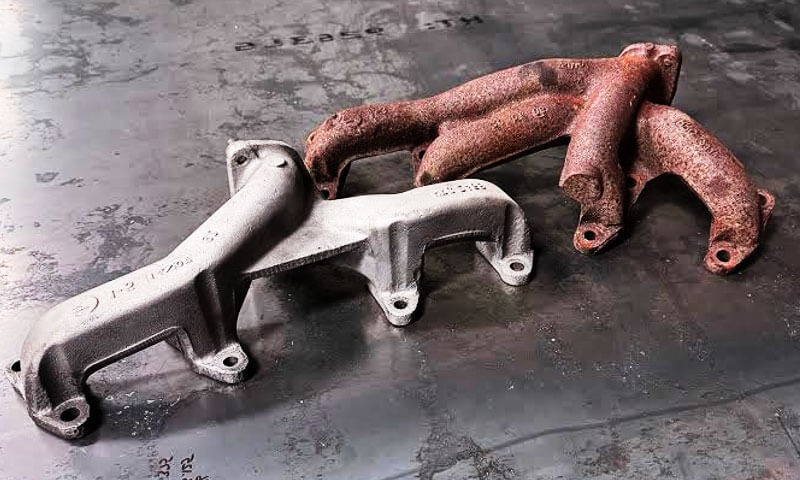
Ketaus užsitarnavo vienos iš patvariausių ir universaliausių kada nors sukurtų inžinerinių medžiagų reputaciją.
Nuo ketaus keptuvės ir olandiškos orkaitės į Mašinų bazės, vožtuvo kūnai, Variklio blokai, ir pramoninių siurblių korpusai, cast iron is valued for its excellent castability, Aukštas gniuždymo stiprumas, Aukščiausias atsparumas dėvėjimams, and outstanding vibration damping capacity.
Tačiau, despite its impressive durability, cast iron has one significant weakness—it is highly susceptible to rūdis (Geležies oksidas) formavimasis veikiant drėgmei ir deguoniui.
Rust is more than a cosmetic issue. If left untreated, it gradually penetrates the metal surface, reducing dimensional accuracy, degrading mechanical performance, contaminating food-contact cookware, and eventually shortening the service life of the component.
Laimei, most rust damage is repairable. Whether dealing with a lightly rusted frying pan, a decades-old woodworking tool, or a heavily oxidized industrial casting, selecting the correct restoration technique is critical.
1. Kodėl ketaus rūdija?
Understanding why ketaus rusts is the foundation of selecting the most effective removal and prevention methods.
Rūdžių susidarymas nėra atsitiktinis procesas, o elektrocheminių reakcijų tarp geležies rezultatas, deguonies, ir vanduo.
Tokie veiksniai kaip lydinio sudėtis, paviršiaus būklė, aplinkos poveikis, ir apsauginės dangos turi įtakos korozijos greičiui.
Kas yra rūdis?
Rūdys yra bendras grupės pavadinimas hidratuoti geležies oksidai kurios susidaro, kai geležis reaguoja su deguonimi esant drėgmei.
Skirtingai nuo aliuminio, kuris sudaro tankų oksido sluoksnį, apsaugantį apatinį metalą, geležies oksidas yra akytas ir silpnai surištas.
Kai susidaro rūdys, tai leidžia papildomam deguoniui ir vandeniui prasiskverbti giliau į medžiagą, todėl korozija tęsiasi.
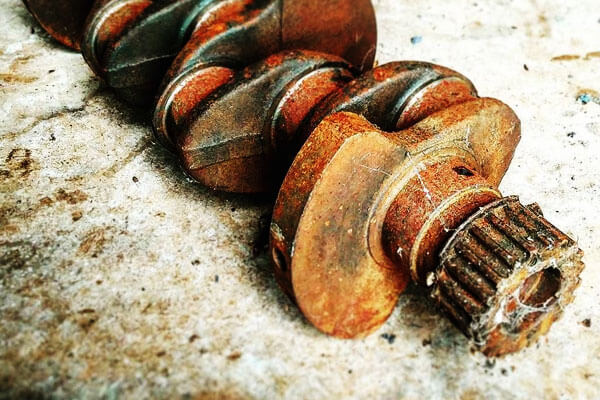
Supaprastinta korozijos reakcija yra:
Lygintuvas + Deguonis + Vanduo → Hidratuoti geležies oksidai (Rūdis)
Įprastos rūdžių formos apima:
| Rūdžių tipas | Cheminė formulė | Išvaizda | Charakteristikos |
| Raudona rūdys | Fe₂o₃ · nho | Rausvai rudos spalvos | Dažniausias atmosferinės korozijos produktas |
| Juodas oksidas | Fe₃o₄ | Juodas | Stabilesnis; dažnai susidaro esant aukštai temperatūrai |
| Geltonos rūdys | Feo(Oi) | Geltonai oranžinė | Dažnas drėgnoje aplinkoje |
| Rudos rūdys | Sumaišyti oksidai | Tamsiai ruda | Būdingas ilgalaikiam lauko poveikiui |
Svarbu atskirti paviršiaus oksidacija ir gili korozija.
Paviršiaus rūdys paprastai veikia tik išorinį sluoksnį ir gali būti pašalintos reikšmingai nepakeitus komponento.
Gili korozija, Tačiau, gali atsirasti duobių, matmenų praradimas, ir sumažėjęs struktūrinis vientisumas.
Kodėl ketus yra jautrus rūdijimui
Nors ketuje yra anglies ir silicio, jis vis dar sudarytas daugiausia iš geležies, todėl jis savaime pažeidžiamas oksidacijos.
Kai kurios medžiagos savybės prisideda prie jos korozijos savybių:
Didelis geležies kiekis
Daugumoje ketaus yra 90-95% geležies, suteikiant daug medžiagos oksidacijos reakcijoms, kai yra deguonies ir drėgmės.
Grafito mikrostruktūra
Skirtingai nuo plieno, ketaus sudėtyje yra dribsnių pavidalo grafito (Pilka geležis), mazgeliai (Kariuomenė geležis), arba grūdinti anglį (kaliojo ketaus).
Šios grafito dalelės sukuria daugybę mikroskopinių sąsajų, kurios tam tikromis sąlygomis gali paspartinti lokalią elektrocheminę koroziją.
Porėto paviršiaus charakteristikos
Liejiniuose paviršiuose dažnai yra mikroskopinių porų ir nelygumų, kurie sulaiko drėgmę ir teršalus, padidina rūdžių atsiradimo tikimybę.
Pasyvios apsaugos nebuvimas
Skirtingai nuo nerūdijančio plieno, kuri sukuria daug chromo turinčią pasyviojo oksido plėvelę, paprastas ketus neturi savaime gyjančio apsauginio sluoksnio.
Patekęs į drėgmę, korozija gali tęstis, nebent paviršius būtų apsaugotas prieskoniais, aliejus, dažyti, arba kita danga.
Pažeistas apsauginis sluoksnis
Ketaus indams, polimerizuotas aliejaus prieskonis veikia kaip pagrindinis korozijos barjeras.
Jei šis sluoksnis nusidėvi dėl agresyvaus valymo, rūgštus maistas, arba ilgalaikis mirkymas, atidengtas metalas greitai pradeda oksiduotis.
Veiksniai, pagreitinantys rūdžių susidarymą
| Faktorius | Mechanizmas | Rūdžių susidarymo greitis |
| Drėgmė | Vanduo suteikia elektrolitą, reikalingą elektrocheminei korozijai. | Greitas |
| Druska | Chlorido jonai ardo apsauginį oksido sluoksnį ir pagreitina elektrocheminę reakciją. | Labai greitas |
| Rūgštys | Rūgštys (Actas, pomidoras, Citrusai) ištirpina apsauginį oksido sluoksnį ir tiesiogiai atakuoja geležį. | Greitas |
| Ilgalaikis šlapinimasis | Stovintis vanduo užtikrina nuolatinę elektrolitų ir deguonies prieigą. | Greitas |
Didelė drėgmė |
Didelė santykinė oro drėgmė (>60%) padidina drėgmės plėvelę ant paviršiaus. | Lėtas ar vidutinio sunkumo |
| Prastas prieskonis | Plonas arba pažeistas prieskonių sluoksnis nesudaro kliūčių drėgmei. | Greitas |
| Mechaniniai pažeidimai | Įbrėžimai, Poveikis, arba abrazyvinis nusidėvėjimas pašalina apsaugines dangas, šviežios geležies oksidacija. | Nuo vidutinio iki greito |
| Aukšta temperatūra + drėgmė | Šiluma pagreitina oksidacijos reakciją. | Vidutinis |
2. Rūdžių sunkumo įvertinimas
Prieš pasirenkant rūdžių šalinimo būdą, tai būtina tiksliai įvertinti korozijos sunkumą.
Skirtingiems rūdžių lygiams reikalingi skirtingi atkūrimo būdai, valymo laikas, ir apsauginiai gydymo būdai.
Naudojant pernelyg agresyvų metodą ant šviesaus paviršiaus rūdžių, galite be reikalo sugadinti originalią apdailą, o nepakankamas valymo metodas gali nepašalinti giliai įterptos korozijos.
Išsamus patikrinimas turėtų įvertinti ne tik matoma išvaizda rūdžių, bet ir Paviršiaus tekstūra, korozijos gylis, duobėjimo mastas, ir numatytas pritaikymas ketaus komponento.
Rūdžių sunkumo klasifikacija
| Rūdžių sunkumas | Tipiška Išvaizda | Paviršiaus sąlyga | Rekomenduojamas pašalinimo būdas |
| Lengvos paviršiaus rūdys | Šviesiai oranžinės arba rudos spalvos pakitimas; pavienių rūdžių dėmių | Paviršius išlieka lygus su minimalia oksidacija | Puiki plieno vata, nailono šveitimo padas, druskos šveitiklis, arba trumpas mirkymas acte |
| Vidutinis rūdys | Ištisinis oranžinis arba rausvai rudas rūdžių sluoksnis; nedidelis pleiskanojimas | Pastebimai grubus paviršius; Trynus rūdys pereina ant pirštų | Vidutinio laipsnio plieno vata, švitrinis popierius (180– 320 grūdų), citrinos rūgštis, mirkymas actu, arba komercinis rūdžių valiklis |
Sunkios rūdys |
Storos rūdžių apnašos su matomu pleiskanojimu ir oksidacijos kaupimu | Grubus, nelygus paviršius su vietine korozija | Vielinis šepetys, sukamasis įrankis, elektrolizė, Abrazyvinis sprogimas, Fosforo rūgštis, arba kompleksonų rūdžių valikliu |
| Įdubusi rūdys | Gilios korozijos duobės, ertmės, arba į kraterį panašūs defektai | Reikšmingi paviršiaus nelygumai su nuolatiniu metalo praradimu | Elektrolizė, po kurios seka vietinis šlifavimas, sprogdinimas, apdirbimas (Jei reikia), ir apsauginė danga arba prieskoniai |
3. Mechaniniai rūdžių šalinimo būdai
Mechaninis rūdžių pašalinimas pašalina koroziją dilimas, grandymas, šepetys, ar šlifavimas.
Tai dažnai yra pirmasis pasirinkimas, kai rūdys yra lengvas arba vidutinio sunkumo, nes tai suteikia tiesioginių vaizdinių rezultatų, reikalauja minimalaus pasiruošimo, ir vengia naudoti chemines medžiagas.
Stipriai korozijai, mechaninis valymas dažnai derinamas su cheminiu apdorojimu, siekiant pašalinti rūdis iš duobių, įtrūkimai, ir kitose neprieinamose vietose.
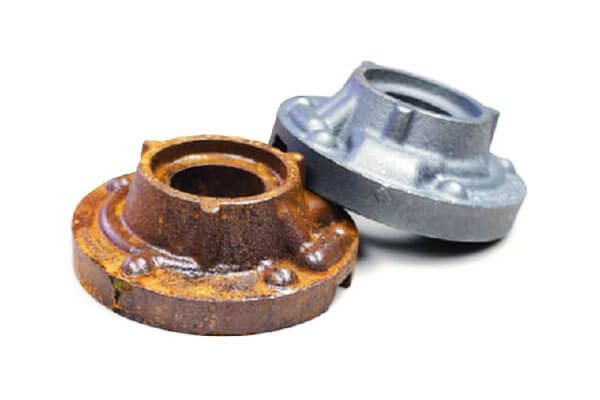
Plieninė vata
Plieninė vata yra vienas iš paprasčiausių ir plačiausiai naudojamų lengvų paviršinių rūdžių pašalinimo iš ketaus būdų., ypač virtuvės reikmenys ir smulkūs įrankiai.
Jo lankstūs pluoštai lengvai prisitaiko prie išlenktų paviršių, tuo pačiu užtikrinant pakankamą dilimą, kad pašalintų oksidaciją be didelių metalo nuostolių.
Dėl lengvo spalvos pakitimo ar rūdžių, itin baudos pažymiai (#0000 arba #000) rekomenduojami, nes jie sumažina įbrėžimus atkuriant pradinę paviršiaus apdailą.
Vidutinės arba stambios klasės gali būti naudojamos stipresnei korozijai, tačiau jas reikia tepti atsargiai, kad būtų išvengta nereikalingo paviršiaus pažeidimo..
Plieninė vata geriausiai veikia, kai naudojama kartu su staliuku, tolygus spaudimas. Valymo metu reikia periodiškai pašalinti palaidas rūdžių daleles, po to kruopščiai nuplauti ir nedelsiant išdžiovinti.
Virtuvės indams, Pašalinus rūdis, paviršių reikia iš karto pakartotinai pagardinti.
Privalumai
- Maža kaina ir plačiai prieinama
- Puiki kontrolė valymo metu
- Minimalus metalo pašalinimas
- Tinka subtiliems ketaus paviršiams
Apribojimai
- Daug darbo reikalaujantis dideliems komponentams
- Mažiau veiksmingas nuo didelių apnašų ar gilių duobių
- Šiurkščiavilnių dažai gali palikti matomus įbrėžimus
Švitrinis popierius
Švitrinis popierius puikiai tinka vidutinei korozijai ant palyginti plokščių arba prieinamų paviršių.
Palyginti su plieno vata, jis agresyviau pašalina rūdis, tuo pačiu leisdamas palaipsniui tobulinti paviršių naudojant kelias abrazyvines rūšis.
Restauravimas paprastai prasideda nuo 80– 120 grūdų popierius stipriai oksidacijai, sekė 220– 400 grūdų abrazyvai paviršiui išlyginti ir šlifavimo žymėms sumažinti.
Nuo šiurkščiavilnių iki smulkių abrazyvų gaunama švaresnė apdaila ir sumažinamas nereikalingas medžiagos pašalinimas.
Nes švitrinis popierius pašalina ir rūdis, ir netauriuosius metalus, jį reikia atsargiai naudoti ant tiksliai apdirbtų paviršių arba komponentų, kurių matmenų nuokrypiai yra nedideli.
Privalumai
- Veiksmingas plačiai, Plokšti paviršiai
- Suteikia lygią apdailą po laipsniško šlifavimo
- Lengva valdyti rankiniu būdu
Apribojimai
- Sudėtingoms geometrijoms reikia daug laiko
- Jei naudojamas per daug, gali keistis matmenys
- Mažiau efektyvus kampuose ir įdubose
Vieliniai šepečiai
Vieliniai šepečiai užtikrina didesnį pjovimo efektyvumą nei plieno vata ir yra ypač veiksmingi norint pašalinti storus rūdžių sluoksnius, laisvos skalės, ir korozija nuo tekstūruotų ar netaisyklingų paviršių.
Rankiniai vieliniai šepečiai puikiai valdo vietinį valymą, o sukamieji vieliniai ratai, sumontuoti ant elektrinių grąžtų ar šlifuoklių, žymiai pagerina didesnių pramoninių komponentų našumą.
Kai naudojami elektriniai vieliniai šepečiai, Rekomenduojamas vidutinis sukimosi greitis ir lengvas slėgis.
Pernelyg didelė jėga gali nupoliruoti, o ne išvalyti paviršių, generuoti nereikalingą šilumą, arba pažeisti minkštesnes ketaus rūšis.
Privalumai
- Greitas vidutinio sunkumo ir stiprių rūdžių pašalinimas
- Tinka netaisyklingiems liejiniams paviršiams
- Veiksmingas grioveliuose ir įdubose
Apribojimai
- Gali subraižyti baigtus paviršius
- Elektriniai šepečiai reikalauja operatoriaus patirties
- Netinka dekoratyvinei apdailai išsaugoti
Rotaciniai įrankiai ir kampiniai šlifuokliai
Labai korozijos pažeistiems liejiniams, sukamieji įrankiai ir kampiniai šlifuokliai yra vienas greičiausių mechaninio valymo būdų.
Priklausomai nuo programos, jie gali būti su vieliniais ratukais, atlenkiami diskai, abrazyviniai diskai, arba neaustinio paviršiaus kondicionavimo ratai.
Sukamieji įrankiai ypač naudingi vietiniam sudėtingų savybių atkūrimui, o kampiniai šlifuokliai dažniausiai naudojami dideliems pramoniniams liejiniams, Mašinų bazės, struktūriniai komponentai, ir lauko įranga.
Siekiant sumažinti žalą, šlifavimas turi būti atliekamas mažu arba vidutiniu greičiu, nuolat judant įrankį.
Per ilgai buvus vienoje vietoje gali susidaryti per daug šilumos, pašalinti medžiagos perteklių, arba sukurti paviršiaus įdubimus.
Privalumai
- Labai didelis valymo efektyvumas
- Tinka stipriai korozijai ir storoms rūdžių nuosėdoms
- Žymiai sumažina atkūrimo laiką
Apribojimai
- Didelė rizika pašalinti garsų metalą
- Sukuria kibirkštis ir šilumą
- Netinka plonoms pjūviams arba tiksliam paviršiui
Abrazyvinis pūtimas
Abrazyvinis valymas pūtimu plačiai vertinamas kaip vienas iš efektyviausių būdų atstatyti stipriai aprūdijusius pramoninius ketaus komponentus..
Didelio greičio abrazyvinė medžiaga pašalina rūdis, senos dangos, malūno skalė, ir teršalus, tuo pat metu ruošiant paviršių dažymui ar kitoms apsauginėms procedūroms.
Pagal restauravimo tikslą parenkamos įvairios sprogdinimo medžiagos.
Plieno smėlis užtikrina agresyvų konstrukcinių liejinių valymą, stiklo karoliukai sukuria lygesnę apdirbtų dalių apdailą, o sodos pūtimas yra švelnesnė alternatyva subtiliems ar istoriniams komponentams.
Kadangi pūtimo parametrai stipriai įtakoja paviršiaus šiurkštumą ir matmenų tikslumą, Pramoninį sprogdinimą turi atidžiai kontroliuoti patyrę operatoriai.
Privalumai
- Itin greitas didelių paviršių valymas
- Vienodas rūdžių šalinimas
- Puikus paviršiaus paruošimas prieš dengimą
- Tinka sudėtingoms geometrijoms
Apribojimai
- Reikalauja specializuotos įrangos
- Didesnės veiklos sąnaudos
- Per didelis pūtimo slėgis gali išardyti plonas dalis
- Būtinas tinkamas dulkių surinkimas ir asmeninės apsaugos priemonės
4. Cheminiai rūdžių šalinimo metodai
Cheminis rūdžių pašalinimas priklauso nuo rūgšties tirpimas, chelatą, arba elektrocheminis redukavimas pašalinti korozijos gaminius be didelio mechaninio dilimo.
Skirtingai nuo mechaninio valymo, cheminis apdorojimas gali prasiskverbti pro siaurus plyšius, aklosios skylės, sriegiuotos sritys, ir gilios korozijos duobės, kurias sunku arba neįmanoma pasiekti rankiniu būdu.
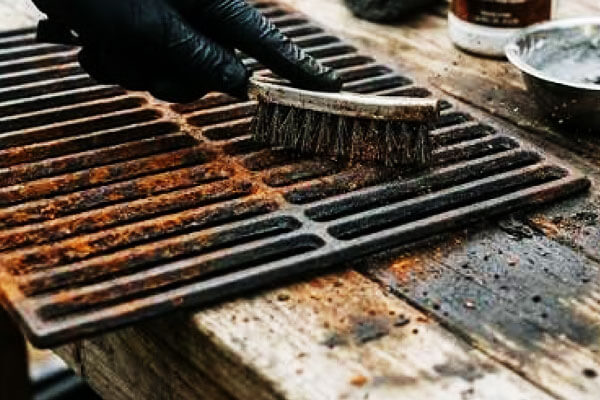
Baltasis actas (Acto rūgštis)
Baltasis actas yra vienas iš labiausiai prieinamų rūdžių šalinimo sprendimų namų restauravimui.
Acto rūgštis palaipsniui tirpdo geležies oksidus, suminkštėjusias rūdis galima pašalinti lengvu šepečiu arba plieno vata.
Jis ypač tinka virtuvės reikmenims, Rankiniai įrankiai, ir lengvai aprūdiję komponentai.
Nes acto rūgštis reaguoja ir su plika geležimi, mirkymo laikas turėtų būti ribotas, o komponentas turi būti periodiškai tikrinamas viso proceso metu.
Po gydymo, liejinys turi būti kruopščiai nuplaunamas, visiškai išdžiūvęs, ir nedelsiant apsaugotas, kad būtų išvengta rūdžių.
Privalumai
- Nebrangus ir plačiai prieinamas
- Paprasta naudoti
- Veiksmingas nuo lengvos iki vidutinės korozijos
- Tinka su maistu besiliečiantiems indams restauruoti
Apribojimai
- Lėtas esant stipriai korozijai
- Per didelis įmirkimas gali pažeisti netauriuosius metalus
- Būtina nedelsiant apsaugoti po gydymo
Citrinų rūgštis
Citrinų rūgštis yra švelnesnė acto alternatyva, kartu su puikia rūdžių šalinimo funkcija.
Jis efektyviai tirpdo korozijos produktus, tačiau paprastai yra mažiau agresyvus pagrindinės geležies atžvilgiu, todėl tinka komponentams, kuriems reikalingas geresnis paviršiaus išsaugojimas.
Kadangi citrinų rūgšties tirpalai išlieka veiksmingi ilgą mirkymo laikotarpį, jie dažnai naudojami dalims, kuriose yra mažų ertmių, Sudėtingos geometrijos, arba srieginės funkcijos, kai šepečiu sunku valyti.
Po gydymo, prieš džiovinant ir dengiant apsaugine danga ar prieskoniais reikia pašalinti visus rūgščių likučius nuplaunant švariu vandeniu..
Privalumai
- Švelnus pagrindiniam metalui
- Geras įsiskverbimas į sudėtingas geometrijas
- Mažesnė pernelyg didelio metalo atakos rizika
- Ekologiškas ir lengvai valdomas
Apribojimai
- Ilgesnis gydymo laikas nei stipresnės rūgštys
- Mažiau efektyvus storoms rūdžių apnašoms
- Gali prireikti papildomo mechaninio valymo
Komerciniai rūdžių valikliai
Komerciniai rūdžių šalinimo produktai yra specialiai sukurti siekiant pagerinti valymo efektyvumą ir sumažinti apatinio metalo pažeidimą. Paprastai jie skirstomi į tris kategorijas.
Chelatiniai rūdžių valikliai selektyviai suriša geležies oksidus, nepažeidžiant garsaus metalo, todėl jie ypač tinka vertingoms mašinoms, Tikslūs komponentai, ir antikvariniai restauracijos darbai.
Šiuos gaminius dažnai reikia panardinti į keletą valandų, tačiau jie ypač gerai išsaugo matmenų tikslumą.
Fosforo rūgšties pagrindu pagaminti produktai chemiškai reaguoja su rūdimis, kad susidarytų stabilus geležies fosfato konversijos sluoksnis, kuris pagerina laikiną atsparumą korozijai ruošiant paviršių dažymui ar dengimui.
Jie dažniausiai naudojami pramonės priežiūrai ir automobilių restauravimui.
Organinės rūgšties preparatai užtikrina vidutinį valymo efektyvumą ir dažnai naudojami nuo lengvos iki vidutinės korozijos, kai reikia greito valymo.
Privalumai
- Aukštas valymo efektyvumas
- Sukurta specialiai rūdžių šalinimui
- Daugelis formulių išsaugo netauriuosius metalus
- Tinka pramoniniam naudojimui
Apribojimai
- Didesnė kaina nei buitinės rūgštys
- Kai kuriuos gaminius reikia atidžiai tvarkyti
- Priklausomai nuo sudėties, gali prireikti apsauginės įrangos
Elektrolizė
Elektrolizė plačiai vertinama kaip vienas iš efektyviausių ir mažiausiai destruktyvių vertingų ketaus komponentų rūdžių šalinimo būdų..
Užuot mechaniškai šlifuojant paviršių ar chemiškai ištirpinus netauriuosius metalus, elektrolizė naudoja žemos įtampos nuolatinę srovę, kad geležies oksidai būtų paverčiami pašalinamomis nuosėdomis, o pagrindinė medžiaga iš esmės nepaveikiama.
Procese paprastai naudojamas skalbimo sodos elektrolitas, aukojamas plieno anodas, ir nuolatinės srovės maitinimo šaltinis.
Gydymo metu, korozijos produktai palaipsniui atsiskiria nuo liejimo paviršiaus, įskaitant rūdis, esančias giliose duobėse ir sudėtingose ertmėse.
Kadangi elektrolizė išsaugo originalias apdirbimo žymes, liejimo tekstūros, ir matmenų tikslumas, jis ypač vertingas senoviniams restauracijoms, tiksliosios mašinos, ir istoriškai reikšmingus ketaus objektus.
Privalumai
- Minimalus garsaus metalo pašalinimas
- Puikiai valo gilias duobes ir sudėtingas formas
- Išsaugomos originalios paviršiaus detalės
- Reikalauja mažai mechaninio šveitimo
Apribojimai
- Ilgesnis apdorojimo laikas
- Reikalinga speciali įranga ir elektros sąranka
- Mažiau praktiška labai dideliems liejiniams
- Eksploatacijos metu susidarančios vandenilio dujos reikalauja tinkamo vėdinimo ir griežtų saugos priemonių
5. Kaip pašalinti rūdis iš ketaus: Žingsnis po žingsnio rūdžių šalinimo procesas
Toliau pateikiamas bendras, sistemingas požiūris į rūdžių pašalinimą iš a ketaus keptuvė arba virtuvės reikmenys. Koreguokite pagal sunkumą ir pasirinktą metodą.
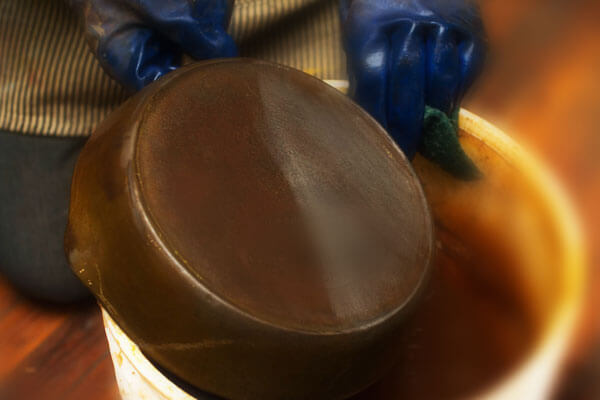
Žingsnis 1: Pradinis valymas
Pašalinkite bet kokius tepalus, aliejus, arba maisto likučius nuo paviršiaus. Naudokite karštą vandenį ir švelnų indų muilą su kempine ar šepečiu. Kruopščiai nuplaukite ir išdžiovinkite.
Žingsnis 2: Įvertinkite ir pasirinkite metodą
Remiantis sunkumo įvertinimu (žr. skyrių 2), pasirinkite rūdžių šalinimo būdą:
- Šviesos rūdys → Plieninė vata (#0000) arba druskos šveitiklis.
- Vidutinis rūdys → Mirkyti actu (20-60 minučių) arba komercinis rūdžių valiklis.
- Sunkios rūdys → Elektrolizė arba abrazyvinis pūtimas.
Žingsnis 3: Taikykite pasirinktą metodą
Cheminiam mirkymui:
- Įdėkite prekę į konteinerį (plastiko ar stiklo; vengti metalo).
- Uždenkite tirpalu (Actas, citrinos rūgštis, arba komercinis produktas).
- Mirkykite rekomenduojamą laiką (periodiškai tikrinti).
- Nuimkite ir nuvalykite plienine vata, kad pašalintumėte atsilaisvinusias rūdis.
- Jei lieka rūdžių, pakartokite mirkymą arba pereikite prie agresyvesnio metodo.
Dėl mechaninių metodų:
- Kruopščiai nušveiskite arba nušveiskite aprūdijusią vietą.
- Dažnai nuplaukite ir išdžiovinkite, kad patikrintumėte eigą.
- Tęskite iki pliko, matosi nerūdijęs metalas.
- Jei duobės lieka, gali tekti naudoti smulkesnes kruopas arba elektrolizę.
Elektrolizė:
- Nustatykite elektrolizės vonią (plastikinė vonia, vanduo, skalbimo soda, aukos anodas).
- Sustabdykite daiktą vonioje (neleiskite jam liesti anodo).
- Prijunkite įkroviklį (teigiamas anodui, neigiamas elementui).
- Įjunkite įkroviklį ir palaukite 6–24 valandas.
- Pašalinkite elementą, nuvalykite plienine vata, kad pašalintumėte likusias rūdis, ir nuplaukite.
Žingsnis 4: Kruopščiai nuplaukite ir išdžiovinkite
Po rūdžių pašalinimo, nuplaukite daiktą švariu vandeniu, kad pašalintumėte cheminių medžiagų likučius.
Sausas nedelsiant ir kruopščiai – naudokite rankšluostį ir padėkite ant mažos ugnies degiklio 2–3 minutėms, kad išgaruotų likusi drėgmė.
Žingsnis 5: Neutralizuoti (Jei reikia)
Jei naudojote rūgštį (acto arba citrinos rūgšties), neutralizuoti paviršių nuplaunant vandeniu ir trupučiu sodos tirpalo (1 šaukštas kepimo sodos 1 litras vandens) sustabdyti rūgšties veikimą. Dar kartą nuplaukite paprastu vandeniu.
Žingsnis 6: Nedelsdami pakartokite sezoną
Kai daiktas išdžius, užtepkite ploną aliejaus sluoksnį (linų sėmenų, vynuogių sėklų, rapsai, arba augalinis aliejus) ir vėl sezoną (žr. skyrių 6).
Tai labai svarbu – jei plikas geležis bus neapsaugotas, per kelias minutes rūdys.
6. Ketaus restauravimas po rūdžių pašalinimo
Rūdžių pašalinimas yra tik pirmasis ketaus komponento atkūrimo etapas.
Pašalinus koroziją, atviras geležies paviršius yra labai reaktyvus ir jautrus mirksi rūdys, kurios gali išsivystyti per kelias minutes esant drėgnoms sąlygoms.
Todėl norint atkurti atsparumą korozijai, būtinas tinkamas tolesnis apdorojimas, išlaikyti paviršiaus vientisumą, ir prailginti liejinio tarnavimo laiką.
Kruopštus valymas ir neutralizavimas
Po mechaninio ar cheminio rūdžių pašalinimo, visas likusias abrazyvines daleles, birus oksidas, arba cheminių medžiagų likučiai turi būti visiškai pašalinti.
Komponentams, valytiems rūgštiniais tirpalais, tokiais kaip actas arba citrinos rūgštis, būtina kruopščiai nuplauti švariu vandeniu, kad būtų neutralizuotas rūgštis ir išvengta nuolatinės korozijos.
Pramoninėje aplinkoje, stipresnių rūgščių veikiamiems komponentams gali būti naudojami šarminiai neutralizuojantys tirpalai.
Vieną kartą išvalytas, paviršius turi būti atidžiai apžiūrėtas:
- Likusios rūdžių dėmės
- Gilios korozijos duobės
- Įtrūkimai arba liejimo defektai
- Restauravimo metu padaryti paviršiaus pažeidimai
- Matmenų pokyčiai tiksliai apdirbtose srityse
A švarus, Paviršius be likučių yra geriausias pagrindas tolesniam apsauginiam apdorojimui.
Visiškas džiovinimas
Ant ką tik išvalyto ketaus likusi drėgmė yra viena iš pagrindinių rūdžių atsiradimo priežasčių.
Džiovinimo metodai apima:
- Valymas nesipūkuojančiais šluostais
- Suslėgtas oras skylėms ir ertmėms
- Džiovinimas žemoje temperatūroje orkaitėje
- Švelnus šildymas ant viryklės (virtuvės reikmenims)
- Pramoninės džiovinimo krosnys dideliems liejiniams
Sudėtingi liejiniai su aklinomis angomis, Vidinės ištraukos, arba srieginėms savybėms reikia skirti ypatingą dėmesį, nes įstrigusi drėgmė gali paspartinti vietinę koroziją.
Komponentas turi visiškai išdžiūti prieš bet kokį aliejų, prieskonių, arba padengiama apsaugine danga.
Ketaus indų pakartotinis pagardinimas
Virtuvės indams, prieskoniai yra svarbiausias atkūrimo proceso etapas.
Skirtingai nuo dažų ar dengimo, prieskonių formos a polimerizuotas anglies turtingas sluoksnis sukurtas kaitinant ploną kepimo aliejaus plėvelę virš dūmų taško.
Šis chemiškai sujungtas sluoksnis veikia ir kaip barjeras nuo korozijos, ir kaip natūraliai nepridegantis kepimo paviršius.
Rekomenduojama pagardinimo procedūra
- Įkaitinkite indus, kad pašalintumėte likusią drėgmę.
- Užtepkite labai ploną, tolygus aukšto dūmų taško aliejaus sluoksnis, pavyzdžiui, linų sėmenų aliejus, vynuogių kauliukų aliejus, rapsų aliejus, arba rafinuotas sojų aliejus.
- Nuvalykite aliejaus perteklių, kol paviršius atrodys beveik sausas.
- Kepkite indus aukštyn kojomis iki 200–230°C (390–450°F) maždaug vienai valandai.
- Leiskite jam natūraliai atvėsti orkaitės viduje.
- Pakartokite procesą 2– 4 kartus sukurti patvarų apsauginį sluoksnį.
Keli ploni prieskonių sluoksniai paprastai užtikrina geresnį patvarumą nei viena stora danga, kuris gali tapti lipnus arba nelygus.
Pramoninio ketaus padengimas apsauginėmis dangomis
Pramoniniai ketaus komponentai paprastai veikia aplinkoje, kur pagardinimas nėra nei praktiškas, nei tinkamas.
Vietoj, apsauga nuo korozijos priklauso nuo inžinerinių dangų sistemų, parinktų pagal eksploatavimo sąlygas.
Įprasti apsauginiai gydymo būdai apima:
- Aliejai, apsaugantys nuo rūdžių
- Laikinojo saugojimo vaškai
- Fosfato konversijos dangos
- Cinko turtingi gruntai
- Epoksidinės dangos
- Poliuretaninių dažų sistemos
- Miltelių danga
Lauko įrangai, Jūrų komponentai, arba cheminio apdorojimo mašinos, kelių sluoksnių dangų sistemos, derinančios gruntus ir aukštos kokybės viršutinius sluoksnius, užtikrina puikų ilgalaikį atsparumą korozijai.
Paviršiaus apdaila ir apdirbimas
Dėl stiprios korozijos gali atsirasti vietinių duobių, šiurkštumas, arba matmenų nelygumai pašalinus rūdis.
Kur pažeidžiami funkciniai paviršiai, gali prireikti papildomų apdailos operacijų.
Įprasti atkūrimo procesai apima:
- Paviršiaus šlifavimas
- Lapping
- Tikslus apdirbimas
- Šlifavimas
- Poliravimas
Šios operacijos atkuria matmenų tikslumą ir pagerina apdirbtų paviršių, pvz., siurblio korpusų, sandarinimo efektyvumą, vožtuvo kūnai, Sėdynės, ir variklio komponentai.
Virtuvės indams ir dekoratyviniams liejiniams, Išsamus apdirbimas paprastai nereikalingas, nebent stipri korozija smarkiai pakeitė paviršių.
Galutinis patikrinimas prieš pakartotinį naudojimą
Prieš grąžinant atkurtą komponentą naudoti, galutinis kokybės patikrinimas turėtų patikrinti, ar buvo pasiekti restauravimo tikslai.
Įprasti tikrinimo elementai apima:
- Visiškas rūdžių pašalinimas
- Vienoda paviršiaus apdaila
- Aktyvios korozijos nebuvimas
- Dangos ar prieskonių vientisumas
- Matmenų tikslumas
- Paviršiaus švara
- Apdirbtų arba sandarinamų paviršių funkcinės savybės
Pramoniniams liejiniams, naudojamiems slėgiui išlaikyti arba konstrukcijoms, papildomas neardomasis bandymas (Ndt), Slėgio bandymas, arba matmenų patikra, priklausomai nuo taikomų inžinerinių standartų.
7. Būsimų rūdžių prevencija
Apsaugoti nuo rūdžių yra daug ekonomiškiau ir efektyviau nei pakartotinai jas šalinti.
Kai pažeidžiama apsauga nuo korozijos, ketaus pradeda oksiduotis, kai tik drėgmė, deguonies, ir yra tinkamos aplinkos sąlygos.
Tinkamų prevencinių priemonių įgyvendinimas gali žymiai pailginti indų tarnavimo laiką, Mašinos, Automobilių komponentai, ir pramoniniai liejiniai.
Veiksminga korozijos prevencijos strategija derina paviršiaus apsauga, aplinkos kontrolė, įprastinė priežiūra, ir reguliarus patikrinimas.
Ketaus laikykite švarų ir sausą
Drėgmė yra vienintelis svarbiausias veiksnys, skatinantis rūdžių susidarymą.
Po kiekvieno naudojimo ar valymo:
- Pašalinkite nešvarumus, tepalas, ir teršalus.
- Nedelsiant išdžiovinkite paviršių.
- Pašalinkite skylėse įstrigusį vandenį, Siūlai, ir ertmės.
- Venkite ilgalaikio lietaus poveikio, kondensacija, arba stovintį vandenį.
Virtuvės indams, trumpas kaitinimas po plovimo efektyviai išgarina likusią drėgmę prieš pagardinant ar tepant aliejumi.
Palaikykite apsauginius paviršiaus sluoksnius
Ištisinis apsauginis barjeras neleidžia deguoniui ir vandeniui liestis su geležies paviršiumi.
Priklausomai nuo programos, apsauga gali apimti:
- Polimerizuoti prieskoniai (virtuvės reikmenys)
- Mineralinė arba mašininė alyva
- Nuo rūdžių apsaugantis vaškas
- Epoksidinės dangos
- Miltelių dangos
- Cinko turtingi gruntai
- Pramoninės dažų sistemos
Protective coatings should be inspected periodically and repaired promptly if damaged by abrasion, poveikis, or chemical exposure.
Laikykite ketaus kontroliuojamoje aplinkoje
Storage conditions have a significant influence on corrosion rates.
Recommended practices include:
- Low relative humidity (preferably below 50%)
- Stable temperatures
- Good air circulation
- Išvalyti, dry storage areas
- Protection from salt spray and industrial pollutants
Precision industrial castings intended for long-term storage are often packaged with desiccants arba vapor corrosion inhibitors (VCIs) to reduce moisture-related corrosion during transportation and warehousing.
Atlikite įprastinę apžiūrą ir techninę priežiūrą
Regular maintenance allows early detection of corrosion before extensive damage occurs.
Inspection should focus on:
- Surface discoloration
- Paint or coating damage
- Rust spots
- Water accumulation
- Corrosion around fasteners
- Wear on machined surfaces
- Dangos storis (kur taikoma)
Components operating in marine, Cheminė, arba lauko aplinką paprastai reikia tikrinti dažniau nei patalpose.
Venkite įprastų korozijos priežasčių
Daugelis rūdžių atvejų atsiranda dėl netinkamo naudojimo, o ne dėl atšiaurių eksploatavimo sąlygų.
Įprastos priežastys apima:
- Ketaus laikymas drėgnoje vietoje
- Palikite indus natūraliai išdžiūti
- Pažeistos apsauginės dangos
- Ilgalaikis rūgštinių ar šarminių cheminių medžiagų poveikis
- Kontaktas su sūriu vandeniu
- Netinkamas valymas po naudojimo
- Prasta ventiliacija sandėliavimo metu
Pašalinus šiuos veiksnius žymiai sumažėja pasikartojančios korozijos tikimybė.
Sukurkite prevencinės priežiūros programą
Pramoninei įrangai, korozijos prevencija turėtų būti struktūrinio techninės priežiūros plano dalis, o ne pasikliauti tik taisomaisiais remontais.
Visapusiška prevencinė programa paprastai apima:
- Suplanuotas valymas
- Periodinis tepimas
- Dangos patikra ir remontas
- Aplinkos monitoringas
- Korozijos įvertinimas
- Documentation of maintenance history
- Replacement of damaged protective systems when necessary
Such programs improve equipment reliability, reduce unexpected downtime, and lower long-term maintenance costs.
8. Ketaus rūdžių šalinimas įvairiems tikslams
Different cast iron products require different restoration strategies because their performance requirements, paviršiaus apdaila, and service environments vary considerably.
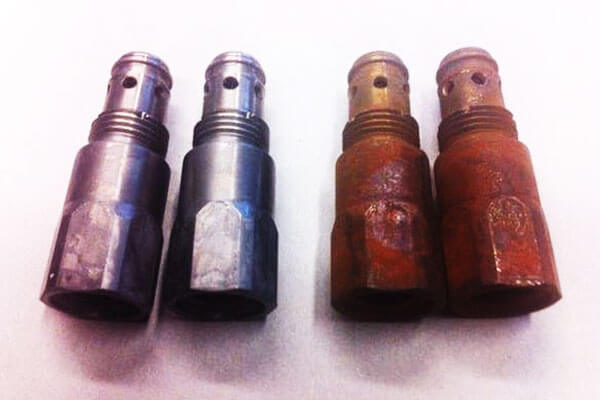
Ketaus indai
Pavyzdžiai yra:
- Keptuvės
- Olandijos krosnys
- Grill pans
- Griddles
- Woks
Rekomenduojamas požiūris:
- Steel wool
- Vinegar or citric acid (jei reikia)
- Thorough drying
- Multiple seasoning cycles
Maintaining the seasoning layer is essential for corrosion resistance and cooking performance.
Ketaus įrankiai
Pavyzdžiai yra:
- Bench vises
- Woodworking planes
- Drill press tables
- Anvils
- Machine accessories
Recommended treatment:
- Wire brushing
- Fine sanding
- Rust remover
- Protective oil or wax
Machined surfaces should be polished carefully to preserve dimensional accuracy.
Automobilių komponentai
Typical cast iron automotive parts include:
- Brake rotors
- Variklio blokai
- Išmetimo kolektoriai
- Flywheels
- Differential housings
Recommended restoration depends on the component.
Brake rotors typically develop superficial surface rust that disappears during braking, whereas engine blocks require careful cleaning to protect gasket surfaces and machined bores.
Pramoniniai liejiniai
Industrial cast iron components include:
- Siurblių korpusai
- Vožtuvo kūnai
- Mašinų bazės
- Kompresorių korpusai
- Vamzdžių jungiamosios detalės
- Pavarų dėžės korpusai
Large castings are commonly restored using:
- Abrasive blasting
- Cheminis valymas
- Industrial coatings
- Tikslus apdirbimas (jei reikia)
Protective coating systems are selected according to service conditions such as humidity, Cheminis poveikis, and outdoor installation.
9. Rūdžių šalinimo metodų palyginimas
Choosing the most suitable rust removal technique depends on corrosion severity, restoration objectives, komponentų geometrija, cost constraints, ir norimą paviršiaus kokybę. No single method is ideal for every application.
The following comparison highlights the strengths and limitations of the most widely used rust removal methods.
| Rust Removal Method | Rūdžių sunkumas | Cleaning Speed | Kaina | Paviršiaus žalos rizika | Metal Preservation | Tipiškos programos |
| Plieninė vata | Lengvas | Vidutinis | Labai žemas | Labai žemas | Puiku | Virtuvės reikmenys, dekoratyviniai liejiniai |
| Švitrinis popierius | Light–Moderate | Vidutinis | Žemas | Žemas | Labai gerai | General restoration |
| Wire Brush | Vidutinis | Greitas | Žemas | Vidutinis | Gerai | Įrankiai, Mašinos |
| Rotary Wire Wheel | Moderate–Heavy | Greitas | Žemas | Vidutinis | Gerai | Industrial maintenance |
| Angle Grinder | Sunkus | Very Fast | Vidutinis | Aukštas | Mugė | Large structural castings |
| Baltasis actas | Light–Moderate | Lėtas | Labai žemas | Labai žemas | Puiku | Household cookware |
Citrinų rūgštis |
Moderate–Heavy | Vidutinis | Žemas | Labai žemas | Puiku | Tikslūs komponentai |
| Chelating Rust Remover | Moderate–Heavy | Vidutinis | Vidutinis | Labai žemas | Išskirtinė | Valuable machinery, antique parts |
| Phosphoric Acid | Sunkus | Greitas | Vidutinis | Žemas | Labai gerai | Pramoninė įranga |
| Elektrolizė | Sunkus | Lėtas | Vidutinis | Labai žemas | Išskirtinė | Antique castings, sudėtingos dalys |
| Abrazyvinis pūtimas | Sunkus | Very Fast | Aukštas | Vidutinis (depends on media) | Labai gerai | Large industrial castings |
10. Išvada
Rust is one of the most common issues affecting cast iron, but it is also one of the most manageable when addressed with the correct restoration techniques and preventive measures.
Whether restoring a lightly oxidized cast iron skillet, refurbishing antique hand tools, or maintaining large industrial castings, successful rust removal requires a thorough understanding of corrosion mechanisms, medžiagų charakteristikos, ir konkrečios programos reikalavimai.
Equally important is the treatment applied po Rūdžių pašalinimas. Freshly cleaned cast iron is highly reactive and can develop flash rust within a short period if left unprotected.
Virtuvės indams, multiple seasoning cycles create a durable polymerized oil film that resists moisture while improving cooking performance.
For industrial castings, protective coatings such as epoxy paint, miltelių danga, phosphate conversion coatings, corrosion-inhibiting oils, or waxes provide long-term corrosion resistance under demanding operating conditions.
Preventive maintenance remains the most cost-effective strategy for extending the service life of cast iron products.
Tinkamas valymas, immediate drying, routine inspection, timely repair of damaged coatings, and storage in controlled environments can significantly reduce corrosion-related failures while lowering maintenance costs.
DUK
Ar galima atkurti stipriai surūdijusį ketų?
Taip. Daugeliu atvejų, even heavily rusted cast iron can be successfully restored, provided the corrosion has not caused severe structural damage or excessive material loss.
Paviršiaus rūdis ir storus oksido sluoksnius galima pašalinti vieliniu šepečiu, Abrazyvinis sprogimas, cheminiai rūdžių valikliai, arba elektrolizė.
Tačiau, jei dėl gilių duobių pažeidžiami slėgį turintys komponentai arba laikančiosios konstrukcijos, Prieš grąžinant dalį eksploatacijai rekomenduojama atlikti inžinerinį įvertinimą.
Ar actas yra saugus rūdžių pašalinimui iš ketaus?
Taip. Baltasis actas (paprastai turi 5–8% acto rūgšties) yra veiksmingas lengvų ir vidutinių rūdžių pašalinimui.
Tačiau, reikia vengti ilgo mirkymo, nes per didelis rūgšties poveikis gali pradėti pulti apatinę geležį, kai rūdys ištirps..
Mirkymo metu rekomenduojama nuolat stebėti.
Ar elektrolizė kenkia ketui?
Nr. Kai atliekama teisingai, elektrolizė yra vienas mažiausiai destruktyvių rūdžių šalinimo būdų.
Skirtingai nuo šlifavimo ar pūtimo, elektrolizė pašalina koroziją elektrocheminiu būdu, nepašalinant pagrindinio metalo.
This makes it particularly suitable for antique castings, Tikslūs komponentai, and valuable restoration projects.
Ar ketus visada turi būti pagardintas po rūdžių pašalinimo?
Ketaus indams, taip. Seasoning creates a polymerized oil layer that protects the iron from moisture while providing a naturally non-stick cooking surface.
Industrial cast iron components generally do not require seasoning.
Vietoj, they are protected using paints, miltelinės dangos, corrosion-inhibiting oils, phosphate coatings, or other industrial surface treatments appropriate to the service environment.
Ketaus gali rūdyti net po to, kai jis buvo pagardintas arba nudažytas?
Taip. Protective layers significantly reduce corrosion but cannot eliminate it entirely.
Seasoning can wear away through cooking, valymas, arba dilimas, while paint or powder coatings may crack, lustas, or become damaged during service.
Once the protective barrier is compromised, moisture and oxygen can reach the underlying iron and initiate corrosion.
Regular inspection and timely maintenance are essential to maintain long-term protection.

