1. Executive Summary
Aluminum die casting has become a core manufacturing solution for robotics parts because it addresses three of the most important requirements in modern robot design: Kūʻai māmā, keʻano hilinaʻi, and scalable production.
Robotics systems are no longer simple mechanical assemblies. They are compact electromechanical platforms that must move quickly, position accurately, dissipate heat efficiently, and operate reliably over long service cycles.
In this context, aluminum die casting offers a practical balance of performance and manufacturability.
One of the main advantages of aluminum die casting is its ability to produce kokoke-net-mode with complex geometry, Hoʻopili i nā iwi, Nā kiʻi paʻi, nā'ōpū, and thermal features in a single operation.
Hoʻemi kēia i ka helu'āpana, shortens assembly time, and improves dimensional repeatability.
For robotics, these benefits translate into lower inertia, better motion efficiency, improved stiffness-to-weight ratio, and more stable system behavior.
From a commercial perspective, die casting becomes especially attractive when a robot platform moves beyond prototyping into pilot production or mass production.
Once tooling is established, unit cost drops significantly, and repeatability improves across large production runs.
For OEMs and automation integrators, this means a manufacturing route that is not only technically sound but also economically scalable.
2. What Is Aluminum Die Casting in Robotics?
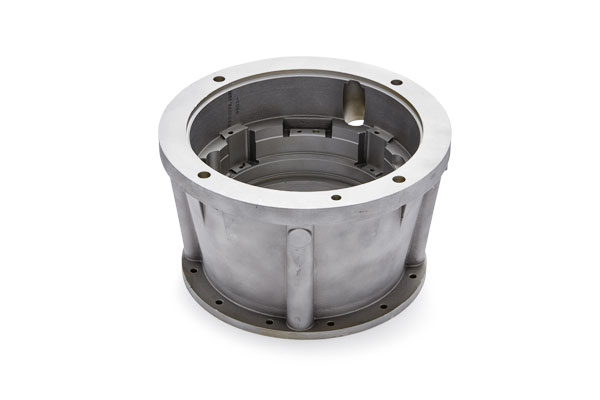
Aluminum make buring is a metal-forming process in which molten aluminum alloy is injected under pressure into a precision steel mold, where it solidifies into the final part shape.
I nā Robotics, this process is used to make structural and functional components that require more strength, Holo Maʻaleʻa, and dimensional stability than plastics or sheet metal can provide.
Like me Cnc iching, which removes material from a billet, die casting forms the part directly and therefore minimizes material waste.
Like me sheet icetal fabrication, it can create thicker, more rigid three-dimensional structures with integrated features.
And unlike ʻO nā molding molding, it produces metal parts that can withstand higher loads, mahana, a me ka lole.
Robotics increasingly relies on cast aluminum because many robot parts are not purely structural; they are also thermal and functional.
A motor housing may need to dissipate heat. A gearbox casing may need to hold precision alignment. A sensor bracket may need vibration resistance. A robot base may need rigidity with low mass. Aluminum die casting is well suited to these hybrid requirements.
3. Why Robotics Needs Aluminum Die Casting
Robotics places unusual demands on materials because the parts are in constant motion, exposed to dynamic loads, and often packed into compact spaces.
Aluminum die casting helps solve several of the most persistent design problems.
Weight reduction for motion efficiency
Every gram matters in a robot arm, especially in distal links and end-effectors.
Lower mass reduces the torque required from motors, improves acceleration and deceleration, and lowers energy consumption.
In articulated robots, a reduction in link mass can have a cascading effect on the entire drive system. Lighter components also reduce vibration and wear on bearings and gear trains.
Structural stiffness for frames and joints
Robots require high positional accuracy. If a link or housing flexes under load, repeatability suffers.
Aluminum die castings can be designed with ribs, thickened load paths, and localized reinforcement to provide stiffness without excessive mass.
This makes them especially effective in robot arms, base frames, and actuator assemblies.
Thermal management for motors and electronics
Robotic systems generate heat in motors, drives, controllers, and power electronics.
Aluminum has high thermal conductivity compared with steel and polymers, which helps transfer heat away from sensitive components.
I nā hihia he nui, the housing itself becomes part of the thermal design. This is particularly important in sealed enclosures where active cooling is limited.
Dimensional consistency for repeatable assembly
Robots are built from assemblies that must fit together precisely. Die casting offers high repeatability when the process is properly controlled.
That makes it suitable for parts where consistent interfaces, alignment features, and mounting surfaces are essential.
Suitability for high-volume manufacturing
Robotics is increasingly moving from custom-built systems to standardized product families.
Die casting supports this transition by enabling repeatable, economical production at scale.
For platforms such as industrial robots, collaborative robots, mobile robots, and warehouse automation systems, the cost structure becomes attractive as production volume grows.
4. Typical Robotics Parts Made by Aluminum Die Casting
Aluminum die casting is used across nearly every major robotics subsystem.
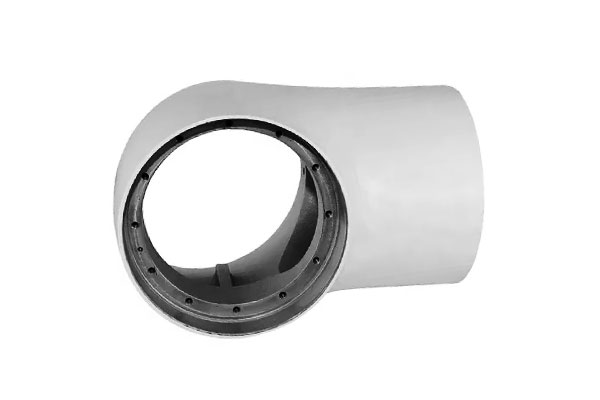
Motor housings
Motor housings need to protect internal components, maintain alignment, and help dissipate heat.
Die casting allows the integration of fins, flanges, cable routing features, and fastening points.
In servo applications, precision around the shaft centerline is critical, which is why critical faces are often machined after casting.
Gearbox and actuator housings
These parts must withstand repeated torque, shock loading, a me ka uila.
Die-cast housings can provide good rigidity while supporting complex internal cavities, mounting bosses, and oil or grease containment features.
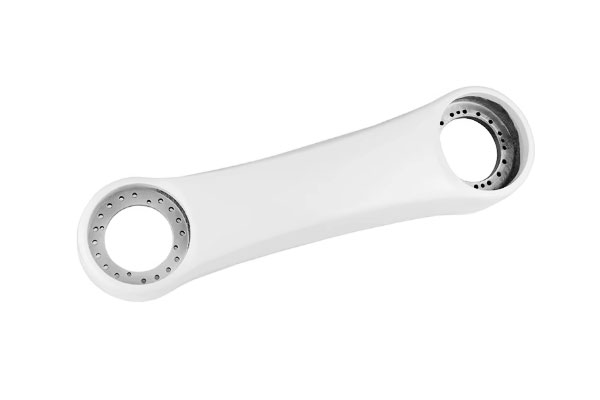
Robotic arm joints and link structures
Arm links benefit strongly from die-cast aluminum because weight reduction at the arm level improves responsiveness and payload efficiency.
The geometry often includes stiffening ribs, cable passages, and integrated bearing seats.
Sensor enclosures and brackets
Modern robots depend on vision systems, lidar, encoders, torque sensors, a me nā mea akamai proximity. These devices require protected but precise housings and mounts.
Die casting provides the geometry control needed for repeatable sensor placement and vibration resistance.
End-effector and gripper bodies
End-effectors must often balance low mass with stiffness and precision.
Die casting allows the creation of compact bodies with integrated finger mounts, cable channels, and pneumatic or electrical pathways.
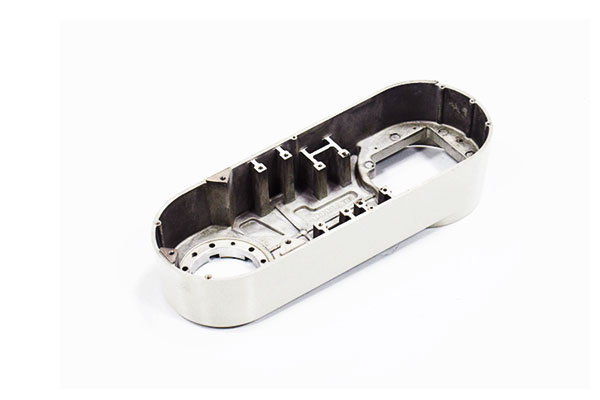
Control module and electronics housings
Many robotics electronics enclosures must manage heat while remaining compact and sealed. Die-cast aluminum housings can act as both a structural shell and a thermal sink.
Base frames and mounting structures
Robot bases and support structures need rigidity, kūlākuai, and dimensional consistency.
Aluminum die castings are often used when the design requires integrated mounting features and a lower mass than equivalent steel structures.
5. Material Selection for Robotics Die Castings
Ke kohoʻana i ka'ākau alluinum alloy is one of the most important decisions in robotics die casting.
The alloy influences castability, ikaika, kumaikalua, Ke kū'ē neiʻo Corrosionion, Holo Maʻaleʻa, and post-processing behavior.
Nā Kūlana maʻamau
- ADC12 / A380-type alloys are widely used for general-purpose die casting because they combine excellent castability with good mechanical performance.
- A360-type alloys are often preferred when better corrosion resistance and pressure tightness are important.
- A383 and similar high-fluidity alloys are useful for thin walls and intricate geometry.
How alloy choice affects performance
- Ikaika: Higher strength alloys help with load-bearing frames and joints.
- Kumaikalua: Useful where parts may experience shock or vibration.
- Ke kū'ē neiʻo Corrosionion: Important for outdoor robots, service robots, and laboratory systems.
- Whola: Nā pāʻili, long flow paths, and fine details require good fluidity.
- Ka HōʻaʻO Kokua: Important for motor and electronics housings.
Kālepa-puka
No alloy is best in every dimension. Alloys with excellent castability may not have the best mechanical strength, while stronger alloys may require more careful process control.
Engineers must define whether the priority is stiffness, hoʻoheheʻe wela, environmental durability, or cost efficiency.
When to prioritize what
- Ka HōʻaʻO Kokua: Nā Mālama Poole, controller cases, heat-sink-like structures.
- Strength and rigidity: arms, Nā Frame, nā leʻaleʻa o nā kāne.
- Ke kū'ē neiʻo Corrosionion: outdoor robotics, marine-adjacent systems, lab equipment.
- Paulapua: consumer-facing robots, collaborative robots, and service products.
6. Design Considerations for Robotics Parts
A successful die-cast robotics part must be designed for both function and manufacturability.
Wall thickness control
Consistent wall thickness reduces shrinkage defects and distortion. Abrupt transitions should be avoided.
Where thickness changes are necessary, they should be gradual and supported by ribs or fillets.
Rib design and reinforcement
Ribs increase stiffness efficiently, but they must be placed intelligently. Overly dense ribbing can create hot spots or impede filling.
Good rib design improves rigidity without causing porosity or sink marks.
Nā Wawa, Pākuʻi, and fastening features
Robotics parts frequently require repeated assembly and disassembly.
Cast-in bosses are useful, but threaded steel inserts may be better for highly loaded or serviceable joints. Insert placement must be controlled to avoid local stress concentration.
Draft angles and parting lines
Draft ensures ejection from the mold. Parting lines should be located so they do not interfere with precision interfaces, nā helehelena hōʻailona, or visible cosmetic surfaces.
Tolerance strategy
Die casting alone should not be expected to achieve final precision on every feature.
', the best strategy is to cast near-net shape and machine critical datums, Nā papa wai, nā maka, and sealing interfaces.
Reducing porosity and distortion
Porosity risk can be reduced through proper gating, kūhewaʻi, vacuum assistance, and melt quality control.
Distortion can be minimized through balanced wall design, kāohiʻia hōʻoluʻolu, and careful fixture planning during post-cast operations.
7. Types of Aluminum Die Casting Processes Used in Robotics
Robotics parts are produced through several die casting routes, but the most appropriate process depends on the part’s geometry, structural demand, sealing requirements, thermal function, a me ka hana hana.
I ka hoʻomaʻamaʻa, the choice of process has a direct impact on density, dimensional pololei, paulapua, and the extent of post-machining required.
ʻO keʻano nui o ke koʻikoʻi (HPDC)
High-pressure die casting is the most common process used for robotics components.
Ma kēiaʻano, molten aluminum is injected into a steel die at high speed and under substantial pressure, allowing the metal to fill thin walls, nā iwi iʻa, Nā Wawa, and intricate cavities with good repeatability.
Its main advantages are short cycle time, excellent productivity, and the ability to produce complex near-net-shape parts at scale.
For robotics, that is highly valuable because many components must be made in medium to high volumes with consistent geometry.
The main limitation is that standard HPDC can trap gas during filling, which may create porosity.
For that reason, the process is best paired with good gating design, vacuum assistance when necessary, and machining of critical interfaces.
Vacuum-Assisted Die Casting
Vacuum-assisted die casting is a refined version of HPDC in which air is evacuated from the mold cavity before or during filling.
This reduces gas entrapment and improves internal soundness.
This process is especially useful for robotics parts that must be:
- Leak-paʻa,
- ʻO ka hōʻehaʻana,
- structurally reliable under repeated motion,
- or suitable for thermal and electrical enclosures where internal porosity is undesirable.
Typical applications include sealed motor housings, control module cases, battery enclosures, and pressure-sensitive actuator bodies.
Vacuum assistance often improves density and can lower the risk of blisters during heat treatment or surface finishing.
For demanding robot systems, it is often the preferred option when both precision and integrity are required.
ʻO ka mālamaʻana i ka nui
Gravity die casting uses gravity rather than high injection pressure to fill the mold. The melt flows into a permanent metal mold at a slower, more controlled rate than HPDC.
This process is less common for highly intricate robotics parts, but it remains useful for:
- thicker housings,
- parts requiring good soundness,
- and components where production volume is moderate rather than very high.
The lower filling speed can reduce turbulence and gas entrapment, which may improve internal quality.
Akā naʻe,, gravity die casting is generally less suitable for ultra-thin walls or extremely complex flow paths.
I nā Robotics, it is often applied to robust housings, kākoʻo i nā hana kākoʻo, or parts where surface finish and dimensional precision are important but cycle time is less critical.
ʻO ka haʻahaʻa haʻahaʻa haʻahaʻa
Low-pressure die casting fills the die cavity using controlled gas pressure applied from below the molten metal bath.
This creates a more stable and directional filling behavior compared with conventional gravity methods.
The process is useful when:
- internal density is important,
- porosity must be minimized,
- and the part requires better metallurgical soundness than standard HPDC.
Although less common in robotics than HPDC, low-pressure casting can be appropriate for structural parts that must withstand cyclic loads or for components where a more uniform solidification pattern is desirable.
It may also be considered for larger castings where filling control is more important than raw throughput.
8. ʻO nā hana kūʻaiʻana
Post-casting operations are essential in robotics because die-cast parts are rarely used directly from the mold.
Even when the casting is near-net shape, critical interfaces typically require finishing, nānā, and surface treatment before the part can be assembled into a robot system.
Trimming and Deflashing
Ma hope o ka hoʻoponoponoʻana, the casting is separated from the die and excess metal is removed. This includes gates, Nā meaʻelele, Pū uilani, and overflow material.
This step is important because robotics components often have tight assembly envelopes. Any leftover flash or gate residue can interfere with:
- mane off mokulele,
- sensor alignment,
- sealing interfaces,
- and automated assembly processes.
Trimming may be performed manually, mechanically, or with dedicated trimming dies, depending on part volume and complexity.
Deburing and cend refinement
Die-cast parts may contain sharp edges or small burrs at parting lines, nā lua, or machined interfaces. Deburring improves safety, assembly consistency, a me ka maikai o ka ili.
I nā Robotics, this is especially important for parts that will:
- interact with cables,
- route wiring internally,
- house electronics,
- or be handled during assembly and maintenance.
Sharp edges can damage insulation, create stress concentration, or complicate downstream automation. Removing them early in the process reduces risk.
CNC Machining of Critical Interfaces
Although die casting can form complex near-net-shape geometry, many functional features require machining to achieve the necessary precision. Common machined features include:
- e hali ana,
- shaft bores,
- nā helehelena hōʻailona,
- threaded holes,
- alignment datums,
- and precision mounting surfaces.
This hybrid approach—die casting plus selective machining—is one of the most effective production strategies for robotics.
It preserves the cost and geometric advantages of casting while ensuring that the interfaces needed for accurate robot assembly meet tight tolerance requirements.
ʻO ka hana wela
Depending on the alloy and service requirements, some die-cast parts may undergo heat treatment to improve mechanical properties or stabilize the microstructure.
The applicability of heat treatment depends strongly on alloy type and the porosity level of the casting.
Heat treatment may be used to:
- improve strength,
- relieve residual stress,
- enhance dimensional stability,
- or support downstream machining and coating operations.
For robotics parts subject to repeated vibration or structural loading, thermal treatment can be valuable, but it must be matched carefully to the alloy and the casting quality.
If porosity is excessive, heat treatment can create blistering or distortion, so process quality must be established first.
Hoʻopau ʻili a me ka uhi ʻana
Surface treatment is often required for robotics components to improve corrosion resistance, aesttheticcs, and environmental durability. Common finishing routes include:
- Anodichiz,
- ʻO ka paleʻana,
- Hoʻololi iā,
- Kāleka,
- and in some cases polishing or blasting.
The choice depends on whether the part is:
- consumer-facing,
- installed in a harsh industrial environment,
- exposed to moisture or chemicals,
- or required to dissipate heat efficiently.
ʻo kahi laʻana, electronics housings may need corrosion protection and a clean visual appearance, while motor housings may prioritize thermal behavior and dimensional stability.
Surface finishing also improves perceived product quality, which matters in collaborative robots and service robots.
Leak Testing
For sealed housings, leak testing is a critical post-casting step. This is especially relevant for:
- Nā Mālama Poole,
- battery compartments,
- electronics enclosures,
- and fluid-containing robotic modules.
Leak testing verifies that the casting is sufficiently dense and that machining or assembly has not compromised pressure integrity.
I nā Robotics, this is not merely a quality preference. It is often a functional requirement, especially for outdoor robots, mobile systems, and equipment operating in humid, dusty, or washdown environments.
Dimensional Inspection and Metrology
Dimensional verification is essential before a part is released to assembly. Common inspection methods include:
- hoʻonohonoho i nā mīkini hōʻailona,
- optical scanners,
- gauges and functional fixtures,
- and automated measurement systems.
Robotics parts often have multiple datum references, and a small dimensional error can affect alignment across the entire assembly chain.
That is why inspection should focus not only on the part itself, but also on how the part interfaces with motors, Kāhele, nā poʻe hoʻopaʻapaʻa, Nā mea paʻa, and structural subassemblies.
Cleanliness and Assembly Readiness
Before final integration, parts must be free from chips, lubricant residue, loose oxide, A me nā meaʻino'ē aʻe.
I nā Robotics, contamination can damage bearings, interfere with electronics, or reduce reliability in sealed enclosures.
Assembly readiness typically means:
- no loose particles,
- no burrs in threaded holes,
- no coating defects on functional surfaces,
- and full compatibility with the intended assembly process.
This is especially important when the parts will enter automated assembly lines, where inconsistent part condition can disrupt robot loading, fixturing, or downstream fit-up.
Why Post-Casting Operations Matter in Robotics
A robotics part is not complete when it leaves the mold. It is complete only when it can be assembled reliably, perform under motion, and survive its service environment.
Post-casting operations transform a raw casting into a functional engineering component by ensuring precision, maʻemaʻe, durability, a me ka hoihoi.
9. O ka kūlana, Paʻa pono, and Testing
Robotics components must survive repeated cycles, shock shock, viguration, and thermal changes. Ma ka hopena, inspection must go beyond visual appearance.
Ke nānāʻole neiʻo Dimensonal
Coordinate measuring machines, Nā Buke, and optical metrology are used to verify critical dimensions and interfaces.
Ke kāohi neiʻo Poosity
Porosity affects strength, moe, a momona ola. Process control and inspection are both necessary.
Nondestructive testing
X-ray inspection or other nondestructive methods may be required for structural or sealed parts, especially in high-reliability systems.
Fatigue and vibration performance
A robot part may appear sound under static load but fail after repeated motion cycles. Fatigue testing and vibration validation are essential for meaningful qualification.
Real-duty-cycle validation
Testing should match the robot’s real operating conditions: motion frequency, payload, environmental exposure, and duty cycle. This is especially important for industrial and mobile robots.
10. Limitations and Engineering Risks
Die casting is powerful, but not universal.
ʻO ke kumukūʻai kumu kūʻai mua
The biggest barrier is die cost. For low-volume products, this may be difficult to justify.
Geometry constraints
Very deep undercuts, extremely thick sections, or unusual internal features may be difficult or impossible to cast efficiently.
He pilikia prostity
Gas porosity remains a concern, especially in thin sections, pressure-tight parts, or fatigue-critical components.
Heat-treatment sensitivity
Not all die-cast alloys respond equally to heat treatment, and some geometries may distort if thermal cycles are not controlled.
Not suitable for every application
For ultra-high-strength, very low-volume, or rapidly changing designs, CNC machining or additive manufacturing may be superior.
11. Applications Across Robotics Segments
Industrial robots
Joint housings, arm links, motor brackets, and base structures.
Collaborative robots
Lightweight covers, joint shells, Sensor Housings, and safe-touch enclosures.
Service robots
Compact frames, camera mounts, battery housings, and actuator enclosures.
Mobile robots and AMRs/AGVs
Drive housings, wheel modules, chassis supports, and battery compartments.
Medical and laboratory automation
Nā mea hou, instrument modules, actuator supports, and thermal enclosures.
Logistics and warehouse systems
Scanner mounts, conveyor interfaces, nā hana hana, and motion assemblies.
12. Comparison with Alternative Manufacturing Routes
Selecting the right manufacturing route for robotics parts is a system-level decision, not a material-only decision.
The optimal process depends on geometry, Ka Hoʻohuiʻana, timmansional, structural load, thermal requirements, ka manawa o waena o ka hoʻomaka a i ka wā pau, a me ke ola ola.
Aluminum die casting is often highly competitive, but it should be evaluated against CNC machining, sheet icetal fabrication, and additive manufacturing on a case-by-case basis.
| Manufacturing Route | Nā ikaika | PAHUI | Best Fit for Robotics | Typical Cost Behavior |
| Aluminum Die Casting | Ka hana nui, maikaʻi loa, Hoʻopau maikaʻi loa, ʻO ka geometry paʻakikī, Nā hiʻohiʻona i hoʻohuiʻia, low unit cost at scale | ʻO ke kumukūʻai kōkua kiʻekiʻe, geometry constraints, He pilikia prostity, less flexible after tool release | Motor housings, Nā Hāʻewa, arm links, nā brackets, nā pā, base structures | ʻO ke kumukūʻai kiʻekiʻe kiʻekiʻe, ʻO ka uku haʻahaʻa haʻahaʻa ma ka nui |
| CNC Mīkini | Maikaʻi loa, fast design changes, strong material properties, no tooling complexity | Higher material waste, slower cycle time, expensive at scale, difficult for highly integrated shapes | Hopoi, nā'āpana haʻahaʻa haʻahaʻa, critical interfaces, precision brackets | Low setup cost, high unit cost as volume increases |
Hana Metala Pepa |
Uku haʻahaʻa haʻahaʻa, turnaround wikiwiki, nā'āpana māmā māmā, easy modification | Ka palena 3D paʻakikī, lower stiffness for thick structural loads, many assembly steps | Uhiʻehā, KUPONUIA, Nā Frame, Nā papa inoa maʻalahi, Nā Huakuai Mīkini | Economical for simple parts and medium volumes |
| Mea hoʻohuiʻaha | Maximum design freedom, rapid prototyping, nā channels kūloko, very short development cycle | Slower production, higher unit cost, limited material properties compared with cast metal, surface finish often requires post-processing | Prototype robotics parts, custom brackets, complex lightweight concepts, low-volume specialized components | Very low tooling cost, high unit cost except for special cases |
13. Hopena
Aluminum die casting is a highly effective manufacturing solution for robotics parts because it combines māmā māmā, luhi, Holo Maʻaleʻa, a me ka scalability placection.
It helps robotic systems move faster, run cooler, and remain dimensionally stable over long service lives. I ka manawa like, it supports cost-efficient scale-up from prototype to mass production.
For robotics engineers, the key is not simply choosing aluminum die casting, but designing the part and the process together.
When material selection, Goody, Ke Kūleʻa Kūlana, machining strategy, and inspection plan are aligned, aluminum die casting becomes a powerful enabler of reliable, high-performance robotic systems.
FaqS
What are the main advantages of aluminum die casting for robotics?
It offers a strong combination of low weight, luhi, Ka HōʻaʻO Kokua, a me ka strilability.
Is die casting better than machining for robot parts?
For prototypes and small runs, machining is often better. For repeatable medium- to high-volume parts, die casting is usually more economical.
Can aluminum die-cast parts be used in moving joints?
ʻAe. Many robot joints, links, and actuator housings are die cast, provided the design supports load, AliKu, and fatigue requirements.
How is porosity controlled in die-cast robotics parts?
Through melt quality control, proper gating and venting, vacuum assistance, process stability, and nondestructive inspection.
Which robotics parts are most suitable for die casting?
Motor housings, Nā hihiaʻo Gaarbox, nā kino hana, arm links, gripper structures, nā pā, and base components.