Corrosion is the progressive degradation of metals through chemical or electrochemical interactions with their environment.
In industry, corrosion reduces asset life, raises maintenance cost, and—most critically—can precipitate catastrophic failures.
This article provides a technically grounded, practical survey of eight common corrosion modes encountered in industrial practice, explains the root mechanisms,
lists typical signatures and detection methods, and gives focused countermeasures designers, operators and inspectors can apply.
1. What is Corrosion?
Corrosion is the chemical or electrochemical degradation of a metal (or metal alloy) caused by reaction with its environment.
At its heart corrosion is an oxidation reaction: metal atoms lose electrons and enter solution as ions; those electrons are consumed by a reduction reaction elsewhere on the surface.
In most engineering settings this is an electrochemical process that requires four elements: an anodic site (where metal oxidizes), a cathodic site (where reduction occurs), an electrolyte to carry ions, and an electrical path between anodic and cathodic areas.
2. Detailed Explanation of Eight Common Corrosion Types
ʻUlaʻula (Kamoihia) Kuupuiawi
Mea lihua / signature:
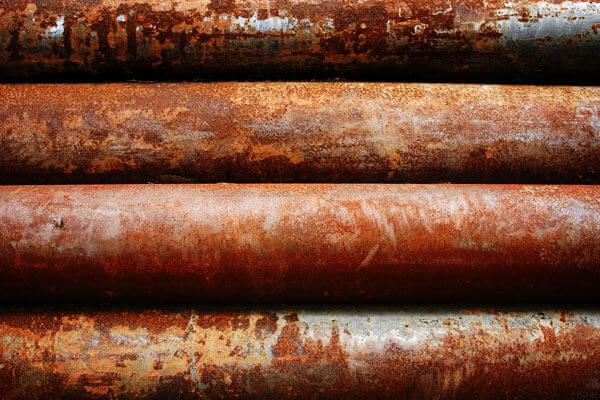
Oia aku, relatively homogeneous metal loss across exposed surfaces caused by widespread electrochemical oxidation (E.g., atmospheric, acid or alkaline attack). Evidenced by thinning, uniform scaling or widespread discoloration.
Typical environments / indicators: humid atmospheres, industrial/urban pollution, acid rain, bulk process fluids; detectable by ultrasonic thickness loss or visual scale.
Hopena: predictable reduction in cross-section and load capacity; long-term weakening of bolts, structural members and pressure parts.
Countermea:
- Koho koho: use inherently more resistant alloys (nā mea kanu lāʻau, nickel alloys, copper-nickel, ailuninil bronzes) for the service environment.
- Pale pale: apply durable coatings/linings (epoxy, Poelurhane, metallic platings or galvanizing) with proper surface prep.
- Hoʻolālā: increase corrosion allowance in design, allow drainage to avoid ponding.
- Mālama & monitoring: schedule UT thickness surveys and corrosion-rate monitoring (coupons, ER probes) to plan replacement before failure.
Pihaʻana
Mea lihua / signature:
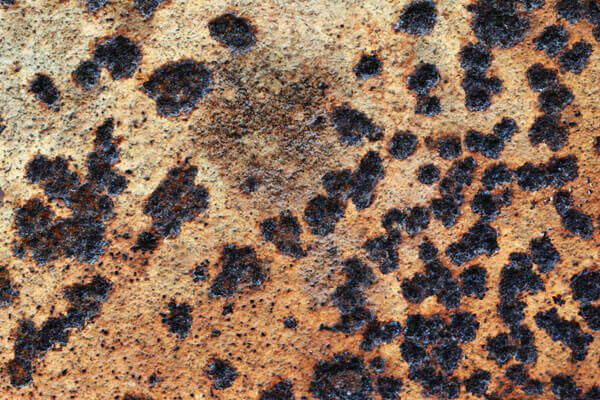
Highly localized breakdown of a passive film (often initiated by halide ions), producing small deep cavities that penetrate rapidly below the apparent surface. Pits often act as fatigue crack starters.
Typical environments / indicators: chloride-containing media (Ke wai wai, nā momona momona), stagnant deposits with salt contamination; tiny surface pits, localized perforation, or sudden leaks.
Hopena: Even tiny pits can act as stress concentration points, causing fasteners to fracture suddenly at loads far below their design capacity.
This makes pitting corrosion one of the most dangerous corrosion types for critical fastener applications.
Countermea:
- ALLOLOL koho: specify alloys with high pitting resistance (choose grades with higher Mo/N and appropriate PREN for chloride service; duplex or superaustenitic stainless steels and nickel alloys where necessary).
- Design for access: avoid deposits and stagnation that concentrate chlorides; provide washdown and drainage.
- Eliminate initiation sites: weld quality control, Hoʻopau i nā mea hoʻokele, avoid machining marks at stress risers.
- Nā pāpale & inhibitors: use defect-free coatings; in-process use of validated corrosion inhibitors where compatible.
- Nānā: periodic close inspection (borescope, eddy current, dye penetrant on small parts) and electrochemical testing during qualification (Pitting).
ʻO ke kūleʻaʻana o ke kalaʻana (SCC)
Mea lihua / signature:
Brittle crack initiation and rapid propagation produced by the simultaneous action of tensile stress (applied or residual) and a specific corrosive environment.
Cracking may be intergranular or transgranular and often occurs with little visible general corrosion.
Typical environments / indicators: susceptible alloy/environment combinations (E.g., austenitic stainless steels in chloride environments; some high-strength alloys in caustic media); appearance of narrow cracks, often without heavy corrosion products.
Hopena: Fasteners are typically under high tensile stress after installation (due to preloading), making them highly susceptible to SCC.
This can result in catastrophic, unforeseen failure of critical structures and equipment.

Countermea:
- Remove or reduce tensile stress: redesign to lower working stresses, control preload/tightening procedures, perform residual stress-relief (thermal) or use compressive surface treatments (ʻO ka panaʻana).
- Material substitution: use SCC-resistant alloys for the specific environment (E.g., low-sensitization stainlesss, duplex steels, nickel alloys).
- Kaʻiʻikeʻaʻa: reduce aggressive species (chrlodes), Hoʻohui Phi Ph, apply inhibitors where validated.
- Welding & fabrication controls: minimize sensitizing thermal cycles; qualify PWHT and welding procedures.
- Surveillance: implement crack-sensitive NDT (dye-penetrant, Ultrasinatic, acoustic emission), and periodic removal/inspection of critical fasteners.
Crevice corrosion
Mea lihua / signature:
Local attack inside narrow gaps where the electrolyte becomes isolated and acidifies (oxygen depletion), producing a microcell that promotes aggressive localized corrosion.
Often concealed under hardware or deposits.
Typical environments / indicators: under gaskets, behind washers, beneath bolt heads, between lap joints; localized attack often adjacent to crevices.
Hopena: concealed loss of section at fastener roots, threaded engagements and gasketed joints leading to failure.

Countermea:
- Design elimination: avoid crevices where possible; use flush or countersunk fasteners, continuous welds, or gasket geometries that do not trap liquids.
- Kaawalewa & moe: use non-porous sealants, conformable gaskets, and insulating washers to prevent electrolyte ingress and galvanic paths.
- Waiwai & coating choice: use crevice-resistant alloys or robust coatings applied to mating surfaces; select fasteners of same metallurgy as substrate.
- ʻO ka hoʻomaʻemaʻe & mālama: regular removal of deposits and debris; ensure weep paths and ventilation in assemblies.
- Targeted inspection: focus inspections on hidden locations (borescope, selective dismantling) rather than relying on external appearance.
Kahiki Galvaniko
Mea lihua / signature:
When two dissimilar metals are electrically connected in an electrolyte, the more anodic metal corrodes preferentially; severity depends on potential difference, electrolyte conductivity and area ratio.
Typical environments / indicators: mixed-metal assemblies in marine or moist conditions; rapid attack on the anodic member near the interface with a more noble metal.
Hopena: accelerated loss of the anodic component (E.g., aluminum components with steel fasteners), compromising connections and structural integrity.

Countermea:
- ʻO nā kūpono kūpono: kahi e hiki ai, specify fasteners and substrates from the same or compatible families.
- Kaawalewa: electrically insulate dissimilar contacts (plastic washers, Nā pāpale, gasts).
- Area ratio control: make the anodic area large relative to the cathode if dissimilar metals must be used (reduces local current density).
- Protective systems: coat the more noble metal to prevent cathodic enlargement, or protect the anodic metal sacrificially (anodes) in submerged systems.
- Design for maintenance: allow easy replacement of sacrificial elements and periodic inspection of joints.
Intergranur corrosior (Igc)
Mea lihua / signature:
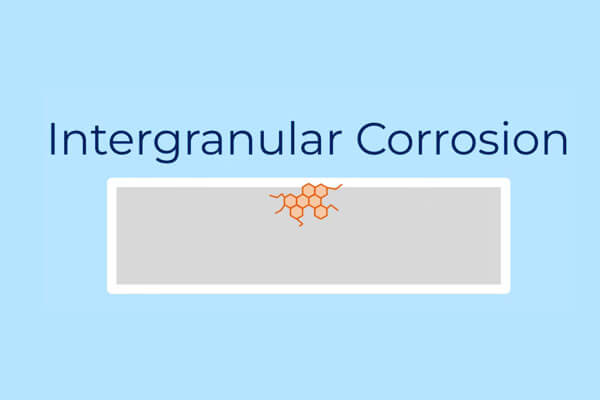
Preferential attack along grain boundaries caused by local depletion of protective elements (E.g., chromium depletion in sensitized stainless steels) or precipitation of brittle phases; surface may look intact while internal cohesion is lost.
Typical environments / indicators: arises after improper thermal exposure (sensitization from welding or slow cooling) or service at sensitizing temperatures; detected by bend tests, microstructural examination, or metallographic etching.
Hopena: loss of ductility and sudden brittle failure of fasteners with limited surface warning.
Countermea:
- ALLOLOL koho: use low-carbon (L-grades), stabilized (Ti/Nb) or alloys resistant to sensitization for welded/stressed components.
- Welding practice: control heat input, use appropriate filler metals and apply post-weld solution anneal if required by the alloy and service.
- ʻO ka hana wela: implement correct thermal cycles to avoid precipitation of deleterious phases; require MTRs and micrographs for critical items.
- Nānā: require destructive/non-destructive acceptance testing for pressure or safety components (E.g., coupon metallography, hardness mapping).
Erosion-corrosioni (hoʻopihaʻia + kekahu lawai)
Mea lihua / signature:
Mechanical removal of protective films by flow, particulates or cavitation exposes fresh metal to chemical attack; mechanical and chemical damage amplify each other.
Result is irregular, often directional material loss.
Typical environments / indicators: Pumps, piping with particulate slurries, turbulent bends, cavitation zones; scalloped surfaces or grooves aligned with flow.
Hopena: rapid thinning, loss of seal integrity, premature wear of threads and clamped surfaces.

Countermea:
- Hydraulic/process design: lower flow velocity, change piping bends, reduce turbulence and avoid cavitation by proper pump selection and NPSH management.
- Kapalakula & removal: remove abrasive particulates upstream (Nā kānana, settling) to reduce mechanical erosion.
- Material/coating selection: use erosion-resistant alloys or hard coatings (hana, thermally sprayed overlays, high-chrome or high-Al bronzes in seawater) in high-impact zones.
- Sacrificial liners / replaceable parts: design to accept wear liners or replaceable sleeves rather than replace whole assemblies.
- Kikiʻu: routine thickness gauging and visual inspection of high-risk zones.
Hydrogen embrittlement (HE) / hydrogen-assisted cracking
Mea lihua / signature:
Atomic hydrogen diffuses into susceptible metals (commonly high-strength steels), accumulates at trap sites and interfaces, and promotes brittle fracture or delayed cracking—often after a latency period following hydrogen exposure.
Typical environments / indicators: Wehe (acidic or high-current Hoʻololi), pickling, welding in hydrogen atmospheres, cathodic protection over-protection, and exposure to sour (H₂S) nā wahi.
Fracture is brittle, frequently intergranular or quasi-cleavage.
Hopena: wikiwiki, delayed brittle failure of high-strength fasteners even under sustained loads well below yield—critical risk in aerospace, pono & aila, and structural bolting.

Countermea:
- Ke kaʻina hanaʻana: avoid hydrogen-charging operations for susceptible parts; where plating/welding is necessary use low-hydrogen processes and properly formulated baths.
- Bake-out (hydrogen relief): perform post-process hydrogen bake (temperature/time per standard) to drive out absorbed hydrogen before stressing or installation.
- Material and hardness control: specify steels and hardness limits with documented HE resistance; use lower-strength grades where acceptable.
- Nā mea kino kino & Nā pāpale: use diffusion barriers or coatings that reduce hydrogen ingress when appropriate.
- Assembly practice: control preload and design to avoid over-tightening; require certified post-treatment records for critical fasteners.
- Hōʻike & Manaʻo: require supplier hydrogen embrittlement mitigation records, post-plating bake certificates and fractography if failure occurs.
3. Why Corrosion Resistance is Critical
Neglecting corrosion protection can lead to three major consequences:
- Economic Costs: Global losses due to corrosion amount to trillions of US dollars annually, including costs associated with maintenance, component replacement, and unplanned downtime.
For industries such as oil and gas, aitompetitive, a me ka infrastructure, these costs can represent a significant portion of operational expenses. - Safety Risks: Failure of critical structures (E.g., Nā alahaka, Nā hale, Poolali, Kōkua) due to corrosion can result in loss of life, environmental disasters, and long-term economic disruption.
ʻo kahi laʻana, corrosion-induced pipeline leaks can cause oil spills, while bridge collapse due to corroded fasteners can lead to tragic accidents. - Product Contamination: In industries such as food processing, nā hale hakakala, a me nā mea lapaʻau, corrosion products (E.g., metal ions) can contaminate products, posing risks to consumer health and safety.
This can also lead to regulatory non-compliance and damage to brand reputation.
4. Hopena
Corrosion is not a single problem but a family of distinct failure modes—each with its own mechanism, signature and most effective countermeasures.
There are no universal cures for corrosion; there are, Akā naʻe,, repeatable engineering processes that reliably reduce risk and lifecycle cost.
By diagnosing the dominant corrosion mechanism, applying the prevention hierarchy, and closing the loop with targeted inspection and supplier control, organizations turn corrosion from an unpredictable hazard into a manageable engineering parameter.
FAQ
Which is the most dangerous corrosion mode?
SCC and hydrogen embrittlement are among the most dangerous because they can produce sudden, brittle failures with little visible precursor.
How do I reduce pitting risk on stainless steel in seawater?
Use higher-PREN materials (duplex or superaustenitic stainless steels), eliminate deposits, apply protective coatings, and avoid crevices.
Can coatings prevent galvanic corrosion?
Proper coatings that electrically isolate dissimilar metals can prevent galvanic attack, but coating breaches or poor adhesion create local galvanic sites—inspection and maintenance are essential.
Are there universal corrosion inhibitors?
ʻAʻole. Inhibitors are environment-specific and must be validated for the process fluid, temperature and materials in service.