

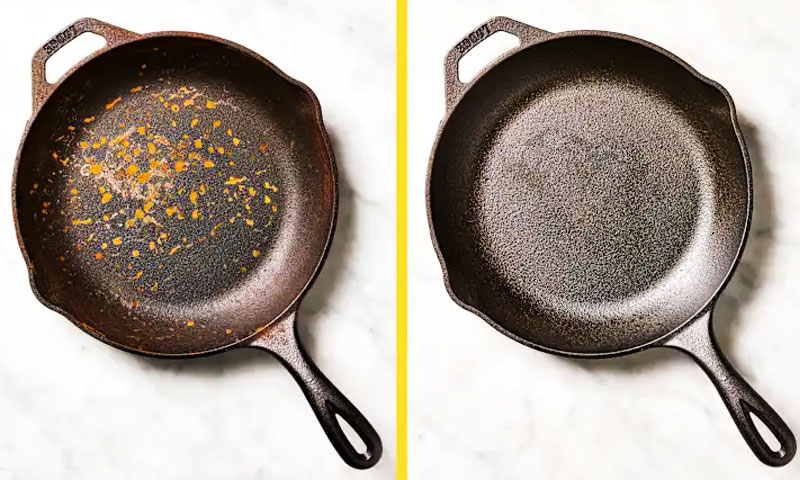
Introducción
Hierro fundido Las sartenes son celebradas como una de las más duraderas., versátil, y opciones de utensilios de cocina de alto rendimiento tanto en cocinas domésticas como profesionales.
Con una retención de calor excepcional., distribución uniforme del calor, y una superficie naturalmente antiadherente que mejora con la edad., pueden durar décadas e incluso pasar de generación en generación.
Sin embargo, La desinformación generalizada sobre la limpieza adecuada a menudo conduce a una oxidación prematura., rendimiento antiadherente degradado, y desecho innecesario de utensilios de cocina perfectamente funcionales.
La limpieza adecuada del hierro fundido no se trata simplemente de eliminar los residuos de alimentos: es una práctica equilibrada que elimina la suciedad., olores, y acumulación mientras se preserva la capa protectora de condimento polimerizado de la sartén..
El proceso sigue principios claros de la ciencia de los materiales., con diferentes intensidades de limpieza adaptadas a diferentes niveles de suciedad.
1. La ciencia del condimento de hierro fundido: La base de una limpieza adecuada
Para limpiar correctamente el hierro fundido, Primero es necesario comprender la estructura de su superficie de trabajo., conocido como condimento.
El condimento es fino., durable, Capa hidrófoba que se forma cuando los aceites con un punto de humo alto se calientan más allá de su punto de humo en hierro fundido., desencadenando un proceso llamado polimerización térmica.
Durante esta reacción, Las moléculas de grasa insaturada se entrecruzan formando una sustancia dura., Película de polímero similar al plástico que se adhiere químicamente a la superficie de óxido de hierro de la sartén..
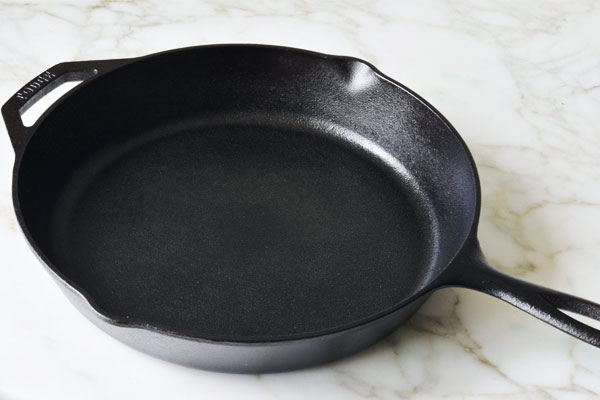
Esta capa cumple dos funciones críticas.:
- Crea una superficie de cocción naturalmente antiadherente que mejora con el uso repetido a medida que se acumulan capas adicionales de polímero..
- Actúa como barrera entre el sustrato poroso de hierro fundido y la humedad., prevenir la formación de óxido.
Principio de limpieza central
Todos los métodos adecuados de limpieza de hierro fundido siguen una regla general: elimine los residuos de alimentos y los contaminantes mientras minimiza el daño a la capa de condimento polimerizado.
Una limpieza demasiado agresiva elimina los condimentos, exponer el hierro desnudo a la humedad y causar óxido, pega, y sabores desagradables. Una limpieza insuficiente deja aceite rancio, acumulación de comida quemada, y olores que degradan el rendimiento de la cocción.
El enfoque óptimo adapta la intensidad de la limpieza al nivel de suciedad, en lugar de utilizar el método más duro disponible para cada uso.
2. La regla de oro: conservar el condimento
El principio más importante al limpiar una sartén de hierro fundido es: no destruyas el condimento.
Cualquier método de limpieza que elimine la capa de aceite polimerizado comprometerá las propiedades antiadherentes y la resistencia a la oxidación de la sartén..
¿Qué daña el condimento??
| Acción | Efecto sobre el condimento | Razón |
| Detergentes fuertes | Tiras de capa de aceite | Los jabones para platos modernos son más suaves, pero los jabones antiguos a base de lejía disuelven los aceites.. |
| lana de acero (agresivo) | Abrazaderas y tiras | Elimina físicamente el recubrimiento polimerizado.. |
| Remojo prolongado | Promueve la oxidación | El agua penetra en los poros., levanta el condimento, y oxida el hierro. |
| utensilios metálicos (raspado) | Crea rayones | El rayado puede exponer el hierro desnudo e iniciar la pérdida del curado.. |
| Exposición al ácido | Disuelve el condimento | Alimentos ácidos (tomates, vinagre) puede corroer la capa polimerizada. |
¿Qué es seguro para condimentar??
| Método de limpieza | Nivel de seguridad | Explicación |
| Agua caliente y esponja | Seguro | El agua por sí sola no disuelve los condimentos.. |
| Lavado de sal | Seguro | La sal actúa como un abrasivo suave.; El aceite elimina los residuos de comida.. |
| jabón para platos (leve) | Seguro (jabones modernos) | La mayoría de los jabones modernos tienen pH neutro y no contienen aceite.; no dañan los aceites polimerizados. |
| Depurador de cota de malla | Seguro (con cuidado) | Los eslabones metálicos redondeados eliminan los residuos sin dañar el condimento.. |
| agua hirviendo | Seguro (si no es prolongado) | Suaviza los alimentos adheridos sin dañar la capa. |
3. Protocolos de limpieza graduados para diferentes niveles de suelo
Las sartenes de hierro fundido rara vez necesitan una limpieza profunda después de cada uso..
El siguiente sistema cubre todo, desde una limpieza ligera de rutina hasta una restauración total del óxido., con cada método calibrado para evitar pérdidas innecesarias de condimento.
Limpieza de rutina posterior al uso (Suelo ligero)
Este es el método estándar para la mayoría de las comidas diarias., como proteínas abrasadoras, saltear verduras, o cocinar huevos.
Elimina residuos ligeros de comida sin desgastar significativamente los condimentos..
1. Deje enfriar un poco y luego enjuague con agua tibia.
Deje que la sartén se enfríe hasta que sea segura de manipular pero aún esté tibia al tacto.. El calor ablanda las partículas de comida para que se liberen fácilmente sin necesidad de frotar..
Evite verter agua fría en una sartén completamente caliente., ya que el choque térmico puede deformar o agrietar el hierro fundido grueso en casos extremos.
2. Agite suavemente con un cepillo suave.
Utilice un cepillo de cerdas de nailon, raspador de bambú, o estropajo de cota de malla para levantar los restos de comida atascados. Aplicar sólo una ligera presión; no es necesario frotar agresivamente.
3. Enjuague bien con agua corriente tibia.
Enjuague todos los residuos sueltos.. Para sartenes ligeramente grasosas, este paso por sí solo es suficiente.
4. Secar inmediata y completamente
Seque la sartén con un paño de algodón sin pelusa o toallas de papel., luego colóquelo en una estufa a fuego lento durante 1 a 2 minutos..
Esto evapora la humedad atrapada en la superficie porosa del hierro., ¿Cuál es el paso más crítico para prevenir la oxidación?.
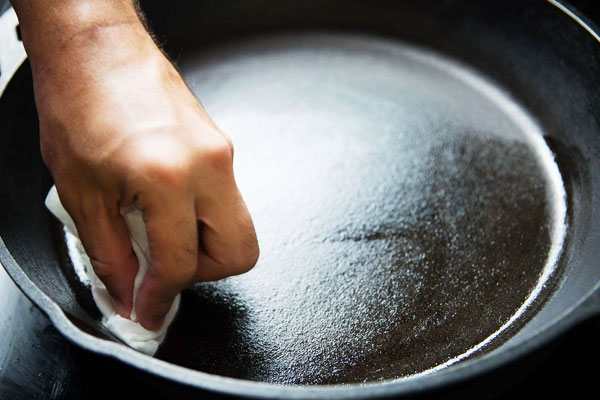
5. Aplicar un retoque de condimentos microfino.
Una vez que la sartén esté tibia pero ya no caliente, Frote una toalla de papel con unas gotas de aceite de alto punto de humo. (semilla de uva, canola, o el aceite de aguacate funcionan bien).
Limpia toda la sartén (interior), exterior, y mango, hasta que no quede aceite visible.. Esto llena los pequeños espacios en la capa de condimento sin dejar residuos pegajosos..
Limpieza profunda para alimentos quemados y acumulaciones rebeldes
Para alimentos muy carbonizados, grasa carbonizada pegajosa, o olores persistentes, Utilice uno de los siguientes métodos abrasivos suaves..
Todos son efectivos para levantar tierra rebelde y al mismo tiempo causan un desgaste mínimo del condimento..
Método 1: Exfoliante de sal gruesa
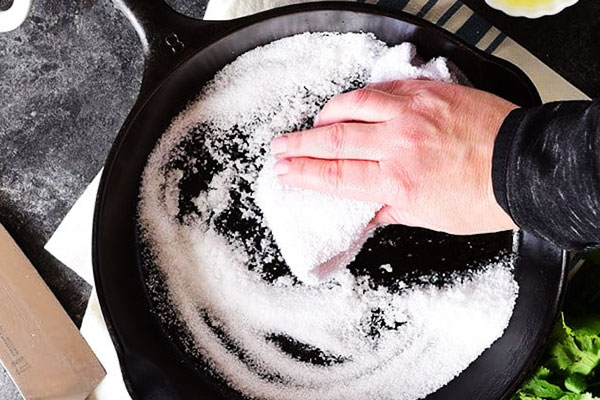
La sal actúa como un suave, abrasivo soluble en agua que elimina los residuos quemados sin rayar la capa de condimento.
- Mientras la sartén aún está caliente, espolvoree 1 o 2 cucharadas de sal kosher gruesa o sal marina por todo el interior.
- Doble una toalla de papel o un paño de algodón en forma de almohadilla y frote la sal sobre las áreas manchadas con movimientos circulares.. Los gránulos de sal recogerán los alimentos quemados y se decolorarán a medida que levantan la tierra..
- Enjuague la sal, secar bien en la estufa, y aplicar una ligera capa de aceite de retoque.
Método 2: Desglasar con agua hirviendo
Lo mejor para áreas grandes de alimentos pegados, como fondant de carne chamuscado o alimentos con almidón quemados..
- Agregue ½ pulgada de agua a la sartén y déjela hervir a fuego lento en la estufa..
- Utilice una espátula de madera o un raspador de nailon para levantar suavemente los trozos quemados de la superficie a medida que el agua los ablanda.. Nunca utilices utensilios metálicos afilados., ya que rayarán el condimento.
- Derramar el agua, enjuagar, secar completamente, y retocar con aceite.
Método 3: pasta de bicarbonato de sodio
Ideal para eliminar olores de aceite rancio y ligera acumulación de carbón..
- Haz una pasta de bicarbonato de sodio y agua. (3 partes de bicarbonato de sodio, 1 parte agua). El bicarbonato de sodio es un abrasivo alcalino suave..
- Extienda la pasta sobre las áreas manchadas y déjela reposar durante 5 a 10 minutos.. La alcalinidad suave descompone la grasa mientras que el polvo fino actúa como un abrasivo suave..
- Frote ligeramente con un cepillo suave, enjuague bien, seco, y volver a engrasar.
Método 4: Depurador de cota de malla
A depurador de cota de malla es una malla de anillos de acero inoxidable entrelazados. Es una herramienta popular para la limpieza de hierro fundido porque:
- Los enlaces redondeados no rasgues el condimento.
- Eliminan fácilmente los alimentos adheridos dejando intacta la capa polimerizada..
- Ellos son duradero y reutilizable.
como usar: Frote suavemente con agua tibia; La cota de malla levanta los residuos sin dañar el condimento.. Enjuague y seque inmediatamente..
4. Restaurar una sartén oxidada o descuidada
Si su sartén se ha oxidado, sido dejado en el fregadero, o haber sido despojado del condimento, se puede restaurar.
Este proceso, llamado volver a condimentar, Implica quitar el viejo condimento y el óxido y comenzar de nuevo..
Paso 1: Eliminar el óxido y los condimentos viejos
| Método | Acción | cuando usar |
| lana de acero + jabón | Frote vigorosamente con lana de acero fina y agua tibia y jabón.. | Para óxido y residuos moderados. |
| Limpiador de hornos | Rocíe con limpiador de hornos (a base de lejía), sellar en una bolsa de plástico para 24 horas, luego frotar. | Para pesados, eliminación de condimentos viejos. |
| Electrólisis | Sumerja en una solución de bicarbonato de sodio con una fuente de alimentación de CC de bajo voltaje.; El óxido se transfiere a un electrodo de sacrificio.. | Para óxido extremo (restauración de sartenes antiguas). |
| remojo en vinagre | Sumérgete en 50/50 agua/vinagre blanco durante 30-60 minutos, luego frotar. | Para óxido ligero. No lo deje en remojo durante horas: el ácido puede dañar el hierro.. |
Paso 2: Re-condimento (Crear una nueva capa de condimento)
| Paso | Acción | Por qué |
| 1 | Lavar La sartén a fondo con agua y jabón para eliminar todos los residuos.. | Garantiza una superficie limpia. |
| 2 | Seco completamente: colóquelo en un quemador tibio durante 2 o 3 minutos.. | Elimina toda la humedad. |
| 3 | Aplicar una capa fina de un aceite de alto punto de humo: linaza, semilla de uva, canola, o aceite vegetal. | Las capas finas polimerizan mejor. |
| 4 | Enjugar exceso: la sartén debe verse mate, no aceitoso. | El exceso de aceite se volverá pegajoso.. |
| 5 | Colocar en horno frío., luego calentar a 230-260°C (450-500°F) . | El calor permite la polimerización.. |
| 6 | Hornear para 1 hora. | El tiempo permite que el aceite se entrecruce.. |
| 7 | Apaga el horno y dejar que la sartén se enfríe por dentro. | El enfriamiento lento evita el agrietamiento. |
| 8 | Repita los pasos 3-7 2-3 veces para una capa de condimento robusta. | Varias capas finas son más fuertes que una capa gruesa. |
El debate sobre el aceite de linaza
El aceite de linaza ha sido ampliamente recomendado para condimentar debido a su alto contenido de grasas poliinsaturadas., lo que crea una dura, capa de polímero brillante.
Sin embargo, algunos usuarios informan que el condimento de linaza es frágil y propenso a descamarse.
El condimento más duradero a menudo proviene de Cocinar repetidamente con aceites cotidianos.—el condimento se desarrolla de forma natural y se refuerza continuamente.
5. Herramientas de limpieza aprobadas y prohibidas & Productos
La selección de herramientas afecta directamente la longevidad del condimento. Las siguientes pautas separan las opciones seguras de las dañinas..
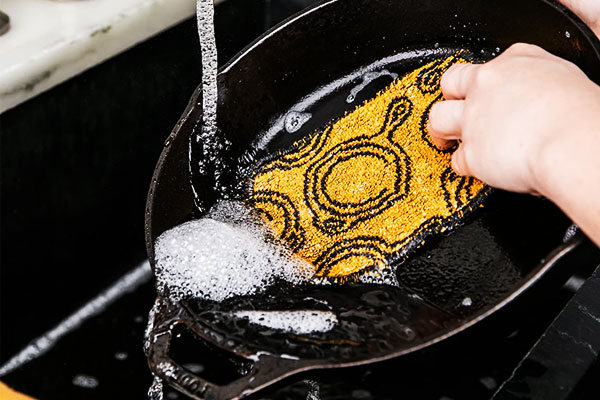
Seguro para uso regular
- Cepillos de cerdas de nailon: Lo suficientemente suave como para evitar rayar el condimento., lo suficientemente rígido como para desalojar los trozos de comida
- Depuradores de cota de malla: Los anillos metálicos entrelazados levantan los alimentos quemados sin desgastar la capa de polímero.; ideal para residuos medianamente rebeldes
- Sal kosher gruesa: Amable, abrasivo soluble en agua para un fregado específico
- Bambú / raspadores de madera: Lo suficientemente rígido como para raspar la comida quemada., lo suficientemente suave como para no estropear el condimento
- Bicarbonato: Abrasivo y desodorante alcalino suave
- Paños de algodón sin pelusa / toallas de papel sin blanquear: Para secado y aplicación de aceite.
Evite estrictamente para la limpieza de rutina
- Estropajos abrasivos (tipo Scotch-Brite verde): Raspe y retire el condimento rápidamente
- lana de acero: Sólo aceptable para restauración completa.; nunca para limpieza regular
- lavavajillas automático: Inmersión prolongada en agua, detergente alcalino fuerte, y el calor alto destruirá completamente el condimento y provocará oxidación generalizada.
- Remojo en agua durante la noche: La humedad atrapada penetra en los poros y provoca oxidación debajo de la capa de condimento.
- Limpiador de hornos / limpiadores a base de lejía: Disuelva el condimento por completo y puede grabar la superficie del hierro.
¿Deberías usar jabón??
Esta es la cuestión más debatida en el cuidado del hierro fundido..
La visión tradicional: Nunca uses jabón. Esto se originó cuando los jabones contenían lejía. (hidróxido de sodio), que disuelve agresivamente los aceites y quitaría el condimento.
La visión moderna: Leve, jabones para platos de pH neutro (P.EJ., Amanecer, palmolive, Séptima generación) son seguros.
No contienen lejía; Están formulados para descomponer los aceites alimentarios., películas de aceite no polimerizadas. Sin embargo, debería:
- Utilice sólo un pequeña cantidad (unas gotas).
- Evite el remojo prolongado en agua jabonosa.
- Enjuague a fondo.
El veredicto pericial: Use jabón cuando sea necesario, especialmente después de cocinar pescado., ajo, u otros alimentos de sabor fuerte, pero con moderación.
Una sartén bien sazonada puede soportar jabón ocasional sin perder su capa protectora..
6. Mitos comunes sobre la limpieza del hierro fundido desacreditados
Mito 1: Una cacerola de hierro fundido oxidada está arruinada
Hecho: El óxido superficial es totalmente reversible..
Siempre y cuando la sartén no haya desarrollado picaduras profundas o agujeros a través del metal., se puede despojar, limpio, y re-sazonado para funcionar como nuevo.
Esta capacidad de restauración es parte del motivo por el cual el hierro fundido es una inversión tan duradera..
Mito 2: El residuo negro que se desprende de los alimentos es tóxico
Hecho: Normal, el condimento bien mantenido no deja residuos nocivos.
Los trozos negros que se descaman suelen ser viejos, Aceite polimerizado degradado o acumulación de carbón suelto., ninguno de los cuales es tóxico.
Si se produce una descamación excesiva, simplemente significa que la capa de condimento está degradada y debe quitarse y refrescarse..
Mito 3: Debes limpiar el hierro fundido en cuanto termines de cocinar.
Hecho: Limpiar mientras la sartén está caliente mejora los resultados., pero no es una emergencia.
Es seguro dejar que la sartén se enfríe por completo antes de limpiarla; solo puede que sea necesario fregar un poco más..
El único requisito urgente es que la sartén esté completamente seca antes de guardarla., no es que se limpie al instante.
Mito 4: Más fregado = más limpio, mejor sartén
Hecho: Fregar demasiado elimina la capa de condimento que hace que el hierro fundido sea antiadherente y resistente al óxido..
Una sartén de hierro fundido bien cuidada desarrollará un color oscuro., liso, pátina brillante con el tiempo; esto es deseable, no “suciedad” que deba ser limpiada.
Mito 5: Nunca debes poner hierro fundido en el lavavajillas..
Hecho: Esto es correcto. Los detergentes para lavavajillas son muy alcalinos y eliminan los condimentos.. El remojo prolongado promueve la oxidación.. Nunca pongas hierro fundido en el lavavajillas..
Mito 6: Los alimentos ácidos destruirán una sartén de hierro fundido..
Hecho: Cocción prolongada de alimentos ácidos. (salsa de tomate, vinagre) De hecho, puede degradar el condimento.. Sin embargo, una breve cocción a fuego lento generalmente está bien.
Para platos ácidos de cocción prolongada, Utilice una sartén de acero inoxidable o hierro fundido esmaltado..
7. Hierro fundido esmaltado: Consideraciones especiales de limpieza
Las sartenes de hierro fundido esmaltado y los hornos holandeses tienen una capa de vidrio fundido sobre el núcleo de hierro., por lo que siguen reglas de limpieza completamente diferentes a las del hierro fundido desnudo..
Diferencias clave:
- El esmalte no es poroso y no se oxida., por lo que es seguro remojar, lavar con jabon, e incluso limpiar en el lavavajillas (aunque lavarse las manos prolonga la vida del esmalte).
- Nunca utilice lana de acero ni almohadillas abrasivas fuertes sobre el esmalte., ya que rayarán y opacarán la superficie del vidrio.
- Para manchas quemadas, Llene la cacerola con agua tibia y 2 o 3 cucharadas de bicarbonato de sodio., cocine a fuego lento durante 10 minutos, luego frote suavemente con un cepillo de nailon.
- Evite el choque térmico (P.EJ., sumergir una sartén esmaltada caliente en agua fría), ya que esto puede hacer que el esmalte se agriete o se astille.
8. Mantenimiento a largo plazo: Conservar su sartén para toda la vida
| Práctica de mantenimiento | Frecuencia | Por qué |
| Limpieza de rutina | Después de cada uso | Previene la acumulación y el óxido.. |
| Secar bien | Después de cada uso | Previene la oxidación. |
| Aceitar ligeramente | Después de cada uso (o semanal) | Mantiene el condimento. |
| Re-condimento periódico | Una o dos veces al año | Reconstruye el condimento si se usa.. |
| Evitar el choque térmico | Siempre | Previene el agrietamiento por cambios rápidos de temperatura.. |
| Evitar los alimentos ácidos | Para una cocción larga | Conserva el condimento. |
| Utilizar utensilios adecuados | Siempre | Madera, silicona, o plástico para evitar rayar. |
| Almacenar en un lugar seco | Siempre | Previene la oxidación. |
Almacenamiento de hierro fundido
- Almacenar en un lugar seco, área ventilada—no en un armario húmedo.
- Evite apilar sin proteccion (Las toallas de papel entre las sartenes evitan rayones y astillas.).
- no almacenar con comida adentro: retire la comida rápidamente.
Cuándo volver a condimentar
Debes volver a condimentar la sartén cuando:
- La superficie aparece seco, aburrido, o gris (en lugar de brillante).
- Alimento palos a pesar del precalentamiento y lubricación adecuados.
- te das cuenta manchas de óxido (El óxido superficial indica pérdida de condimento.).
- El condimento tiene en escamas o astillados.
Volver a condimentar no es una tarea frecuente; es posible que una sartén bien utilizada solo necesite volver a condimentarse una o dos veces al año..
Sin embargo, si usas la sartén a diario, el condimento se refuerza continuamente, y volver a condimentar puede ser innecesario durante años.
9. Solución de problemas comunes
| Asunto | Causa probable | Solución |
| palitos de comida | mal condimento; aceite insuficiente; temperatura de cocción incorrecta. | Retemporada; usa más aceite; calentar adecuadamente. |
| Óxido | Queda humedad en la sartén; condimento dañado. | Friegue el óxido; volver a sazonar a fondo. |
| superficie pegajosa | exceso de aceite; aceite no completamente polimerizado. | Calienta la sartén a fuego lento para eliminar el exceso.; Evite aplicar demasiado aceite. |
| condimento para escamas | Aceite aplicado demasiado espeso; calor alto; o condimento viejo que se agrieta. | Frote el condimento que se descascara; Vuelva a condimentar con finas capas de aceite.. |
| Manchas blancas | Depósitos de agua dura o alimentos carbonizados. | Frotar con sal y aceite; enjuagar bien. |
| Comida quemada | Calentamiento excesivo; aceite insuficiente durante la cocción. | agua a fuego lento; frotar con sal o cota de malla. |
10. Conclusión
Limpiar una sartén de hierro fundido es una práctica de mantenimiento protector más que de desinfección agresiva.
Su lógica central tiene sus raíces en la química del condimento polimerizado y la metalurgia del hierro fundido.: eliminar residuos de alimentos y contaminantes, pero conserva la capa protectora funcional que hace que el hierro fundido sea antiadherente., resistente al óxido, y duradero.
Al hacer coincidir la intensidad de la limpieza con el nivel de suciedad, desde simples enjuagues con agua tibia para uso rutinario, agregar sal a los exfoliantes y agua hirviendo para eliminar la acumulación de quemaduras, hasta el decapado completo y el nuevo curado de sartenes oxidadas: cualquiera puede mantener una sartén de hierro fundido funcionando bien durante décadas..
Disipando mitos comunes sobre el jabón, óxido, y una limpieza “adecuada” elimina la ansiedad innecesaria en torno al cuidado del hierro fundido y libera todo el valor de este utensilio de cocina atemporal..
Preguntas frecuentes
¿Puedo usar jabón en una sartén de hierro fundido??
Sí, jabones suaves modernos para platos (sin lejía) son seguros en pequeñas cantidades.
Evite los detergentes agresivos, remojo prolongado, y fregado excesivo. Enjuague bien y seque inmediatamente..
¿Con qué frecuencia debo sazonar mi sartén de hierro fundido??
Después de cada limpieza, es una buena práctica aplicar una fina capa de aceite.
Re-sazonado completo (hornear con aceite en el horno) sólo se necesita una o dos veces al año, o cuando el condimento está dañado.
¿Cuál es el mejor aceite para condimentar??
Aceites con alto punto de humo, como el de linaza, semilla de uva, canola, o aceite vegetal.
La linaza produce una capa dura pero puede ser quebradiza.; Muchos cocineros prefieren la canola o la semilla de uva por su equilibrio de dureza y durabilidad..
¿Puedo usar lana de acero para limpiar hierro fundido??
Se puede utilizar lana de acero fina para eliminar óxido o acumulaciones carbonizadas pesadas..
Sin embargo, para limpieza rutinaria, es demasiado abrasivo. En su lugar, utilice un estropajo de cota de malla o un estropajo no metálico..
¿Por qué mi sartén se ve seca y gris??
Esto indica que el condimento está gastado.. Vuelva a sazonar con una fina capa de aceite y hornee como se describe.. El uso regular y el engrase restaurarán el brillo., superficie oscura.
¿Se puede limpiar el hierro fundido en el lavavajillas??
No. Sazonador en tiras para lavavajillas, promover el óxido, y puede causar grietas. Lavar siempre a mano.
¿Qué debo hacer si mi sartén se oxida??
Frote el óxido con lana de acero o un exfoliante con sal., enjuagar, seco, y volver a condimentar inmediatamente. El óxido superficial no es irreversible..
¿Es seguro cocinar alimentos ácidos en hierro fundido??
Breve cocina (30-60 minutos) normalmente esta bien. Para una cocción prolongada (horas) de salsa de tomate o platos a base de vinagre, Utilice acero inoxidable o hierro fundido esmaltado para evitar la degradación del condimento..
¿Puedo usar una espátula de metal sobre hierro fundido??
Sí, Las espátulas de metal son aceptables si tienen bordes lisos y se usan con cuidado..
Sin embargo, pueden rayar el condimento si se usan agresivamente. Madera, silicona, o los utensilios de plástico son más suaves.
¿Cómo puedo saber si mi sartén está bien sazonada??
Una sartén bien sazonada debe tener una textura suave, oscuro, aspecto ligeramente brillante. Debería liberar la comida fácilmente., y debe verse un ligero brillo de aceite.. El agua debe formar gotas en la superficie..

