1. Giới thiệu
Thép không gỉ is widely regarded as one of the most versatile and durable materials across various industries.
Hàn thép không gỉ cho phép chúng tôi tham gia các bộ phận và linh kiện, ensuring the material’s integrity and reliability, particularly in environments requiring both strength and corrosion resistance.
Trong blog này, we will walk you through the most commonly used stainless steel welding techniques, delve into their benefits and challenges,
and share tips on best practices to ensure flawless welds and long-lasting results.
2. What is Stainless Steel Welding?
Welding stainless steel involves joining two or more parts using heat and/or pressure. This process is crucial for creating strong, bền, và khớp chống ăn mòn.

The importance of stainless steel welding cannot be overstated, especially when considering its role in maintaining structural integrity while preserving the aesthetic appeal of the final product.
Effective welding ensures that stainless steel retains its beneficial properties, making it an indispensable skill in numerous applications.
3. Common Stainless Steel Welding Techniques
Tôi hàn (Khí trơ kim loại)
Tôi hàn, also known as Gas Metal Arc Welding (Gawn), is one of the most common and effective techniques used for welding stainless steel.
It uses a continuous wire feed as both the electrode and filler material, with an inert gas like argon protecting the weld pool from contamination.
This method is known for its speed, making it ideal for high-volume production and thicker stainless steel pieces.

It is capable of producing strong, consistent welds and works well for both thin and thick materials.
Theo báo cáo của ngành, MIG welding can offer a deposition rate of up to 4 pounds per hour for some applications, making it highly productive.
Hàn tig (Khí trơ vonfram)
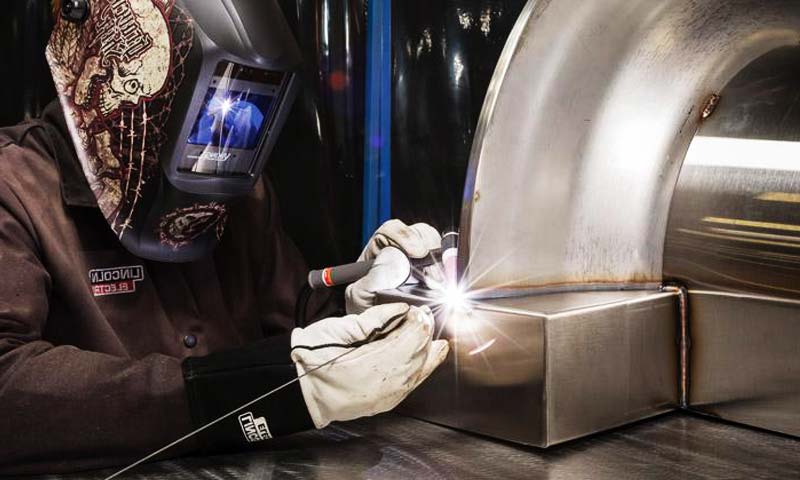
Hàn tig, or Gas Tungsten Arc Welding (GTAW), is known for its precision and ability to produce high-quality, clean welds.
Unlike MIG, TIG uses a non-consumable tungsten electrode, and the filler material is added manually.
This technique provides excellent control over the heat input, allowing welders to work on thin-walled stainless steel without warping the material.

It is often used in applications where appearance, sức mạnh, and cleanliness are paramount, such as in aerospace or medical device manufacturing.
With TIG welding, users can achieve welds with excellent strength-to-weight ratios and minimal distortion.
Stick Welding (Smaw)
Stick welding or Shielded Metal Arc Welding, is commonly used for outdoor or heavy-duty stainless steel welding projects.
The process uses a consumable electrode coated in flux, which provides its shielding gas during the welding process.
Stick welding is favored for applications that require robustness and versatility, and it works well on rusty or contaminated surfaces.
Tuy nhiên, it may not provide the same level of precision as MIG or TIG welding, making it more suitable for structural or construction applications.
Hàn hồ quang-thông lượng (Fcaw)
FCAW is an alternative to MIG welding, especially when working with thicker stainless steel sections.
It uses a hollow wire filled with flux, providing deep penetration and faster welding speeds.
This method is particularly useful in heavy manufacturing industries, like shipbuilding and steel construction, where thicker materials are involved.
Unlike MIG, FCAW can also be used outdoors as it provides better resistance to wind and environmental factors.
4. Choosing the Right Stainless Steel for Welding
Selecting the appropriate stainless steel grade for your welding project is a critical step in ensuring strong, bền, và khớp chống ăn mòn.
The choice of material will directly impact the quality of the weld, the performance of the finished product, and its ability to withstand environmental stresses.
Grades of Stainless Steel
Stainless steel comes in various grades, each offering unique properties tailored to different applications. Some of the most commonly used grades for welding include:
- 304 thép không gỉ:
304 is the most widely used stainless steel grade, offering a good balance of corrosion resistance, Khả năng hàn, và sức mạnh.
It is typically used for kitchen appliances, Thiết bị chế biến thực phẩm, and chemical containers.
When welding 304, it’s important to use a 308 filler rod to match its properties, ensuring a strong, corrosion-resistant weld. - 316 thép không gỉ:
Known for its excellent corrosion resistance, particularly against chlorides and acids, 316 is often used in marine environments, thiết bị y tế, và các ngành công nghiệp chế biến hóa học.
When welding 316, a 316L filler rod is typically preferred, as it offers lower carbon content to prevent carbide precipitation and intergranular corrosion. - 2205 Thép không gỉ song công:
2205 is a duplex stainless steel known for its high strength, khả năng chống lại vết nứt ăn mòn căng thẳng, and pitting.
It is commonly used in highly corrosive environments like chemical processing plants and marine applications.
Hàn 2205 requires careful consideration of the heat input to avoid issues like brittleness or cracking. It is often welded with a 2209 filler material for the best results. - 430 thép không gỉ:
430 is a ferritic stainless steel used in applications where corrosion resistance is less critical, but strength and heat resistance are important.
It is often found in automotive parts, kitchen utensils, và trao đổi nhiệt.
Từ 430 is not as weldable as austenitic grades, it requires more attention to heat control to avoid cracking during welding.
Khả năng hàn
Not all stainless steel grades have the same weldability. Factors like carbon content, Các yếu tố hợp kim, and microstructure play a significant role in how easily a material can be welded.
- Thép không gỉ Austenitic (VÍ DỤ., 304, 316):
Austenitic stainless steels have excellent weldability, as they are less prone to cracking and distortion compared to other stainless steel types.
Tuy nhiên, they are heat-sensitive and require careful management of heat input to avoid issues like sensitization (formation of chromium carbide) trong quá trình hàn. - Thép không gỉ ferritic (VÍ DỤ., 430):
Thép không gỉ ferritic, while generally easy to weld, are more prone to cracking compared to austenitic steels.
They also have higher susceptibility to oxidation, so welding parameters need to be adjusted to prevent degradation of the material properties. - Thép không gỉ song công (VÍ DỤ., 2205):
Duplex stainless steels have a mixed microstructure of austenite and ferrite. While these steels offer excellent strength and corrosion resistance, they are more difficult to weld.
The proper filler material and heat control are necessary to avoid cracks and maintain the desired microstructure.
Carbon Content and Its Effect on Weldability
The carbon content in stainless steel is a key factor that affects weldability. High carbon content increases the likelihood of kết tủa cacbua trong vùng bị ảnh hưởng bởi nhiệt (HAZ) trong quá trình hàn.
Điều này có thể dẫn đến Ăn mòn giữa các hạt and reduce the material’s overall corrosion resistance.
- Low-Carbon Stainless Steels (VÍ DỤ., 304L, 316L):
Low-carbon versions of austenitic steels (denoted by the “L” suffix) are designed to reduce the risk of carbide precipitation.
These are ideal for welding, as they offer better resistance to corrosion and cracking in the heat-affected zone.
Ví dụ, 304L and 316L are frequently used in welding applications where corrosion resistance and strength are critical.
Consideration of Alloy Composition
The alloy composition of stainless steel can significantly impact the welding process.
Đặc biệt, elements like chromium, Niken, Molypden, and nitrogen improve corrosion resistance but may also require special consideration during welding:
- Crom:
Crucial for the corrosion resistance of stainless steel, chromium forms a passive oxide layer on the surface.
Tuy nhiên, high levels of chromium may lead to more sensitive areas around the weld pool, requiring more precise control over heat input. - Niken:
Nickel is often added to stainless steel to improve its toughness and corrosion resistance. Tuy nhiên, too much nickel can cause Vết nứt nóng Trong một số trường hợp.
Vì thế, a balanced alloy composition is necessary for optimal weldability. - Molypden:
Molybdenum enhances corrosion resistance, đặc biệt là trong môi trường axit hoặc giàu clorua.
Stainless steels containing molybdenum, giống 316, are more resistant to pitting corrosion.
Tuy nhiên, high molybdenum content can make welding more challenging due to its tendency to cause liquid metal embrittlement ở nhiệt độ cao.
5. Stainless Steel Welding Tips
Mastering stainless steel welding requires not only an understanding of the different techniques but also a series of practical tips that can enhance your welding efficiency and quality.
Preparation is Key
- Sạch sẽ: Before beginning any welding operation, ensure that the stainless steel surfaces are thoroughly cleaned.
Any contaminants such as oil, dầu mỡ, or dirt can lead to porosity and weaken the weld joint. Use solvents or wire brushes specifically for stainless steel to remove these contaminants. - Joint Preparation: Proper joint preparation is crucial. Ensure that the edges are beveled correctly if needed, and gaps are minimized to avoid excessive heat input during welding.
Selecting the Right Filler Material
- Match Your Base Metal: Choose filler materials that match the base metal’s composition as closely as possible.
Ví dụ, use ER308L for welding Grade 304 thép không gỉ. This helps in maintaining the integrity and corrosion resistance of the welded joint. - Consider Dilution Rates: Keep in mind the dilution rates when selecting fillers.
Higher alloyed fillers may be necessary when joining dissimilar metals or when dealing with high heat inputs.
Heat Control Techniques
- Minimize Heat Input: Stainless steel is particularly sensitive to overheating, which can cause warping, biến dạng, and even changes in material properties.
Employ techniques like pulse TIG welding or using lower amperage settings to control heat input effectively. - Use Backing Bars: Utilize copper backing bars to dissipate heat more efficiently from the weld zone, helping to minimize distortion and maintain the workpiece’s shape.
Shielding Gas Considerations
- Proper Gas Selection: Use inert gases like argon or helium for shielding, especially for TIG welding.
Argon provides better arc stability and cleaner welds, while helium increases penetration and welding speed. - Gas Flow Rate: Optimize the gas flow rate to protect the molten pool adequately without causing turbulence that could introduce atmospheric contamination.
Phương pháp điều trị sau hàn
- Dưa chua và thụ động: Sau khi hàn, consider pickling and passivating the stainless steel to restore its corrosion resistance.
These processes remove any heat tint and oxide layers formed during welding, ensuring the surface remains passive and resistant to corrosion. - Ủ: Trong một số ứng dụng, post-weld annealing might be necessary to relieve internal stresses and improve the material’s ductility and corrosion resistance.
Monitoring and Adjusting During Welding
- Real-Time Adjustments: Continuously monitor the weld pool and make real-time adjustments to parameters such as voltage, hiện hành, and travel speed.
This proactive approach helps in achieving consistent weld quality. - Kiểm tra trực quan: Regularly inspect the weld visually for any signs of defects or inconsistencies.
Early detection allows for prompt corrections, preventing costly rework later on.
6. Challenges in Stainless Steel Welding
Stainless steel welding, while offering numerous advantages such as corrosion resistance and strength,
comes with a unique set of challenges that can affect the quality and integrity of the welds.
Độ nhạy nhiệt
- Thử thách: Stainless steel is highly sensitive to heat, which can lead to distortion, sự đổi màu, and warping.
Overheating can also degrade the material’s corrosion resistance properties. - Giải pháp: To mitigate these risks, it’s essential to control the heat input carefully.
Techniques like pulse TIG welding or using lower amperage settings can help manage heat more effectively.
Ngoài ra, employing copper backing bars can assist in dissipating heat away from the weld zone, minimizing distortion.
Cracking and Porosity
- Thử thách: Một số loại thép không gỉ, especially those with higher carbon content, are prone to cracking and porosity, which can compromise the weld’s structural integrity.
- Giải pháp: Selecting the appropriate filler material is critical. Ví dụ, low-carbon fillers like ER308L reduce the risk of intergranular corrosion and cracking.
Ensuring proper shielding gas coverage and avoiding contamination from oils, dầu mỡ, or moisture can also prevent porosity.
Ăn mòn giữa các hạt
- Thử thách: Ăn mòn giữa các hạt, particularly sensitization, occurs when stainless steel is exposed to temperatures between 800°F and 1500°F (427°C – 816°C),
leading to chromium depletion at grain boundaries. - Giải pháp: This challenge can be addressed by selecting low carbon grades (VÍ DỤ., 304L, 316L) hoặc các lớp ổn định (VÍ DỤ., 321, 347) that resist sensitization.
Post-weld heat treatments such as solution annealing can restore the material’s corrosion resistance by dissolving carbides back into the austenite phase.
7. Factors to Consider When Choosing a Welding Rod
Choosing the right welding rod is essential to ensure a successful welding process and durable joint. Several factors must be considered when selecting a filler material:
Khả năng tương thích vật chất
Ensure that the welding rod is compatible with the base material you’re working with.
Ví dụ, when welding 304 thép không gỉ, you’ll typically use a 308 or 308L welding rod. Tương tự, vì 316 thép không gỉ, các 316 or 316L welding rod is ideal.
Corrosion Resistance Requirements
The environment where the welded component will be used is a significant factor in selecting the right rod.
For environments exposed to high chloride concentrations (such as marine applications), using a rod with molybdenum (VÍ DỤ., 316) will ensure superior resistance to pitting and crevice corrosion.
Điện trở nhiệt độ
Cho các ứng dụng nhiệt độ cao, rods such as 321 Và 347 are more suitable because they offer improved resistance to oxidation, quy mô, và ăn mòn giữa các hạt.
These rods also maintain their mechanical properties at elevated temperatures.
Joint Type and Thickness
The size of the joint and the thickness of the base material also influences the choice of welding rod.
For thin materials, Một 308 hoặc 309 welding rod might be more appropriate due to their lower heat input,
whereas thicker materials might require rods like 316 hoặc 347 that are designed to withstand higher stresses.
Filler Metal Compatibility
When selecting a welding rod, it’s important to consider the compatibility of the filler metal with the parent metal.
The filler rod should match or be slightly more alloyed than the base material to ensure optimal mechanical properties and corrosion resistance.
8. Best Practices for Stainless Steel Welding
- Pre-Welding Preparation: Proper surface cleaning is crucial to prevent contamination. Any oils, rỉ sét, or scale can introduce defects into the weld.
- Điều trị sau hàn: Post-weld treatments like pickling and passivation are necessary to improve the corrosion resistance of the welded stainless steel,
particularly when welding grades that are more prone to corrosion.
9. Applications of Stainless Steel Welding
- Không gian vũ trụ và hàng không: Stainless steel’s high strength-to-weight ratio and corrosion resistance make it ideal for aerospace components
such as brackets, khung, và hệ thống ống xả. - Công nghiệp ô tô: Welding stainless steel is critical in manufacturing automotive parts that must endure high temperatures and resist rust, such as exhaust systems and mufflers.
- Xây dựng và cơ sở hạ tầng: Stainless steel welded components are used extensively in bridges, tay vịn, and structural support beams, ensuring long-term durability.
- Food Processing and Medical Equipment: Stainless steel is often used in environments that require high hygiene standards,
chẳng hạn như trong các thiết bị y tế và thiết bị chế biến thực phẩm. Welded joints must meet strict sanitation and corrosion resistance standards.
10. Stainless Steel Welding Machine and Equipment
Selecting the right equipment is fundamental to achieving high-quality stainless steel welds.
The advancements in welding technology have introduced a variety of machines and tools tailored specifically for stainless steel,
each designed to enhance precision, hiệu quả, and weld quality.
Welding Power Sources
- Inverter-Based Power Supplies: Modern inverter-based power supplies provide excellent arc stability and control, which are crucial for welding stainless steel.
These units offer adjustable parameters like current, điện áp, and pulse frequency, enabling fine-tuned welding processes.
They are energy-efficient and can reduce electricity consumption by up to 30% compared to traditional transformer-based machines. - TIG Welders: Ideal for precise work on thin materials, TIG welders provide exceptional control over the welding process.
High-end models come with features such as square wave AC output for aluminum welding, advanced waveform controls, and remote control capabilities,
making them suitable for intricate stainless steel projects.
Welding Torches and Guns
- Water-Cooled TIG Torches: For prolonged use or high amperage applications, water-cooled TIG torches are recommended.
They prevent overheating and ensure continuous operation without compromising on performance.
Water cooling systems can reduce torch temperatures by up to 70%, extending the life of consumables. - MIG Guns: When it comes to MIG welding, choosing a gun with an ergonomic design and appropriate duty cycle ensures comfort and reliability.
Look for guns with easy-to-replace contact tips and nozzles to minimize downtime.
Shielding Gas Apparatus
- Gas Regulators and Flowmeters: Accurate gas flow control is vital for protecting the molten weld pool from atmospheric contamination.
High-precision regulators and flowmeters allow for consistent gas delivery, which is especially important when working with reactive metals like stainless steel.
Proper gas regulation can improve weld quality by reducing porosity and spatter. - Gas Mixers: Some applications may require mixed shielding gases (VÍ DỤ., argon with small amounts of helium or nitrogen).
Advanced gas mixers ensure a homogeneous blend, optimizing penetration and bead appearance.
Tự động hóa và robot
- Robotic Welding Cells: Automation has revolutionized stainless steel fabrication, offering unparalleled precision and repeatability.
Robotic welding cells equipped with vision systems and adaptive control mechanisms can handle complex geometries and maintain tolerances within ±0.005 inches.
This level of accuracy significantly reduces rework rates and enhances productivity. - CNC Plasma Cutters: For preparing stainless steel components before welding, CNC plasma cutters provide clean, accurate cuts with minimal heat-affected zones.
These machines can operate at speeds exceeding 200 inches per minute, accelerating production cycles while maintaining high standards of cut quality.
Safety Equipment
- Welding Helmets with Auto-Darkening Filters: Protecting your eyes and skin from harmful UV/IR radiation is non-negotiable.
Modern welding helmets feature auto-darkening filters that adjust instantly to changing light conditions, providing clear visibility during setup and protection during welding. - Ventilation Systems: Effective ventilation is critical in removing fumes and particulates generated during stainless steel welding.
Installing local exhaust ventilation systems near the welding area can significantly reduce exposure to hazardous substances, ensuring a safer working environment.
11. Technological Advancements in Stainless Steel Welding
- Automation in Welding: Robotic welding systems enhance productivity by automating repetitive tasks, ensuring consistent and precise welds.
These systems are particularly beneficial in industries where high-volume production is needed, such as automotive manufacturing.

- Hàn laser: Laser welding enables highly precise welding with minimal heat-affected zones, ideal for thin-walled materials or intricate designs.
The precision of laser welding makes it suitable for high-end industries, including aerospace and medical device manufacturing. - Hybrid Welding: Hybrid welding, which combines laser welding and arc welding, offers the benefits of both processes.
It’s known for its ability to achieve high-speed welds with excellent penetration and minimal distortion.
12. Phần kết luận
Mastering stainless steel welding requires not only understanding the various welding techniques
but also knowing how to choose the right materials and manage the challenges that arise during the process.
With the proper skills, công cụ, and techniques, you can produce high-quality welds that meet the most demanding standards across industries like aerospace, Ô tô, and healthcare.
If you’re looking for high-quality Stainless Steel Welding services, lựa chọn Langhe là quyết định hoàn hảo cho nhu cầu sản xuất của bạn.
Liên hệ với chúng tôi ngay hôm nay!
Tài liệu tham khảo bài viết: https://casting-china.org/stainless-steel-welding/