1. Giới thiệu
3D in, còn được gọi là sản xuất phụ gia, đã cách mạng hóa nền sản xuất hiện đại bằng cách cho phép tạo mẫu nhanh, tùy biến, và sản xuất hiệu quả chi phí.
Không giống như sản xuất trừ truyền thống, loại bỏ vật liệu khỏi một khối rắn, 3In D xây dựng các đối tượng theo từng lớp dựa trên các mô hình kỹ thuật số.
Ban đầu được phát triển để tạo mẫu, bây giờ nó đã mở rộng sang các ứng dụng công nghiệp quy mô lớn, từ hàng không vũ trụ đến chăm sóc sức khỏe.
Bài viết này tìm hiểu các nguyên tắc cơ bản của in 3D, công nghệ chủ chốt, tùy chọn vật liệu, Ứng dụng công nghiệp, thuận lợi, thách thức, và những đổi mới trong tương lai định hình công nghệ biến đổi này.
2. Nguyên tắc cơ bản của in 3D
3D in, còn được gọi là sản xuất phụ gia, đã thay đổi cách thiết kế sản phẩm, nguyên mẫu, và sản xuất.
Không giống như sản xuất trừ truyền thống, nơi vật liệu được lấy ra khỏi một khối rắn, 3In D xây dựng các đối tượng theo từng lớp dựa trên các mô hình kỹ thuật số.
Cách tiếp cận này cho phép hình học phức tạp, Giảm chất thải vật liệu, và cho phép sản xuất theo yêu cầu.
In 3D là gì?
3In D là một quá trình sản xuất phụ gia tạo ra các vật thể vật lý từ các thiết kế kỹ thuật số bằng cách thêm liên tục vật liệu theo lớp.
Quá trình này được hướng dẫn bởi các máy điều khiển bằng máy tính tuân theo hướng dẫn từ một 3mô hình D.
Quy trình cơ bản của in 3D
Quá trình in 3D tuân theo quy trình làm việc được tiêu chuẩn hóa:
- 3D Mô hình hóa – Đối tượng được thiết kế bằng CAD (Thiết kế hỗ trợ máy tính) phần mềm.
- Cắt lát – Mô hình được chuyển đổi thành các lớp và hướng dẫn bằng phần mềm cắt lát.
- In ấn – Máy in 3D làm theo hướng dẫn để xây dựng đối tượng.
- Xử lý hậu kỳ – Vật in được làm sạch, bảo dưỡng, hoặc kết thúc điều trị.
3. Công nghệ cốt lõi trong in 3D
3Công nghệ in D đã phát triển đáng kể, cung cấp các giải pháp đa dạng cho các ngành công nghiệp khác nhau.
Mỗi phương pháp đều có ưu điểm riêng về độ chính xác, Khả năng tương thích vật chất, Tốc độ sản xuất, và phạm vi ứng dụng.
Các công nghệ được sử dụng rộng rãi nhất bao gồm Mô hình lắng đọng hợp nhất (FDM), In li-tô lập thể (SLA), Thiêu kết Laser chọn lọc (SLS),
Thiêu kết laser kim loại trực tiếp (DMLS) / Tia điện tử tan chảy (EBM), Máy ép chất kết dính, Và Phun vật liệu.
Mô hình lắng đọng hợp nhất (FDM) – Giá cả phải chăng và đa năng
Quá trình:
FDM, còn được gọi là Chế tạo sợi hợp nhất (FFF), đùn sợi nhựa nhiệt dẻo thông qua một vòi phun nước nóng, lắng đọng từng lớp vật liệu để tạo ra một vật thể.
Máy in di chuyển theo mô hình kỹ thuật số được cắt lát, dần dần xây dựng cấu trúc.

Các tính năng chính:
- Vật liệu phổ biến: PLA, ABS, PETG, Nylon, TPU
- Nghị quyết: 50–400 micron
- Điểm mạnh: Chi phí thấp, thân thiện với người dùng, tạo mẫu nhanh
- Giới hạn: Đường lớp có thể nhìn thấy, chất lượng bề mặt hạn chế, cường độ thấp hơn so với phương pháp công nghiệp
Cái nhìn sâu sắc trong ngành:
Theo phân tích thị trường, Tài khoản FDM hơn 50% ứng dụng in 3D trên máy tính để bàn, làm cho nó trở thành kỹ thuật được sử dụng rộng rãi nhất trên toàn cầu.
In li-tô lập thể (SLA) – In nhựa độ phân giải cao
Quá trình:
SLA sử dụng một tia cực tím (UV) tia laze để củng cố nhựa lỏng, hình thành các lớp chính xác. Laser xử lý có chọn lọc photopolymer, dần dần định hình đối tượng cuối cùng.

Các tính năng chính:
- Vật liệu phổ biến: Nhựa tiêu chuẩn, nhựa cứng, nhựa nha khoa
- Nghị quyết: 25–100 micron
- Điểm mạnh: Độ chính xác cao, bề mặt mịn hoàn thiện, Chi tiết tốt
- Giới hạn: Yêu cầu xử lý hậu kỳ (Rửa, bảo dưỡng), vật liệu giòn
Thiêu kết Laser chọn lọc (SLS) – Các bộ phận chắc chắn và bền bỉ
Quá trình:
SLS sử dụng một tia laser công suất cao để nung chảy vật liệu dạng bột, tiêu biểu nylon hoặc nhựa nhiệt dẻo, thành các lớp rắn.
Vì SLS không yêu cầu cấu trúc hỗ trợ, nó cho phép tạo ra các hình học phức tạp.

Các tính năng chính:
- Vật liệu phổ biến: Nylon, TPU, bột tổng hợp
- Nghị quyết: 50–120 micron
- Điểm mạnh: Mạnh, các bộ phận bền với thiết kế phức tạp, không cần cấu trúc hỗ trợ
- Giới hạn: Máy in cấp công nghiệp đắt tiền, bề mặt thô
Cái nhìn sâu sắc trong ngành:
SLS được sử dụng rộng rãi cho các ứng dụng công nghiệp, với Nylon 12 là tài liệu được in phổ biến nhất do nó độ bền kéo cao và tính linh hoạt.
Thiêu kết laser kim loại trực tiếp (DMLS) & Tia điện tử tan chảy (EBM) – In 3D kim loại cho các ứng dụng công nghiệp
Quá trình:
DMLS và EBM là các công nghệ sản xuất bồi đắp kim loại sử dụng nguồn năng lượng cao (tia laser hoặc chùm tia điện tử) để nung chảy bột kim loại thành các bộ phận rắn.
Sự khác biệt chính là DMLS sử dụng tia laser trong môi trường khí trơ, trong khi EBM sử dụng chùm tia điện tử trong buồng chân không.

Các tính năng chính:
- Vật liệu phổ biến: Titan, nhôm, thép không gỉ, Cobalt-chrome
- Nghị quyết: 20–100 micron
- Điểm mạnh: Các bộ phận kim loại có độ bền cao, Tính chất cơ học tuyệt vời, Cấu trúc nhẹ
- Giới hạn: Đắt, tốc độ in chậm, yêu cầu xử lý hậu kỳ rộng rãi
Cái nhìn sâu sắc trong ngành:
Qua 2030, các Ngành công nghiệp in 3D kim loại dự kiến sẽ vượt qua $20 tỷ, được thúc đẩy bởi những tiến bộ về hàng không vũ trụ và y tế.
Phun chất kết dính – Sản xuất nhanh và có thể mở rộng
Quá trình:
Thuốc xịt phun chất kết dính a chất liên kết lỏng lên các lớp vật liệu dạng bột, gắn kết chúng lại với nhau.
Không giống như SLS hoặc DMLS, phun chất kết dính không sử dụng tia laser, làm cho nó nhanh hơn và tiết kiệm chi phí hơn cho sản xuất khối lượng lớn.

Các tính năng chính:
- Vật liệu phổ biến: Kim loại, cát, gốm sứ, polyme đầy màu sắc
- Nghị quyết: 50–200 micron
- Điểm mạnh: Tốc độ sản xuất nhanh, khả năng đa vật liệu, in đủ màu
- Giới hạn: Yêu cầu xử lý hậu kỳ (thiêu kết, sự xâm nhập), độ bền cơ học thấp hơn
Cái nhìn sâu sắc trong ngành:
Máy phun chất kết dính đang đạt được sức hút đối với sản xuất hàng loạt bộ phận kim loại, Cung cấp 50–Tốc độ in nhanh hơn 100 lần so với DMLS.
Phun vật liệu – In đầy đủ màu sắc và đa vật liệu
Quá trình:
Vật liệu phun lắng đọng các giọt chất lỏng của photopolymer, sau đó được xử lý từng lớp bằng tia UV.
Điều này cho phép in có độ phân giải cao với nhiều màu sắc và kết hợp vật liệu.

Các tính năng chính:
- Vật liệu phổ biến: Photopolyme, sáp, gốm sứ
- Nghị quyết: 16–50 micron
- Điểm mạnh: Độ chính xác cao, khả năng đầy đủ màu sắc, bề mặt mịn
- Giới hạn: Đắt, vật liệu giòn, Sức mạnh hạn chế
Cái nhìn sâu sắc trong ngành:
Phun vật liệu cho phép in đa vật liệu với hơn 500,000 biến thể màu sắc, làm cho nó trở thành sự lựa chọn hàng đầu cho nguyên mẫu sản phẩm cao cấp.
4. Vật liệu được sử dụng trong in 3D
Lựa chọn vật liệu là yếu tố quan trọng trong in 3D, ảnh hưởng đến tính chất cơ học, độ bền, trị giá, và phạm vi ứng dụng của các bộ phận in.
Nói rộng ra, 3Vật liệu in D có thể được phân loại thành polyme, kim loại, gốm sứ, và vật liệu tổng hợp.
Mỗi danh mục có những đặc điểm riêng giúp nó phù hợp với các ứng dụng cụ thể.
4.1 Polyme – Linh hoạt và tiết kiệm chi phí
Polyme là vật liệu được sử dụng phổ biến nhất trong in 3D do giá cả phải chăng, dễ xử lý, và phạm vi ứng dụng rộng rãi. Những vật liệu này có sẵn trong dây tóc, nhựa, hoặc dạng bột, tùy thuộc vào quá trình in 3D.
Nhựa nhiệt dẻo (FDM, SLS)
Nhựa nhiệt dẻo mềm khi đun nóng và đông đặc lại khi làm mát, Làm cho chúng phù hợp cho Mô hình lắng đọng hợp nhất (FDM) Và Thiêu kết Laser chọn lọc (SLS).
| Vật liệu | Thuộc tính chính | Các ứng dụng phổ biến |
|---|---|---|
| PLA (Axit polylactic) | phân hủy sinh học, dễ dàng in, độ cong vênh thấp | tạo nguyên mẫu, người mẫu có sở thích |
| ABS (Acrylonitrile butadien styrene) | Khó, Chống tác động, Chống nhiệt | Các bộ phận ô tô, hàng tiêu dùng |
| PETG (Polyethylene Terephthalate Glycol) | Mạnh, kháng hóa chất, an toàn thực phẩm | Thiết bị y tế, chai nước |
| Nylon (Polyamide) | Linh hoạt, chống mòn, bền | Bánh răng, các bộ phận cơ học |
Photopolyme (SLA, DLP)
Photopolyme là nhựa nhạy sáng được sử dụng trong In li-tô lập thể (SLA) Và Xử lý ánh sáng kỹ thuật số (DLP) in ấn.
Họ cung cấp độ phân giải cao và bề mặt mịn, nhưng có xu hướng giòn.
| Vật liệu | Thuộc tính chính | Các ứng dụng phổ biến |
|---|---|---|
| Nhựa tiêu chuẩn | Độ chi tiết cao, Kết thúc mượt mà | Nguyên mẫu, bức tượng nhỏ |
| Nhựa cứng | Chống va đập, mạnh hơn nhựa tiêu chuẩn | Bộ phận chức năng |
| Nhựa dẻo | Giống cao su, tính chất đàn hồi | Thiết bị đeo được, nắm chặt |
| Nhựa nha khoa | Tương thích sinh học, chính xác | Bộ chỉnh răng, vương miện |
Polyme hiệu suất cao (PEEK, TỐI THƯỢNG)
Được sử dụng trong ứng dụng công nghiệp và hàng không vũ trụ, triển lãm polyme hiệu suất cao tính chất cơ học và nhiệt vượt trội.
| Vật liệu | Thuộc tính chính | Các ứng dụng phổ biến |
|---|---|---|
| PEEK (Polyether ether ketone) | Nhiệt độ cao & kháng hóa chất, mạnh | Hàng không vũ trụ, Cấy ghép y tế |
| TỐI THƯỢNG (Polyetherimide – PEI) | Sức mạnh cao, chống cháy | Nội thất máy bay, Ô tô |
4.2 Kim loại – Độ bền cao và ứng dụng công nghiệp
In 3D kim loại cho phép tạo ra tổ hợp, Các bộ phận cường độ cao cho các ngành đòi hỏi khắt khe như hàng không vũ trụ, thuộc về y học, và ô tô.
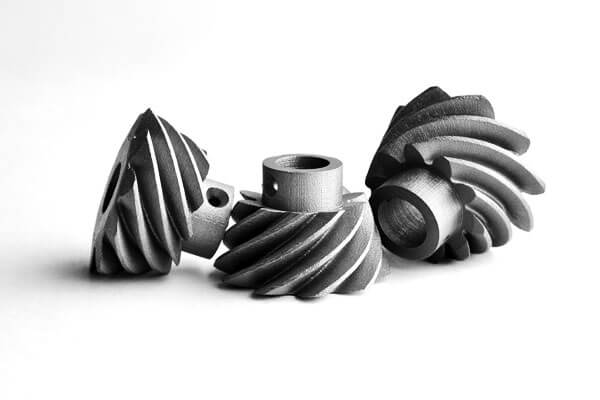
Những vật liệu này thường được sử dụng trong Thiêu kết laser kim loại trực tiếp (DMLS), Tia điện tử tan chảy (EBM), và phun chất kết dính.
| Vật liệu | Thuộc tính chính | Các ứng dụng phổ biến |
|---|---|---|
| Titan (Ti-6al-4V) | Nhẹ, mạnh, chống ăn mòn | Hàng không vũ trụ, Cấy ghép y tế |
| thép không gỉ (316L, 17-4 PH) | Bền, chống mòn | Dụng cụ công nghiệp, dụng cụ phẫu thuật |
Nhôm (ALSI10MG) |
Nhẹ, Độ dẫn nhiệt tốt | ô tô, Điện tử |
| Cobalt-Chrome (CoCr) | Tương thích sinh học, chịu nhiệt độ cao | Cấy ghép nha khoa, Lưỡi dao tuabin |
| Hợp kim niken (Bất tiện 625, 718) | Chịu nhiệt và chống ăn mòn | Động cơ phản lực, nhà máy điện |
4.3 Gốm sứ – Chịu nhiệt và mài mòn
Vật liệu gốm được sử dụng trong các ứng dụng đòi hỏi chịu nhiệt độ cao, ổn định hóa học, và độ cứng.
Những vật liệu này được in bằng phun chất kết dính, SLA, hoặc các phương pháp dựa trên ép đùn.
| Vật liệu | Thuộc tính chính | Các ứng dụng phổ biến |
|---|---|---|
| Carbide silicon (Sic) | Sức mạnh cao, Chống nhiệt | Hàng không vũ trụ, Điện tử |
| Alumina (AL2O3) | Cứng, Hóa học trơ | Cấy ghép y sinh, Thành phần công nghiệp |
| Zirconia (ZRO2) | Khó, chống mòn | Mão răng, Công cụ cắt |
4.4 tổng hợp & Vật liệu tiên tiến – Hiệu suất nâng cao
Vật liệu tổng hợp kết hợp polyme, kim loại, hoặc gốm có sợi gia cố để nâng cao sức mạnh cơ học, độ dẫn điện, hoặc tính linh hoạt.
Composite cốt sợi
Sợi carbon và sợi thủy tinh là nhúng vào nhựa nhiệt dẻo để cải thiện sức mạnh và giảm cân.
| Vật liệu | Thuộc tính chính | Các ứng dụng phổ biến |
|---|---|---|
| Sợi cacbon Gia cố nylon | Tỷ lệ sức mạnh trên trọng lượng cao | Máy bay không người lái, Robotics, Ô tô |
| PLA gia cố bằng sợi thủy tinh | Cứng nhắc, Chống tác động | Các thành phần cấu trúc |
Vật liệu thông minh và phân hủy sinh học
Đổi mới trong vật liệu dựa trên sinh học và tự phục hồi đang mở rộng khả năng in 3D.
| Vật liệu | Thuộc tính chính | Các ứng dụng phổ biến |
|---|---|---|
| Polyme dẫn điện | Độ dẫn điện | Điện tử in, cảm biến |
| Polyme tự chữa lành | Sửa chữa hư hỏng nhỏ | Thiết bị đeo, Các thành phần hàng không vũ trụ |
| Hỗn hợp PLA phân hủy sinh học | Thân thiện với môi trường, có thể phân hủy | Bao bì bền vững, Cấy ghép y tế |
5. Xử lý hậu kỳ bản in 3D
Xử lý sau là một bước quan trọng trong in 3D giúp nâng cao các tính chất cơ học, chất lượng bề mặt, và chức năng của các bộ phận in.
Vì các vật thể in 3D thô thường thể hiện đường lớp, độ nhám bề mặt, và vật liệu còn sót lại, nhiều kỹ thuật xử lý hậu kỳ khác nhau được áp dụng dựa trên loại vật liệu, quá trình in ấn, và dự định ứng dụng.

Việc lựa chọn phương pháp xử lý hậu kỳ phụ thuộc vào các yếu tố như yêu cầu thẩm mỹ, độ chính xác chiều, tính toàn vẹn cấu trúc, và điều kiện môi trường bộ phận sẽ được tiếp xúc với.
Dưới đây là một phân tích toàn diện trong số các kỹ thuật xử lý hậu kỳ phổ biến nhất cho các công nghệ in 3D khác nhau.
Tại sao xử lý hậu kỳ lại quan trọng?
- Cải thiện bề mặt hoàn thiện – Giảm độ nhám và tăng tính thẩm mỹ.
- Tăng cường sức mạnh cơ học – Loại bỏ các khuyết tật vi mô và tăng cường độ bền của bộ phận.
- Tối ưu hóa chức năng – Điều chỉnh các thuộc tính như tính linh hoạt, độ dẫn điện, và đeo điện trở.
- Loại bỏ hỗ trợ & Vật liệu dư – Đảm bảo bộ phận không có vật liệu dư thừa hoặc các đồ tạo tác khó coi.
- Cho phép điều trị bổ sung – Cho phép bức vẽ, mạ, hoặc niêm phong, tùy theo nhu cầu ứng dụng.
Các kỹ thuật xử lý hậu kỳ phổ biến bằng công nghệ in
Mô hình lắng đọng hợp nhất (FDM) Xử lý hậu kỳ
Bản in FDM thường có đường lớp có thể nhìn thấy và yêu cầu loại bỏ hỗ trợ. Các kỹ thuật xử lý hậu kỳ phổ biến nhất bao gồm:
| Kỹ thuật | Quá trình | Những lợi ích | Thách thức |
|---|---|---|---|
| Hỗ trợ loại bỏ | Cắt hoặc hòa tan các cấu trúc hỗ trợ (PVA hòa tan trong nước, HIPS hòa tan trong limonene). | Ngăn ngừa hư hỏng bề mặt. | Yêu cầu xử lý cẩn thận để tránh vỡ. |
| Chà nhám & đánh bóng | Dùng giấy nhám (120–2000 hạt sạn) để làm mịn bề mặt. | Tăng cường tính thẩm mỹ và giảm khả năng hiển thị lớp. | Tốn thời gian, có thể thay đổi kích thước. |
Làm mịn hóa học |
Bộ phận tiếp xúc với hơi dung môi (axeton cho ABS, etyl axetat cho PLA). | Đạt được độ bóng hoàn thiện, loại bỏ các đường lớp. | Có thể làm suy yếu cấu trúc bộ phận nếu tiếp xúc quá mức. |
| Bức vẽ & Lớp phủ | Sơn lót và thi công sơn, lớp phủ rõ ràng, hoặc xử lý kỵ nước. | Cải thiện màu sắc, độ bền, và bảo vệ. | Requires proper surface preparation. |
In li-tô lập thể (SLA) & Xử lý ánh sáng kỹ thuật số (DLP) Xử lý hậu kỳ
Since SLA and DLP use liquid resin, post-processing focuses on curing and improving the fragile surface finish.
| Kỹ thuật | Quá trình | Những lợi ích | Thách thức |
|---|---|---|---|
| UV Curing | Exposing prints to UV light to strengthen the resin. | Enhances durability. | Requires proper curing time to avoid brittleness. |
| Isopropyl Alcohol (IPA) Rửa sạch | Cleaning excess uncured resin with IPA (90%+ sự tập trung). | Ensures smooth, clean prints. | Over-soaking can cause warping. |
| Chà nhám & đánh bóng | Wet sanding to achieve a smoother surface. | Improves aesthetics and paint adhesion. | Can remove fine details. |
| Clear Coating & Bức vẽ | Applying UV-resistant coatings or dyes. | Adds color and protection. | Can alter the print’s translucency. |
Ví dụ ngành công nghiệp:
TRONG dental and medical applications, SLA-printed surgical guides and orthodontic models undergo IPA cleaning and UV curing to ensure biocompatibility and mechanical strength.
Thiêu kết Laser chọn lọc (SLS) Xử lý hậu kỳ
SLS prints are powder-based and often exhibit a grainy texture. Quá trình xử lý hậu kỳ chủ yếu tập trung vào làm mịn và tăng cường các bộ phận.
| Kỹ thuật | Quá trình | Những lợi ích | Thách thức |
|---|---|---|---|
| Loại bỏ bột | Phun bằng khí nén hoặc nhào trộn để loại bỏ bột thừa. | Đảm bảo các bộ phận sạch sẽ và hoạt động tốt. | Bột mịn cần được xử lý đúng cách. |
| Nhuộm & Tô màu | Ngâm các bộ phận trong bể nhuộm để có màu đồng nhất. | Tăng cường tính thẩm mỹ cho các bộ phận. | Giới hạn ở màu tối. |
| Làm mịn hơi | Dùng hơi hóa chất để làm tan chảy và làm phẳng các lớp bên ngoài. | Tạo lớp sơn bán bóng, cải thiện tính chất cơ học. | Yêu cầu tiếp xúc với hóa chất được kiểm soát. |
| nổ hạt & Lộn xộn | Sử dụng phương tiện tốt (gốm, Hạt thủy tinh) Để làm mịn bề mặt. | Giảm độ xốp và tăng cường độ hoàn thiện. | Có thể thay đổi kích thước một chút. |
Ví dụ ngành công nghiệp:
Nike và Adidas sử dụng SLS sản xuất đế giày, Ở đâu làm mịn và nhuộm hơi cung cấp một kết thúc mềm mại và tốt hơn Đang đeo điện trở.
Thiêu kết laser kim loại trực tiếp (DMLS) & Tia điện tử tan chảy (EBM) Xử lý hậu kỳ
Yêu cầu in 3D kim loại xử lý hậu kỳ mở rộng để đạt được các tính chất cơ học và độ bóng bề mặt mong muốn.
| Kỹ thuật | Quá trình | Những lợi ích | Thách thức |
|---|---|---|---|
| Hỗ trợ loại bỏ (Dây EDM, Cắt CNC) | Cắt các kết cấu đỡ kim loại bằng gia công phóng điện (EDM). | Đảm bảo độ chính xác trong hình học phức tạp. | Cần nhiều lao động cho các bộ phận phức tạp. |
| Điều trị nhiệt (Ủ, HÔNG) | Gia nhiệt để giảm ứng suất dư và cải thiện độ dẻo dai. | Tăng cường sức mạnh bộ phận, ngăn ngừa nứt. | Yêu cầu chu kỳ nhiệt được kiểm soát. |
| Gia công (CNC, Nghiền, LAPP) | Tinh chỉnh kích thước bằng phay hoặc mài CNC. | Đạt được độ chính xác cao và hoàn thiện mịn màng. | Thêm thời gian xử lý và chi phí. |
| Điện tử | Sử dụng quy trình điện phân để làm phẳng bề mặt. | Cải thiện khả năng chống ăn mòn, Thẩm mỹ. | Chỉ hoạt động trên kim loại dẫn điện. |
Ví dụ ngành công nghiệp:
TRONG Ứng dụng hàng không vũ trụ, Các bộ phận titan do DMLS sản xuất cho động cơ phản lực undergo Nóng isostatic nhấn (HÔNG) để loại bỏ độ xốp vi mô và cải thiện Kháng mệt mỏi.
Kỹ thuật hoàn thiện nâng cao
Vì Ứng dụng hiệu suất cao, kỹ thuật hoàn thiện bổ sung được sử dụng:
- mạ điện – Phủ các bộ phận bằng Niken, đồng, hoặc vàng để cải thiện độ dẫn điện và khả năng chống ăn mòn.
- Lớp phủ gốm – Tăng cường khả năng chống mài mòn và bảo vệ nhiệt cho linh kiện kim loại.
- Sản xuất lai – Kết hợp 3In D bằng gia công CNC cho các bộ phận có độ chính xác cao.
6. Ưu điểm và thách thức của in 3D
Phần này cung cấp một phân tích sâu sắc về những thuận lợi và thách thức chính In 3D trong các ngành công nghiệp hiện đại.
Ưu điểm chính của in 3D
Tự do thiết kế và tùy chỉnh
Khác với sản xuất truyền thống, dựa vào khuôn mẫu, cắt, và lắp ráp,
3Việc in D cho phép tạo ra các hình học phức tạp đó sẽ là không thể hoặc cực kỳ tốn kém sử dụng các phương pháp thông thường.
- Tùy chỉnh hàng loạt – Sản phẩm có thể thiết kế riêng cho từng khách hàng mà không mất thêm chi phí.
- Hình học phức tạp - Cấu trúc mạng phức tạp, kênh nội bộ, và hình dạng hữu cơ là khả thi.
- Thiết kế nhẹ – Ngành công nghiệp hàng không vũ trụ và ô tô sử dụng tối ưu hóa cấu trúc liên kết để giảm cân mà không mất sức.
Tạo mẫu nhanh và sản xuất nhanh hơn
Việc tạo nguyên mẫu truyền thống có thể mất tuần hoặc tháng, Nhưng 3In D tăng tốc chu kỳ phát triển đáng kể.
- 90% tạo mẫu nhanh hơn – Một khái niệm có thể xuất phát từ thiết kế thành một nguyên mẫu chức năng trong một vấn đề giờ hoặc ngày.
- Tăng tốc đổi mới – Các công ty có thể thử nghiệm nhiều lần lặp lại thiết kế một cách nhanh chóng, cải thiện hiệu quả phát triển sản phẩm.
- Sản xuất theo yêu cầu – Loại bỏ chuỗi cung ứng dài, giảm bớt chi phí lưu kho và tồn kho.
Giảm chất thải vật liệu và tính bền vững
Không giống như sản xuất trừ (VÍ DỤ., Gia công CNC), loại bỏ vật liệu để tạo hình một vật thể, 3In D xây dựng các bộ phận theo từng lớp, giảm đáng kể chất thải.
- Lên đến 90% ít lãng phí vật liệu so với gia công thông thường.
- Vật liệu tái chế chẳng hạn như PLA dựa trên sinh học và polyme tái chế nâng cao tính bền vững.
- Sản xuất nội địa hóa giảm lượng khí thải carbon liên quan đến chuỗi cung ứng toàn cầu.
Giảm chi phí trong sản xuất khối lượng thấp
Vì sản xuất khối lượng thấp hoặc đặc sản, 3In D là đáng kể tiết kiệm chi phí hơn hơn so với sản xuất truyền thống.
- Không có chi phí khuôn hoặc dụng cụ – Lý tưởng cho sản xuất ngắn hạn và thị trường có nhu cầu thấp.
- Giảm các bước gia công đắt tiền – Loại bỏ nhiều quy trình sản xuất (đúc, xay xát, khoan).
- Giá cả phải chăng cho người khởi nghiệp & doanh nghiệp nhỏ – Giảm rào cản gia nhập đối với đổi mới sản xuất.
Tích hợp chức năng & Giảm lắp ráp
3Cho phép in D hợp nhất một phần, cho phép kết hợp nhiều thành phần thành một thiết kế tích hợp.
- Giảm độ phức tạp lắp ráp – Ít phần hơn có nghĩa là ít lao động hơn và ít điểm thất bại tiềm ẩn hơn.
- Cải thiện tính toàn vẹn cấu trúc - Loại bỏ sự cần thiết của ốc vít, mối hàn, hoặc chất kết dính.
Những thách thức và hạn chế của in 3D
Lựa chọn vật liệu hạn chế
Trong khi in 3D đã mở rộng ra ngoài nhựa để bao gồm cả kim loại, gốm sứ, và vật liệu tổng hợp, các phạm vi của các tài liệu có thể in vẫn còn hạn chế so với sản xuất truyền thống.
- Tính chất cơ học – Nhiều tài liệu in ấn không phù hợp với nội dung sức mạnh, độ dẻo, hoặc điện trở nhiệt của các bộ phận được sản xuất thông thường.
- Chi phí vật liệu – Vật liệu hiệu suất cao (VÍ DỤ., titan, PEEK, TỐI THƯỢNG) đắt tiền.
- Thiếu tiêu chuẩn hóa – Tính chất vật liệu khác nhau giữa các loại khác nhau mô hình máy in và nhà sản xuất.
Yêu cầu sau xử lý
Hầu hết các bộ phận in 3D đều yêu cầu bước hoàn thiện bổ sung trước khi chúng có thể sử dụng được.
- Làm mịn bề mặt – Nhiều phần có thể nhìn thấy được đường lớp và yêu cầu chà nhám, đánh bóng, hoặc làm mịn bằng hơi.
- Điều trị nhiệt – In kim loại thường cần ủ hoặc ép đẳng nhiệt nóng (HÔNG) để loại bỏ căng thẳng nội bộ.
- Loại bỏ cấu trúc hỗ trợ – Nhiều quy trình, chẳng hạn như SLA, SLS, và DMLS, yêu cầu cẩn thận loại bỏ vật liệu dư thừa.
Chi phí đầu tư ban đầu cao
Mặc dù chi phí đang giảm, Máy in và vật liệu 3D cấp công nghiệp vẫn đắt tiền.
- Máy in 3D kim loại trị giá $250,000 ĐẾN $1 triệu.
- Máy in polymer cao cấp (SLA, SLS) phạm vi từ $50,000 ĐẾN $200,000.
- Chi phí vật liệu thường xuyên 5–Cao hơn 10 lần hơn các vật liệu sản xuất thông thường.
Các vấn đề về tốc độ và khả năng mở rộng
Trong khi tạo mẫu nhanh, Sản xuất hàng loạt bằng in 3D vẫn chậm hơn hơn là ép phun hoặc gia công.
- Tốc độ in thấp – Có thể chịu được các chi tiết lớn vài ngày in.
- Khả năng mở rộng hạn chế – In ấn hàng ngàn bộ phận vẫn còn chậm hơn và đắt hơn hơn các phương pháp truyền thống.
- Yêu cầu xử lý hàng loạt – Để tăng hiệu quả, nhiều phần thường được in cùng một lúc, điều này làm phức tạp việc kiểm soát chất lượng.
7. Ứng dụng của In 3D trong các ngành công nghiệp
Từ tạo mẫu nhanh đến sản xuất hàng loạt các hình học phức tạp, 3Ưu đãi in ấn D tính linh hoạt thiết kế chưa từng có, giảm chi phí, Và Hiệu quả vật chất.
Tác động của nó trải rộng trên nhiều lĩnh vực, bao gồm cả sản xuất, Không gian vũ trụ, chăm sóc sức khỏe, Ô tô, sự thi công, và hơn thế nữa.
Chế tạo & tạo nguyên mẫu
Tạo nguyên mẫu nhanh
Một trong những ứng dụng quan trọng nhất của in 3D trong sản xuất là Tạo mẫu nhanh.
Phương pháp tạo mẫu truyền thống, chẳng hạn như ép phun, có thể mất hàng tuần hoặc hàng tháng để thiết lập và sản xuất.
Ngược lại, 3Cho phép in D lặp lại nhanh hơn, với các nguyên mẫu thường được tạo ra trong giờ hoặc ngày, cho phép thử nghiệm nhanh chóng và xác nhận thiết kế.
- Hiệu quả chi phí: 3In D loại bỏ sự cần thiết của khuôn mẫu đắt tiền, dụng cụ, và thời gian thiết lập dài liên quan.
- Tùy chỉnh: Tổ hợp, các bộ phận tùy chỉnh có thể được sản xuất mà không cần thêm chi phí hoặc thiết lập.
Điều này đặc biệt hữu ích trong sản xuất hàng loạt nhỏ hoặc khi tạo các thành phần cần được điều chỉnh theo nhu cầu cụ thể của khách hàng.
Sản xuất dụng cụ và mục đích sử dụng cuối cùng
Ngoài việc tạo mẫu, 3In D cũng đóng một vai trò quan trọng trong dụng cụ Và thậm chí bộ phận sử dụng cuối cùng.
Các thành phần như đồ gá lắp, đồ đạc, và khuôn có thể được sản xuất nhanh chóng và hiệu quả bằng cách sử dụng in 3D, giảm thời gian và chi phí sản xuất.
- Dụng cụ theo yêu cầu cho phép điều chỉnh nhanh chóng trong thiết kế mà không cần thời gian thực hiện dài.
- Các công ty ngày càng sản xuất bộ phận sử dụng cuối cùng cho các ứng dụng cụ thể, chẳng hạn như cấy ghép y tế tùy chỉnh hoặc linh kiện ô tô nhẹ.
Hàng không vũ trụ & ô tô
Ứng dụng hàng không vũ trụ
Ngành hàng không vũ trụ đã đi đầu trong việc áp dụng in 3D nhờ khả năng sản xuất nhẹ, các bộ phận phức tạp với tỷ lệ sức mạnh trên trọng lượng đặc biệt.
Linh kiện được sản xuất bằng thiêu kết laser kim loại trực tiếp (DMLS) hoặc sự tan chảy của chùm tia điện tử (EBM) rất cần thiết để giảm trọng lượng của máy bay,
điều đó góp phần trực tiếp vào Hiệu quả nhiên liệu Và tiết kiệm chi phí.
- Tùy chỉnh: 3In D cho phép các bộ phận phù hợp cho ứng dụng hàng không vũ trụ cụ thể, chẳng hạn như cánh tuabin hoặc giá đỡ được tối ưu hóa cho hiệu suất.
- Tiết kiệm chi phí: Việc sản xuất Hình học phức tạp nếu không sẽ yêu cầu nhiều bước sản xuất có thể giảm chi phí đáng kể.
Ứng dụng ô tô
Trong lĩnh vực ô tô, 3In D được sử dụng để tạo Các nguyên mẫu chức năng, các bộ phận tùy chỉnh, Và thậm chí công cụ sản xuất.
Khi ngành công nghiệp chuyển sang hướng nhiều hơn bền vững Và tiết kiệm năng lượng xe cộ, 3In D cung cấp các cách để sản xuất vật liệu nhẹ, các thành phần phức tạp.
- Tùy chỉnh: 3In D cho phép các nhà sản xuất ô tô sản xuất bộ phận tùy chỉnh theo yêu cầu,
chẳng hạn như các thành phần nội thất chuyên dụng, nguyên mẫu cho các mô hình mới, và thậm chí nhẹ, bộ phận động cơ bền. - Thời gian nhanh hơn trên thị trường: 3In D giúp giảm thời gian phát triển bằng cách cho phép thử nghiệm và lặp lại nguyên mẫu nhanh hơn.

Thuộc về y học & Chăm sóc sức khỏe
Chân tay giả và cấy ghép tùy chỉnh
Một trong những ứng dụng có ảnh hưởng nhất của in 3D là thiết bị y tế, đặc biệt cho chân tay giả tùy chỉnh Và cấy ghép.
Các phương pháp sản xuất truyền thống thường gặp khó khăn trong việc sản xuất các thiết bị có tính phù hợp cao, nhưng in 3D vượt trội trong việc tạo ra giải pháp dành riêng cho bệnh nhân.
- Tùy chỉnh: Với in 3D, chân tay giả có thể được thiết kế và sản xuất để thông số kỹ thuật chính xác, đảm bảo sự phù hợp hoàn hảo cho bệnh nhân.
- Hiệu quả chi phí: Chân tay giả và cấy ghép truyền thống thường bao gồm các quy trình tốn kém và tốn thời gian. 3In D cho phép sản xuất nhanh hơn Và chi phí thấp hơn.
in sinh học
In sinh học là một lĩnh vực mới nổi trong in 3D sử dụng tế bào sống để tạo ra cấu trúc mô Và thậm chí mô hình đàn organ.
Mặc dù vẫn đang ở giai đoạn đầu, in sinh học hứa hẹn nhiều hứa hẹn cho tương lai của y học cá nhân, có khả năng dẫn đến việc tạo ra các mô và cơ quan được tạo ra từ công nghệ sinh học.
- Kỹ thuật mô: Các mô in sinh học cuối cùng có thể được sử dụng để thử nghiệm thuốc, giảm nhu cầu thử nghiệm trên động vật.
- Y học tái sinh: Nghiên cứu về in sinh học đang khám phá khả năng in các cơ quan đầy đủ chức năng để cấy ghép.
Sự thi công & Ngành kiến trúc
3Tòa nhà in chữ D
Trong ngành xây dựng, 3In D đang cách mạng hóa cách thức tòa nhà Và cấu trúc được thiết kế và xây dựng.
Công nghệ đã làm cho nó có thể in toàn bộ tòa nhà, giảm đáng kể chi phí và thời gian xây dựng.
- Giảm chi phí: 3In D có thể cắt giảm chi phí xây dựng lên tới 50%, vì nó đòi hỏi ít nhân công và vật liệu hơn.
- Bền vững: Với khả năng sử dụng vật liệu tái chế trong quá trình in ấn, 3In D đang góp phần tạo ra các phương pháp xây dựng bền vững hơn.
Hình học phức tạp
Một trong những lợi ích chính của in 3D trong xây dựng là khả năng thiết kế và in hình khối kiến trúc phức tạp khó hoặc không thể tạo ra bằng các phương pháp truyền thống.
Điều này mở ra những khả năng mới cho thiết kế kiến trúc sáng tạo và cấu trúc.
Hàng tiêu dùng & Điện tử
Sản phẩm tiêu dùng tùy chỉnh
Trong ngành hàng tiêu dùng, 3In D cho phép các nhà sản xuất sản xuất tùy chỉnh, sản phẩm làm theo đơn đặt hàng.
Cho dù đó là đồ trang sức cá nhân, giày dép theo yêu cầu, hoặc phụ kiện thời trang tùy chỉnh phù hợp, 3In D cung cấp khả năng tùy chỉnh tuyệt vời với chi phí thấp hơn so với các phương pháp truyền thống.
- Cá nhân hóa sản phẩm: Người tiêu dùng có thể thiết kế sản phẩm của mình và in chúng theo yêu cầu, loại bỏ sản xuất hàng loạt và giảm chất thải.
- Ngành thời trang: Các nhà thiết kế đang tận dụng công nghệ in 3D để tạo ra những sản phẩm thời trang sáng tạo, chẳng hạn như đồ trang sức tùy chỉnh Và thậm chí công nghệ thiết bị đeo.
Sản xuất điện tử
3In D cũng đóng một vai trò quan trọng trong ngành công nghiệp điện tử, nơi nó được sử dụng để in Bảng mạch, thành phần thu nhỏ, Và vỏ bọc cho các thiết bị điện tử.
Khả năng để tạo ra hình học phức tạp ở quy mô nhỏ, các bộ phận phức tạp đã mở ra khả năng cho thiết bị điện tử tùy chỉnh.
- Điện tử chức năng: Các công ty hiện đang sử dụng vật liệu in 3D dẫn điện in linh kiện điện tử chức năng, chẳng hạn như anten, tụ điện, và dấu vết mạch.
- Tạo nguyên mẫu và thử nghiệm: 3In D cho phép nhanh chóng lặp lại và thử nghiệm of new electronic products and devices.
8. Sản xuất phụ gia và sản xuất truyền thống
The comparison between Sản xuất phụ gia (3D in) and traditional manufacturing methods,
chẳng hạn như trừ Và formative manufacturing, highlights the unique strengths and challenges of each approach.
Understanding these methods is crucial for industries looking to select the most efficient and cost-effective manufacturing process based on their specific needs.
Sản xuất phụ gia (3D In ấn)
Tổng quan về quy trình
Sản xuất phụ gia (LÀ), thường được gọi là 3D in, involves creating three-dimensional objects by depositing material layer by layer based on a digital design.
Khác với sản xuất truyền thống, where material is removed or shaped by force, AM is a process of building up vật liệu, which gives it unique advantages in design freedom and material efficiency.
Đặc điểm chính
- Hiệu quả vật chất: AM uses only the material necessary for the part, giảm chất thải.
Unlike subtractive methods, which cut away material from a solid block, 3D printing builds the object, using less raw material. - Thiết kế linh hoạt: AM enables the creation of Hình học phức tạp dễ dàng,
bao gồm các cấu trúc bên trong phức tạp, Hình dạng hữu cơ, và các thiết kế tùy chỉnh mà phương pháp truyền thống không thể thực hiện được hoặc tốn kém. - Tốc độ: Mặc dù AM có thể chậm hơn các quy trình truyền thống đối với các lô lớn, Nó cung cấp khả năng tạo mẫu nhanh.
Bạn có thể tạo và thử nghiệm nguyên mẫu trong vài giờ hoặc vài ngày, một quá trình có thể mất tuần bằng phương pháp truyền thống.
Sản xuất trừ
Tổng quan về quy trình
Sản xuất trừ bao gồm việc loại bỏ vật liệu khỏi một khối rắn (được gọi là một trống) sử dụng các công cụ cơ khí như xay xát, quay, Và mài.
Vật liệu được cắt dần để tạo hình vật thể, để lại phần cuối cùng. Phương pháp này là một trong những phương pháp lâu đời nhất và được sử dụng phổ biến nhất trong sản xuất.
Đặc điểm chính
- Độ chính xác và bề mặt hoàn thiện: Sản xuất trừ được biết đến với Độ chính xác cao Và
khả năng tạo ra các bộ phận có bề mặt hoàn thiện tuyệt vời, làm cho nó trở nên lý tưởng để sản xuất các bộ phận có dung sai chặt chẽ. - Chất thải vật chất: Một nhược điểm lớn của sản xuất trừ là chất thải vật chất sinh ra trong quá trình cắt.
Phần lớn vật liệu bị loại bỏ dưới dạng phế liệu, làm cho nó ít tiết kiệm vật liệu hơn so với các quy trình phụ gia. - Chi phí dụng cụ và thiết lập: Các phương pháp trừ thường yêu cầu dụng cụ đắt tiền, chẳng hạn như khuôn Và chết, có thể làm tăng chi phí, đặc biệt là đối với các hoạt động sản xuất nhỏ.
Sản xuất định hình
Tổng quan về quy trình
Sản xuất định hình bao gồm việc tạo ra các vật thể bằng cách định hình vật liệu thông qua nhiệt, áp lực , hoặc cả hai.
Ví dụ về các phương pháp hình thành bao gồm Đúc phun, chết đúc, phun ra, Và dập.
Những phương pháp này thường được sử dụng để sản xuất khối lượng lớn các bộ phận có hình dạng từ đơn giản đến phức tạp vừa phải..
Đặc điểm chính
- Sản xuất tốc độ cao: Các phương pháp tạo hình như Đúc phun cho phép sản xuất hàng loạt nhanh chóng của các bộ phận,
khiến chúng trở nên lý tưởng cho các ngành công nghiệp đòi hỏi số lượng lớn các thành phần giống hệt nhau. - Sử dụng vật liệu: Giống như sản xuất bồi đắp, phương pháp hình thành là hiệu quả vật chất, vì chúng thường liên quan đến việc tạo ra các bộ phận từ khuôn với ít chất thải.
- Chi phí dụng cụ: Trong khi tốc độ sản xuất cao, chi phí khuôn và khuôn có thể đáng kể, Đặc biệt đối với các hình dạng phức tạp.
Những chi phí này thường được trải đều trên khối lượng sản xuất lớn, làm cho phương pháp này có hiệu quả kinh tế khi chạy với khối lượng lớn.
So sánh Sản xuất Phụ gia với Sản xuất Truyền thống
| Tính năng | Sản xuất phụ gia (3D In ấn) | Sản xuất trừ | Sản xuất định hình |
|---|---|---|---|
| Hiệu quả vật chất | Cao – Chỉ sử dụng vật liệu cần thiết cho bộ phận. | Thấp – Lãng phí nguyên liệu do cắt giảm hàng tồn kho. | Cao – Chất thải tối thiểu trong quá trình đúc. |
| Sự phức tạp của thiết kế | Có thể tạo các hình dạng phức tạp và cấu trúc bên trong. | Bị giới hạn bởi hình dạng dụng cụ và đường cắt. | Trung bình – Hình dạng phức tạp đòi hỏi khuôn đắt tiền. |
Tốc độ sản xuất |
Chậm hơn đối với lô lớn nhưng nhanh chóng khi tạo mẫu. | Nhanh chóng để sản xuất hàng loạt các bộ phận đơn giản. | Cực nhanh cho lô lớn, thiết lập khuôn chậm. |
| Chi phí thiết bị | Trung bình – Chi phí đầu vào thấp hơn cho máy in để bàn. | Máy và dụng cụ CNC cao cấp có thể đắt tiền. | Cao – Dụng cụ và khuôn mẫu đắt tiền. |
| Tùy chọn vật chất | Giới hạn, nhưng đang phát triển (nhựa, kim loại, gốm sứ). | Rộng - Kim loại, nhựa, và vật liệu tổng hợp. | Rộng - Chủ yếu là nhựa và kim loại. |
| Tùy chỉnh | Cao – Lý tưởng cho việc đặt hàng riêng, khối lượng thấp, các bộ phận tùy chỉnh. | Các bộ phận được tiêu chuẩn hóa thấp. | Trung bình – Giới hạn khả năng của khuôn. |
| Quy mô sản xuất | Tốt nhất cho âm lượng thấp, tổ hợp, và các bộ phận tùy chỉnh. | Lý tưởng cho âm lượng lớn, các bộ phận có độ chính xác cao. | Tốt nhất cho sản xuất hàng loạt các bộ phận đơn giản. |
9. Phần kết luận
3In D tiếp tục định hình lại các ngành công nghiệp bằng cách mang đến sự linh hoạt chưa từng có, hiệu quả, và đổi mới.
Mặc dù nó có những hạn chế về tính chất vật liệu và khả năng mở rộng, những tiến bộ liên tục trong sản xuất hybrid, Tích hợp AI, và vật liệu bền vững sẽ nâng cao hơn nữa khả năng của nó.
Langhe là sự lựa chọn hoàn hảo cho nhu cầu sản xuất của bạn nếu bạn cần dịch vụ in 3D chất lượng cao.
Liên hệ với chúng tôi ngay hôm nay!
Tài liệu tham khảo bài viết: https://www.hubs.com/guides/3d-printing/