1. Giới thiệu
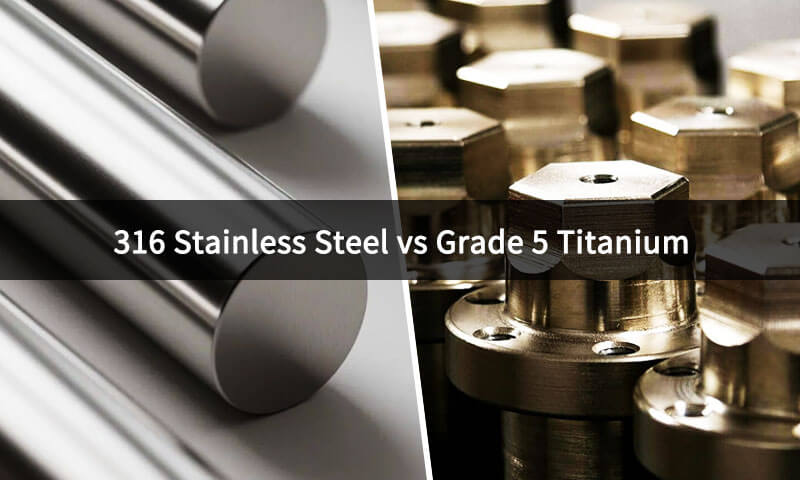
316 stainless steel vs Grade 5 titan (Ti-6al-4V) are both high-value engineering metals, nhưng chúng giải quyết những vấn đề khác nhau.
Thép không gỉ 316 is a molybdenum-bearing austenitic stainless steel, widely used because it combines reliable corrosion resistance, định dạng tốt, and practical weldability.
Cấp 5 titan, Ngược lại, is a two-phase alpha-plus-beta titanium alloy designed for high strength, Mật độ thấp, and excellent performance in demanding aerospace and marine environments.
Their overlap is real, but it is limited: they often compete in the same design conversation, yet they are optimized around different physics.
From an engineering standpoint, the comparison is not just about “which is stronger” or “which resists corrosion better.”
It is about the full performance stack: Tỉ trọng, Độ cứng, strength retention, Mở rộng nhiệt, fabrication burden, service temperature, and lifecycle economics.
316 stainless steel is usually the more accessible and forgiving stainless option; Ti-6Al-4V titanium is the more specialized high-performance option.
2. Là gì 316 thép không gỉ?
316 thép không gỉ là một austenitic chromium-nickel-molybdenum stainless steel designed for environments where corrosion resistance must go beyond what standard 304-grade stainless steel can provide.
Its defining metallurgical feature is the addition of Molypden, which significantly improves resistance to rỗ Và Ăn mòn kẽ hở, especially in chloride-bearing media such as seawater, saline atmospheres, and many industrial process streams.
Trong thực tế, Điều này làm cho 316 one of the most widely used stainless steels for corrosive service.
Về mặt cấu trúc, thép không gỉ 316 is an austenitic steel, which means it retains the classic advantages of that family: Độ dẻo cao, Độ cứng tốt, non-hardenability by conventional heat treatment, and strong weldability.
These traits make it suitable not only for corrosive service, but also for fabrication-heavy applications where formed and welded assemblies are common.
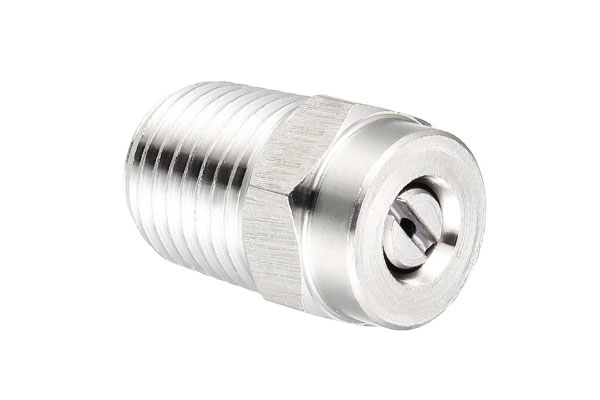
316 Stainless Steel Variants
Các 316 family is not a single fixed material. The main practical variants are 316, 316L, 316H, Và 316Của, each tuned for a different balance of corrosion resistance, Khả năng hàn, và hiệu suất nhiệt độ cao.
The low-carbon 316L stainless steel is especially important because reduced carbon improves resistance to intergranular corrosion in welded or sensitization-prone structures.
316H is used where higher strength at elevated temperature is desired, trong khi 316Của is titanium-stabilized for improved behavior in certain hot-service applications.
Đặc trưng
- strong resistance to pitting and crevice corrosion in chloride environments;
- good general corrosion resistance in a wide range of process conditions;
- excellent formability and fabricability;
- strong weldability by standard fusion methods;
- Độ cứng tốt, including useful low-temperature performance;
- a stiff, dimensionally stable structure for conventional engineering use.
3. Lớp là gì 5 Titan?
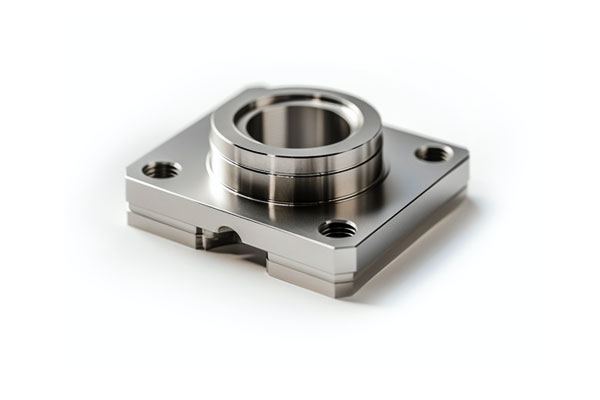
Cấp 5 titan, còn được gọi là Ti-6al-4V, is the most widely used titanium alloy and the benchmark material in the titanium family.
It is an alpha-beta titanium alloy, meaning its chemistry is designed to stabilize both the alpha and beta phases, producing a strong and versatile structure.
The alloy is valued for combining very low density với sức mạnh cao, Kháng ăn mòn tuyệt vời, and strong fatigue performance.
That combination is why it is called the “workhorse” titanium alloy in industrial use.
Compared with stainless steel, Lớp Titan 5 offers a much higher strength-to-weight ratio and significantly lower density.
Compared with many other lightweight metals, it offers superior fatigue performance and more reliable corrosion resistance in demanding environments such as seawater and many chemical service conditions.
Cấp 5 Titanium Variants
The most important variant is Cấp 5 Eli (Thêm kẽ thấp).
ELI contains lower interstitial impurities, particularly oxygen, and is used where improved ductility and fracture toughness are more important than maximum strength.
This version is especially relevant in fracture-critical, đông lạnh, and some thuộc về y học ứng dụng.
More generally, Cấp 5 is also supplied in product forms and specifications adapted to different industrial sectors, including sheet, đĩa, thanh, rèn, and aerospace-qualified material forms.
The underlying chemistry remains Ti-6Al-4V, but processing and specification control tailor the material for particular service requirements.
Đặc trưng
- very low density relative to steel;
- sức mạnh cao, especially after suitable heat treatment;
- Kháng ăn mòn tuyệt vời in many media, bao gồm nước biển;
- Kháng mệt mỏi tốt, particularly in wet environments;
- useful temperature capability, with common service guidance up to around 400° C. / 750° f;
- Khả năng hàn, provided contamination control is strict;
- hot formability, though room-temperature forming is more difficult than with stainless steel.
4. Thành phần hóa học: 316 Stainless Steel vs Grade 5 Titan
The two alloys belong to completely different metallurgical families, and their chemistry explains most of their behavioral differences.
The table below lists the standard composition ranges used in engineering datasheets.
| Yếu tố | 316 thép không gỉ | Cấp 5 Titan |
| Kim loại cơ bản | Sắt (THĂNG BẰNG) | Titan (THĂNG BẰNG) |
| Crom (Cr) | 16.0–18,0% | - |
| Niken (TRONG) | 10.0–14.0% | - |
| Molypden (MO) | 2.00–3.00% | - |
| Carbon (C) | 0.08% max for 316; 0.030% max for 316L | 0.10% Tối đa |
| Mangan (Mn) | 2.00% Tối đa | - |
| Silicon (Và) | 0.75% Tối đa | - |
| Phốt pho (P) | 0.045% Tối đa | - |
| Lưu huỳnh (S) | 0.030% Tối đa | - |
| Nitơ (N) | 0.10% Tối đa | 0.05% Tối đa |
| Nhôm (Al) | - | 5.50–6,75% |
| Vanadi (V) | - | 3.50–4.50% |
| Sắt (Fe) | Sự cân bằng | 0.40% Tối đa |
| Ôxy (O) | - | 0.020% Tối đa |
| Hydro (H) | - | 0.015% Tối đa |
| Các yếu tố khác | - | 0.40% max total; 0.10% max each |
316 stainless steel’s chemistry is built around corrosion resistance in chloride-bearing environments, with molybdenum as the key differentiator from lower-alloy stainless grades.
Cấp 5 titanium’s chemistry is built around Sức mạnh cụ thể cao, with aluminum stabilizing the alpha phase and vanadium stabilizing the beta phase, which is what makes the alloy heat-treatable and structurally efficient.
5. Tính chất vật lý và cơ học
The comparison below uses representative room-temperature datasheet values.
That matters, because both alloys are product-form dependent: 316 values vary by grade and product condition, while Ti-6Al-4V titanium values depend on section size, Điều trị nhiệt, and whether the material is supplied as bar, đĩa, or forging stock.
The figures here are therefore best read as engineering reference values, not as immutable constants.
Tính chất vật lý
| Tài sản | 316 thép không gỉ | Cấp 5 Titan |
| Tỉ trọng | 8.0 g/cm³ (0.289 lbm/in³) | 4.42–4.43 g/cm³ (0.160 lb/in³) |
| mô đun đàn hồi | 200 GPA (29 × 10⁶ psi) | 114 GPA đặc trưng |
| Hệ số giãn nở nhiệt | 16.0 × 10⁻⁶/k (20Mạnh100 ° C.) | 8.6 × 10⁻⁶/k (20Mạnh100 ° C.) |
| Độ dẫn nhiệt | 15 có/(m · k) | 6.7 ĐẾN 7.5 W/m · k |
| Nhiệt dung riêng | 500 J/(kg·K) | 553-570 J/(kg·K) |
| Magnetic response | KHÔNG | Không có |
Tính chất cơ học
| Tài sản | 316 thép không gỉ | Cấp 5 Titan |
| Sức mạnh năng suất | 205 MPA tối thiểu | 828 MPA tối thiểu; 910 MPA đặc trưng |
| Độ bền kéo | 515 MPA tối thiểu (typical product forms) | 895 MPA tối thiểu; 1,000 MPA đặc trưng |
| Kéo dài | 40% | 10% tối thiểu; 18% đặc trưng |
| Độ cứng | 140Mạnh190 HB | 36 HRC đặc trưng |
| Gãy xương / fatigue behavior | Excellent toughness in the solution-annealed condition; suitable for cryogenic applications | Excellent fatigue behavior; crack initiation is not affected by water or salt below 230° C. |
| Service temperature capability | Excellent cryogenic toughness; elevated-temperature behavior depends on grade/variant such as 316Ti | Recommended service range -210°C to 400°C |
6. Hiệu suất ăn mòn trong các môi trường khác nhau
Chloride and marine exposure
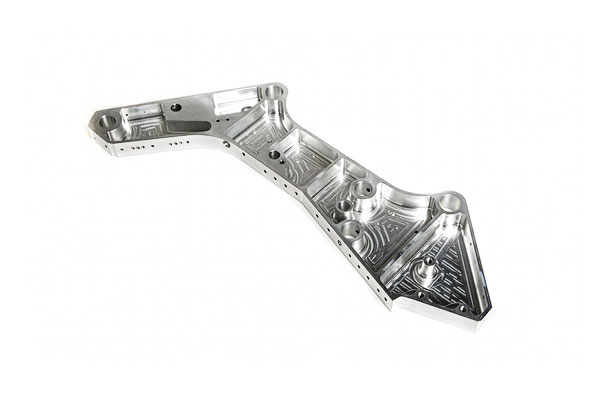
316 stainless steel is specifically valued for its resistance to pitting and crevice corrosion in chloride environments.
Molybdenum improves resistance to these forms of attack, Và 316 family offers excellent resistance in acidic or neutral chloride solutions.
Điều này làm cho 316 a dependable stainless steel for marine-adjacent hardware, process tanks, and equipment exposed to chloride-bearing fluids.
Lớp Titan 5 behaves differently. Its corrosion resistance in seawater as arising from passivation by a protective TiO₂ layer and states that its general corrosion resistance in seawater at normal ocean temperatures is very strong.
Trong điều khoản thực tế, Cấp 5 titanium often outperforms stainless steel 316 in seawater service, especially where long-term corrosion resistance is more important than fabrication economy.
Wet process and general corrosive service
Thép không gỉ 316 is a widely accepted choice for process streams containing chlorides or halides, moderately oxidizing and reducing environments, and polluted marine atmospheres.
It also has excellent toughness at cryogenic temperatures and good as-welded resistance to intergranular corrosion when the low-carbon variant is used.
That broad but not unlimited corrosion envelope explains why 316 is so common in chemical and food-processing equipment.
Ti-6Al-4V titanium is stronger in seawater and many chloride-exposed service conditions, but chloride contamination can contribute to stress corrosion cracking above about 450° f (230° C.).
So titanium’s corrosion advantage is real, but not unconditional; temperature and contamination control still matter.
Corrosion versus temperature
316Ti is specifically positioned for elevated-temperature applications, and 316L is used when welding and intergranular corrosion resistance are priorities.
Cấp 5 titan, Ngược lại, has a recommended general service range of roughly -350°F to 750°F, with performance outside that range dependent on specific conditions.
That makes 316 the more versatile stainless-family option for hot fabrication-heavy systems, trong khi lớp 5 titanium is the better choice where lower density and high structural efficiency dominate.
7. Sự chế tạo, Hàn, và cân nhắc sản xuất
316 thép không gỉ: easier fabrication and broader shop compatibility
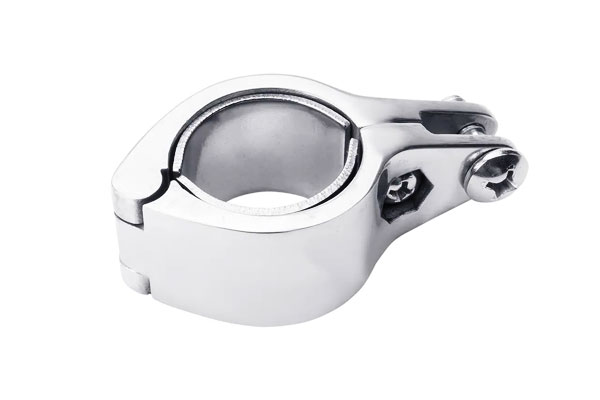
316 stainless steel is generally the easier material to fabricate.
Các 316 family as having good formability and weldability, and low-carbon 316L is especially valuable where welding is frequent because it reduces the risk of carbide precipitation and intergranular corrosion in the heat-affected zone.
In practical manufacturing terms, this means stainless steel 316 fits comfortably into standard stainless-steel fabrication workflows.
That fabrication friendliness matters. 316 can be formed, uốn cong, hàn, and finished using widely available shop methods, and the alloy is well understood by most stainless fabricators.
For large welded assemblies, Thiết bị hóa học, đường ống, and sheet-metal structures, this predictability is a major advantage because it lowers process risk and shortens production development time.
Cấp 5 titan: fully manufacturable, but more process-sensitive
Ti-6Al-4V titanium is also fully manufacturable, but it demands more control than 316 thép không gỉ.
Datasheets state that Ti-6Al-4V can be machined using practices similar to austenitic steels, nhưng với tốc độ chậm, thức ăn nặng, dụng cụ cứng nhắc, and non-chlorinated cutting fluids.
That combination tells the real story: titanium is not exotic to make, but it is less forgiving than stainless steel and rewards disciplined process control.
Forming behavior is another key difference. Ti-6Al-4V is commonly described as difficult to form at room temperature, so severe forming is usually done hot or with carefully managed thermal processing.
It is readily forged, with forging commonly performed near 1750° f / 955° C. or close to the alpha-plus-beta working range.
Trong thực tế, titanium fabrication is very feasible, but it is built around tighter thermal windows and more careful control of microstructure than 316 sự chế tạo.
Hàn: both weldable, but the quality-control burden differs
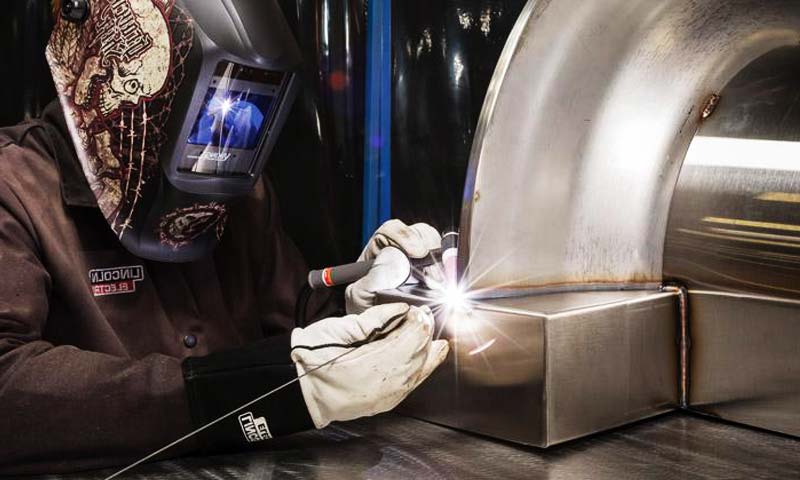
316 stainless steel is generally straightforward to weld with conventional stainless processes.
The low-carbon 316L variant is particularly useful because it reduces sensitization concerns after welding and helps preserve corrosion resistance in welded assemblies.
That is one reason 316L is so widely used in process equipment, đường ống, and welded fabrications.
Lớp Titan 5 is weldable as well, but welding must be carried out with strict attention to contamination control.
Titanium has a high affinity for oxygen, nitơ, và hydro, and the datasheet explicitly warns that chloride contamination, Ứng suất dư, and elevated temperature can contribute to stress corrosion cracking.
It also states that chlorine-free solvents should be used and that fingerprints and other chloride traces should be removed before heating operations.
Trong điều khoản thực tế, titanium welding is not difficult because the alloy cannot be welded; it is difficult because quality control must be unusually strict.
Xử lý nhiệt và hậu xử lý
316 stainless steel and Ti-6Al-4V titanium also differ in how they respond to thermal post-processing.
Ss 316 is typically handled as a conventional stainless steel, with annealing, ngâm, and passivation used where appropriate to restore corrosion performance after fabrication.
Its low-carbon or stabilized variants are chosen when thermal exposure during welding or service makes sensitization a concern.
Cấp 5 titan, Ngược lại, is commonly supplied in the annealed or solution-treated-and-aged condition, and its heat treatment is tied directly to the final balance of strength and toughness.
The datasheet notes that heat treatment and conditioning often require vacuum or inert-gas practice to avoid alpha-case formation and contamination-related property loss.
This is one of the main reasons titanium manufacturing is more specialized: the material’s final properties are very sensitive to thermal atmosphere control.
8. Ứng dụng công nghiệp: 316 Stainless Steel vs Grade 5 Titan
316 thép không gỉ: the corrosion-resistant fabrication alloy
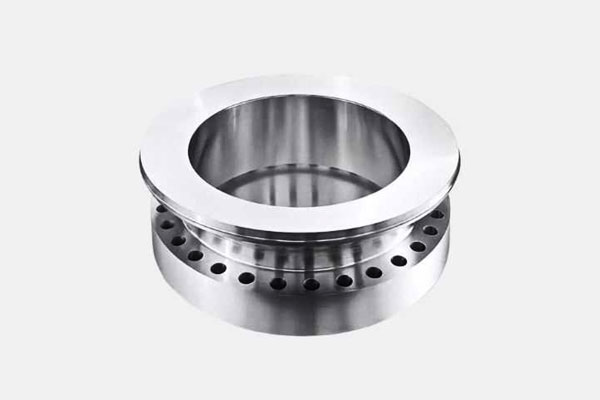
316 stainless steel is widely used where corrosion resistance, Khả năng hàn, and fabrication simplicity matter more than minimum weight.
Technical datasheets identify typical uses such as Thiết bị chế biến thực phẩm, brewery equipment, chemical and petrochemical equipment, laboratory equipment, marine-exposed tubing, Trao đổi nhiệt, ống xả, Các bộ phận lò, valve and pump trim, and architectural or marine hardware.
Its appeal is not that it is the lightest or strongest option, but that it offers a dependable combination of corrosion resistance and manufacturing practicality across a broad industrial range.
Trong thực tế, Ss 316 tends to be selected when the component must be hàn, hình thành, làm sạch, and maintained economically, while still operating in chloride-bearing or moderately corrosive environments.
That is why it appears so often in process equipment, fluid-handling systems, and marine-adjacent hardware.
The material is especially effective when the design calls for a stainless solution that can be fabricated with standard shop methods rather than specialized titanium-grade controls.
Cấp 5 titan: the high-specific-strength structural alloy
Cấp 5 titanium is used in a different kind of problem.
Datasheets list applications such as aero-engine components, airframe components, hàng hải thiết bị, offshore oil and gas equipment, power-generation hardware, autosport parts, pumps and valves, turbines and airframes, Cấy ghép chỉnh hình, dụng cụ phẫu thuật, stress joints, tăng, và vỏ.
The common thread is not simply corrosion resistance; nó là high strength at low weight, often in environments where performance, độ tin cậy, and mass savings all matter at the same time.
Ti-6Al-4V titanium becomes especially valuable when mass reduction has a system-level benefit.
Trong hàng không vũ trụ, Ví dụ, lower density can reduce structural loads and improve efficiency.
The marine and offshore systems, titanium’s corrosion resistance can justify its premium position when long service life and low maintenance are important.
Trong các ứng dụng y tế, the alloy’s combination of strength, kháng ăn mòn, and biocompatibility makes it a standard material for load-bearing and precision devices.
9. Trị giá, Giá trị vòng đời, and Total-Cost Thinking
There is no need to pretend the cost decision is subtle: based on chemistry, processing control, and fabrication difficulty, Cấp 5 titanium is generally the more expensive material to put into service, trong khi 316 stainless steel is typically the more economical of the two.
That is an inference from the data rather than a live market quote, but it is a very strong one: 316 is a conventional stainless steel with easy fabrication, whereas titanium Grade 5 requires tighter chemistry control, more careful forming, and more disciplined welding.
Lifecycle value can overturn the initial purchase-price intuition. If lower mass reduces structural loads, improves energy efficiency, or enables a simpler design, Ti-6Al-4V titanium may deliver better total value despite the higher entry cost.
If the part is large, weld-intensive, and does not benefit materially from lower density, 316 often offers the better total-cost outcome.
The correct decision is therefore economic and functional, not just material-based.
10. So sánh toàn diện: 316 Stainless Steel vs Grade 5 Titan
| Loại | 316 thép không gỉ | Cấp 5 Titan (Ti-6al-4V) |
| Gia đình hợp kim | Thép không gỉ Austenitic | Hợp kim titan alpha-beta |
| Main alloying elements | Cr 16–18%, Ni 10–14%, MO 2… 3% | Al 5.50–6.75%, V 3.50–4.50% |
| Tỉ trọng | 8.0 g/cm³ | 4.43 g/cm³ |
| mô đun đàn hồi | 193 GPA | 105GP120 GPA |
| Độ bền kéo | 515 MPa tối thiểu | Up to about 1100 MPa after heat treatment in sections up to 25 mm |
| Sức mạnh năng suất | 205 MPa tối thiểu | Up to about 1100 MPa ultimate / high yield depending on condition |
| Kéo dài | 40% tối thiểu | About 10–12% typical in cited datasheets |
| Sự giãn nở nhiệt | 16.6 × 10⁻⁶/k (20Mạnh100 ° C.) | About half that of austenitic stainless steel |
| Độ dẫn nhiệt | 15 W/m · k | Thấp hơn 316 in practical design terms |
Hành vi ăn mòn |
Excellent in many chloride-bearing environments; pitting/crevice resistance improved by Mo | Excellent seawater and many aqueous media; protected by a TiO₂ passive film |
| Sự chế tạo | Very good formability and weldability | Có thể hàn, but more sensitive to contamination and process control |
| Gia công | Conventional stainless-steel practice | Rigid tooling, tốc độ chậm, thức ăn nặng, non-chlorinated cutting fluid |
| Typical use case | Thiết bị hóa học, Phần cứng hàng hải, chế biến thực phẩm, welded assemblies | Cấu trúc hàng không vũ trụ, high-integrity marine parts, Tàu áp lực, weight-critical components |
11. Phần kết luận
316 thép không gỉ vs lớp 5 titan are both excellent materials, but they are optimized for different engineering priorities.
316 stainless steel is the more conventional and fabrication-friendly alloy: it offers strong chloride resistance, Khả năng hàn tuyệt vời, độ dẻo tốt, and very high stiffness.
Cấp 5 titanium is the more specialized high-performance alloy: it is far lighter, much stronger, more dimensionally stable with temperature changes, and highly effective in aerospace and seawater-exposed applications.
The real decision is not whether one material is universally better.
It is whether the design is dominated by stiffness, corrosion in chloride service, fabrication simplicity, and cost-efficiency—conditions that favor 316—or by weight reduction, Sức mạnh cụ thể cao, and premium performance under demanding conditions—conditions that favor Ti-6Al-4V titanium.
That is the cleanest way to read the comparison.
Câu hỏi thường gặp
Đó là mạnh hơn, 316 stainless steel vs Grade 5 titan?
Cấp 5 titanium is stronger. 316 Tại 515 MPa minimum tensile strength Và 205 MPa minimum yield strength, trong khi lớp 5 can develop about 1100 MPa ultimate strength in suitable heat-treated sections.
Which resists corrosion better?
Nó phụ thuộc vào môi trường. 316 is especially strong against pitting and crevice corrosion in chloride environments, while Ti-6Al-4V titanium has excellent general resistance in seawater due to its TiO₂ passive layer.
Which is better for marine use?
Both can be used, but for different reasons. 316 is a strong stainless choice for chloride exposure,
trong khi lớp 5 titanium is exceptionally resistant to general seawater corrosion and is often preferred when weight and long-term seawater durability matter more.
Which is better for aerospace?
Lớp Titan 5 is the more natural aerospace alloy because it combines low density with high strength and is used in compressor blades, airframe components, Tàu áp lực, and rocket engine cases.
Là lớp 5 titanium always better than 316?
KHÔNG. 316 cứng hơn, easier to fabricate, and often more practical in corrosion-resistant equipment. Ti-6Al-4V is better when weight and specific strength dominate the design problem.