1. Вступ
Обробні дошки відіграють ключову роль у гігієні кухні та приготуванні їжі.
Вони захищають стільниці, зберегти леза ножа, і допомагає запобігти перехресному забрудненню.
Ще, Вибір правильного матеріалу обробної дошки передбачає не тільки естетику; це безпосередньо впливає на довговічність, безпека, та зусилля з обслуговування.
У цій статті, ми порівнюємо обробну дошку з нержавіючої сталі та титану за властивостями матеріалів, продуктивність різання, гігієна, довговічність, вартість, дизайн, та реальні програми.
До кінця, ви матимете чіткі рамки для вибору ідеальної дошки для ваших кулінарних потреб.
2. Матеріальні властивості
Нержавіюча сталь
Нержавіюча сталь зазвичай використовують обробні дошки оцінка 304 і 316.
Сорт 304 містить приблизно 18% хром (Cr) і 8% нікель (У), поки клас 316 підвищує молібден (Mo) вміст до о 2%, підвищення стійкості до хлоридів.

Обидва сорти досягають твердості за Роквеллом B80-B95 (≈170–220 HV) і мають щільність 7.8 g/cm³.
Хром підвищує стійкість до корозії, утворюючи пасив Cr₂o₃ шар. При подряпинах, плівка самовідновлюється протягом декількох хвилин у насиченому киснем середовищі.
Завдяки цій пасивації, нержавіючі дошки стійкі до іржі та плям навіть після багатьох років використання на кухні.
Титан
Титан входить обробна дошка комерційно чистий (Cp) оцінка або сплаву TI-6AL-4V.
CP titanium забезпечує міцність на розрив 300–500 МПа, твердість ≈150 HV, і щільність 4.5 g/cm³.
Навпаки, Ti-6Al-4V — використовується там, де важлива додаткова довговічність 900 MPA міцність на розрив і ≈350 HV твердість.

Рідний Титан титановий діоксид шар утворюється спонтанно, забезпечує неперевершену стійкість до корозії за будь-яких умов pH, включаючи солоне і кисле середовище.
Ця оксидна плівка залишається стабільною навіть за екстремального термічного чи хімічного впливу.
3. Продуктивність різання & Дружність до ножа
Твердість поверхні та зносостійкість
Дошки з нержавіючої сталі досягають 200–220 HV, достатньо, щоб протистояти ударам, але досить міцно, щоб з часом затупити ножі.
Плати з титанового сплаву, в ≈350 HV, витримує інтенсивне використання з мінімальним зносом. Однак, менша твердість чистого титану (~150 HV) робить його більш сприйнятливим до подряпин.
Вплив на утримання леза ножа
Часте рубання нержавіючої сталі прискорює затуплення леза: ножі програють приблизно 20–30% гостроти краю після 500 відбивні.
Плати з титанового сплаву зменшують ці втрати до 10–15%, завдяки низькому коефіцієнту стирання титану.
Проте обидва матеріали залишаються менш поблажливими, ніж дерево чи пластик; сталеві або титанові дошки забезпечують довговічність торгового ножа для гігієнічних переваг.
Тяга та безпека
Нержавіючі та титанові поверхні можуть стати слизькими, коли намокнуть. Виробники часто об'єднуються оброблені пази або фактурні візерунки для посилення зчеплення.
Наприклад, a 1 мм фінішна обробка з бісером збільшує коефіцієнт тертя на 25%, зменшення аварій, пов’язаних із ковзанням.
4. Гігієна & Безпека харчових продуктів
Забезпечення захисту обробної дошки від розмноження бактерій і перехресного зараження є одним з найважливіших питань на будь-якій кухні.
Як нержавіюча сталь, так і титан мають невід'ємні переваги перед пористими матеріалами, такими як деревина чи певні пластики, але вони відрізняються ключовими гігієнічними показниками.

Непористість і утримання бактерій
Присутні обидва метали непорочний поверхні, які позбавляють бактерій мікроскопічних щілин, необхідних для колонізації.
У незалежних лабораторних тестах, з нержавіючої сталі зберігається менше ніж 10 колонієутворюючі одиниці (КУО) на см² на Кишкова паличка після стандартного циклу прання,
тоді як титан зареєстрований ефективно 0 КУО/см² при ідентичних умовах.
Отже, жодна поверхня не містить вологи чи частинок їжі, і обидва перевершують полімерні плити (який може захопити до 1,000 КУО/см²) в мікробній чистоті.
Очищення та стерилізація
Більше, нержавіюча сталь витримує багаторазову хімічну та термічну обробку.
На комерційних кухнях регулярно стерилізують дошки з нержавіючої сталі автоклави при 121 ° C або з хлоровані дезінфікуючі засоби— методи, які не залишають довготривалих пошкоджень поверхні.
Аналогічно, міцний титан Tio₂ оксидна плівка стійка до витравлення або травлення від агресивних миючих засобів і відбілювачів, дозволяє мити в посудомийній машині та дезінфікувати УФ-світлом без погіршення якості.
Стійкість до фарбування, Запахи, та перехресне забруднення
Крім того, обидва матеріали стійкі до поглинання пігментів і запахів.
В 500-годинний прискорений тест фарбування, сорт 316 нержавіюча сталь показала нульову передачу кольору від томатного соку та куркуми,
і титан не виявляв зміни кольору поверхні або збереження запахів навіть після прямого контакту з екстрактами часнику та цибулі.
Така безреактивна поведінка гарантує, що на одній дошці можна безпечно готувати різні типи їжі — м’ясо, риба, фрукти, і овочі — без ризику перенесення смаку або хімічного вимивання.
Завдяки поєднанню непористої металургії з винятковою чистотою та стійкістю до плям, Обробні дошки з нержавіючої сталі та титану забезпечують безпечність харчових продуктів, які потрібні для професійної та домашньої кухні.
5. Міцність & Технічне обслуговування
Стійкість до подряпин і деформації
Нержавіюча сталь деформується при навантаженні вище 500 П., показуючи неглибокі вм’ятини. Титановий сплав витримує навантаження до 800 П. без остаточної деформації.
Чистий титан вм'ятини на 300 П., тому користувачі часто віддають перевагу Ti-6Al-4V у середовищах із високим стресом.
Стабільність розмірів і викривлення
Обидва метали протистоять викривленню під час термічного циклу між ними від –20 °C до 80 ° C.
У тривалих циклах миття в посудомийній машині, сорт 304 дошки експон 0.1% зміна розмірів, тоді як титан залишається незмінним.
Протоколи очищення
Дошки з нержавіючої сталі ефективно очищаються в комерційних посудомийних машинах і стійкі до кислотних мийних засобів.
Титан також витримує посудомийні машини, але вимагає відсутність пасивації після прання, оскільки його оксидний шар ніколи не руйнується.
6. Вартість & Економічні міркування
| Метричний | Нержавіюча сталь (304/316) | Комерційно чистий титан | Сплав Ti-6Al-4V |
|---|---|---|---|
| Ціна сировини (США/кг) | $3– 5 доларів | $10– 15 доларів | $20– 30 доларів |
| Складність виробництва | Помірний (штампування & закінчення) | Високий (точна обробка) | Дуже високий |
| Вартість життєвого циклу | Помірний (замінювати кожні 5–10 років) | Низький (20+ років) | Дуже низький |
7. Естетика & Гнучкість дизайну
Крім продуктивності та гігієни, обробні дошки служать візуальними та тактильними фокусами на сучасних кухнях.
Нержавіюча сталь і титан пропонують унікальні естетичні якості та можливості індивідуального налаштування, дозволяючи виробникам і користувачам адаптувати форму та функції.

Поверхнева обробка
Нержавіюча сталь
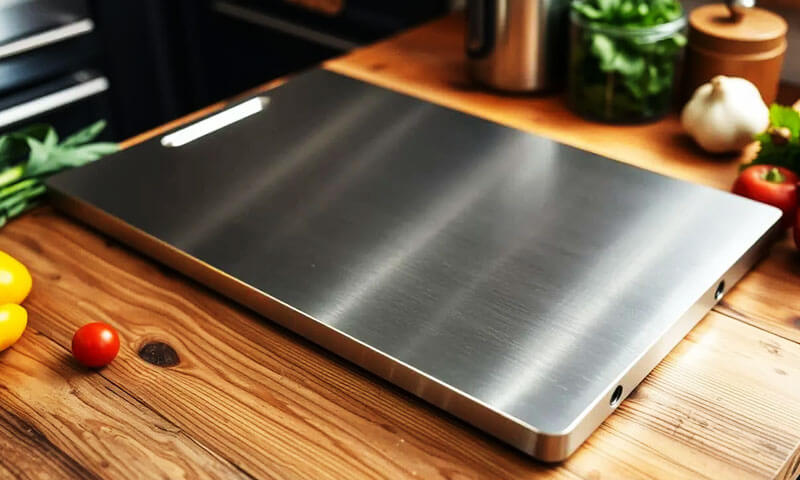
- Дзеркало-Полірований: Забезпечує світловідбиваючий ефект, глянцеве покриття, яке однаково доповнює професійні та житлові кухні.
Технічне обслуговування вимагає час від часу полірування для видалення дрібних подряпин. - Матовий (Сатин): Демонструє рівномірні лінійні лінії зерна, приховуючи незначні потертості, водночас створюючи гладкий вигляд, матовий вигляд.
Матові поверхні зберігають a коефіцієнт тертя (Квап) приблизно 0,35 — покращує зчеплення у вологих умовах. - Бісероструменена: Виробляє м'який, текстура з низьким коефіцієнтом відбиття. Це покриття зменшує видимі відбитки пальців і забезпечує приблизно значення CoF 0.45, підвищення стійкості до ковзання під час приготування їжі.
Титан
- Натуральний матовий: Рідний оксидний шар має м’який сірий матовий колір, який надзвичайно добре приховує зношення.
Його CoF поблизу 0.40 забезпечує баланс між стійкістю до ковзання та легкістю руху ножа. - Анодований Кольори: Електрохімічне анодування може давати яскраві відтінки — блакитні, фіолетові, золото — без шкоди для стійкості до корозії.
Варіанти кольорів варіюються у всьому спектрі кольорів, можливість виготовлення кухонних аксесуарів на замовлення. - Візерункова обробка: Фрезерування на ЧПУ створює мікротекстуровані поверхні (Напр., штриховий або рифлений) що покращує як естетику, так і функціональність зчеплення, з мінімальним впливом на леза ножа.
Параметри налаштування
Виробники та ремісники можуть пристосувати ці метали до точних вимог дизайну:
- Інкрустації та вставки: Врізані силіконові або дерев’яні вставки забезпечують м’яку зону посадки ножа та додають контрастні акценти.
Обидва метали допускають точне фрезерування кишень для вбудованої інкрустації. - Крайові профілі: Скошені, бичачий ніс, або скошені краї підвищують комфорт і безпеку.
Чудова оброблюваність титану (навіть при більш високих ступенях твердості) допускає складну геометрію країв без тріщин. - Лазерний гравірування & Потеблення: Високоенергетичні лазерні системи виробляють перманентне травлення — логотипи, вимірювальні шкали, або посібники з рецептами — з роздільною здатністю вищою за 100 мкм, додавання функціональних або фірмових елементів.
Сприйняття користувача: Вага, відчувати, і Premium Appeal
- Різниця у вазі:
-
- A 30×30×0,5 см дошка з нержавіючої сталі (щільність 7.8 g/cm³) важить приблизно 3.5 кг, тоді як ідентична титанова плата (щільність 4.5 g/cm³) важить лише 2.0 кг—а 43% зменшення.
Легкі титанові панелі покращують керованість, особливо на зайнятих кухнях або надворі.
- A 30×30×0,5 см дошка з нержавіючої сталі (щільність 7.8 g/cm³) важить приблизно 3.5 кг, тоді як ідентична титанова плата (щільність 4.5 g/cm³) важить лише 2.0 кг—а 43% зменшення.
- Тактильний досвід:
-
- Нержавіюча сталь – це круто, міцне відчуття при контакті передає довговічність і професійну естетику.
Навпаки, дещо тепліший дотик титану та витончена пружинна спинка забезпечують більшу чутливість, преміальна сенсація.
- Нержавіюча сталь – це круто, міцне відчуття при контакті передає довговічність і професійну естетику.
- Візуальний вплив:
-
- Дзеркально полірована сталь відбиває кольори навколишнього середовища, легко інтегрується в сучасні кухні з нержавіючої сталі.
Анодований титан пропонує сміливі акцентні кольори, що дозволяє дизайнерам поєднувати або контрастувати з шафами, прилади, і посуд.
- Дзеркально полірована сталь відбиває кольори навколишнього середовища, легко інтегрується в сучасні кухні з нержавіючої сталі.
8. Сценарії використання & Рекомендації
Вибір між обробними дошками з нержавіючої сталі та титану залежить від конкретних умов використання, бюджетні обмеження, і пріоритети ефективності.
Внизу, ми окреслюємо чотири поширені сценарії — професійні кухні, домашня кухня, зовнішнє використання, і обслуговування великого обсягу їжі з подальшими індивідуальними рекомендаціями.
Професійні кухні
У ресторанах і закладах громадського харчування, кухарі вимагають довговічності, санітарія, і легкість очищення при інтенсивному щоденному використанні.
- Рекомендація:Сорт 316 нержавіюча сталь дошки, 0.5– товщина – 1,0 см
-
- Обґрунтування: В ~4$ за кг, сорт 316 забезпечує чудову стійкість до корозії кислих продуктів і частого впливу дезінфікуючих засобів.
Можна використовувати в автоклаві та мити в посудомийній машині, ці дошки вимагають мінімального обслуговування. - Виконання: Витримує 500+ щоденні цикли прання і стійкий до вм’ятин під дією типового кухарського ножа (до 600 П.).
- Обґрунтування: В ~4$ за кг, сорт 316 забезпечує чудову стійкість до корозії кислих продуктів і частого впливу дезінфікуючих засобів.
Домашні кухарі
Домашні кухарі збалансовують ефективність, вартість і естетику. Вони часто готують різні інгредієнти, але в менших обсягах.
- Рекомендація:Матовий 304 нержавіюча сталь або комерційно чистий титан дошки, 0.5 см товщиною
-
- Обґрунтування: Матовий 304 нержавіючі витрати $3- 5 доларів за кг, протистоїть утворенню плям від томатів і цитрусових, і ідеально поєднується з кухонним декором.
Плати з чистого титану коштують $12- 15 доларів за кг але зважити 43% менше (≈2 кг проти. 3.5 кг на дошку 30×30 см). - Виконання: Нержавіюча сталь забезпечує відмінну гігієну та захист від ножа для помірного домашнього використання.
Титан додає відчуття преміум-класу та зручність використання для маленьких кухонь.
- Обґрунтування: Матовий 304 нержавіючі витрати $3- 5 доларів за кг, протистоїть утворенню плям від томатів і цитрусових, і ідеально поєднується з кухонним декором.
Відпочинок на природі та кемпінг
Портативність, стійкість до корозії в непередбачувану погоду, і багатоцільовий вибір дошки приводу для кемперів і туристів.
- Рекомендація:Комерційно чистий титан, 0.3– товщина – 0,5 см
-
- Обґрунтування: Титановий 4.5 g/cm³ щільність дає вагу дошки 1.2–2,0 кг, порівняно з 2,6–3,5 кг для нержавіючої сталі.
Його оксидний шар стійкий до дощу, річкова вода, та кислотні залишки від багаття. - Виконання: Титан витримує термічні удари, напр., розміщення гарячих сковорідок безпосередньо на дошці — і не вимагає покриття або обробки для підтримки стійкості до корозії.
- Обґрунтування: Титановий 4.5 g/cm³ щільність дає вагу дошки 1.2–2,0 кг, порівняно з 2,6–3,5 кг для нержавіючої сталі.
Обслуговування великого обсягу їжі
Зали громадського харчування, інституційні кафетерії, і харчові лінії вимагають важких плит, які витримують швидку пропускну здатність і безперервну санітарну обробку.
- Рекомендація:Сплав Ti-6Al-4V дошки, 0.8– товщина – 1,2 см, в поєднанні з дошками з нержавіючої сталі
-
- Обґрунтування: Хоча $20– 30$ за кг, Ti-6Al-4V витримує до 800 П. локалізованої сили без деформації та виживає 1,000+ щоденні прибирання.
Поєднання з основою з нержавіючої сталі забезпечує економічну підтримку та додаткову робочу поверхню. - Виконання: Ці плати мінімізують час простою для заміни, скорочення витрат протягом життєвого циклу, незважаючи на вищі початкові інвестиції.
- Обґрунтування: Хоча $20– 30$ за кг, Ti-6Al-4V витримує до 800 П. локалізованої сили без деформації та виживає 1,000+ щоденні прибирання.
Збалансування бюджету та продуктивності
Коли бюджет обмежений, вибирати матовий 304 нержавіюча сталь як універсальний, рішення середньої вартості.
Якщо вам потрібна легка портативність або преміальна довговічність, а бюджет дозволяє,титан або титановий сплав Плати виправдовують свою вартість за рахунок скорочення обслуговування та покращення взаємодії з користувачем.
Зведена таблиця рекомендацій
| Сценарій | Вибір матеріалу | Товщина | Блок. Вартість | Ключова вигода |
|---|---|---|---|---|
| Професійні кухні | 316 Нержавіюча сталь | 0.5–1,0 см | $4 / кг | Корозія & санітарна стійкість |
| Домашні кухарі | 304 Нержавіюча сталь або чистий титан | 0.5 см | $3– 5 доларів / кг (СС); $12– 15 доларів / кг (На) | Економічний або легкий |
| Відкритий & Кемпінг | Чистий титан | 0.3–0,5 см | $12– 15 доларів / кг | Портативність & всепогодна стійкість |
| Обслуговування великого обсягу їжі | Сплав Ti-6Al-4V + Підтримка СС | 0.8–1,2 см | $20– 30 доларів / кг | Надзвичайна довговічність & довговічність |
9. Висновок
Обробні дошки з нержавіючої сталі та титану забезпечують переконливі переваги.
Нержавіюча сталь пропонує баланс доступності, Корозійна стійкість, і легке обслуговування.
Титан, особливо Ti-6Al-4V, відрізняється твердістю, легкість, і максимальна стійкість до корозії, хоча і з вищою початковою ціною.
Шляхом зважування продуктивності різання, гігієнічні вимоги, бюджетні обмеження, та дизайнерські переваги, ви можете вибрати матеріал, який відповідає вашим кулінарним умовам і вимогам використання.
Зрештою, обидва метали є значним кроком у порівнянні з традиційними дерев'яними або пластиковими плитами, пропонуючи неперевершену довговічність і чистоту для сучасних кухонь.