1. Why dimensional accuracy matters
Dimensional accuracy is one of the most critical quality attributes of odlewy, bezpośrednio wpływające na precyzję montażu, niezawodność funkcjonalna, Życie zmęczeniowe, i wymienność.
In industries such as aerospace, automotive powertrain, precision machinery, urządzenia medyczne, i sprzęt energetyczny, dimensional deviations of even a few tenths of a millimeter can result in assembly failure, performance degradation, or excessive downstream machining costs.
Despite its importance, dimensional accuracy is frequently underestimated in daily foundry operations.
Many manufacturers rely heavily on mold compensation or increased machining allowances to mitigate dimensional issues.
While these measures may temporarily mask problems, they do not address the underlying process variability.
Więc, when customers impose stringent tolerance requirements, manufacturers often find themselves unable to achieve consistent results.
Dimensional accuracy is not governed by a single parameter; it is the cumulative outcome of tooling behavior, material characteristics, equipment capability, historia termiczna, and process design.
This article systematically analyzes the principal factors affecting casting dimensional accuracy—particularly in investment casting—based on industrial practice and engineering principles, and provides practical guidance for effective control.
2. Overview — main sources of dimensional variation
At a high level, dimensional errors originate from four domains:
- Projekt / process scheme: bramkowanie, Geometria części, wall-thickness distribution, core supports.
- Obróbka / pleśń: geometria, thermal state, release behavior and wear.
- Przybory: wax chemistry (Casting inwestycyjny), refractory composition, recycled content variability.
- Sprzęt & działanie: injection temperature/pressure, machine control precision, shell temperature at pour, cooling/drying conditions and human factors.
Each domain interacts: NP., mold temperature affects wax shrinkage; shell temperature affects metal solidification and shell bulging; wax injection pressure and release timing create internal stresses that relax during cooling.
3. Czynniki związane z pleśnią
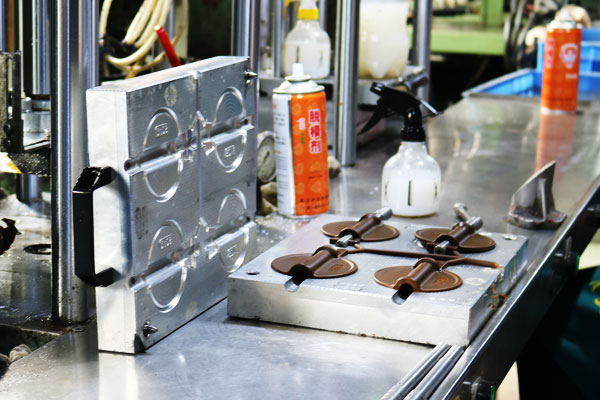
The mold defines the initial geometry of the wax pattern (or sand core, in other processes) and therefore establishes the baseline for dimensional accuracy.
Among mold-related variables, temperature control and structural design are the most influential yet often neglected.
Temperatura pleśni
Mold temperature has a direct and quantifiable impact on dimensional stability due to thermal expansion and contraction.
W Casting inwestycyjny, steel or aluminum molds can experience measurable dimensional change with temperature variation.
A temperature difference of 10 °C can cause dimensional changes on the order of 0.05–0.15 mm for medium-sized molds—significant for high-precision parts.
W rzeczywistości, molds are often transferred directly from storage areas (which may be unconditioned) into wax injection workshops. Seasonal temperature differences exacerbate the problem.
Wax patterns produced before the mold reaches thermal equilibrium will exhibit systematic dimensional deviation, even if all injection parameters remain unchanged.
Key control principles:
- Molds must be thermally stabilized in the wax injection environment before production.
- Mold temperature should be monitored and documented for precision castings.
- Temperature differences between mold, wosk, and ambient environment should be minimized to reduce differential cooling and shrinkage.
Mold Structure and Release Behavior
Mold structure influences how stresses develop and relax during wax solidification and demolding.
Poor mold design—such as insufficient draft, complex core-pulling mechanisms, or unbalanced cavity layouts—can cause wax pattern deformation during release.
Release timing is particularly critical:
- Premature demolding results in plastic deformation because the wax has not completed solidification and shrinkage.
- Excessive demolding delay increases adhesion and friction, requiring higher release forces that distort the pattern.
Dodatkowo, poorly designed runners and gates can cause uneven filling and non-uniform cooling, which translate into dimensional inconsistency.
4. Wax Material-Related Factors
W castingu inwestycyjnym, the wax pattern is the prototype of the casting, and its dimensional accuracy directly affects the dimensional accuracy of the final casting.
The quality and performance of the wax material—including the type of wax material and the state of recycled wax—are key factors affecting the dimensional stability of the wax pattern.

New Wax Material
Different manufacturers produce wax materials with different raw material compositions and additive ratios, leading to differences in their shrinkage rates.
Even when using the same mold, the dimensional accuracy of wax patterns produced by different wax materials will vary significantly.
The shrinkage rate of the wax material is a key indicator affecting the dimensional accuracy of the wax pattern;
a higher shrinkage rate will lead to greater dimensional deviation after the wax pattern cools, while a stable shrinkage rate is the basis for ensuring consistent wax pattern dimensions.
Dlatego, when producing castings with high dimensional accuracy, it is necessary to select wax materials from reputable manufacturers with stable performance,
and conduct strict inspection and testing of the wax material’s shrinkage rate before use to ensure it meets production requirements.
Recycled Wax
In most casting companies, wax materials are recycled and reused to reduce production costs.
Jednakże, in the recycling process, many factors will change the performance of the wax material, thereby affecting the dimensional stability of the wax pattern.
Po pierwsze, the addition ratio of new wax in recycled wax varies, resulting in inconsistent shrinkage rates of the mixed wax material.
Po drugie, the instability of the wax treatment process (such as insufficient melting or uneven mixing) leads to uneven performance of the wax material.
Ponadto, differences in water content and ash content between batches of recycled wax will also cause changes in the wax material’s shrinkage rate.
A practical and effective suggestion is that when producing castings with high dimensional accuracy, a dedicated wax injection machine should be used, and all new wax materials should be adopted for production.
This can minimize the impact of recycled wax on the dimensional accuracy of the wax pattern and ensure the consistency of the wax pattern dimensions.
Up to now, some companies still use cylinder-changing wax injection machines to produce high-precision products, aiming to control the temperature consistency of the wax material as much as possible, thereby ensuring the dimensional stability of the wax pattern.
5. Wax Injection Machine Performance
The performance of the wax injection machine is a key equipment factor affecting the dimensional stability of the wax pattern.
The precision with which the wax injection machine controls wax temperature, ciśnienie wtrysku, and other parameters directly determines the quality and dimensional accuracy of the wax pattern.
Practical testing has shown that when the set temperature of the wax injection machine is 53°C, the temperature of the wax material injected from the wax injection port fluctuates between 52°C and 56°C (excluding measurement errors),
indicating that the wax injection machine has insufficient precision in controlling wax material temperature.
In addition to equipment performance limitations, human factors also affect the performance of the wax injection machine.
Na przykład, some workers are accustomed to directly pouring waste wax patterns into the wax storage tank of the wax injection machine, which directly affects the temperature uniformity of the wax material in the tank.
The frequency of wax replenishment in the wax storage tank also affects the temperature uniformity of the wax material:
if wax is replenished too frequently, the temperature of the new wax will cause fluctuations in the overall temperature of the wax material in the tank;
if replenished too infrequently, the wax material’s temperature will decrease due to heat loss, leading to changes in its fluidity and shrinkage rate.
6. Wax Injection Parameters
Wax injection parameters are the most intuitive factors affecting the dimensional accuracy of the wax pattern, including wax injection pressure, mold release time, prędkość wtrysku, and other parameters.
Wśród nich, wax injection pressure and mold release time have the most significant impact on the dimensional accuracy of the wax pattern.
Wax injection pressure directly affects the filling degree of the wax material in the mold cavity.
If the injection pressure is too low, the wax material cannot fill the mold cavity completely, resulting in insufficient size of the wax pattern.
If the injection pressure is too high, the wax material will generate excessive internal stress in the mold cavity, and this internal stress will be released during cooling, leading to deformation of the wax pattern.
Jak wspomniano wcześniej, mold release time also has a direct impact on the dimensional accuracy of the wax pattern.
Jednakże, even if the wax injection parameters are set consistently, fluctuations in wax pattern dimensions still occur, which is closely related to the performance of the wax injection machine.
Practical testing found that when the same wax injection machine continuously produces 40 wax patterns of a flange (design size 95mm), the difference between the maximum and minimum sizes of the 40 wax patterns reaches 0.3mm.
Further investigation revealed that two of the wax patterns had dimensional deviations due to prolonged mold release time caused by workers taking breaks.
When the mold release time was artificially extended to 3 protokół, the dimensions of all wax patterns were almost consistent.
Jednakże, prolonged mold release time will seriously affect production efficiency, and many product structures are not suitable for extended mold release time; this test only verifies the impact of mold release time on wax pattern dimensions.
7. Wax Pattern Cooling
The cooling process of the wax pattern is a key link affecting its dimensional accuracy, especially for wax patterns with high dimensional accuracy.
W rzeczywistej produkcji, it is not recommended to use water to cool wax patterns with high dimensional accuracy.
Even if the wax pattern is covered after being put into water, it is easy to cause uneven cooling speed, resulting in uneven shrinkage and further deformation of the wax pattern.
In foreign advanced casting factories, water cooling of wax patterns is almost never used, which fully reflects the importance of uniform cooling for wax pattern dimensional accuracy.
For products prone to deformation, special shaping tools must be made for the wax pattern during cooling.
It should be noted that shaping tools are not recommended to be made of metals such as aluminum, as metals have high thermal conductivity, which will cause local rapid cooling of the wax pattern and lead to deformation.
In the production of certain aerospace products, each wax pattern is equipped with a dedicated cooling tool to ensure uniform cooling and maintain its dimensional accuracy.
8. Refractory Materials and Shell Strength
W castingu inwestycyjnym, the shell made of refractory materials serves as the mold for pouring molten metal, and the performance of refractory materials and the strength of the shell directly affect the dimensional accuracy of the final casting.
Different refractory materials have different thermal expansion coefficients (the impact of thermal expansion coefficients on casting dimensions has been mentioned in previous articles).
These differences will lead to variations in the expansion and contraction of the shell during heating and cooling, thereby affecting the dimensional accuracy of the casting.

Even when using the same refractory material, differences in slurry preparation, operation methods, and shell thickness will also impact casting dimensions.
Ponadto, shell bulging is another important factor affecting casting dimensional accuracy.
Shell bulging can be caused by unreasonable product structures, insufficient interlayer density of the shell during shell making, uneven shell thickness, and other reasons.
Once the shell bulges during pouring, the shape of the casting cavity will change, resulting in serious dimensional deviations of the casting.
9. Shell Temperature During Pouring
The temperature of the ceramic shell at the moment of pour is a critical process variable that directly controls how the molten metal solidifies — and therefore strongly influences final dimensions.
Shell temperature sets the local heat-extraction rate: a hotter shell reduces the metal’s cooling rate and delays solidification, while a colder shell increases the cooling rate and promotes rapid freezing.
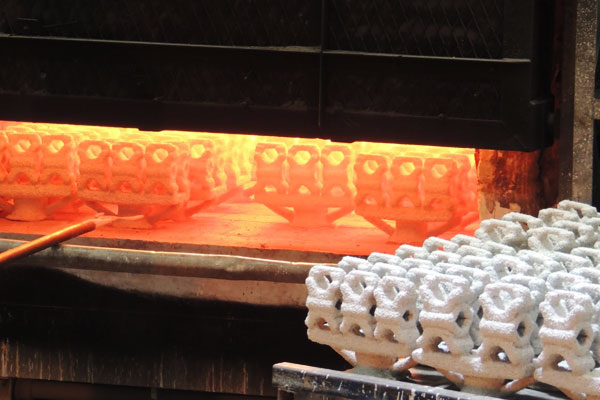
Both extremes change shrinkage behavior, feeding effectiveness and the propensity for casting defects.
- Too hot: when the shell is overheated (for example ~1000 °C versus a much cooler shell), the metal cools slowly, solidification is prolonged, and overall volumetric shrinkage can increase.
Slow cooling also shifts the location and timing of feeding, which may cause larger dimensional deviations or internal shrinkage defects because the part remains liquid longer and contraction is greater before the metal is fully supported by a rigid matrix. - Za zimno: when the shell is under-heated (for example ~600 °C), the metal freezes rapidly.
Rapid freezing can trap the metal before the cavity is completely filled and raise the likelihood of cold shuts, misruns or incomplete fills — all of which produce dimensional errors and nonconformities.
Because the optimal shell temperature depends on alloy chemistry, grubość sekcji, gating/riser design and the dimensional tolerance required, shell-temperature control must be specified and validated for each casting family.
Practical measures include pre-heating shells to a validated setpoint, monitoring shell temperature with thermocouples or IR pyrometers at representative locations, and logging temperatures for traceability.
Pilot pours or thermal simulations should be used to identify the shell-temperature window that produces uniform cooling, predictable feeding and the required dimensional stability.
Praktyczna lista kontrolna
- Define and document the target shell temperature range for each alloy and part geometry.
- Preheat shells and allow temperature equilibration before pouring; avoid large temperature gradients across the shell.
- Monitor shell temperature in real time (thermocouples or calibrated IR) and record readings for each batch.
- Use sample pours or simulation to validate the temperature window and confirm directional solidification and feeding performance.
- If dimensional drift appears, correlate it with shell-temperature logs as a first diagnostic step.
Controlling shell temperature is therefore a high-leverage control: it aligns solidification behavior with gating/riser strategy, minimizes shrinkage surprises and helps ensure repeatable dimensional accuracy.
10. Process Scheme Factors
The process scheme is the overall guide for casting production, and its rationality directly affects the dimensional accuracy of castings. Among the key factors here, gate position and casting structure are the most influential.
Different gate positions will lead to different degrees of casting deformation.
This point has typical cases in both investment casting handbooks and relevant professional books (such as works by Yamaya Yoko), and many industry experts have also cited relevant examples, so this article will not elaborate further.

The fundamental reason is that different gate positions lead to differences in the filling sequence, temperature field distribution, and stress distribution of the molten metal in the cavity, thereby causing variations in casting shrinkage and deformation.
Ponadto, different casting structures will also lead to uneven shrinkage of castings.
Na przykład, castings with complex structures, uneven wall thickness, and large differences in local volume will have uneven cooling speeds during the solidification process, resulting in uneven shrinkage and further dimensional deviations.
Dlatego, when designing the casting structure and process scheme, it is necessary to fully consider the impact of shrinkage on dimensional accuracy and take corresponding measures to reduce dimensional deviations.
11. Wniosek
The dimensional accuracy of castings is affected by numerous factors, including but not limited to molds, wax materials, wax injection machines, wax injection parameters, wax pattern cooling, Materiały refrakcyjne, shell temperature during pouring, and process schemes.
W rzeczywistej produkcji, manufacturers often only focus on individual factors (such as mold adjustment and increasing machining allowance) and ignore the comprehensive impact of various factors, resulting in failure to meet customers’ high dimensional accuracy requirements.
To produce castings with high dimensional accuracy, it is necessary to establish a comprehensive quality control system, strictly control every link of the production process, and pay attention to every detail that may affect dimensional accuracy.
In addition to the factors mentioned above, other aspects such as post-finishing (szlifowanie, obróbka) will also have a certain impact on casting dimensional accuracy.
Only by comprehensively considering and strictly controlling all relevant factors can the dimensional stability and accuracy of castings be effectively improved, meeting the increasingly high quality requirements of customers and enhancing the market competitiveness of enterprises.