1. Wstęp
3D drukowanie, Znany również jako produkcja addytywna, zrewolucjonizował współczesną produkcję, umożliwiając szybkie prototypowanie, personalizacja, i opłacalna produkcja.
W przeciwieństwie do tradycyjnej produkcji subtraktywnej, który usuwa materiał z stałego bloku, 3Drukowanie D konstruuje obiekty warstwa po warstwie w oparciu o modele cyfrowe.
Początkowo opracowany do prototypowania, obecnie rozszerzył się na zastosowania przemysłowe na dużą skalę, począwszy od przemysłu lotniczego po opiekę zdrowotną.
W tym artykule omówiono podstawy druku 3D, kluczowe technologie, opcje materiałowe, Aplikacje branżowe, zalety, wyzwania, oraz przyszłe innowacje kształtujące tę transformacyjną technologię.
2. Podstawy druku 3D
3D drukowanie, Znany również jako produkcja addytywna, zmienił sposób projektowania produktów, prototypowany, i wyprodukowane.
W przeciwieństwie do tradycyjnej produkcji subtraktywnej, gdzie materiał jest usuwany z stałego bloku, 3Drukowanie D buduje obiekty warstwa po warstwie w oparciu o modele cyfrowe.
Takie podejście umożliwia tworzenie złożonych geometrii, zmniejsza marnotrawstwo materialne, i umożliwia produkcję na żądanie.
Co to jest druk 3D?
3Drukowanie D jest proces wytwarzania przyrostowego która tworzy obiekty fizyczne na podstawie projektów cyfrowych, sukcesywnie dodając materiał warstwami.
Procesem sterują maszyny sterowane komputerowo, które postępują zgodnie z instrukcjami a 3Model D.
Podstawowy przebieg procesu drukowania 3D
Proces drukowania 3D przebiega według ustandaryzowanego przepływu pracy:
- 3D modelowanie – Obiekt został zaprojektowany przy użyciu CHAM (Projekt wspomagany komputerowo) oprogramowanie.
- Krajanie na plastry – Model jest konwertowany na warstwy i instrukcje za pomocą oprogramowania do krojenia.
- Druk – Drukarka 3D postępuje zgodnie z instrukcjami, aby zbudować obiekt.
- Przetwarzanie końcowe – Wydrukowany obiekt przechodzi czyszczenie, odnalezienie, lub zabiegi wykończeniowe.
3. Podstawowe technologie w druku 3D
3Technologie druku D znacząco ewoluowały, oferując różnorodne rozwiązania dla różnych gałęzi przemysłu.
Każda metoda ma wyraźne zalety pod względem precyzji, Kompatybilność materialna, prędkość produkcji, i zakres zastosowania.
Do najpowszechniej stosowanych technologii należą Modelowanie osadzania topionego (FDM), Stereolitografia (SLA), Selektywne spiekanie laserowe (SLS),
Bezpośrednie spiekanie metalowe (DMLS) / Topienie wiązki elektronów (EBM), Nakładanie spoiwa, I Natryskiwanie materiału.
Modelowanie osadzania topionego (FDM) – Niedrogi i wszechstronny
Proces:
FDM, znany również jako Produkcja włókien stopionych (FFF), wytłacza włókno termoplastyczne przez podgrzewaną dyszę, osadzanie materiału warstwa po warstwie w celu stworzenia obiektu.
Drukarka porusza się zgodnie z pociętym modelem cyfrowym, stopniowo budując konstrukcję.

Kluczowe funkcje:
- Wspólne materiały: Pla, Abs, PETG, Nylon, TPU
- Rezolucja: 50–400 mikronów
- Mocne strony: Tanie, przyjazny dla użytkownika, szybkie prototypowanie
- Ograniczenia: Widoczne linie warstw, ograniczona jakość powierzchni, mniejsza wytrzymałość w porównaniu do metod przemysłowych
Wgląd w branżę:
Według analizy rynku, Konta FDM obejmują ponad 50% stacjonarnych aplikacji do drukowania 3D, co czyni ją najpowszechniej stosowaną techniką na świecie.
Stereolitografia (SLA) – Druk żywiczny o wysokiej rozdzielczości
Proces:
SLA zatrudnia ultrafioletowy (UV) laser do zestalenia płynnej żywicy, tworząc precyzyjne warstwy. Laser selektywnie utwardza fotopolimer, stopniowo kształtując finalny obiekt.

Kluczowe funkcje:
- Wspólne materiały: Żywice standardowe, twarde żywice, żywice dentystyczne
- Rezolucja: 25–100 mikronów
- Mocne strony: Wysoka precyzja, gładkie wykończenie powierzchni, Drobne szczegóły
- Ograniczenia: Wymaga przetwarzania po przetwarzaniu (mycie, odnalezienie), kruche materiały
Selektywne spiekanie laserowe (SLS) – Mocne i trwałe części
Proces:
SLS wykorzystuje m.in laser o dużej mocy do stapiania sproszkowanego materiału, zazwyczaj nylonu lub tworzyw termoplastycznych, w solidne warstwy.
Ponieważ SLS nie wymaga konstrukcji wsporczych, umożliwia tworzenie skomplikowanych geometrii.

Kluczowe funkcje:
- Wspólne materiały: Nylon, TPU, proszki kompozytowe
- Rezolucja: 50–120 mikronów
- Mocne strony: Mocny, trwałe części o skomplikowanych konstrukcjach, nie są potrzebne żadne konstrukcje wsporcze
- Ograniczenia: Drogie drukarki klasy przemysłowej, szorstkie wykończenie powierzchni
Wgląd w branżę:
SLS jest szeroko stosowany w zastosowaniach przemysłowych, z Nylon 12 jest najczęściej drukowanym materiałem ze względu na swój charakter wysoka wytrzymałość na rozciąganie i elastyczność.
Bezpośrednie spiekanie metalowe (DMLS) & Topienie wiązki elektronów (EBM) – Druk 3D metalu do zastosowań przemysłowych
Proces:
DMLS i EBM to technologie wytwarzania przyrostowego metali, które korzystać ze źródeł wysokoenergetycznych (lasery lub wiązki elektronów) do stapiania proszków metali w części stałe.
Główna różnica polega na tym DMLS wykorzystuje laser w środowisku gazu obojętnego, chwila EBM wykorzystuje wiązkę elektronów w komorze próżniowej.

Kluczowe funkcje:
- Wspólne materiały: Tytan, aluminium, stal nierdzewna, Kobalt-chrom
- Rezolucja: 20–100 mikronów
- Mocne strony: Części metalowe o wysokiej wytrzymałości, Doskonałe właściwości mechaniczne, Lekkie struktury
- Ograniczenia: Drogi, niska prędkość drukowania, wymagana jest rozległa obróbka końcowa
Wgląd w branżę:
Przez 2030, . Przewiduje się, że branża druku 3D w metalu przekroczy $20 miliard, napędzany postępem w lotnictwie i medycynie.
Natryskiwanie spoiwa – szybka i skalowalna produkcja
Proces:
Spraye do natryskiwania spoiwa a płynny środek wiążący na warstwy sproszkowanego materiału, łącząc je ze sobą.
W przeciwieństwie do SLS lub DMLS, do natryskiwania spoiwa nie wykorzystuje się laserów, zrobienie tego szybsze i bardziej opłacalne do produkcji o dużej objętości.

Kluczowe funkcje:
- Wspólne materiały: Metal, piasek, ceramika, polimery pełnokolorowe
- Rezolucja: 50–200 mikronów
- Mocne strony: Szybkie prędkości produkcyjne, możliwości wielu materiałów, druk pełnokolorowy
- Ograniczenia: Wymaga przetwarzania po przetwarzaniu (spiekanie, infiltracja), niższa wytrzymałość mechaniczna
Wgląd w branżę:
Natryskiwanie spoiwa zyskuje na popularności masową produkcję części metalowych, ofiara 50–100 razy większa prędkość drukowania niż DMLS.
Material Jetting – druk pełnokolorowy i wielomateriałowy
Proces:
Natryskiwanie materiału powoduje osadzanie się ciekłych kropelek fotopolimeru, które następnie utwardza się warstwa po warstwie za pomocą światła UV.
Umożliwia to drukowanie w wysokiej rozdzielczości przy użyciu wielu kolorów i kombinacji materiałów.

Kluczowe funkcje:
- Wspólne materiały: Fotopolimery, wosk, ceramika
- Rezolucja: 16–50 mikronów
- Mocne strony: Wysoka dokładność, możliwość pełnego koloru, gładkie powierzchnie
- Ograniczenia: Drogi, kruche materiały, ograniczona siła
Wgląd w branżę:
Umożliwia natryskiwanie materiału druk wielomateriałowy z over 500,000 różnice kolorystyczne, co czyni go wiodącym wyborem dla wysokiej klasy prototypowanie produktów.
4. Materiały stosowane w druku 3D
Wybór materiałów jest kluczowym czynnikiem w druku 3D, wpływające na właściwości mechaniczne, trwałość, koszt, i zakres zastosowań drukowanych części.
Rozłożysto, 3Materiały drukarskie D można podzielić na polimery, metale, ceramika, i kompozyty.
Każda kategoria ma unikalne cechy, które sprawiają, że nadaje się do określonych zastosowań.
4.1 Polimery – wszechstronne i ekonomiczne
Polimery są najczęściej stosowanymi materiałami w druku 3D ze względu na ich przystępną cenę, łatwość przetwarzania, i szeroki zakres zastosowań. Materiały te są dostępne w włókno, żywica, lub w postaci proszku, w zależności od procesu druku 3D.
Termoplastics (FDM, SLS)
Tworzywa termoplastyczne miękną po podgrzaniu i twardnieją po ochłodzeniu, sprawiając, że są odpowiednie dla Modelowanie osadzania topionego (FDM) I Selektywne spiekanie laserowe (SLS).
| Tworzywo | Kluczowe właściwości | Typowe zastosowania |
|---|---|---|
| Pla (Kwas polimlekowy) | Biodegradowalny, łatwe do wydrukowania, niskie wypaczenie | Prototypowanie, modele hobbystyczne |
| Abs (Akrylonitryl-butadien-styren) | Trudny, odporne na uderzenie, odporne na ciepło | Części samochodowe, dobra konsumpcyjne |
| PETG (Glikol poli(tereftalanu etylenu).) | Mocny, odporne na chemiczne, bezpieczny dla żywności | Urządzenia medyczne, butelki z wodą |
| Nylon (Poliamid) | Elastyczny, odporne na zużycie, wytrzymały | Przekładnie, Części mechaniczne |
Fotopolimery (SLA, DLP)
Fotopolimery są żywice światłoczułe używane w Stereolitografia (SLA) I Cyfrowe przetwarzanie światła (DLP) druk.
Oferują wysoka rozdzielczość i gładkie wykończenie powierzchni, ale zwykle są kruche.
| Tworzywo | Kluczowe właściwości | Typowe zastosowania |
|---|---|---|
| Standardowa żywica | Wysoka szczegółowość, gładkie wykończenie | Prototypy, figurki |
| Twarda żywica | Odporny na uderzenia, mocniejsza niż standardowa żywica | Części funkcjonalne |
| Elastyczna żywica | Gumowe, właściwości elastyczne | Urządzenia do noszenia, uchwyty |
| Żywica dentystyczna | Biokompatybilny, dokładny | Nakładki dentystyczne, korony |
Polimery o wysokiej wydajności (ZERKAĆ, OSTATECZNY)
Używane w zastosowań przemysłowych i lotniczych, wykazują polimery o wysokiej wydajności doskonałe właściwości mechaniczne i termiczne.
| Tworzywo | Kluczowe właściwości | Typowe zastosowania |
|---|---|---|
| ZERKAĆ (Keton eterowy polieter) | Wysoka temperatura & Odporność chemiczna, mocny | Aerospace, Implanty medyczne |
| OSTATECZNY (Polieteroimid – PEI) | Wysoka siła, ognioodporne | Wnętrza samolotów, automobilowy |
4.2 Metale – wysoka wytrzymałość i zastosowania przemysłowe
Druk 3D z metalu umożliwia tworzenie złożony, części o wysokiej wytrzymałości dla wymagających branż, takich jak przemysł lotniczy, medyczny, i motoryzacyjne.
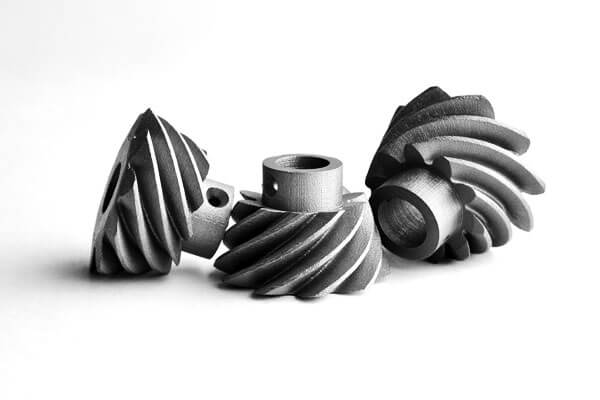
Materiały te są zwykle używane w Bezpośrednie spiekanie metalowe (DMLS), Topienie wiązki elektronów (EBM), i Binder Jetting.
| Tworzywo | Kluczowe właściwości | Typowe zastosowania |
|---|---|---|
| Tytan (TI-6AL-4V) | Lekki, mocny, odporne na korozję | Aerospace, Implanty medyczne |
| Stal nierdzewna (316L, 17-4 Ph) | Wytrzymały, odporne na zużycie | Narzędzia przemysłowe, Instrumenty chirurgiczne |
Aluminium (ALSI10MG) |
Lekki, Dobra przewodność cieplna | Automobilowy, elektronika |
| Kobalt-Chrom (CoCr) | Biokompatybilny, odporny na wysoką temperaturę | Implanty dentystyczne, Ostrza turbiny |
| Stopy niklu (Niewygod 625, 718) | Odporny na ciepło i korozję | Silniki odrzutowe, elektrownie |
4.3 Ceramika – odporność na ciepło i zużycie
Materiały ceramiczne są stosowane w zastosowaniach wymagających odporność na wysoką temperaturę, Stabilność chemiczna, i twardość.
Materiały te są drukowane przy użyciu natryskiwanie spoiwa, SLA, lub metody oparte na wytłaczaniu.
| Tworzywo | Kluczowe właściwości | Typowe zastosowania |
|---|---|---|
| Krzemowy węglik (Sic) | Wysoka siła, odporne na ciepło | Aerospace, elektronika |
| Glinka (AL2O3) | Twardy, chemicznie obojętne | Implanty biomedyczne, Komponenty przemysłowe |
| Cyrkonia (ZrO2) | Trudny, odporne na zużycie | Korony dentystyczne, narzędzia tnące |
4.4 Złożony & Zaawansowane materiały – zwiększona wydajność
Kompozyty łączą Polimery, metale, lub ceramika z włóknami wzmacniającymi ulepszyć Siła mechaniczna, przewodność, lub elastyczność.
Kompozyty wzmocnione włóknem
Są to włókno węglowe i włókno szklane osadzone w tworzywach termoplastycznych w celu poprawy siły i zmniejszenia masy ciała.
| Tworzywo | Kluczowe właściwości | Typowe zastosowania |
|---|---|---|
| Włókno węglowe Wzmocniony nylon | Wysoki stosunek wytrzymałości do ważności | Drony, robotyka, automobilowy |
| PLA wzmocniony włóknem szklanym | Sztywny, odporne na uderzenie | Składniki strukturalne |
Inteligentne i biodegradowalne materiały
Innowacje w biomateriały i samonaprawiające się poszerzają możliwości druku 3D.
| Tworzywo | Kluczowe właściwości | Typowe zastosowania |
|---|---|---|
| Polimery przewodzące | Przewodność elektryczna | Drukowana elektronika, czujniki |
| Polimery samoleczące | Naprawia drobne uszkodzenia | Urządzenia do noszenia, Komponenty lotnicze |
| Biodegradowalne mieszanki PLA | Przyjazny dla środowiska, kompostowalny | Zrównoważone opakowanie, Implanty medyczne |
5. Post-processing wydruków 3D
Obróbka końcowa to krytyczny etap druku 3D, który poprawia właściwości mechaniczne, Jakość powierzchni, i funkcjonalność drukowanych części.
Ponieważ surowe obiekty wydrukowane w 3D często wykazują linie warstw, chropowatość powierzchni, i pozostałości materiału, w oparciu o różne techniki przetwarzania końcowego rodzaj materiału, proces drukowania, i zamierzone zastosowanie.

Wybór metody obróbki końcowej zależy od czynników takich jak wymagania estetyczne, dokładność wymiarowa, integralność strukturalna, i warunki środowiskowe część będzie narażona.
Poniżej znajduje się kompleksowa analiza z najpopularniejszych technik post-processingu dla różnych technologii druku 3D.
Dlaczego przetwarzanie końcowe jest ważne?
- Poprawia wykończenie powierzchni – Zmniejsza szorstkość i poprawia estetykę.
- Zwiększa wytrzymałość mechaniczną – Usuwa mikrodefekty i zwiększa trwałość części.
- Optymalizuje funkcjonalność – Reguluje właściwości takie jak elastyczność, przewodność, i odporność na zużycie.
- Usuwa podpory & Pozostały materiał – Zapewnia, że część jest wolna od nadmiaru materiału lub nieestetycznych artefaktów.
- Umożliwia dodatkowe zabiegi – Pozwala malarstwo, platerowanie, lub uszczelnienie, w zależności od potrzeb aplikacji.
Typowe techniki przetwarzania końcowego w technologii druku
Modelowanie osadzania topionego (FDM) Przetwarzanie końcowe
Wydruki FDM często je mają widoczne linie warstw i wymagają usunięcia podpór. Do najpopularniejszych technik postprocessingu zalicza się m.in:
| Technika | Proces | Korzyści | Wyzwania |
|---|---|---|---|
| Usunięcie wsparcia | Cięcie lub rozpuszczanie konstrukcji wsporczych (PVA rozpuszcza się w wodzie, HIPS rozpuszcza się w limonenie). | Zapobiega uszkodzeniom powierzchni. | Wymaga ostrożnego obchodzenia się, aby uniknąć złamania. |
| Szlifowanie & Polerowanie | Używanie papieru ściernego (120– ziarno 2000) aby wygładzić powierzchnię. | Podnosi estetykę i zmniejsza widoczność warstw. | Czasochłonne, może zmienić wymiary. |
Wygładzanie chemiczne |
Wystawienie części na opary rozpuszczalnika (aceton do ABS, octan etylu dla PLA). | Pozwala uzyskać błyszczące wykończenie, eliminuje linie warstw. | Może osłabić strukturę części w przypadku prześwietlenia. |
| Malarstwo & Powłoka | Gruntowanie i nakładanie farby, przezroczyste powłoki, lub zabiegi hydrofobowe. | Poprawia kolor, trwałość, i ochrona. | Wymaga odpowiedniego przygotowania powierzchni. |
Stereolitografia (SLA) & Cyfrowe przetwarzanie światła (DLP) Przetwarzanie końcowe
Ponieważ SLA i DLP używają płynnej żywicy, postprocessing skupia się na utwardzanie i ulepszanie delikatnego wykończenia powierzchni.
| Technika | Proces | Korzyści | Wyzwania |
|---|---|---|---|
| Utwardzanie UV | Naświetlanie wydruków światłem UV w celu wzmocnienia żywicy. | Zwiększa trwałość. | Wymaga odpowiedniego czasu utwardzania, aby uniknąć kruchości. |
| Alkohol izopropylowy (IPA) Płukanie | Czyszczenie nadmiaru nieutwardzonej żywicy za pomocą IPA (90%+ stężenie). | Zapewnia gładkość, czyste wydruki. | Nadmierne namoczenie może spowodować wypaczenie. |
| Szlifowanie & Polerowanie | Szlifowanie na mokro w celu uzyskania gładszej powierzchni. | Poprawia estetykę i przyczepność farby. | Potrafi usunąć drobne szczegóły. |
| Przezroczysta powłoka & Malarstwo | Nakładanie powłok lub barwników odpornych na promieniowanie UV. | Dodaje koloru i ochrony. | Może zmienić przezroczystość wydruku. |
Przykład branży:
W zastosowań stomatologicznych i medycznych, Drukowane metodą SLA prowadnice chirurgiczne i modele ortodontyczne przejść Czyszczenie IPA i utwardzanie promieniami UV aby zapewnić biokompatybilność i wytrzymałość mechaniczną.
Selektywne spiekanie laserowe (SLS) Przetwarzanie końcowe
Odciski SLS są proszkowe i często mają ziarnistą konsystencję. Post-processing koncentruje się przede wszystkim na wygładzenie i wzmocnienie części.
| Technika | Proces | Korzyści | Wyzwania |
|---|---|---|---|
| Usuwanie proszku | Przedmuchanie sprężonym powietrzem lub bębnowanie w celu usunięcia nadmiaru proszku. | Zapewnia czystość i funkcjonalność części. | Drobne proszki wymagają właściwej utylizacji. |
| Barwiący & Kolorowanie | Zanurzanie części w kąpielach barwiących w celu uzyskania jednolitego zabarwienia. | Estetycznie poprawia części. | Ograniczone do ciemnych kolorów. |
| Wygładzanie parowe | Stosowanie oparów chemicznych do topienia i wygładzania warstw zewnętrznych. | Tworzy półbłyszczące wykończenie, poprawia właściwości mechaniczne. | Wymaga kontrolowanej ekspozycji chemicznej. |
| Starowanie koralików & Koziołkujący | Używanie dobrych mediów (ceramiczny, szklane koraliki) do wygładzania powierzchni. | Zmniejsza porowatość i poprawia wykończenie. | Może nieznacznie zmienić wymiary. |
Przykład branży:
Nike i Adidasa używać SLS do produkcji podeszew butów, Gdzie wygładzanie parowe i farbowanie zapewniają miękkie w dotyku wykończenie i lepsze odporność na zużycie.
Bezpośrednie spiekanie metalowe (DMLS) & Topienie wiązki elektronów (EBM) Przetwarzanie końcowe
Wymagane są wydruki 3D z metalu rozbudowana obróbka końcowa w celu uzyskania pożądanych właściwości mechanicznych i wykończenia powierzchni.
| Technika | Proces | Korzyści | Wyzwania |
|---|---|---|---|
| Usunięcie wsparcia (Drut EDM, Cięcie CNC) | Cięcie metalowych konstrukcji wsporczych metodą obróbki elektroerozyjnej (EDM). | Zapewnia precyzję w skomplikowanych geometriach. | Pracochłonne w przypadku skomplikowanych części. |
| Obróbka cieplna (Wyżarzanie, BIODRO) | Ogrzewanie w celu zmniejszenia naprężeń szczątkowych i poprawy wytrzymałości. | Zwiększa wytrzymałość części, zapobiega pękaniu. | Wymaga kontrolowanych cykli termicznych. |
| Obróbka (CNC, Szlifowanie, Uciekanie) | Uszlachetnianie wymiarów za pomocą frezowania lub szlifowania CNC. | Zapewnia wysoką precyzję i gładkie wykończenia. | Zwiększa czas i koszty przetwarzania. |
| Elektropolera | Zastosowanie procesu elektrolitycznego do wygładzenia powierzchni. | Poprawia odporność na korozję, estetyka. | Działa tylko na metalach przewodzących. |
Przykład branży:
W Zastosowania lotnicze, Części tytanowe produkowane przez DMLS do silników odrzutowych przejść Hot Isostatic Pressing (BIODRO) wyeliminować mikro-właściwość i popraw odporność na zmęczenie.
Zaawansowane techniki wykańczania
Dla Zastosowania o wysokiej wydajności, stosowane są dodatkowe techniki wykończeniowe:
- Galwanotechnika – Powlekanie części nikiel, miedź, lub złoto w celu poprawy przewodności i odporności na korozję.
- Powłoka ceramiczna – Zwiększona odporność na zużycie i ochrona termiczna elementy metalowe.
- Produkcja hybrydowa – Łączenie 3Druk D z obróbką CNC do części precyzyjnych.
6. Zalety i wyzwania druku 3D
W tej części dokonano szczegółowej analizy kluczowe zalety i wyzwania druku 3D w nowoczesnych gałęziach przemysłu.
Kluczowe zalety druku 3D
Swoboda projektowania i personalizacja
W odróżnieniu od tradycyjnej produkcji, który opiera się na pleśni, cięcie, i montaż,
3Druk D umożliwia tworzenie skomplikowanych geometrii to by było niemożliwe lub zbyt drogie przy użyciu konwencjonalnych metod.
- Masowe dostosowywanie – Możliwość dostosowania produktów pod indywidualnych klientów bez dodatkowych kosztów.
- Złożone geometrie – Skomplikowane struktury kratowe, Kanały wewnętrzne, możliwe są organiczne kształty.
- Lekkie projekty – Przemysł lotniczy i motoryzacyjny wykorzystuje optymalizację topologii do zmniejszyć wagę bez utraty siły.
Szybkie prototypowanie i szybsza produkcja
Tradycyjne prototypowanie może zająć tygodnie lub miesiące, Ale 3Druk D przyspiesza cykl rozwoju znacznie.
- 90% szybsze prototypowanie – Można wyjść z koncepcji projektu do funkcjonalnego prototypu w kwestii godziny lub dni.
- Przyspieszone innowacje – Firmy mogą szybko testować wiele iteracji projektu, Ulepszanie efektywność rozwoju produktu.
- Produkcja na żądanie – Eliminuje długie łańcuchy dostaw, zmniejszenie koszty magazynowania i zapasów.
Mniejsze straty materiałowe i zrównoważony rozwój
W przeciwieństwie do produkcji subtraktywnej (NP., CNC Mękawka), który usuwa materiał w celu ukształtowania obiektu, 3Druk D buduje części warstwa po warstwie, znacznie ograniczając ilość odpadów.
- Aż do 90% mniej odpadów materiałowych w porównaniu do obróbki konwencjonalnej.
- Materiały nadające się do recyklingu takie jak PLA pochodzenia biologicznego i polimery pochodzące z recyklingu, zwiększają zrównoważony rozwój.
- Zlokalizowana produkcja zmniejsza ślad węglowy związany z globalnymi łańcuchami dostaw.
Redukcja kosztów w produkcji niskonakładowej
Dla produkcja małoseryjna lub specjalistyczna, 3Druk D jest znaczny bardziej opłacalne niż tradycyjna produkcja.
- Brak kosztów form i narzędzi – Idealny do produkcji krótkoseryjnej i rynki o niskim popycie.
- Redukuje kosztowne etapy obróbki – Eliminuje wiele procesów produkcyjnych (odlew, przemiał, wiercenie).
- Niedrogie dla startupów & małe firmy – Obniża bariery wejścia dla innowacji produkcyjnych.
Integracja funkcjonalna & Redukcja montażu
3Drukowanie D umożliwia konsolidacja części, pozwala na połączenie wielu elementów w jeden zintegrowany projekt.
- Zmniejsza złożoność montażu – Oznacza mniej części mniej pracy i mniej potencjalnych punktów awarii.
- Poprawia integralność strukturalną – Eliminuje potrzebę stosowania śrub, spoiny, lub kleje.
Wyzwania i ograniczenia druku 3D
Ograniczony wybór materiału
Podczas gdy druk 3D rozszerzył się poza tworzywa sztuczne i objął metale, ceramika, i kompozyty, . zakres materiałów do druku pozostaje ograniczony w porównaniu z tradycyjną produkcją.
- Właściwości mechaniczne – Wiele materiałów drukowanych nie odpowiada wytrzymałość, plastyczność, lub odporność na ciepło z konwencjonalnie produkowanych części.
- Koszty materiałów – Materiały o wysokiej wydajności (NP., tytan, ZERKAĆ, OSTATECZNY) są drogie.
- Brak standaryzacji – Właściwości materiału różnią się między sobą modele i producenci drukarek.
Wymagania po przetwarzaniu
Większość części drukowanych w 3D wymaga dodatkowe kroki wykończeniowe zanim nadadzą się do użytku.
- Wygładzanie powierzchni – Wiele części jest widocznych linie warstw i wymagają szlifowanie, Polerowanie, lub wygładzanie parą.
- Obróbka cieplna – Często potrzebne są metalowe nadruki wyżarzanie lub prasowanie izostatyczne na gorąco (BIODRO) w celu usunięcia naprężeń wewnętrznych.
- Demontaż konstrukcji wsporczej – Wiele procesów, jak na przykład SLA, SLS, i DMLS, wymagają ostrożności usunięcie nadmiaru materiału.
Wysokie początkowe koszty inwestycji
Choć koszty maleją, przemysłowe drukarki 3D i materiały pozostają drogie.
- Metalowe drukarki 3D koszt $250,000 Do $1 milion.
- Wysokiej klasy drukarki polimerowe (SLA, SLS) Zakres od $50,000 Do $200,000.
- Koszty materiałów są często 5–10x wyższy niż konwencjonalne materiały produkcyjne.
Problemy z szybkością i skalowalnością
Chwila prototypowanie jest szybkie, masowa produkcja z wykorzystaniem druku 3D pozostaje wolniejsza niż formowanie wtryskowe lub obróbka skrawaniem.
- Niskie prędkości drukowania – Duże części mogą wytrzymać kilka dni wydrukować.
- Ograniczona skalowalność – Drukowanie tysiące części jest nadal wolniej i drożej niż tradycyjne metody.
- Wymagane przetwarzanie wsadowe – Aby zwiększyć wydajność, wiele części jest często drukowanych jednocześnie, which complicates quality control.
7. Zastosowania druku 3D w różnych gałęziach przemysłu
From rapid prototyping to mass production of complex geometries, 3D printing offers unprecedented design flexibility, redukcja kosztów, I wydajność materialna.
Its impact spans a wide range of sectors, w tym produkcja, lotniczy, opieka zdrowotna, automobilowy, budowa, i więcej.
Produkcja & Prototypowanie
Szybkie prototypowanie
One of the most significant applications of 3D printing in manufacturing is Szybkie prototypowanie.
Traditional prototyping methods, such as injection molding, can take weeks or months to set up and produce.
W przeciwieństwie do tego, 3Drukowanie D umożliwia faster iteration, with prototypes typically being created in godziny lub dni, allowing for quick testing and design validation.
- Opłacalność: 3D printing eliminates the need for expensive molds, obróbka, and the associated long setup times.
- Personalizacja: Złożony, customized parts can be produced without additional costs or setup.
This is especially useful in small-batch production or when creating components that need to be tailored to specific customer needs.
Produkcja narzędzi i zastosowań końcowych
Beyond prototyping, 3D printing also plays a key role in obróbka a nawet części do użytku końcowego.
Komponenty takie jak przyrządy, oprawy, i formy można wytwarzać szybko i wydajnie za pomocą druku 3D, redukując czas i koszty produkcji.
- Narzędzia na żądanie pozwala na szybkie zmiany w projekcie bez długich terminów realizacji.
- Firmy produkują coraz więcej części do użytku końcowego dla określonych aplikacji, takie jak spersonalizowane implanty medyczne lub lekkie komponenty samochodowe.
Aerospace & Automobilowy
Zastosowania lotnicze
Przemysł lotniczy przoduje we wdrażaniu druku 3D ze względu na swoje możliwości produkcyjne lekki, złożone części z wyjątkowy stosunek wytrzymałości do masy.
Komponenty wyprodukowane przy użyciu bezpośrednie spiekanie laserowe metalu (DMLS) Lub topienie wiązki elektronów (EBM) są niezbędne do zmniejszenia masy samolotu,
co bezpośrednio się do tego przyczynia efektywność paliwa I oszczędności.
- Personalizacja: 3Druk D umożliwia wykonanie części dostosowanych do indywidualnych potrzeb specyficzne zastosowania lotnicze, takie jak łopatki lub wsporniki turbin, które są zoptymalizowane pod kątem wydajności.
- Oszczędności kosztów: Produkcja złożone geometrie które w przeciwnym razie wymagałyby wielu etapów produkcji, mogą znacznie obniżyć koszty.
Zastosowania motoryzacyjne
W sektorze motoryzacyjnym, 3Do tworzenia służy druk D Prototypy funkcjonalne, części niestandardowe, a nawet narzędzia produkcyjne.
W miarę jak branża zmierza w kierunku więcej zrównoważony I energooszczędne pojazdy, 3Druk D oferuje sposoby na uzyskanie lekkości, złożone komponenty.
- Personalizacja: 3Druk D umożliwia producentom samochodów produkcję części niestandardowe na żądanie,
takie jak specjalistyczne komponenty wewnętrzne, prototypy nowych modeli, a nawet lekki, trwałe części silnika. - Szybszy czas na rynek: 3Druk D skraca czas opracowywania, umożliwiając szybsze testowanie i iterację prototypów.

Medyczny & Opieka zdrowotna
Indywidualna protetyka i implanty
Jednym z najbardziej wpływowych zastosowań druku 3D jest urządzenia medyczne, szczególnie dla spersonalizowana protetyka I implanty.
Tradycyjne metody produkcji często sprawiają trudności w wytwarzaniu wysoce dostosowanych urządzeń, ale druk 3D przoduje w tworzeniu rozwiązania dostosowane do potrzeb pacjenta.
- Personalizacja: Z drukiem 3D, można projektować i produkować protezy dokładne specyfikacje, zapewniając idealne dopasowanie do pacjenta.
- Wydajność kosztów: Tradycyjna protetyka i implanty często wiążą się z kosztownymi i czasochłonnymi procesami. 3Druk D umożliwia szybsza produkcja I niższe koszty.
Biodruk
Biodruk to rozwijająca się dziedzina druku 3D, która do tworzenia wykorzystuje żywe komórki struktury tkankowe a nawet modele organów.
Wciąż na wczesnym etapie, biodruk niesie ze sobą ogromne nadzieje na przyszłość medycyna spersonalizowana, potencjalnie prowadzi do powstania bioinżynierii tkanek i narządów.
- Inżynieria tkankowa: Tkanki z biodrukiem mogłyby ostatecznie zostać wykorzystane do testowania leków, ograniczenie konieczności przeprowadzania testów na zwierzętach.
- Medycyna Regeneracyjna: Badania nad biodrukiem badają możliwość drukowanie w pełni funkcjonalnych organów do przeszczepu.
Budowa & Architektura
3Budynki drukowane metodą D
W branży budowlanej, 3Druk D rewolucjonizuje ten sposób zabudowania I struktury są zaprojektowane i zbudowane.
Technologia to umożliwiła drukuj całe budynki, znacznie zmniejszając koszty i czas budowy.
- Redukcja kosztów: 3Druk D może obniżyć koszty budowy nawet o 50%, ponieważ wymaga mniej pracowników i materiałów.
- Zrównoważony rozwój: Z możliwością wykorzystania w procesie druku materiałów pochodzących z recyklingu, 3Druk D przyczynia się do bardziej zrównoważonych metod budownictwa.
Złożone geometrie
Jedną z głównych zalet druku 3D w budownictwie jest możliwość projektowania i drukowania złożone kształty architektoniczne które są trudne lub niemożliwe do wykonania tradycyjnymi metodami.
Otwiera to nowe możliwości dla innowacyjne projekty architektoniczne i struktury.
Towary konsumpcyjne & Elektronika
Niestandardowe produkty konsumenckie
W branży dóbr konsumpcyjnych, 3Druk D umożliwia producentom produkcję dostosowane, produkty robione na zamówienie.
Niezależnie od tego, czy jest to spersonalizowana biżuteria, obuwie na zamówienie, lub dopasowane dodatki modowe, 3Druk D oferuje niezrównaną personalizację za ułamek kosztów tradycyjnych metod.
- Personalizacja produktu: Konsumenci mogą projektować swoje produkty i zlecać ich drukowanie na żądanie, eliminacja masowej produkcji i redukcja odpadów.
- Przemysł modowy: Projektanci wykorzystują druk 3D do tworzenia innowacyjnych elementów mody, jak na przykład spersonalizowana biżuteria a nawet technologia noszenia.
Produkcja elektroniczna
3Druk D również odgrywa ważną rolę w przemysł elektroniczny, gdzie jest używany do drukowania płytki obwodowe, zminiaturyzowane komponenty, I obudowy dla urządzeń elektronicznych.
Umiejętność wytwarzać złożone geometrie w małej skali, skomplikowanych części otworzyło możliwości dostosowaną elektronikę.
- Elektronika funkcjonalna: Firmy już korzystają przewodzące materiały do druku 3D wydrukować funkcjonalne elementy elektroniczne, takie jak anteny, kondensatory, i ślady obwodu.
- Prototypowanie i testowanie: 3Druk D umożliwia szybkie drukowanie iteracja i testowanie nowych produktów i urządzeń elektronicznych.
8. Produkcja przyrostowa a produkcja tradycyjna
Porównanie pomiędzy Produkcja addytywna (3D drukowanie) i tradycyjne metody produkcji,
jak na przykład odejmowanie I produkcja formatywna, podkreśla wyjątkowe mocne strony i wyzwania każdego podejścia.
Zrozumienie tych metod ma kluczowe znaczenie dla branż, które chcą wybrać najbardziej wydajny i opłacalny proces produkcyjny w oparciu o swoje specyficzne potrzeby.
Produkcja addytywna (3D drukowanie)
Przegląd procesu
Produkcja addytywna (JESTEM), powszechnie nazywany 3D drukowanie, polega na tworzeniu trójwymiarowe obiekty poprzez osadzanie materiału warstwa po warstwie w oparciu o projekt cyfrowy.
W odróżnieniu od tradycyjnej produkcji, gdzie materiał jest usuwany lub kształtowany siłą, AM jest procesem budowanie tworzywo, co daje mu wyjątkowe korzyści w zakresie swobody projektowania i wydajności materiałowej.
Kluczowe cechy
- Wydajność materialna: AM używa wyłącznie materiału niezbędnego do wykonania danej części, Zmniejszenie odpadów.
W odróżnieniu od metod subtraktywnych, które odcinają materiał od stałego bloku, 3Druk D buduje obiekt, zużywając mniej surowca. - Elastyczność projektowania: AM umożliwia tworzenie złożone geometrie łatwo,
łącznie ze skomplikowanymi strukturami wewnętrznymi, Organiczne kształty, i niestandardowe projekty, które byłyby niemożliwe lub kosztowne przy użyciu tradycyjnych metod. - Prędkość: Chociaż AM może być wolniejszy niż tradycyjne procesy w przypadku dużych partii, Oferuje możliwości szybkiego prototypowania.
Możesz stworzyć i przetestować prototyp w ciągu kilku godzin lub dni, proces, który może zająć tygodnie tradycyjnymi metodami.
Produkcja subtraktywna
Przegląd procesu
Produkcja subtraktywna polega na usuwaniu materiału z stałego bloku (określane jako pusty) przy użyciu narzędzi mechanicznych, takich jak przemiał, obrócenie, I szlifowanie.
Materiał jest stopniowo odcinany w celu nadania kształtu obiektowi, zostawiając ostatnią część. Metoda ta jest jedną z najstarszych i najczęściej stosowanych w produkcji.
Kluczowe cechy
- Precyzja i wykończenie powierzchni: Produkcja subtraktywna jest znana ze swojego Wysoka precyzja I
możliwość tworzenia części o doskonałym wykończeniu powierzchni, dzięki czemu idealnie nadaje się do produkcji komponentów o wąskich tolerancjach. - Marnotrawstwo materialne: Jedną z głównych wad produkcji subtraktywnej jest marnotrawstwo materialne powstające podczas procesu cięcia.
Większość materiału jest wyrzucana jako złom, co czyni go mniej efektywnym materiałowo w porównaniu z procesami addytywnymi. - Koszty oprzyrządowania i konfiguracji: Metody subtraktywne często wymagają drogich narzędzi, jak na przykład formy I umiera, co może zwiększyć koszty, zwłaszcza w przypadku małych serii produkcyjnych.
Produkcja formatywna
Przegląd procesu
Produkcja formatywna polega na tworzeniu obiektów poprzez kształtowanie materiału ciepło, ciśnienie, lub oba.
Przykłady metod formatywnych obejmują formowanie wtryskowe, Die casting, wyrzucenie, I cechowanie.
Metody te są często stosowane w przypadku wielkoseryjnych serii produkcyjnych części o prostych i średnio skomplikowanych kształtach.
Kluczowe cechy
- Produkcja szybkiej: Metody formacyjne, takie jak formowanie wtryskowe pozwól szybka produkcja masowa części,
co czyni je idealnymi dla branż wymagających dużych ilości identycznych komponentów. - Wykorzystanie materiału: Podobnie jak produkcja przyrostowa, są metody formacyjne materialny, ponieważ często wiążą się z tworzeniem części z formy przy niewielkiej ilości odpadów.
- Koszty narzędzi: Chociaż prędkość produkcji jest wysoka, koszty form i matryc może być znaczące, szczególnie w przypadku złożonych kształtów.
Koszty te są zazwyczaj rozłożone na duże wielkości produkcji, dzięki czemu metoda jest ekonomicznie opłacalna w przypadku serii wielkoseryjnych.
Porównanie wytwarzania przyrostowego z produkcją tradycyjną
| Funkcja | Produkcja addytywna (3D drukowanie) | Produkcja subtraktywna | Produkcja formatywna |
|---|---|---|---|
| Wydajność materialna | Wysoka – wykorzystuje tylko materiał potrzebny do wykonania części. | Niski – odpady materiałowe powstałe w wyniku wycinania zapasów. | Wysoka – minimalne straty w procesach formowania. |
| Złożoność projektu | Potrafi tworzyć złożone kształty i struktury wewnętrzne. | Ograniczone geometrią narzędzia i ścieżkami skrawania. | Umiarkowany – złożone kształty wymagają drogich form. |
Prędkość produkcji |
Wolniej w przypadku dużych partii, ale szybko w przypadku prototypowania. | Szybki do masowej produkcji prostych części. | Niezwykle szybki w przypadku dużych partii, powolna konfiguracja form. |
| Koszt sprzętu | Umiarkowane – niższe koszty wejścia na rynek drukarek stacjonarnych. | Maszyny i oprzyrządowanie o dużej wydajności CNC mogą być drogie. | Wysoki – oprzyrządowanie i formy są kosztowne. |
| Opcje materialne | Ograniczony, ale rośnie (tworzywa sztuczne, metale, ceramika). | Szerokie – Metale, tworzywa sztuczne, i kompozyty. | Szerokie – głównie tworzywa sztuczne i metale. |
| Personalizacja | Wysoka – idealna do zamówień na zamówienie, Niska objętość, części niestandardowe. | Części o niskim standardzie. | Umiarkowany – ograniczony do możliwości formy. |
| Skala produkcji | Najlepiej przy małej głośności, złożony, i części niestandardowe. | Idealny do dużych objętości, części precyzyjne. | Najlepsze do masowej produkcji prostych części. |
9. Wniosek
3Drukowanie D w dalszym ciągu zmienia branżę, oferując niespotykaną dotąd elastyczność, efektywność, i innowacje.
Chociaż ma ograniczenia dotyczące właściwości materiału i skalowalności, ciągły postęp w produkcji hybrydowej, Integracja AI, i zrównoważone materiały jeszcze bardziej zwiększą jego możliwości.
LangHe to idealny wybór dla Twoich potrzeb produkcyjnych, jeśli potrzebujesz wysokiej jakości usług druku 3D.
Skontaktuj się z nami już dziś!
Odniesienie do artykułu: https://www.hubs.com/guides/3d-printing/