Nailono medžiaga (poliamidas) yra viena iš plačiausiai naudojamų inžinerinių polimerų šeimų.
Since its commercial introduction in the 1930s as a textile fiber, nylon chemistry and processing have evolved into a versatile platform used for fibers, Filmai, molded engineering components and high-performance composites.
Šiame straipsnyje pateikiama techninė, multi-perspective analysis of nylon: what it is chemically, its principal grades, key physical and mechanical behavior, processing routes, Privalumai ir apribojimai, common applications, sustainability issues, and future directions.
1. What is Nylon?
Nailono medžiaga is the trade name commonly used for a family of synthetic poliamidas polimerai.
Developed in the 1930s as the first fully synthetic fiber, nylon now exists in two broad commercial streams: textile fibers (nylon fiber and filament) ir engineering thermoplastics (injection-molded and extruded polyamides).
As a material class, nylons combine Geras mechaninis stiprumas, Tvirtumas, abrasion resistance and chemical resistance with broad processability (verpimas, išspaudimas, liejimas įpurškimas), which makes them ubiquitous across textiles, consumer goods and industrial engineering applications.
2. Chemical structure and principal commercial grades
Basic chemistry
Nylons are polyamides formed by repeating amide bonds (–CO–NH–) in a polymer backbone.
Differences between grades arise from the monomers used and resulting repeat-unit spacing, which controls crystallinity, melting point and hydrolytic stability.
Common commercial grades (abbreviations and short notes)
- PA6 (polycaprolactam / nailonas 6): made by ring-opening polymerization of caprolactam. Geras tvirtumas, slightly lower melting point than PA66; widely used for molded parts and fibers.
- Pa66 (poly(hexamethylene adipamide) / nailonas 66): produced by condensation of adipic acid and hexamethylenediamine.
Higher melting point and slightly higher stiffness and heat resistance than PA6. - PA11 / PA12 (long-chain nylons): lower water uptake and better chemical/low-temperature performance; often used for tubing, fuel lines and flexible parts. PA11 can be made from bio-based feedstock (castor oil).
- Copolyamides (Pvz., PA6/66 blends): trade off properties; improved processability or hydrolytic stability.
- Specialty polyamides: high-temperature nylons (Pvz., PA46), aromatic or semi-aromatic polyamides (higher performance, Didesnės išlaidos).
3. Typical physical and mechanical properties (tipiniai diapazonai)
The table below gives typical engineering ranges for unfilled (neat) commercial nylons. Actual values depend on grade, conditioning (Drėgmės kiekis), and test method.
| Nuosavybė | Tipiškas diapazonas (neat PA6 / Pa66) | Practical note |
| Tankis (g · cm⁻³) | 1.12–1.15 | PA6 ≈1.13; PA66 ≈1.14 |
| Tempimo stiprumas (MPA) | 50–90 | Higher for PA66; glass fill raises to 100–200+ MPa |
| Youngo modulis (GPA) | 2.5–3,5 | Increases with glass fill |
| Pailgėjimas pertraukos metu (%) | 20–150 | Highly ductile when dry; decreases with glass |
| Notched Izod (kJ·m⁻²) | 20–80 | Good impact toughness |
| Lydymosi temperatūra (° C.) | PA6: ~215–220; Pa66: ~255–265 | Process and use temp implications |
| Stiklo perėjimas (° C.) | ≈ 40–70 | Moisture and crystallinity affect Tg |
| Vandens sugėrimas (equilibrium, wt%) | 0.5–3.0 (depends on RH & pažymys) | PA6 typically 1.5–2.5% at 50% RH; PA12/11 much lower |
| HDT (1.82 MPA) (° C.) | 60–120 (neat) | Glass fill raises HDT significantly |
Dizaino pastaba: mechanical properties listed above are for sausa Derva; moisture equilibrium typically reduces modulus and increases toughness—so conditioned test data should be used for design.
4. Thermal behaviour and dimensional stability
- Melting behaviour: PA6 and PA66 are semi-crystalline; their high crystallinity gives strength and thermal resistance but also anisotropic shrinkage.
- Useful continuous service temperature: typically up to 80–120 °C for unfilled grades; glass-filled or heat-stabilized grades extend usable temperature.
- Matmenų stabilumas: anisotropic shrinkage during molding and hygroscopic swelling are the key drivers of dimensional change.
Designers must account for both processing shrinkage and moisture-induced expansion in tolerance stacks.
5. Moisture uptake and its effects — the defining practical constraint
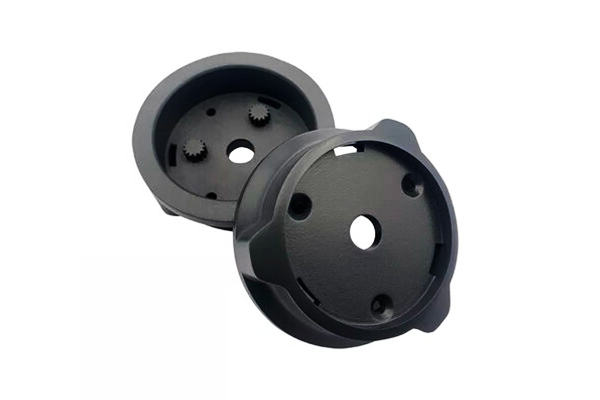
Moisture is the single most important practical consideration for nylon material.
Mechanizmas & magnitude
- Nylon absorbs water by diffusion into amorphous regions; equilibrium content depends on relative humidity and temperature.
- Typical equilibrium water uptake: PA6 ~1.5–2.5 wt% (room conditions), PA66 slightly higher; PA11/PA12 << 1% (long-chain nylon advantage).
Effects on properties
- Stiffness and strength decrease as water acts as a plasticizer (modulus down 10–30% at equilibrium).
- Toughness and elongation often increase, reducing brittleness.
- Dimensional change (swelling) gali būti reikšmingas (hundreds of µm for small parts) and must be accommodated by design or post-conditioning.
- Processing implications: molded parts should be conditioned to expected service humidity before final inspection; drying before molding is essential to avoid hydrolysis (chain scission) in the melt.
Practical rules
- For dimensionally critical parts, specify conditioning protocol (Pvz., sausa: 0.05% drėgmė, conditioned: 23°C/50% RH until equilibrium).
- Consider long-chain nylons (PA11/PA12) or filled grades to reduce hygroscopicity.
6. Chemical resistance and electrical properties
- Cheminis atsparumas: nylons resist hydrocarbons, aliejai, greases and many solvents.
Jie yra attacked by strong acids, strong oxidizers and some halogenated solvents—especially at elevated temperature.
Fuel and hydraulic compatibility depends on grade and exposure conditions; long-term immersion requires validation. - Electrical properties: good electrical insulation when dry; dielectric constant and loss tangent change with moisture, so electrical applications require moisture-controlled environments or hermetic encapsulation.
7. Processing and manufacturing methods
Common processes
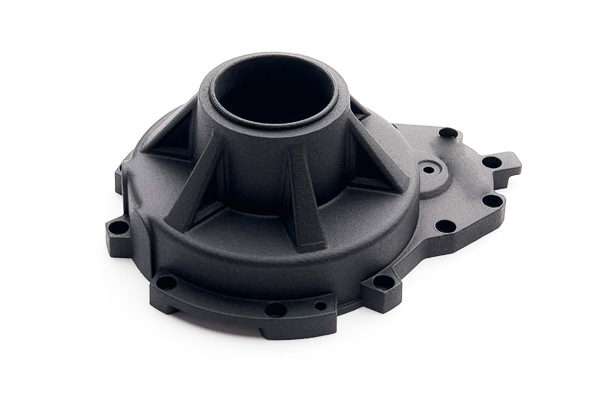
- Injekcijos liejimas: dominant for complex shapes and high volume. Processing melt temps: PA6 ~230–260 °C; PA66 ~260–280 °C (start points — validate per grade).
Molds are typically kept warm (60–90 °C) to control crystallization and reduce sink. - Išspaudimas: strypai, vamzdžiai, profiles and films.
- Blow molding/thermoforming: konkrečioms klasėms (PA12 tubing, fuel lines).
- Fiber spinning: nylon fibers for textiles and industrial tapes.
- Apdirbimas: nylon can be machined from extruded stock; tooling geometry and chip control are important due to ductility.
Key processing controls
- Džiovinimas: nylon material must be dried (typical target moisture <0.2%) before melt processing to prevent hydrolysis and poor surface finish; drying schedules vary (Pvz., 80–100 °C for several hours).
- Melt stability: avoid excessive residence time and high shear to prevent degradation.
- Gate/flow design: manage weld lines and minimize orientation that leads to property anisotropy.
8. Reinforced and specialty nylons
Fillers and copolymerization tailor nylon material performance:
- Glass-filled nylons (20–50% GF): increase modulus and dimensional stability, raise HDT, but reduce impact toughness and increase abrasive wear on mating parts.
- Mineral fillers (talc, MICA): moderate stiffness increase and improved creep resistance.
- PTFE or graphite lubricated grades: lower coefficient of friction and reduce wear in sliding applications.
- Flame-retardant, UV-stabilized and hydrolysis-stabilized grades are available for demanding environments.
- Polyamide blends and copolymers (Pvz., PA6/PA66, PA6T) optimize processability and thermal performance.
9. Advantages and Limitations of Nylon Material
Advantages of Nylon
- Didelis jėga ir tvirtumas
Typical tensile strength ranges from 50–90 MPA (neat grades), with excellent impact resistance and fatigue performance. - Good wear and abrasion resistance
Especially effective in gears, įvorės, and sliding components; lubricated grades further improve tribological behavior. - Lightweight with good stiffness
Density is low (~1.13–1.15 g/cm³), while stiffness can be significantly increased using glass or mineral fillers. - Cheminis atsparumas
Resistant to oils, kuras, and many hydrocarbons, making nylon suitable for automotive and industrial environments. - Cost-effective and easy to process
Compatible with injection molding and extrusion, with a wide range of commercially available grades. - Highly customizable
Properties can be tailored through fillers, sutvirtinimai, stabilizatoriai, ir tepalai.
Limitations of Nylon
- Drėgmės absorbcija (key limitation)
Nylon is hygroscopic; moisture uptake (paprastai 1–3 masės%) reduces stiffness and strength and causes dimensional changes. - Temperatūros ribos
Continuous service temperatures are usually below 120°C for standard grades; properties degrade at higher temperatures. - Creep under sustained load
Long-term loads, especially at elevated temperature or humidity, can lead to deformation. - Matmenų nestabilumas
Semi-crystalline structure and moisture sensitivity can cause warpage and tolerance drift. - Chemical sensitivity
Poor resistance to strong acids, oxidizers, and some aggressive solvents. - Apdorojimo jautrumas
Requires thorough drying before molding to prevent hydrolysis and loss of mechanical properties.
10. Applications of Nylon Material
- Automobiliai: Įsiurbimo kolektoriai (PA6/6T), fuel and brake lines (PA11/PA12), variklio gaubtai, gears and bearings.
- Pramoninės mašinos: įvorės, ritinėliai, Dėvėkite pagalvėles, konvejerio komponentai.
- Vartojimo prekės & prietaisai: pavaros, vyriai, tvirtinimo detalės, toothbrush bristles (fibers).
- Elektrinė & elektronika: cable ties, jungtys (when moisture is controlled).
- Textiles and composites: fibers, cordage, and reinforced composite matrices.
- Medicinos: PA12 used for some medical devices (biocompatibility and sterilization considerations apply).
11. Comparison with other engineering plastics
| Nuosavybė / Kriterijus | Nailonas (PA6 / Pa66) | Pom (Acetalas) | Ptfe (Teflonas) | Žvilgtelėti | PBT | UHMW-PE |
| Tankis (g · cm⁻³) | 1.12–1.15 | ≈1.40–1.42 | ≈2.10–2.16 | ≈1.28–1.32 | ≈1.30–1.33 | ≈0.93–0.95 |
| Tempimo stiprumas (MPA) | 50–90 | 50–75 | 20–35 | 90–110 | 50–70 | 20–40 |
| Youngo modulis (GPA) | 2.5–3,5 | 2.8–3,5 | 0.3–0.6 | 3.6–4.1 | 2.6–3.2 | 0.8–1.5 |
| Tirpimas / typical service temp (° C.) | Tm ≈215 (PA6) / service ≈80–120 | Tm ≈165–175 / service ≈80–100 | Tm ≈327 / service up to ≈260 (mechanical limits) | Tm ≈343 / service ≈200–250 | Tm ≈220–225 / service ≈120 | Tm ≈130–135 / service ≈80–100 |
| Water uptake (wt%, eq.) | ≈1.5–2.5% (PA6) | ≈0.2–0.3% | ≈0% | ≈0,3–0,5 % | ≈0.2–0.5% | ≈0.01–0.1% |
| Trinties koeficientas (sausa) | 0.15–0.35 | 0.15–0.25 | 0.04–0.15 (labai žemas) | 0.15–0.4 | 0.25–0.35 | 0.08–0.20 |
| Dėvėti / tribology | Gerai (improvable with fillers) | Puiku (gears/bushings) | Vargšas (improves with filler) | Puiku (filled best) | Gerai | Puiku (abrasion-resistant) |
| Cheminis atsparumas | Good to hydrocarbons; poor to strong acids/oxidizers | Good to fuels/solvents | Išskirtinė (nearly universal) | Puiku (aggressive media) | Gerai | Labai gerai |
Aparatas |
Gerai (Mašingas) | Puiku | Mugė (machinable from billet) | Gerai (tough but machinable) | Gerai | Iššūkis (gumulas) |
| Matmenų stabilumas | Vidutinis (hygroscopic) | Labai gerai (low hygroscopic) | Puiku | Puiku | Gerai | Labai gerai |
| Tipiškos programos | Pavaros, guoliai, korpusai, vamzdeliai (PA11/12) | Pavaros, precision bushings, fuel components | Ruoniai, cheminiai įdėklai, low-friction surfaces | High-temp bearings, kosmoso, Medicininiai implantai | Elektros jungtys, korpusai | Lineriai, Dėvėkite pagalvėles, konvejerio komponentai |
| Quick selection hint | Choose when toughness and cost matter; manage moisture | Choose for precision, low-friction mechanical parts | Choose if chemical inertness & lowest µ are required | Choose for high-temp & high-load critical parts | Choose for good dimensional stability and molding ease | Choose where extreme abrasion resistance and impact are needed |
12. Tvarumas, recycling and regulatory issues
- Perdirbimas: Nylon material is mechanically recyclable; reclaimed PA may be downgraded for less critical use.
Depolymerization (chemical recycling) routes exist and are industrially developing—they can recover monomer (caprolactam) or other feedstocks. - Bio-based options: PA11 (from castor oil) and PA610/1010 (partially bio-based) reduce fossil feedstock dependency.
- Reguliavimo: food contact and medical use require grade certification (FDA, ES) and compliance with extractables/leachables testing where appropriate.
- Environmental concerns: life-cycle assessment varies by grade and filler; filling and glass content affect recyclability and embodied energy.
13. Conclusions and practical recommendations
Nailonas (poliamidas) yra subrendęs, versatile engineering polymer family that balances strength, toughness and wear resistance with economic processability.
The wide palette of chemistries — from PA6 and PA66 to PA11 and PA12 — together with fillers and modifiers, permits fine-tuning for applications spanning textiles to high-performance automotive systems.
The principal engineering challenges are moisture management and chemical susceptibility in aggressive environments; these are addressed by appropriate grade selection (long-chain nylons), užpildai, drying and design allowances.
Ongoing advances in recycling, bio-feedstocks and composite technology are extending nylon’s sustainability and application envelope.
DUK
Is PA6 or PA66 better?
PA66 typically offers higher melting point, slightly higher stiffness and better creep resistance; PA6 is easier to process and can be tougher. Choose based on temperature and processing constraints.
How should I specify nylon for dimensional control?
Specify the conditioning state for inspection (Pvz., “conditioned to 23 ° C., 50% RH until equilibrium”), and provide tolerances that account for moisture swelling and molding anisotropy.
Can nylon material be used in fuel lines?
Yes—PA11 and PA12 are common for fuel and hydraulic tubing due to low moisture uptake and good chemical resistance. Always validate with the specific fluid and temperature.
Are glass-filled nylons recyclable?
Mechanically, taip, but glass content changes melt viscosity and property retention; recycled glass-filled nylon is typically used in less demanding applications unless chemically recycled.
How do I prevent hydrolysis during molding?
Thoroughly dry resin to the supplier’s specification and limit melt residence time and excessive barrel temperatures.