1. Įvadas
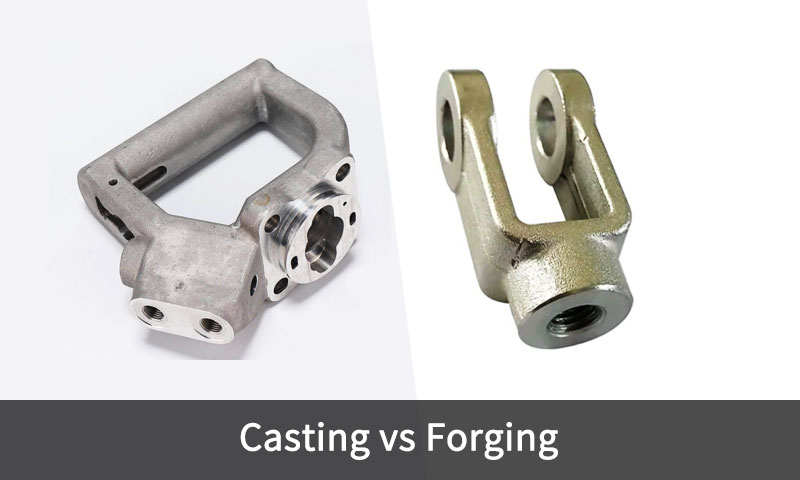
Liejimas vs kalimas yra du pagrindiniai metalo formavimo būdai.
Laidos puikiai tinka gaminti sudėtingas formas, vidinės ertmės ir didelės dalys su santykinai mažomis medžiagų atliekomis ir nedidelėmis detalės įrankio sąnaudomis vidutinio dydžio geometrijoms.
Kalimas gamina dalis su aukščiausiomis mechaninėmis savybėmis, pagerintas atsparumas nuovargiui ir geresnis grūdų srautas, tačiau paprastai reikia sunkesnių įrankių ir daugiau apdirbimo sudėtingoms geometrijoms.
Tinkamas pasirinkimas priklauso nuo taikymo mechaninių reikalavimų, geometrijos sudėtingumas, apimtis, išlaidų tikslai ir reguliavimo apribojimai.
2. Kas yra liejimas?
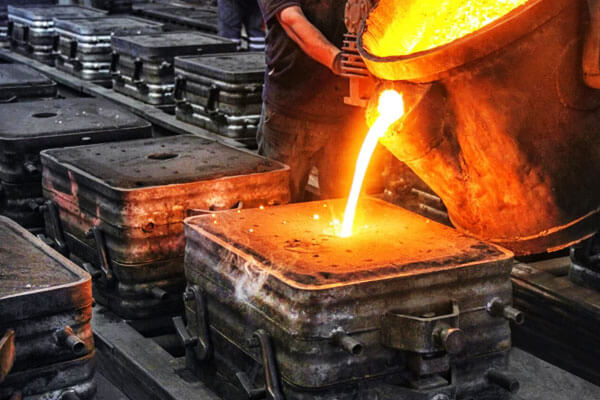
Liejimas yra gamybos procesas, kurio metu išlydytas metalas pilamas į formos ertmę, suformuotą kaip norimas komponentas.
Kai metalas atvės ir sukietėja, forma pašalinama, kad būtų atskleista išlieta dalis.
Šis procesas yra vienas iš seniausių metalo formavimo būdų, siekia tūkstančius metų, ir vis dar plačiai naudojamas dėl savo universalumo gaminant paprastas ir labai sudėtingas dalis.
Proceso apžvalga
- Šablonų kūrimas – Dalies kopija (modelis) pagamintas iš vaško, mediena, plastikas, arba metalas.
- Pelėsių paruošimas – Forma sukuriama naudojant smėlį, keramika, arba metalas, priklausomai nuo liejimo metodo.
- Tirpimas & Pilti – Metalų lydiniai išlydomi (paprastai 600–1600 °C, priklausomai nuo lydinio) ir supilame į formą.
- Kietėjimas & Aušinimas – Kontroliuojamas aušinimas leidžia metalui įgauti formos ertmės formą.
- Shakeout & Valymas – Forma sulūžusi arba atidaryta, ir medžiagos perteklius (Vartai, RISERS) yra pašalintas.
- Apdaila & Tikrinimas – Terminis apdorojimas, apdirbimas, ir paviršiaus apdaila taikoma pagal poreikį.
Liejimo variantai
- Smėlio liejimas – Ekonomiškas, tinka didelėms ir sunkioms dalims; matmenų tolerancija paprastai ±0,5–2,0 mm.
- Investicijų liejimas (Pamiršta vaškas) – Gamina itin detaliai, beveik tinklinės formos dalys su puikia paviršiaus apdaila (Ra ≈ 1.6–3.2 µm).
- Mirti liejimas – Aukšto slėgio išlydytų spalvotųjų metalų lydinių įpurškimas (Al, Zn, Mg) į nuolatines formas; puikiai tinka didelės apimties gamybai.
- Išcentrinis liejimas – Naudojamas cilindrinėms dalims, pavyzdžiui, vamzdžiams, su dideliu tankiu ir minimaliais defektais.
- Nuolatinis liejimas – Pramoninis ruošinių gamybos procesas, plokštės, ir strypai tiesiai iš išlydyto metalo.
Pagrindiniai pranašumai
- Gebėjimas gaminti Sudėtingos geometrijos, įskaitant vidines ertmes ir plonasienes dalis.
- Platus asortimentas lydinio lankstumas (plienas, lygintuvai, aliuminis, Vario, Nikelis, titanas).
- Beveik tinklo forma galimybė sumažina apdirbimo reikalavimus.
- Ekonomiškai efektyvus Didelės dalys ir Mažos ir vidutinės apimtys.
- Mastelio keitimas – nuo prototipų iki didelės apimties gamybos (ypač liejant slėginiu būdu).
Apribojimai
- Liejimo defektai, tokie kaip poringumas, susitraukiančios ertmės, intarpai, ir karštos ašaros.
- Mechaninės savybės (tempimo stiprumas, Nuovargio atsparumas) dėl dendritinių mikrostruktūrų ir poringumo dažnai yra prastesnės už suklastotus ekvivalentus.
- Matmenų tikslumas ir paviršiaus apdaila labai skiriasi priklausomai nuo proceso.
- Aušinimo greitis gali sukelti segregation ir mechaninių savybių anizotropija.
3. Kas kalimas?
Kalimas yra metalo apdirbimo procesas, kurio metu metalas formuojamas norimos geometrijos pavidalu gniuždymo jėga, paprastai naudojant plaktukus, Presai, ar miršta.
Skirtingai nuo liejimo, kur medžiaga išsilydo ir sukietėja, kalimo darbai metalo a kietos būsenos, gerina grūdelių struktūrą ir pagerina mechanines savybes.
Kalimas yra vienas iš seniausių metalo formavimo būdų, istoriškai atliekami kalviai paprastais rankiniais įrankiais.
Šiandien, tai didelio tikslumo pramoninis procesas, plačiai naudojamas kosminėje erdvėje, automobilių, aliejus & dujos, energijos generavimas, ir gynybos pramonėje.

Proceso apžvalga
- Šildymas (Neprivaloma) – Metalas kaitinamas iki plastiko (karštam kalimui) arba palikti kambario temperatūroje (šaltam kalimui).
- Deformacija – Metalas suspaudžiamas arba kalamas į formą tarp plokščių arba forminių štampų.
- Apipjaustymas – Medžiagos perteklius (Blykstė) yra pašalintas.
- Terminis apdorojimas (Jei reikia) – Normalizuojasi, gesinimas, ir grūdinimas taikomas siekiant optimizuoti stiprumą, kietumas, ir lankstumas.
- Apdaila – Apdirbimas, paviršiaus apdaila, ir patikrinimas užbaigia procesą.
Kalimo rūšys
- Atviras mirimas kalimas – Didelės dalys suformuotos tarp plokščių štampų; naudojami velenams, diskai, ir dideli blokai.
- Uždaras (Įspūdis-mirė) Kalimas – Metalas supresuotas į formines ertmes beveik tinklinės formos dalims; plačiai naudojamas automobilių ir kosmoso pramonėje.
- Šaltas kalimas – Atliekama kambario temperatūroje; puikus matmenų tikslumas ir paviršiaus apdaila.
- Karštas kalimas – Atliekama aukštesnėje nei rekristalizacijos temperatūroje; leidžia formuoti didelius, kieti lydiniai su sumažintu kietėjimu.
- Izoterminis & Tikslumas – Pažangūs titano metodai, Nikelis, ir aviacijos ir kosmoso lydiniai, mažinant apdirbimo ir medžiagų atliekas.
Pagrindiniai pranašumai
- Aukščiausios mechaninės savybės dėl rafinuotos grūdelių struktūros ir vidinių tuštumų pašalinimo.
- Aukštas Nuovargio atsparumas ir atsparumas smūgiams, palyginti su liejiniais.
- Nuoseklus matmenų tikslumas preciziniame kalime.
- Tinka Kritinės programos pavyzdžiui, orlaivių variklių dalys, automobilių alkūniniai velenai, slėgio indai, ir branduolinės energijos komponentai.
- Minimalus poringumas ir puikus metalurginis vientisumas.
Apribojimai
- Didesnės išlaidos nei liejimas, ypač sudėtingoms formoms.
- Apsiribojama dalimis, kurios gali susidaryti dėl deformacijos – mažiau tinka tuščiaviduriams, Plonos sienos, arba labai sudėtingos geometrijos.
- Reikalauja specializuoti įrankiai ir didelio tonažo presai didelėms dalims.
- Ilgesnis pristatymo laikas individualiems štampams.
4. Mikrostruktūra & Liejimo grūdų srautas vs. Kalimas
Vienas iš esminių skirtumų tarp liejimo ir kalimo yra vidinė mikrostruktūra iš medžiagos.
Kaip susidaro grūdai, sulygintas, ir paskirstytas apdorojimo metu tiesiogiai įtakoja mechaninį stiprumą, Tvirtumas, ir galutinio komponento atsparumas nuovargiui.
Liejimo mikrostruktūra
- Kietėjimo procesas – Kastinge, išlydytas metalas atvėsta ir sukietėja formos viduje.
Grūdai atsitiktinai formuojasi branduoliais ir auga į išorę, formuojantis Equiaxed arba stulpiniai grūdai priklausomai nuo aušinimo sąlygų. - Grūdų orientacija – Nėra pageidaujamos orientacijos (izotropinė struktūra), bet dažnai nevienalytis. Grūdų ribos gali būti silpnosios vietos esant stresui.
- Defektai – Galima poringumas, susitraukiančios ertmės, intarpai, ir legiruojamųjų elementų atskyrimas dėl netolygaus aušinimo. Tai sumažina atsparumą nuovargiui ir atsparumą lūžiams.
- Savybės – Tinka statinėms apkrovoms ir sudėtingoms formoms, tačiau paprastai mažesnis tempiamasis stipris ir atsparumas nuovargiui, palyginti su kaltinėmis dalimis.
Kalimo mikrostruktūra
- Plastiko deformacijos procesas – Kalimas plastiškai deformuoja kietą metalą, suardo išlietas dendritines struktūras ir pašalina poringumą.
- Grūdų srauto išlyginimas – Kalimas išlygina grūdelius veikiančių jėgų kryptimi, Gamina a nuolatinis grūdų srautas kuri atitinka detalės formą.
Tai pagerina atsparumą smūgiams ir atsparumą nuovargiui, ypač komponentuose, tokiuose kaip alkūniniai velenai ir turbinų mentės. - Defektų mažinimas – Kalimas sutankina tuštumus ir inkliuzus, sumažinti defektų dydį ir pagerinti metalurginį vientisumą.
- Savybės – Kaltinės dalys pasižymi puikiomis mechaninėmis savybėmis, ypač dinaminės arba ciklinės apkrovos sąlygomis.
5. Tipinės liejimo mechaninės savybės, palyginti su. Kalimas
| Nuosavybė (Rt) | Liejimas (316 SS) | Kalimas (316 SS) |
| Tempimo stiprumas (MPA) | 485– 515 | 560–620 |
| Derliaus stiprumas (0.2% MPA) | 170–240 | 240–310 |
| Pailgėjimas (%) | 20–30 | 35–40 |
| Kietumas (Hb) | 135–150 | 150–160 |
| Charpy poveikis (J) | 60–80 | 100–120 |
| Nuovargio stiprumas (MPA, 10⁷ ciklai) | ~ 170 | ~ 240 |
6. Dizaino laisvė, Tolerancijos, ir paviršiaus apdaila
Lyginant liejimas vs kalimas, vienas iš labiausiai lemiamų veiksnių yra pusiausvyra tarp dizaino lankstumas, matmenų valdymas, ir paviršiaus kokybė.
Kiekvienas procesas turi unikalių stipriųjų ir apribojimų, kurie nustato tinkamumą įvairioms reikmėms.

Dizaino laisvė
- Liejimas siūlo neprilygstamą dizaino lankstumą. Sudėtingos geometrijos, pavyzdžiui, vidinės ertmės, Plonos sienos, Grando struktūros, o apatiniai įpjovimai gali būti pagaminti tiesiai vienu išpylimu.
Investicinis liejimas suteikia galimybę beveik tinklinės formos detalėms, sumažinant apdirbimą iki 70%.
Komponentai, tokie kaip siurblio sparnuotės, Turbinos ašmenys, arba sudėtingi laikikliai beveik išimtinai gaminami liejant, nes tokių formų kalimas būtų neįmanomas arba ekonomiškai brangus. - Kalimas, priešingai, yra apribotas santykinai paprastesnėmis geometrijomis.
Nors uždaras kalimas leidžia beveik tinklinės formos dalis, sudėtingi vidiniai praėjimai, smulkios gardelės struktūros, arba staigūs įpjovimai nepasiekiami.
Kalimas puikiai tinka, kai detalė reikalauja tvirto, ištisinė geometrija be tuščiavidurių pjūvių, pavyzdžiui, velenai, pavaros, ir jungiamieji strypai.
Matmenų nuokrypiai (ISO 8062 Nuoroda)
| Procesas | Tipinė tolerancijos klasė | Pavyzdys (100 mm Matmenys) | Kritinių savybių tolerancija (Pvz., Skylės skersmuo) |
| Smėlio liejimas | CT8 - CT10 | ±0,4 – 0.8 mm | ±0,2 – 0.4 mm |
| Investicijų liejimas | CT4 - CT6 | ±0,05 – 0.2 mm | ±0,03 – 0.08 mm |
| Mirti liejimas (Al/Zn/Mg) | CT5 - CT7 | ± 0,1 - 0.3 mm | ±0,05 – 0.15 mm |
| Atviras mirimas kalimas | CT10–CT12 | ±0,8 – 1.5 mm | ±0,4 – 0.8 mm |
| Uždarytas mirimas | CT7 - CT9 | ±0,2 – 0.6 mm | ± 0,1 - 0.25 mm |
Paviršiaus apdaila (Šiurkštumas Ra, μm)
| Procesas | AS-CAST / As-Forged Ra (μm) | Po apdailos Ra (μm) |
| Smėlio liejimas | 10 - 20 | 5 - 10 |
| Investicijų liejimas | 1.2 - 5 | 0.8 - 2 |
| Mirti liejimas (Al/Zn/Mg) | 2 - 10 | 1.2 - 5 |
| Atviras mirimas kalimas | 10 - 40 | 5 - 10 |
| Uždarytas mirimas | 5 - 12 | 2.5 - 5 |
7. Antrinės operacijos ir terminio apdorojimo poveikis
Antrinės operacijos ir terminis apdorojimas atlieka svarbų vaidmenį optimizuojant komponentų, pagamintų liejant ar kaliant, veikimą.
Šie po apdorojimo etapai tiesiogiai veikia mechanines savybes, matmenų tikslumas, paviršiaus apdaila, ir ilgalaikis patvarumas.

Antrinės operacijos
Apdirbimas:
- Liejimas: Lietus komponentus dažnai reikia gerokai apdirbti, kad būtų pasiekti griežti leistini nuokrypiai ir kritiniai paviršiai, ypač skylėms, Siūlai, ir besiporuojantys veidai.
Investicinis liejimas sumažina apdirbimo reikalavimus dėl beveik grynosios formos galimybių, tuo tarpu liejant smėlį paprastai reikia didesnio apdirbimo. - Kalimas: Kaltoms dalims paprastai reikia minimalaus apdirbimo, dažniausiai paviršių apdailai ir tikslioms skylėms, dėl uždarojo kalimo vienodumo ir beveik galutinių matmenų.
Paviršiaus apdaila:
- Poliravimas ir šlifavimas: Pagerinkite paviršiaus kokybę, sumažinti šiurkštumą, ir pašalinti nedidelius paviršiaus defektus. Investiciniai liejiniai gali pasiekti Ra < 1.5 μm po mechaninio arba elektropoliravimo.
- Šūvys sprogdinimas / Karoliukų sprogimas: Naudojamas apnašoms pašalinti, Blykstė, ir pagerinti paviršiaus vienodumą.
- Dangos ir dengimas: Antrinės dangos (Pvz., Nerūdijančio plieno pasyvavimas, cinko arba nikelio danga apsaugai nuo korozijos) dažnai naudojami po apdirbimo.
Susirinkimas & Montavimas:
- Labai svarbus komponentams su keliomis dalimis, pavyzdžiui, įvorės, Smeigtukai, arba vyrių mazgai. Tinkamos antrinės operacijos užtikrina tinkamą klirensą, trukdžių, ir funkcinis derinimas.
Terminis apdorojimas
Tikslas:
Terminis apdorojimas naudojamas mechaninėms savybėms, pvz., stiprumui, pagerinti, kietumas, ausmingumas, ir atsparumas dėvėjimams. Jo poveikis skiriasi nuo lietinių ir kaltinių komponentų.
- Liejimas:
-
- Lietas nerūdijantis plienas ir mažai legiruotas plienas dažnai apdorojami Sprendimo atkaitinimas, Stresas palengvina, arba Amžius sukietėjimas liekamiesiems įtempimams sumažinti, homogenizuoti mikrostruktūrą, ir pagerinti apdirbamumą.
- Reikia pasirūpinti, kad būtų išvengta dalinio išsilydymo arba grūdelių sutirštėjimo plonose dalyse, ypač investiciniuose liejiniuose.
- Kalimas:
-
- Kaltiniai komponentai turi naudos normalizavimas arba gesinimas ir grūdinimas patobulinti grūdelių struktūrą ir maksimaliai padidinti mechanines savybes.
- Kalant iš prigimties gaunamas tankesnis, Vienodesnė mikrostruktūra, todėl terminis apdorojimas daugiausia optimizuoja kietumą ir sumažina įtampą, o ne kompensuoja defektus.
Išplėstinis tolesnis apdorojimas
- Hip gali uždaryti liejinių vidinį poringumą, priartinti savybes kaltai / kaltinei medžiagai už didelę kainą.
- Paviršiaus procedūros (Nušauti peening, nitridavimas, Carburizacija) pagerinti nuovargio tarnavimo laiką ir atsparumą dilimui.
8. Pramonės programos: Metodas, atitinkantis poreikį
Liejimas ir kalimas dominuoja atskiruose pramonės sektoriuose, atsižvelgiant į jiems būdingas stipriąsias puses – geometrijos sudėtingumą, Mechaninis atlikimas, tūrio reikalavimai, ir išlaidų apribojimai.

Liejimo programos
Automobiliai:
- Variklio blokai: Smėlio liejimas plačiai naudojamas geležiniams variklio blokams, talpinanti sudėtingas vandens striukes ir vidines ertmes.
- Cilindro galvutės: Investicinis liejimas leidžia sukurti tikslius aušinimo kanalus ir sudėtingą geometriją didelio našumo varikliuose.
- Aliuminio ratai: Liejimas slėgiu leidžia gaminti didelius kiekius, pasižyminčius puikia paviršiaus apdaila ir matmenų nuoseklumu.
Aviacijos ir kosmoso:
- Turbinos ašmenys: Investicinis superlydinių, tokių kaip Inconel, liejimas 718 pasiekia sudėtingą aerodinaminio profilio geometriją, būtiną efektyvumui ir atsparumui aukštai temperatūrai.
- Variklio korpusai: Smėlio liejimas iš aliuminio lydinių palaiko lengvas, vidutinio sudėtingumo konstrukcijas.
Aliejus & Dujos:
- Siurblių korpusai: Smėlio liejimas iš ketaus arba plieno užtikrina tvirtumą, ekonomiškai efektyvūs skysčių tvarkymo sprendimai.
- Vožtuvo kūnai: Liejimas iš 316 l nerūdijančio plieno užtikrina griežtus kritinių vožtuvų leistinus nuokrypius ir atsparumą korozijai.
Statyba & Infrastruktūra:
- Šulinio dangteliai: Smėlio liejimas iš kaliojo ketaus užtikrina didelį stiprumą ir ilgaamžiškumą.
- Vamzdžių jungiamosios detalės & Komponentai: Liejimas iš aliuminio arba žalvario suteikia lengvumo, korozijai atsparūs vandens ir dujų tinklų sprendimai.
Programų kalimas
Automobiliai:
- Alkūniniai velenai: Uždaras kalimas iš AISI 4140 plienas užtikrina didelį atsparumą nuovargiui ir puikų grūdų srautą našiems varikliams.
- Švaistikliai: Kaltas iš 4340 plienas, užtikrinantis stiprumą ir kietumą, esant pakartotinai dinaminei apkrovai.
Aviacijos ir kosmoso:
- važiuoklės komponentai: Titano lydinių uždaras kalimas sujungia aukštą stiprumo ir svorio santykį su puikiu nuovargio tarnavimo laiku.
- Variklio velenai: Atviras „Inconel“ kalimas 625 Gamina komponentus, atsparius aukštai temperatūrai ir įtempiams.
Aliejus & Dujos:
- Gręžimo apykaklės: „Open-Die“ kalimas AISI 4145H Plienas užtikrina aukšto slėgio ištvermę atšiaurioje downhole aplinkoje.
- Vožtuvo stiebai: Uždarytas 316L nerūdijančio plieno kalimas garantuoja matmenų tikslumą ir atsparumą korozijai.
Sunkiosios mašinos & Pramoninė įranga:
- Pavarų ruošiniai: Uždaras kalimas iš AISI 8620 Plienas pasiekia didelį kietumą ir atsparumą dilimui, kad būtų galima perduoti galią.
- Hidrauliniai cilindrai & Velenai: „Open-Die“ kalimas A36 pliene užtikrina atsparumą stiprumui ir smūgiams sunkiasvorių operacijų metu.
9. Išsamus liejimo palyginimas su. Kalimas
Laidos vs kalimas yra pagrindiniai gamybos metodai, kiekvienas turi skirtingus pranašumus, apribojimai, ir idealaus naudojimo atvejai.
Žemiau esančioje lentelėje apibendrinti pagrindiniai skirtumai tarp kelių matmenų, Pateikti inžinieriams AT-a-Glance vadovą, Dizaineriai, ir gamybos vadovai:
| Aspektas | Liejimas | Kalimas |
| Proceso principas | Išlydytas metalas pilamas į formą ir sukietėjo | Metalas deformuotas veikiant gniuždymo jėgai, paprastai aukštoje temperatūroje |
| Medžiagos panaudojimas | Vidutinis arba didelis laužo sumažinimas investicijoms / liejimui; kai kurios atitvarų / stovų atliekos | Labai didelis medžiagų efektyvumas; minimalus laužas tinkamai suplanavus |
| Dizaino laisvė | Puikiai tinka sudėtingoms geometrijoms, Plonos sienos, Vidinės ištraukos, poilsio | Apribota formomis, kurias galima padirbti; vidines ertmes reikia apdirbti arba atlikti antrines operacijas |
| Matmenų tikslumas | Investicijų liejimas: ± 0,05–0,3 mm; Smėlio liejimas: ± 0,5–1,0 mm | Uždarytas mirimas: ±0,1–0,8 mm; Kalimas atviruoju būdu: ±0,5–2,0 mm |
| Paviršiaus apdaila | Investicinis liejimas Ra 1,6–6,3 μm; smėlio liejimas Ra 6,3–25 μm | Uždaras kalimas Ra 3,2–12,5 μm; atviras kalimas Ra 6,3–50 μm |
| Mechaninės savybės | Vidutinis stiprumas; izotropinės savybės paprastuose liejiniuose; mažesnis atsparumas nuovargiui dėl poringumo | Aukščiausia jėga ir tvirtumas; išlygintas grūdų srautas pagerina nuovargį ir atsparumą smūgiams |
Suderinamumas su terminiu apdorojimu |
Visiškai suderinamas; gali sumažinti vidinius įtempius ir pagerinti mikrostruktūrą | Suderinamas; kalimas sukuria darbui atsparias sritis ir kryptingą grūdų srautą, kurie pagerina mechanines savybes |
| Gamybos apimtis & Kaina | Didelės apimties gamyba (štampavimo / investicinis liejimas) sumažina vienos dalies kainą; maža apimtis gali kainuoti brangiai | Mažas ir vidutinis tūris ekonomiškiausias; didelės apimties gali būti brangios dėl įrankių ir preso sąnaudų |
| Tipiškos programos | Sudėtingi siurblio korpusai, vožtuvo kūnai, Variklio blokai, Turbinos ašmenys | Alkūniniai velenai, Jungiamieji strypai, velenai, Nusileidimo įrankis, didelio įtempimo mechaniniai komponentai |
| Švino laikas | Vidutinis; pelėsių ir raštų vystymasis gali užtrukti kelias savaites | Nuo vidutinio iki ilgo; kalimo štampams reikia tikslaus dizaino ir apdirbimo |
| Argumentai | Sudėtingos formos, beveik tinklo forma, Mažiau apdirbimo, galimi vidiniai praėjimai | Didelė jėga, Aukščiausias atsparumas nuovargiui, kryptinis grūdų srautas, Puikus tvirtumas |
| Trūkumai | Mažesnis mechaninis našumas, potencialus poringumas, susitraukimas, ribotas veikimas esant dideliam stresui | Ribotas geometrinis sudėtingumas, didesnės įrankių sąnaudos, dažnai reikia antrinio apdirbimo |
10. Išvada
Liejimas ir kalimas yra ne konkurentai, o papildomi įrankiai – kiekvienas optimizuotas konkretiems gamybos poreikiams:
- Pasirinkite Casting If: Jums reikia sudėtingų geometrijų, maža išankstinė kaina už mažą kiekį, arba dalys, pagamintos iš trapių metalų (ketaus).
Investicinis liejimas išsiskiria tikslumu, smėlio liejimas už savikainą, ir didelio tūrio spalvotųjų metalų dalių liejimas. - Pasirinkite kalimą, jei: Jums reikia didelės jėgos, Nuovargio atsparumas, arba griežti nuokrypiai nuo paprastų iki vidutinių formų. Uždaras kalimas puikiai tinka didelės apimties kalimui, didelio streso dalys; atviras kalimas dideliems, mažos apimties komponentai.
Sėkmingiausios gamybos strategijos panaudoja abu metodus, pvz., automobilio variklis naudoja lietus blokus (Sudėtingumas) ir kaltiniai alkūniniai velenai (stiprybė).
Suderinus proceso pasirinkimą su dalies funkcija, apimtis, ir kaina, inžinieriai gali optimizuoti našumą, sumažinti TCO, ir užtikrinti ilgalaikį patikimumą.
DUK
Galima kalti gaminti dalis su vidinėmis ertmėmis?
Ne – kalimas formuoja tvirtą metalą, todėl vidinės ertmės reikalauja antrinio apdirbimo (gręžimas, nuobodus), tai padidina sąnaudas ir sumažina stiprumą.
Liejimas (ypač smėlio ar investicijų) yra vienintelis praktiškas metodas dalims su vidinėmis savybėmis (Pvz., variklio vandens striukes).
Kuris procesas yra tvaresnis plieninėms dalims?
Didelės apimties kalimas yra patvaresnis, didelio streso dalys: sunaudoja 30–40 % mažiau energijos nei liejant smėliu, gamina mažiau atliekų (10-15% prieš. 15–20%), o kaltinės dalys turi ilgesnį tarnavimo laiką (sumažinant pakeitimo ciklus).
Smėlio liejimas yra tvaresnis mažos apimties atveju, Sudėtingos dalys (mažesnė įrankių energija).
Koks yra didžiausias liejimo dydis, palyginti su. kalimas dalys?
- Liejimas: Smėlio liejimo būdu galima pagaminti detales iki 100 tonos (Pvz., laivų sraigtai); investicinis liejimas ribojamas ~50 kg (Tikslios dalys).
- Kalimas: Atviras kalimas gali gaminti dalis iki 200 tonos (Pvz., elektrinių šachtos); uždaras kalimas ribojamas iki ~100 kg (didelės apimties dalys).
Kodėl aviacijos ir kosmoso turbinų mentės yra liejamos, o ne kaltos??
Turbinos mentės turi sudėtingą aerodinaminio profilio geometriją ir vidinius aušinimo kanalus – jų neįmanoma padirbti.
Investicijų liejimas (naudojant vieno kristalo superlydinius, tokius kaip Inconel 718) sukuria šias savybes reikiamu tikslumu, o terminis apdorojimas optimizuoja stiprumą aukštoje temperatūroje.