1. Ringkasan eksekutif
Penutup die-cast aluminium memberikan kombinasi yang tak tertandingi kekuatan mekanis, akurasi dimensi, konduktivitas termal dan pelindung elektromagnetik dalam bentuk near-net tunggal.
Untuk banyak produk elektronik dan elektromekanis dimana pembuangan panas, Perlindungan EMI dan ketahanan mekanis adalah prioritas,
Penutup aluminium HPDC adalah solusi yang lebih disukai dibandingkan rumah lembaran logam atau plastik asalkan penutup tersebut dirancang dengan batasan die-casting (ketebalan dinding, draf, tulang rusuk, bos) dan permesinan dan penyegelan hilir yang sesuai.
Pengorbanan utamanya adalah biaya perkakas dan langkah penyelesaian/pemrosesan per bagian; untuk volume sedang hingga tinggi, HPDC sangat ekonomis.
2. Apa itu selungkup aluminium die-cast?
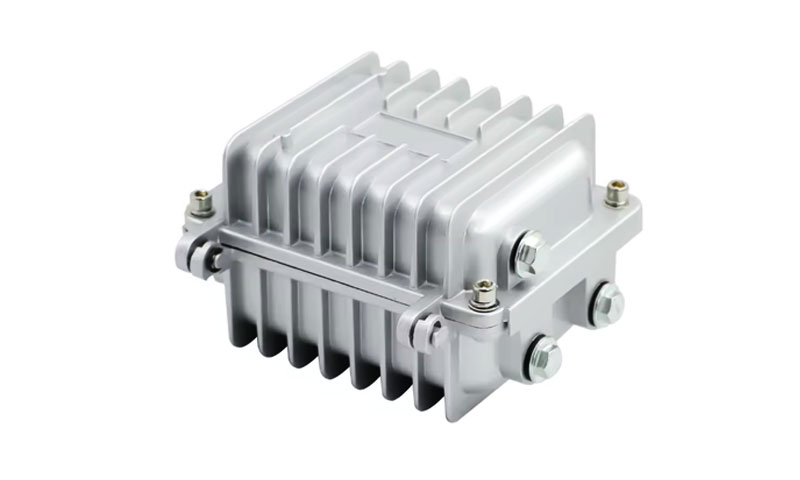
Sebuah kandang die-cast aluminium adalah housing yang diproduksi terutama dengan die casting bertekanan tinggi (HPDC) menggunakan paduan aluminium (MISALNYA., Keluarga A380/ADC12, Varian A356 atau paduan die-casting khusus) dan kemudian selesai dengan pemesinan, perawatan permukaan dan penyegelan.
Fitur khas yang terintegrasi ke dalam bagian cor termasuk bos pemasangan, kebuntuan, tulang rusuk, port masuk kabel, bos untuk sisipan berulir, sirip pendingin, dan flensa untuk gasket atau konektor.
Die-casting menghasilkan bentuk mendekati jaring dengan detail permukaan halus dan toleransi dimensi berulang.
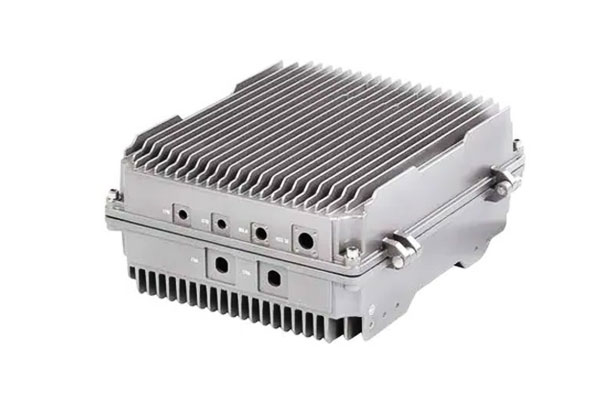
Mengapa memilih aluminium die-cast untuk penutup?
- Kekakuan tinggi dan ketahanan benturan (melindungi elektronik)
- Konduksi termal yang sangat baik untuk pembuangan panas pasif
- Pelindung EMI/RFI yang melekat (logam kontinyu yang konduktif secara elektrik)
- Kemampuan untuk mengintegrasikan fitur struktural dan termal dalam satu bagian
- Kualitas permukaan yang baik untuk pelapisan dan penyelesaian estetika
- Dapat didaur ulang dan tersedia secara luas
3. Bahan & Pilihan paduan
Paduan Aluminium digunakan untuk penutup die cast dipilih berdasarkan kemampuan cast, kekuatan mekanis, konduktivitas termal, ketahanan terhadap korosi dan kemampuan mesin.
Di bawah ini adalah tabel ringkas pilihan umum dan cakupan performa umumnya (panduan teknik — verifikasi lembar data pemasok untuk mengetahui nilai pastinya).
| Paduan / Nama umum | Khas digunakan di selungkup | Kepadatan (g/cm³) | Kekuatan tarik khas (MPa) | Konduktivitas termal yang khas (W·m⁻¹·K⁻¹) | Catatan |
| A380 / ALSI9CU3(Fe) (standar die-casting) | Penutup die-cast serba guna | ~2,68–2,80 | ~150–260 (as-cast) | ~100–140 (bergantung pada paduan) | Terbaik untuk HPDC volume tinggi; castabilitas dan detail yang baik; kekuatan sedang |
| ADC12 (Mirip dengan A380) | Otomotif & rumah elektronik | ~ 2.7 | ~160–260 | ~100–140 | Banyak digunakan di Asia; kemampuan dinding tipis yang baik |
| A356 / ALSI7MG (gravitasi/PM & terkadang HPDC) | Kekuatan lebih tinggi, selungkup yang dapat diberi perlakuan panas & heat sink | ~2,65–2,70 | ~200–320 (T6) | ~ 120–160 | Bisa dirawat panas (T6) memberikan mekanik yang lebih baik & sifat kelelahan; sering digunakan ketika diperlukan kinerja termal dan ketahanan tekanan yang lebih tinggi |
| A413 / AlSi12Cu (casting) | Perumahan khusus, bagian yang menuntut panas | ~ 2.7 | ~200–300 | ~110–150 | Keseimbangan kekuatan dan konduktivitas |
Catatan: nilai adalah rentang tipikal untuk estimasi desain. Paduan die-cast memiliki keuletan yang lebih rendah dibandingkan aluminium tempa dan menunjukkan perbedaan porositas tergantung pada prosesnya.
Konduktivitas termal paduan aluminium cor lebih rendah dibandingkan aluminium murni (237 W/m · k) namun masih menguntungkan untuk manajemen termal dibandingkan dengan plastik.
4. Proses die-casting & varian yang relevan dengan penutup aluminium
Aluminium cetakan selungkup dapat diproduksi dengan beberapa teknologi pengecoran.
Setiap proses menawarkan keseimbangan yang berbeda kemampuan geometri, Kualitas Permukaan, porositas (integritas), sifat mekanik, biaya dan keluaran.
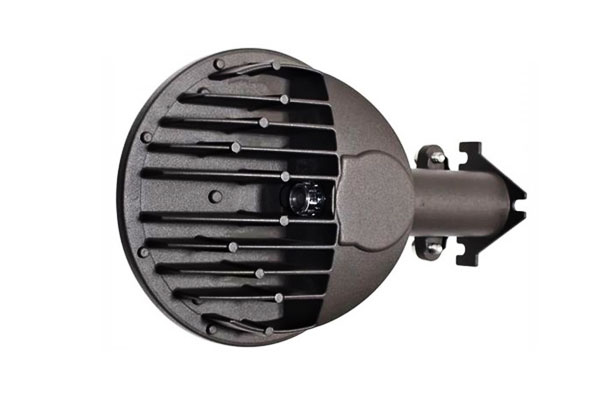
Tabel ringkasan — sekilas proses
| Proses | Skala produksi yang khas | Dinding min yang khas (mm) | Porositas relatif / integritas | Permukaan akhir (Ra) | Kekuatan utama | Kapan harus memilih |
| Casting mati bertekanan tinggi (HPDC) | Tinggi → sangat tinggi | 1.0–1.5 | Sedang (dapat ditingkatkan) | 1.6–6 μm | Throughput yang sangat tinggi, dinding tipis, Detail yang bagus, pengulangan dimensi yang sangat baik | Penutup bervolume tinggi dengan dinding tipis dan banyak fitur terintegrasi |
| Vakum HPDC | Tinggi (premi) | 1.0–1.5 | Porositas rendah (varian HPDC terbaik) | 1.6–6 μm | Semua manfaat HPDC + mengurangi porositas gas dan meningkatkan perilaku mekanis/kelelahan | Penutup memerlukan integritas yang lebih tinggi, segel tekanan, atau meningkatkan umur kelelahan |
| Casting mati bertekanan rendah / Gravitasi Tekanan Rendah (LPDC) | Sedang | 2–4 | Rendah (Bagus) | 3–8 mikron | Integritas yang baik, turbulensi yang lebih rendah, sifat mekanik yang lebih baik dari HPDC | Volume sedang yang mengutamakan integritas dan sifat mekanik |
| Peras casting / Reo / Setengah padat | Rendah → sedang | 1.5–3 | Porositas sangat rendah | 1.6–6 μm | Properti yang hampir dipalsukan, porositas rendah, mekanik yang sangat baik | Penutup yang membutuhkan kekuatan/ketahanan lelah yang lebih tinggi; volume yang lebih kecil |
Cetakan permanen / Gaya berat (PM) |
Rendah → sedang | 3–6 | Rendah | 3–8 mikron | Sifat mekanik yang baik, porositas rendah, hidup mati lebih lama dari pada pasir | Volume sedang, selungkup berdinding lebih tebal dan bagian struktural |
| Pengecoran Investasi | Rendah → sedang | 0.5–2 | Rendah (Bagus) | 0.6–3 μm | Detail luar biasa dan permukaan akhir, bagian tipis mungkin | Kecil, selungkup presisi atau bagian dengan geometri internal yang kompleks |
| Casting pasir (damar / hijau) | Rendah | 6+ | Lebih tinggi (bagian yang lebih besar) | 6–25 μm | Biaya perkakas yang rendah, ukuran fleksibel | Prototipe, volume yang sangat rendah, kandang yang sangat besar |
| Busa yang hilang / Aditif (hibrida) | Rendah | 1–6 (tergantung geometri) | Variabel | Variabel | Perkakas cepat untuk formulir yang rumit, inti yang lebih sedikit | Prototipe cepat, Validasi Desain, penutup khusus bervolume rendah |
Deskripsi proses terperinci & implikasi praktis
Casting mati bertekanan tinggi (HPDC)
- Bagaimana cara kerjanya: Aluminium cair disuntikkan dengan kecepatan/tekanan tinggi ke dalam cetakan baja (dua bagian), dengan cepat memadat dan dikeluarkan. Waktu siklus pada umumnya singkat (detik hingga beberapa menit).
- Parameter proses yang khas: suhu cair ~680–740 °C (bergantung pada paduan); suhu mati ~150–220 °C; kecepatan tembakan yang cepat dan tekanan intensifikasi yang tinggi memampatkan logam menjadi fitur yang tipis.
- Pertunjukan: akurasi dimensi yang sangat baik, Detail yang bagus (logo, tulang rusuk, sirip tipis) dan biaya unit yang rendah dalam skala besar.
- Pengorbanan: HPDC cenderung memerangkap porositas yang disebabkan oleh gas/turbulensi dan mungkin menghasilkan struktur mikro yang sedikit kurang ulet dibandingkan metode gravitasi. Vakum HPDC dan gerbang/ventilasi yang dioptimalkan sangat mengurangi masalah ini.
- Tip praktis: tentukan HPDC vakum jika menyegel permukaan, bos yang disadap atau kehidupan yang lelah sangat penting; jika tidak, HPDC konvensional adalah biaya terendah untuk penutup sederhana.
Vakum HPDC (BANTUAN VAKSUUM)
- Keuntungan: menarik udara keluar dari rongga dan sistem pelari selama pengisian — mengurangi udara yang terperangkap dan porositas terkait hidrogen, meningkatkan sifat mekanik dan kekencangan bocor.
- Kasus penggunaan: Penutup berperingkat IP dengan permukaan penyegelan mesin, konektor di bawah tekanan atau penutup dalam aplikasi yang kritis terhadap getaran.
Casting mati bertekanan rendah / Gravitasi Tekanan Rendah (LPDC)
- Bagaimana cara kerjanya: logam cair dipaksa masuk ke dalam cetakan tertutup dengan tekanan positif rendah dari bawah (atau diisi oleh gravitasi), menghasilkan pengisian yang lembut dan turbulensi rendah.
- Pertunjukan: kesehatan yang lebih baik dan porositas lebih sedikit dibandingkan HPDC; struktur mikro dan umur kelelahan yang lebih baik.
- Kasus penggunaan: volume sedang yang mengutamakan integritas mekanis namun keekonomian HPDC tidak diperlukan.
Peras casting / Setengah padat (Reo / Tuhan)
- Bagaimana cara kerjanya: bubur semipadat atau logam dipadatkan di bawah tekanan dalam cetakan tertutup. Hasilnya adalah kepadatan hampir penuh dan struktur mikro halus.
- Pertunjukan: properti dekat dengan penempaan (kekuatan tinggi, porositas rendah), permukaan akhir yang lebih baik daripada pengecoran konvensional.
- Kasus penggunaan: selungkup yang membutuhkan kinerja mekanis/kelelahan yang tinggi namun dalam volume yang sederhana.
Cetakan permanen / Gravitasi mati
- Bagaimana cara kerjanya: cetakan logam yang dapat digunakan kembali diisi oleh gravitasi; lebih lambat dari HPDC tetapi pengisiannya lebih lembut.
- Pertunjukan: porositas bawah, mekanik yang lebih baik dari HPDC; kompleksitas terbatas vs HPDC.
- Kasus penggunaan: volume menengah menuntut integritas yang lebih tinggi (MISALNYA., rumah dengan bagian dinding yang lebih besar).
Pengecoran Investasi (Lilin yang hilang, Silika-sol)
- Bagaimana cara kerjanya: pola (lilin/cetak 3D) dilapisi dengan cangkang keramik, dewaxed dan cangkang keramik dipecat, Kemudian diisi dengan logam cair (biasanya dalam ruang hampa/inert untuk paduan reaktif).
- Pertunjukan: permukaan akhir yang sangat baik dan kemampuan dinding tipis; Fitur internal yang kompleks; throughput yang lebih lambat dan biaya yang lebih tinggi.
- Kasus penggunaan: rumah presisi kecil, saluran kompleks internal, atau ketika penyelesaian kosmetik/kesetiaan fitur terbaik diperlukan.
Casting pasir (Hijau/Resin)
- Bagaimana cara kerjanya: cetakan pasir yang dapat dibuang terbentuk di sekitar pola; permukaan yang fleksibel namun kasar dan variasi dimensi.
- Pertunjukan: risiko porositas tinggi pada bagian tipis dan hasil akhir kasar; Biaya perkakas yang rendah.
- Kasus penggunaan: prototipe, volume yang sangat rendah, kandang yang sangat besar atau ketika investasi perkakas mahal.
Busa yang hilang / Hibrida aditif
- Bagaimana cara kerjanya: pola busa atau pola cetak 3D dilapisi atau tertanam di pasir; pola logam menguap saat dituang; alur kerja aditif-ke-pengecoran hibrid meningkat untuk NPI yang cepat.
- Pertunjukan & menggunakan: bagus untuk bentuk kompleks dan penyesuaian volume rendah; integritas variabel tergantung pada kontrol proses.
Bagaimana pilihan proses memengaruhi atribut enklosur
- Ketebalan dinding & fitur: HPDC unggul dalam dinding luar yang tipis dan bos yang terintegrasi; PM dan investasi lebih baik agar lebih tebal, bos yang menahan stres.
- Porositas & kebocoran sesak: Vakum HPDC, LPDC, pengecoran pemerasan dan cetakan permanen memberikan porositas terendah; HPDC tanpa vakum mungkin memerlukan penyegelan atau kelonggaran desain untuk permukaan kritis.
- Mekanis & kekuatan kelelahan: komponen pemerasan/semi padat dan cetakan permanen umumnya mengungguli standar HPDC dalam aplikasi yang kritis terhadap kelelahan.
PANGGUL (Pengepresan Isostatik Panas pasca-cetak) adalah opsi untuk menutup porositas internal untuk komponen dengan keandalan sangat tinggi (tapi mahal). - Permukaan akhir & detail: casting investasi > HPDC > cetakan permanen > casting pasir. Logo yang bagus, tekstur dan kosmetik yang terlihat paling mudah dilakukan dengan HPDC dan pengecoran investasi.
- Perkakas & ekonomi satuan: Biaya perkakas HPDC paling tinggi namun biaya unit paling rendah pada volume tinggi.
Pasir dan investasi menawarkan biaya perkakas yang rendah namun harga per bagian berdasarkan volume lebih tinggi. Perkakas cetakan permanen berada di antara keduanya.
5. Mekanis, Panas, dan kinerja Listrik
Kepadatan: ~2,68–2,80 g/cm³ — kira-kira 1/3 baja, mengurangi berat produk.
Kekakuan / modulus: ~68–72 IPK (kelas aluminium) — lebih rendah dari baja, tetapi cukup bila dirancang dengan rusuk dan ketebalan dinding.
Kekuatan tarik khas (cetakan): ~150–260 MPa (paduan HPDC); hingga ~300 MPa untuk A356 T6 yang diberi perlakuan panas.
Konduktivitas termal: paduan cor tipikal ~100–160 W/m·K (paduan dan porositas tergantung). Ini jauh lebih unggul daripada plastik dan membantu pendinginan pasif.
Konduktivitas listrik & Perisai EMI: cangkang aluminium kontinu adalah penghalang konduktif yang efektif; bagus untuk pelindung dasar, terutama ketika gasket dan antarmuka konduktif dikontrol.
Implikasi:
- Penutup aluminium memberikan perlindungan struktural dan penyebaran panas untuk elektronika daya.
- Untuk ketahanan mekanis, gunakan rusuk dan flensa — die-casting dengan mudah mengintegrasikannya.
- Untuk kinerja EMI, permukaan konduktif terus menerus dan kontak yang baik pada lapisan (dengan gasket konduktif atau flensa yang tumpang tindih) sangat penting.
6. Desain untuk die cast — geometri, fitur, dan aturan DFM
Desain die-casting yang bagus sangat menentukan. Di bawah ini adalah tabel pedoman desain praktis dan aturan utama yang harus diikuti oleh desainer.
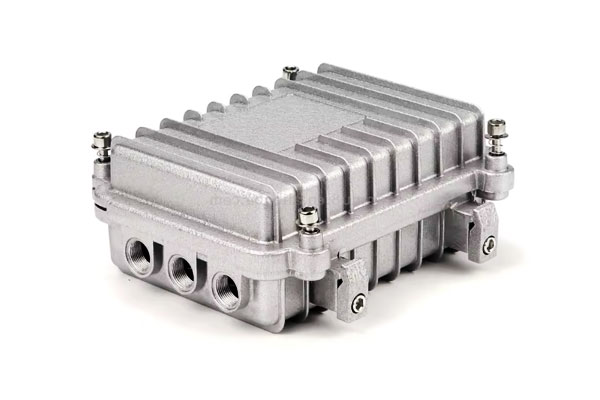
Aturan utama DFM (ringkasan)
- Ketebalan dinding: bertujuan untuk dinding yang seragam. Minimum HPDC yang khas: 1.0–1.5 mm untuk bentuk sederhana; dinding eksterior kandang praktis sering 1.5–3.0 mm. Hindari pulau-pulau yang tebal—gunakan tulang rusuk daripada menambah ketebalan lokal.
- Sudut rancangan: menyediakan 1–3 ° draft pada semua permukaan vertikal (lebih banyak untuk fitur mendalam).
- Tulang rusuk: gunakan rusuk untuk mengeraskan — ketebalan rusuk ≈ 0.5–0,8× ketebalan dinding nominal; hindari tulang rusuk yang membuat bagian tertutup.
- Bos / kebuntuan: bos dinding luar ≈ 1.5–2.0× ketebalan dinding utama; termasuk radius antara bos dan dinding; termasuk lubang pembuangan/pengukur untuk ventilasi; menggabungkan ketebalan akar yang tepat untuk menghindari penyusutan.
- Fillet & jari-jari: gunakan fillet yang banyak pada transisi (≥1–2× ketebalan dinding) untuk mengurangi konsentrasi stres dan masalah makan.
- Undercuts: meminimalkan undercut; bila diperlukan gunakan slide atau cetakan terpisah yang meningkatkan biaya perkakas.
- Menyegel wajah: cor sedikit kebesaran dan mesin hingga rata; tentukan permukaan akhir (Ra) untuk penyegelan paking.
- Threading: hindari benang yang dibentuk untuk perakitan berulang — lebih suka benang yang dikerjakan dengan mesin atau benang yang dipasang/dimasukkan dengan panas (lihat Bagian 10).
- Lubang angin & gating: temukan gerbang dan ventilasi untuk meminimalkan porositas pada permukaan penyegelan dan bos; berkoordinasi dengan pengecoran untuk rencana gating.
Tabel DFM ringkas
| Fitur | Pedoman umum |
| Ketebalan dinding minimal (HPDC) | 1.0–1.5 mm; lebih memilih ≥1,5 mm untuk kekakuan |
| Ketebalan dinding yang khas (lampiran) | 1.5–3.0 mm |
| Sudut rancangan | 1–3 ° (luar) |
| Diameter bos:rasio dinding minimum | Bos OD 3–5× ketebalan dinding; ketebalan bos 1,5–2× dinding |
| Ketebalan tulang rusuk | 0.5–0,8× ketebalan dinding |
| Jari-jari fillet | ≥1–2× ketebalan dinding |
| Tunjangan muka penyegelan mesin | 0.8– Stok ekstra 2,0 mm |
| Pertunangan benang | 2.5× diameter sekrup dalam aluminium (atau gunakan sisipan) |
Ini adalah aturan praktis — konsultasikan dengan die-caster lebih awal untuk optimasi dan simulasi.
7. Penyegelan, Perlindungan masuknya, dan strategi Gasketing
Penutup elektronik sering kali harus memenuhi peringkat IP. Pertimbangan utama:
- Desain alur paking: gunakan alur persegi panjang atau pas untuk kompresi paking (MISALNYA., 20–30% kompresi). Berikan geometri alur yang berkesinambungan dan hindari ruang mati.
- Kerataan wajah & menyelesaikan: mesin menyegel wajah hingga rata dan tentukan Ra (MISALNYA., Ra ≤ 1.6 µm) untuk adhesi elastomer yang baik.
- Pengencang & urutan kompresi: tentukan torsi baut, jarak, dan penggunaan sekrup penahan atau sisipan berulir untuk mencegah ekstrusi paking. Pertimbangkan beberapa sekrup yang lebih kecil untuk kompresi yang seragam.
- Bahan paking: pilih silikon, EPDM, neoprena atau fluorosilikon khusus berdasarkan suhu/paparan bahan kimia dan kekerasan (pantai A 40–60 tipikal). Untuk pelindung EMI gunakan gasket elastomer konduktif.
- Drainase & ventilasi: menyediakan lubang tangisan atau membran ventilasi untuk pemerataan tekanan; gunakan ventilasi bernapas untuk mencegah kondensasi sambil mempertahankan IP.
- Konektor tertutup & kelenjar kabel: gunakan kelenjar kabel bersertifikat untuk aplikasi IP67/68. Pertimbangkan untuk membuat pot atau cetakan berlebih untuk lingkungan yang keras.
Kualifikasi: untuk IP67/68 tentukan uji perendaman dan debu sesuai IEC 60529 dan kondisi pengujian detail (kedalaman, lamanya, suhu).
8. Manajemen termal dan strategi pembuangan panas
Penutup aluminium die-cast sering digunakan sebagai heat sink struktural.
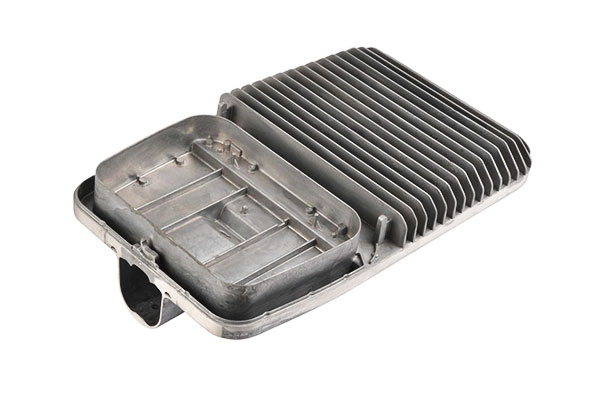
Strategi desain:
- Pemasangan langsung komponen penghasil panas ke dasar penutup atau area bos khusus untuk mengalirkan panas ke dalam tubuh.
Gunakan bahan antarmuka termal (WAKTU), bantalan termal, atau perekat konduktif termal untuk meningkatkan kontak. - Integrasikan sirip dan tingkatkan luas permukaan pada permukaan luar; HPDC dapat membentuk geometri sirip yang rumit jika desain cetakannya memungkinkan.
Sirip harus cukup tebal untuk menghindari kerusakan namun cukup tipis untuk pendinginan konvektif. Ketebalan sirip tipikal 1–3 mm dengan jarak yang dioptimalkan untuk aliran udara. - Gunakan jalur konduksi internal: rusuk bagian dalam dan bantalan menebal yang menyalurkan panas ke kulit terluar.
- Permukaan akhir untuk perpindahan panas: permukaan matte atau anodized dapat mengubah emisivitas; anodisasi mengurangi konduktivitas kontak termal jika terdapat lapisan — pertimbangkan hal ini saat merancang pendinginan konduksi.
- Konveksi paksa: desain bukaan masuk/keluar (dengan penyaringan debu) dan menyediakan fitur pemasangan untuk kipas atau blower. Untuk selungkup berperingkat IP, pertimbangkan pendinginan konduksi atau pipa panas untuk menghindari ventilasi.
- Pemodelan termal: gunakan CFD untuk menyeimbangkan konduksi, konveksi dan radiasi; simulasi termal harus mempertimbangkan tata letak PCB, peta kehilangan daya dan kondisi lingkungan terburuk.
Aturan praktis: jalur konduksi penutup aluminium biasanya mengurangi suhu hotspot PCB secara signifikan dibandingkan penutup plastik; diukur dengan ketahanan termal (°C/W) untuk perakitan yang dimaksud.
9. EMI / Perlindungan RFI dan pertimbangan landasan
Penutup aluminium memberikan penghalang konduktif tetapi memerlukan desain yang cermat untuk efektivitas pelindung yang tinggi:
- Kontrol jahitan: pastikan luas permukaan kontak jahitan mencukupi dan gunakan gasket konduktif pada sambungan jika diperlukan. Flensa yang tumpang tindih dengan kompresi pengikat konduktif efektif.
- Permukaan akhir & pelapis: konversi kromat, pelapisan nikel atau cat konduktif dapat meningkatkan ketahanan korosi dan menjaga konduktivitas.
Lapisan non-konduktif (beberapa cat) kurangi pelindung kecuali titik kontak tidak dilapisi atau disediakan jalur konduktif. - Pemilihan paking: gasket elastomer konduktif (silikon dengan impregnasi perak atau nikel) menyediakan penyegelan EMI pada jahitan dan di sekitar panel akses.
- Kabel & konektor feed-through: gunakan feed-through yang difilter atau konektor berpelindung; menjaga kontinuitas pelindung 360°.
- Strategi landasan: tentukan satu atau lebih titik ground dengan grounding bintang untuk menghindari ground loop; gunakan kancing penahan atau lugs yang dilas untuk titik ground eksternal.
- Pengujian: mengukur efektivitas perisai (SE) menurut IEEE 299 atau MIL-STD-285; penutup aluminium khas yang dirancang dengan baik dapat menghasilkan 60–80 dB SE pada pita frekuensi yang relevan dengan gasket yang tepat.
10. Pemesinan, Sisipan, dan metode perakitan
Pemesinan pasca cor biasanya diperlukan untuk mengawinkan wajah, lubang benang, area pemasangan konektor dan fitur presisi.
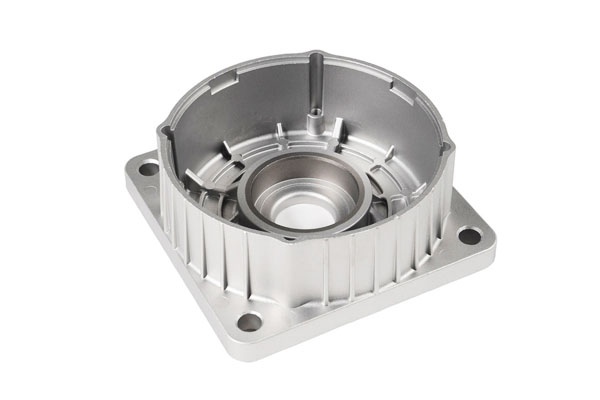
- Tunjangan pemesinan: tentukan stok pemesinan pada bagian cor (0.8–2,0 mm tergantung pada prosesnya) pada permukaan kritis.
- Threading: gunakan helicoil atau sisipan baja (MISALNYA., PEM, ambil mur atau ring berulir) di mana perakitan berulang diharapkan.
Untuk bos berdinding tipis gunakan sekrup sadap sendiri dengan torsi terkontrol atau mur sisipkan. - Pertunangan benang: usahakan untuk memasang diameter sekrup ≥2,5× pada aluminium atau gunakan sisipan baja.
- Tekan-pas & pas sekali: mungkin untuk retensi internal, tapi pertimbangkan siklus termal dan mulur pada aluminium.
- Torsi pengikat: tentukan torsi maksimum untuk menghindari pengupasan bos. Gunakan alat pembatas torsi dalam perakitan.
- Fitur pemasangan permukaan: penguatan bos dan gusset untuk mendukung konektor dan penanganan yang sering.
Kontrol kualitas: kehabisan, pengukur kerataan dan ulir; Inspeksi CMM untuk geometri kritis; mempertahankan datum selama pemesinan.
11. Permukaan selesai, pelapis dan perlindungan korosi
Hasil akhir umum untuk penutup die-cast:
- Konversi kromat (Film Alodin/Kimia): meningkatkan ketahanan terhadap korosi dan daya rekat cat; perhatikan peraturan lingkungan mendukung proses non-heksavalen.
- Anodisasi: dekoratif dan pelindung korosi; anodisasi yang tebal meningkatkan isolasi dielektrik dan dapat mengurangi konduksi termal pada antarmuka—rencanakan bantalan pemasangan yang tidak dilapisi atau dengan lapisan yang dihilangkan untuk kontak termal.
- Lapisan bubuk / cat: estetika yang baik dan perlindungan korosi; harus mengelola konduktivitas jahitan untuk EMI (gunakan gasket konduktif atau permukaan kontak bertopeng).
- Nikel listrik listrik / pelapisan nikel: meningkatkan ketahanan aus dan korosi; mempertahankan konduktivitas listrik.
- Penyelesaian mekanis: Bead Blasting, jatuh, pemolesan untuk penyelesaian kosmetik.
Catatan seleksi: untuk desain kritis EMI biarkan permukaan segel tidak dilapisi atau berikan cat/pelapisan konduktif pada area flensa/gasket. Untuk penggunaan di luar ruangan, pilihlah pelapis yang tahan korosi dan penyegelan yang tepat.
12. Pengujian, Kualifikasi, dan Standar
Tes dan standar utama yang umum diterapkan:
- Perlindungan Masuknya (AKU P) pengujian: IEC 60529 (Peringkat IPxx untuk debu dan air). Target tipikal: IP54, IP65, IP66, IP67 tergantung pada lingkungan.
- Semprotan garam / korosi: ASTM B117 untuk pelapis; kondisi servis nyata mungkin memerlukan pengujian perendaman atau korosi siklik.
- Bersepeda termal & terkejut: memvalidasi kelelahan termal dan stabilitas dimensi (MISALNYA., sesuai MIL-STD-810).
- Getaran & terkejut: IEC 60068-2, standar otomotif atau MIL tergantung pada aplikasi.
- EMC / pengujian EMI: per FCC, Petunjuk CE EMC, MIL-STD-461 (militer), IEEE 299 untuk melindungi efektivitas.
- Pengujian mekanis: menjatuhkan, uji dampak dan torsi untuk konektor.
- Tekanan / uji kebocoran: jika rumah bertekanan atau dalam pot, uji kebocoran dan integritas segel.
- Rohs / kepatuhan REACH: pemilihan bahan dan pelapis harus memenuhi persyaratan peraturan di pasar sasaran.
13. Ekonomi manufaktur, Waktu tunggu, dan pertimbangan Volume
- Biaya perkakas: biaya cetakannya tinggi (puluhan hingga ratusan kUSD tergantung kerumitan dan rongganya) — dibenarkan untuk volume sedang hingga tinggi.
- Biaya satuan: HPDC menghasilkan biaya per bagian yang rendah dalam skala besar; untuk opsi prototipe volume rendah mencakup pola cetak 3D, pengecoran pasir atau aluminium mesin CNC.
- Waktu siklus: Siklus HPDC pendek (detik hingga menit), memungkinkan throughput yang tinggi.
- Biaya pasca pemrosesan: pemesinan, perlakuan panas, finishing permukaan, masukkan instalasi dan perakitan menambah biaya per bagian; desain untuk meminimalkan operasi sekunder yang mahal.
- Titik impas: biasanya die casting menjadi ekonomis ketika volume tahunan melebihi ribuan bagian, tapi ini sangat bervariasi.
Kiat rantai pasokan: keterlibatan awal dengan die-caster mengurangi iterasi, dan memodulasi bagian-bagiannya (bingkai bagian dalam vs penutup luar) dapat mengurangi kompleksitas perkakas.
14. Lingkungan, kesehatan & keamanan dan daur ulang
- Daur ulang: aluminium sangat mudah didaur ulang dengan biaya energi yang rendah untuk melebur kembali dibandingkan produksi primer. Scrap die-cast dan housing yang sudah habis masa pakainya memiliki nilai scrap yang tinggi.
- Pelapisan kepatuhan lingkungan: lebih memilih pelapis konversi non-heksavalen dan kimia cat yang sesuai untuk ROHS/REACH.
- Pengecoran H&S: pengendalian logam cair, debu, dan asap selama finishing dan pelapisan; ventilasi yang baik dan APD diperlukan.
- Manfaat siklus hidup: housing yang ringan mengurangi pengiriman dan dapat menurunkan konsumsi energi dalam aplikasi seluler.
15. Aplikasi industri yang umum & contoh kasus
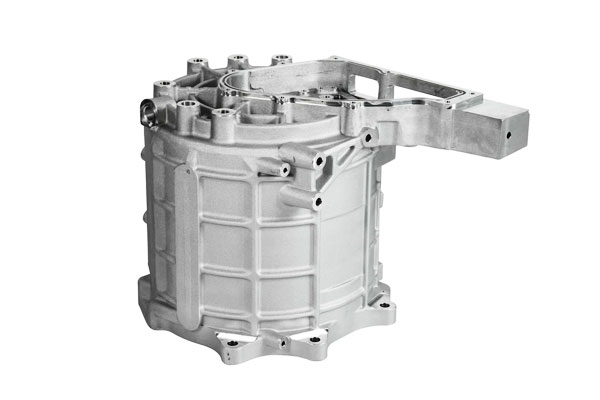
- Elektronika daya / inverter (tenaga surya, Ev, penggerak motor): selungkup menghantarkan dan menghilangkan panas; harus memenuhi EMI dan perlindungan lingkungan.
- Stasiun pangkalan telekomunikasi & kepala radio: Pelindung EMI dan tahan cuaca.
- Otomotif ECU & modul daya: menggabungkan peran struktural dan termal; getaran dan siklus suhu sangat penting.
- Kontrol industri & instrumentasi: enclosure melindungi pengontrol di lingkungan yang keras (Versi IP66 umum).
- Alat kesehatan & elektronik pencitraan (non-implan): membutuhkan hasil akhir yang higienis dan kontrol EMI.
- IoT luar ruangan / node kota pintar: rumah die-cast kecil dengan flensa terintegrasi dan dudukan antena.
16. Penutup Aluminium Die-Cast vs. Alternatif — Tabel Perbandingan
Di bawah ini adalah kompak, perbandingan berorientasi teknik penutup aluminium die-cast (HPDC) versus bahan/proses alternatif yang umum.
| Bahan / Proses | Kepadatan (g · cm⁻³) | Konduktivitas termal (W·m⁻¹·K⁻¹) | Kekuatan tarik khas (MPa) | Perisai EMI | Permukaan akhir yang khas | Biaya relatif (satuan, volume tengah) | Kasus penggunaan terbaik |
| Aluminium HPDC (A380 / ADC12) | ~ 2.7 | ~100 – 140 | ~150 – 260 | Sangat bagus (cangkang logam terus menerus) | Halus sebagai cetakan → cat / bubuk / anodize | Sedang | Penutup elektronik bervolume tinggi memerlukan dinding tipis, bos terintegrasi, disipasi termal dasar dan pelindung EMI |
| Aluminium (A356 T6, gaya berat / vakum HPDC) | ~2,65 | ~120 – 160 | ~200 – 320 (T6) | Sangat bagus | Bagus → dapat dikerjakan dengan mesin & anodized | Sedang - Tinggi | Penutup memerlukan integritas mekanik yang lebih tinggi, peningkatan kinerja kelelahan/termal atau segel tekanan |
| Baja lembaran logam (dicap / dilipat) | ~ 7.85 | ~45 – 60 | ~300 – 600 (tergantung kelas) | Sangat bagus (dengan jahitan terus menerus & Gasket) | Dilukis / dilapisi bubuk | Low -Medium | Kandang berbiaya rendah, panel besar, bentuk sederhana; di mana bobot tidak terlalu penting dan ketangguhan diperlukan |
| Baja Tahan Karat (lembaran) | ~7.7–8.1 | ~15 – 25 | ~450 – 700 | Bagus sekali (konduktif, tahan korosi) | Disikat / elektropoli | Tinggi | Lingkungan yang korosif atau higienis, kekuatan tinggi & ketahanan terhadap korosi diperlukan |
Plastik Cetakan Injeksi (komputer, ABS, PPO) |
~1.1–1.4 | ~0,2 – 0.3 | ~40 – 100 | Miskin (kecuali logam) | Mulus, bertekstur | Rendah | Berbiaya rendah, selungkup dielektrik, elektronik konsumen dalam ruangan, aplikasi kritis non-EMI |
| Seng die-cast (bebannya) | ~6.6–7.1 | ~100 – 120 | ~200 – 350 | Bagus | Detail permukaan yang sangat halus; pelapisan mudah | Sedang | Kecil, rumah yang detail dimana bobotnya tidak begitu kritis dan diperlukan detail yang tinggi; Hasil akhir dekoratif |
| Magnesium cetakan | ~1.8 | ~70 – 90 | ~200 – 350 | Sangat bagus | Pemeran yang bagus; dapat dikerjakan/dicat | Sedang - Tinggi | Penutup ultra-ringan dengan konduksi termal yang baik (otomotif, elektronik dirgantara) |
| Diekstrusi / Aluminium Fabrikasi (lembaran/ekstrusi + pemesinan) | ~ 2.7 | ~ 205 (murni Al), paduan lebih rendah | 200 - - 400 (bergantung pada paduan) | Sangat bagus | Bagus sekali (anodize, hasil akhir yang dikerjakan dengan mesin) | Sedang - Tinggi | Penutup yang presisi, bagian terintegrasi heat-sink, rendah- hingga volume menengah berjalan di mana NPI & biaya perkakas harus dibatasi |
| Manufaktur Aditif Logam (ALSI10MG / 316L) | 2.7 / 8.0 | 100 (Al) / 10–16 (316) | 250–500 (ketergantungan materi) | Sangat bagus | As-built → dikerjakan dengan mesin & menyelesaikan | Tinggi | Volume rendah, saluran internal yang kompleks, prototipe iterasi cepat, jalur termal yang sangat optimal |
Catatan & panduan seleksi
- Berat: aluminium (≈2,7 gram·cm⁻³) memberikan perdagangan bobot-ke-kekakuan terbaik vs baja atau seng; magnesium masih lebih ringan tetapi biaya/prosesnya terbatas.
- Manajemen termal: paduan aluminium menawarkan konduksi termal yang jauh lebih baik dibandingkan plastik dan baja tahan karat — alasan utama memilih aluminium die-cast untuk elektronika daya.
- kinerja EMI: rumah logam (aluminium, baja, seng, magnesium) memberikan perlindungan EMI yang baik secara inheren; plastik memerlukan metalisasi atau gasket konduktif agar sesuai.
- Integritas struktural & porositas: Komponen HPDC mungkin menunjukkan porositas — gunakan vakum HPDC, LPDC, atau A356 (T6) rute di mana kebocoran sesak, umur kelelahan atau permukaan penyegelan mesin sangat penting.
- Permukaan akhir & korosi: aluminium die-cast menerima berbagai hasil akhir (lapisan bedak, cat, nikel tanpa listrik, konversi kromat, anodize). Stainless menawarkan ketahanan korosi bare-metal yang unggul.
- Ekonomi: HPDC memiliki biaya perkakas yang tinggi tetapi biaya unit yang rendah berdasarkan volume. Lembaran logam lebih murah dari segi perkakas untuk volume rendah tetapi kurang mampu untuk fitur terintegrasi yang kompleks. AM mahal per bagiannya tetapi memungkinkan kebebasan geometri yang tak tertandingi.
17. Kesimpulan
Penutup die-cast aluminium memberi para insinyur platform kuat yang terintegrasi perlindungan mekanis, konduksi panas dan pelindung EMI dalam satu paket yang dapat diproduksi.
Penggunaan yang berhasil memerlukan fokus sejak dini DFM untuk pengecoran mati, paduan yang benar dan pemilihan proses (vakum HPDC atau A356 T6 ketika integritas dan kinerja termal sangat penting), penyegelan yang jelas dan strategi EMI, dan penyelesaian dan pengujian yang ditentukan dengan baik.
Jika dirancang dan ditentukan dengan benar, penutup aluminium die-cast dapat mengurangi kerumitan perakitan, meningkatkan keandalan dan memberikan premi, perumahan tahan lama untuk elektronik modern.
FAQ
Kapan saya sebaiknya memilih aluminium die-cast daripada penutup lembaran logam?
Lebih suka aluminium die-cast ketika Anda membutuhkan rusuk/bos yang terintegrasi, konduksi termal yang unggul, ketahanan mekanik yang lebih tinggi, dan pelindung EMI. Lembaran logam unggul karena biaya perkakas yang sangat rendah, profil tipis dan bentuk sederhana.
Dapatkah saya menggunakan penutup die-cast yang dicat dan masih memenuhi persyaratan EMI?
Ya — tetapi pastikan kontak konduktif terpasang pada jahitannya, atau sediakan bantalan kontak konduktif yang tidak dilapisi. Cat konduktif atau pelapisan pada area flensa juga membantu.
Apakah penutup cetakan/aluminium tahan air?
Hal ini dapat terjadi—saat permukaan penyegel dikerjakan hingga rata, gasket dan kelenjar kabel yang sesuai digunakan, dan desainnya diuji dan memenuhi syarat untuk peringkat IP yang diinginkan.
Bagaimana cara mencegah creep gasket dan kompresi yang disetel seiring waktu?
Tentukan bahan paking yang tahan lama, desain untuk kompresi yang tepat (20–30%), menjaga pola baut dan torsi, dan pilih sisipan jika pengencang sering didaur ulang.
Berapa waktu tunggu tipikal untuk perkakas produksi?
Waktu tunggu perkakas bervariasi sesuai kompleksitas—biasanya 6–20 minggu. Keterlibatan pemasok awal dan desain untuk kemampuan manufaktur mengurangi iterasi dan waktu produksi.
Bagaimana penutup aluminium die-cast mencapai pelindung EMI?
Perlindungan EMI dicapai melalui: 1) Konduktivitas bawaan aluminium (50 dasar dB); 2) Tulang rusuk pelindung internal terintegrasi (tambahkan 40–60 dB); 3) Perawatan permukaan konduktif (nikel tanpa listrik, cat konduktif, menambahkan 15–30 dB).
Berapa peringkat IP maksimum untuk casing die-cast aluminium?
Penutup die-cast aluminium dapat mencapai IP68 (perendaman di luarnya 1 M) dengan die casting vakum (porositas <1%) dan desain alur penyegelan yang presisi (toleransi ±0,1 mm) dipasangkan dengan cincin-O Viton.
Dapatkah penutup aluminium die-cast digunakan dalam aplikasi suhu tinggi?
Ya—penutup standar (A380/ADC12) beroperasi hingga 125°C; paduan suhu tinggi (6061) dengan anodisasi keras dapat bertahan pada suhu 150–200°C (cocok untuk elektronik yang dipasang di mesin).