1. Ներածություն
Կտրող տախտակները առանցքային դեր են խաղում խոհանոցի հիգիենայի և սննդի պատրաստման գործում.
Նրանք պաշտպանում են վահանակները, պահպանել դանակի եզրերը, և օգնում է կանխել խաչաձև աղտոտումը.
Դեռ, Հատման տախտակի ճիշտ նյութ ընտրելը ավելին է, քան գեղագիտությունը; դա ուղղակիորեն ազդում է ամրության վրա, անվտանգություն, և պահպանման ջանքերը.
Այս հոդվածում, մենք համեմատում ենք չժանգոտվող պողպատից և տիտանի կտրող տախտակը՝ ըստ նյութի հատկությունների, կտրելու կատարումը, հիգիենա, երկարակեցություն, ծախս, դիզայն, եւ իրական աշխարհի դիմումներ.
Վերջում, դուք կունենաք հստակ շրջանակ ձեր խոհարարական կարիքների համար իդեալական տախտակ ընտրելու համար.
2. Նյութական հատկություններ
Չժանգոտվող պողպատ
Չժանգոտվող պողպատ սովորաբար օգտագործվում են կտրող տախտակներ դասարաններ 304 և 316.
Դասարան 304 ներառում է մոտավորապես 18% քրոմ (Խուզարկու) և 8% նիկել (Մեջ), իսկ դասարան 316 բարձրացնում է մոլիբդենը (Ժամանակ) բովանդակությունը մոտ 2%, քլորիդների նկատմամբ դիմադրության բարձրացում.

Երկու դասարաններն էլ հասնում են Rockwell կարծրության B80-B95 (≈170–220 ՀՎ) և ունեն խտություն 7.8 գ / սմ.
Քրոմը խթանում է կոռոզիոն դիմադրությունը՝ ձևավորելով պասիվ Cr₂o շերտ. Երբ քերծվում է, այդ թաղանթն ինքնաբուժվում է թթվածնով հագեցած միջավայրում րոպեների ընթացքում.
Այս պասիվացման շնորհիվ, չժանգոտվող տախտակները դիմադրում են ժանգին և գունավորմանը նույնիսկ տարիներ շարունակ խոհանոցում օգտագործելուց հետո.
Տիտղոս
Տիտղոս ներս մտեք կտրող տախտակ կոմերցիոն առումով մաքուր (Ցեխ) դասարաններ կամ համաձուլվածքը TI-6AL-4V.
CP տիտանն առաջարկում է առաձգական ուժ 300-500 MPA, մի կարծրություն ≈150 HV, և խտությունը 4.5 գ / սմ.
Ի հակադրություն, Ti-6Al-4V- օգտագործվում է այնտեղ, որտեղ լրացուցիչ ամրությունը կարևոր է 900 MPA առաձգական ուժ և ≈350 HV կարծրություն.

Տիտանի բնիկ տիտան երկօքսիդ շերտը ձևավորվում է ինքնաբերաբար, ապահովելով կոռոզիայից անզուգական դիմադրություն pH-ի բոլոր պայմաններում, ներառյալ աղի և թթվային միջավայրերը.
Այդ օքսիդի թաղանթը կայուն է մնում նույնիսկ ծայրահեղ ջերմային կամ քիմիական ազդեցության տակ.
3. Կտրման կատարումը & Դանակի ընկերասիրություն
Մակերեւութային կարծրություն եւ դիմադրություն հագնել
Չժանգոտվող պողպատից տախտակները հասնում են 200– 220 HV, բավական է գոլ խփելուն դիմակայելու համար, բայց բավական դժվար է ժամանակի ընթացքում դանակները խլացնելու համար.
Տիտանի խառնուրդի տախտակներ, մոտ ≈350 HV, դիմանալ ծանր օգտագործմանը նվազագույն մաշվածությամբ. Այնուամենայնիվ, մաքուր տիտանի ցածր կարծրություն (~150 HV) այն ավելի ենթակա է քերծվածքների.
Ազդեցություն դանակի եզրերի պահպանման վրա
Չժանգոտվող պողպատի վրա հաճախակի կտրելը արագացնում է շեղբերի բթացումը: դանակները կորցնում են մոտավորապես 20-30% եզրերի սրությունը հետո 500 կոտլետներ.
Տիտանի խառնուրդի տախտակները նվազեցնում են այդ կորուստը 10-15%, շնորհիվ տիտանի ավելի ցածր քայքայումի գործակցի.
Այնուամենայնիվ, երկու նյութերն էլ ավելի քիչ ներողամիտ են, քան փայտը կամ պլաստիկը; պողպատե կամ տիտանի տախտակները փոխում են դանակի երկարակեցությունը հիգիենիկ առավելությունների համար.
Ձգում և անվտանգություն
Չժանգոտվող և տիտանի մակերեսները կարող են սայթաքուն դառնալ, երբ թաց լինեն. Արտադրողները հաճախ ինտեգրվում են մշակված ակոսներ կամ հյուսվածքային նախշեր ուժեղացնել բռնելով.
Օրինակ, ա 1 մմ բշտիկով պայթեցված ավարտը մեծացնում է շփման գործակիցը 25%, նվազեցնելով սայթաքման հետ կապված վթարները.
4. Հիգիենա & Սննդի անվտանգություն
Ապահովել, որ կտրող տախտակը դիմակայում է բակտերիաների աճին և խաչաձեւ աղտոտմանը, դասվում է ցանկացած խոհանոցի ամենակարևոր նկատառումների շարքին:.
Ե՛վ չժանգոտվող պողպատը, և՛ տիտանը բնորոշ առավելություններ են տալիս ծակոտկեն նյութերի նկատմամբ, ինչպիսիք են փայտը կամ որոշակի պլաստմասսա, սակայն դրանք տարբերվում են հիգիենայի հիմնական չափորոշիչներով.

Ոչ ծակոտկեն և բակտերիալ պահպանում
Երկու մետաղներն էլ առկա են ոչ ծակոտկեն մակերեսներ, որոնք մերժում են բակտերիաներին գաղութացնելու համար անհրաժեշտ մանրադիտակային ճեղքերը.
Անկախ լաբորատոր թեստերում, չժանգոտվող պողպատը պահպանվել է ավելի քիչ, քան 10 գաղութներ կազմող միավորներ (CFU) սմ²-ի համար է Էշերիխիա կոլի ստանդարտ լվացման ցիկլից հետո,
մինչդեռ տիտանն արդյունավետորեն գրանցվեց 0 CFU/սմ² նույն պայմաններում.
Հետեւաբար, ոչ մակերեսը չի պարունակում խոնավություն կամ սննդի մասնիկներ, և երկուսն էլ գերազանցում են պոլիմերային տախտակները (որը կարող է ծուղակ ընկնել մինչև 1,000 CFU/սմ²) մանրէաբանական մաքրության մեջ.
Մաքրման հնարավորություն և ստերիլիզացում
Որեվէ ավելին, չժանգոտվող պողպատը դիմակայում է կրկնվող քիմիական և ջերմային սանիտարական պայմաններին.
Առևտրային խոհանոցները կանոնավոր կերպով մանրէազերծում են չժանգոտվող տախտակները ավտոկլավներ ժամը 121 ° C կամ հետ քլորացված ախտահանիչներ- պրակտիկա, որը չի թողնում երկարատև մակերեսային վնաս.
Նմանապես, տիտանն ամուր է Tio₂ Օքսիդային թաղանթը դիմադրում է ագրեսիվ լվացող միջոցներից և սպիտակեցնող նյութերից փորվածքի կամ փորագրման դեմ, հնարավորություն տալով և՛ աման լվացող մեքենայի, և՛ ուլտրամանուշակագույն ճառագայթների ախտահանման՝ առանց քայքայման.
Դիմադրություն գունավորմանը, Հոտեր, և խաչաձև աղտոտում
Բացի այդ, երկու նյութերն էլ դիմակայում են պիգմենտների և հոտերի կլանմանը.
Ա 500-ժամ արագացված ներկման թեստ, դասարան 316 չժանգոտվող պողպատը ցույց տվեց զրոյական գույնի փոխանցում լոլիկի հյութից և քրքումից,
և տիտանը մակերեսային գունաթափում կամ հոտ չի պահպանում նույնիսկ սխտորի և սոխի էքստրակտների հետ անմիջական շփումից հետո.
Այս ոչ ռեակտիվ վարքագիծը երաշխավորում է, որ մեկ տախտակ կարող է ապահով կերպով պատրաստել սննդի տարբեր տեսակներ՝ միս, ձուկ, Մրգեր, և բանջարեղեն՝ առանց համի փոխանցման կամ քիմիական տարրալվացման վտանգի.
Համատեղելով ոչ ծակոտկեն մետալուրգիան բացառիկ մաքրության և բծերի դիմադրության հետ, չժանգոտվող պողպատից և տիտանի կտրող տախտակները ապահովում են սննդամթերքի անվտանգության արդյունավետությունը, որը պահանջում են պրոֆեսիոնալ և տնային խոհանոցները.
5. Durability & Պահպանում
Քերծվածքների դիմադրություն և դեֆորմացիա
Չժանգոտվող պողպատը դեֆորմացվում է վերևում գտնվող բեռների տակ 500 Ն, ցույց տալով մակերեսային փորվածքներ. Տիտանի համաձուլվածքը դիմանում է մինչև 800 Ն առանց մշտական դեֆորմացիայի.
Մաքուր տիտանի փորվածքներ է 300 Ն, ուստի օգտվողները հաճախ նախընտրում են Ti-6Al-4V բարձր սթրեսային միջավայրերում.
Չափային կայունություն և շեղում
Երկու մետաղներն էլ դիմադրում են ճեղքմանը ջերմային ցիկլերի միջև -20 °C-ից մինչև 80 ° C.
Սպասք լվացող մեքենայի երկարատև ցիկլերում, դասարան 304 տախտակների ցուցադրություն 0.1% ծավալային փոփոխություն, մինչդեռ տիտանը մնում է անփոփոխ.
Մաքրող արձանագրություններ
Չժանգոտվող պողպատից պատրաստված տախտակները արդյունավետ մաքրում են առևտրային սպասք լվացող մեքենաներում և դիմակայում են թթվային մաքրող միջոցներին.
Տիտանը նույնպես դիմանում է աման լվացող մեքենաներին, բայց պահանջում է լվացումից հետո պասիվացում չկա, քանի որ դրա օքսիդային շերտը երբեք չի քայքայվում.
6. Ծախս & Տնտեսական նկատառումներ
| Մետրային | Չժանգոտվող պողպատ (304/316) | Առևտրային մաքուր տիտան | Ti-6Al-4V խառնուրդ |
|---|---|---|---|
| Հումքի գինը (ԱՄՆ դոլար/կգ) | $3- $5 | $10- $15 | $20- 30 դոլար |
| Արտադրություն բարդություն | Չափավոր (դրոշմում & ավարտ) | Բարձր (Ision շգրիտ հաստատում) | Շատ բարձր |
| Կյանքի ծախսերը | Չափավոր (փոխարինել յուրաքանչյուր 5-10 տարին մեկ) | Ցածր (20+ տ) | Շատ ցածր |
7. Գեղագիտություն & Դիզայնի ճկունություն
Կատարումից և հիգիենայից դուրս, Կտրող տախտակները ժամանակակից խոհանոցներում ծառայում են որպես տեսողական և շոշափելի կիզակետեր.
Չժանգոտվող պողպատից և տիտանից յուրաքանչյուրն առաջարկում է յուրահատուկ գեղագիտական որակներ և հարմարեցման հնարավորություններ, թույլ տալով արտադրողներին և օգտագործողներին հարմարեցնել ձևը, ինչպես նաև գործել.

Մակերեւույթի ավարտը
Չժանգոտվող պողպատ
- Հայելի-Փայլուն: Ապահովում է ռեֆլեկտիվ, փայլուն ավարտ, որը լրացնում է ինչպես պրոֆեսիոնալ, այնպես էլ բնակելի խոհանոցները.
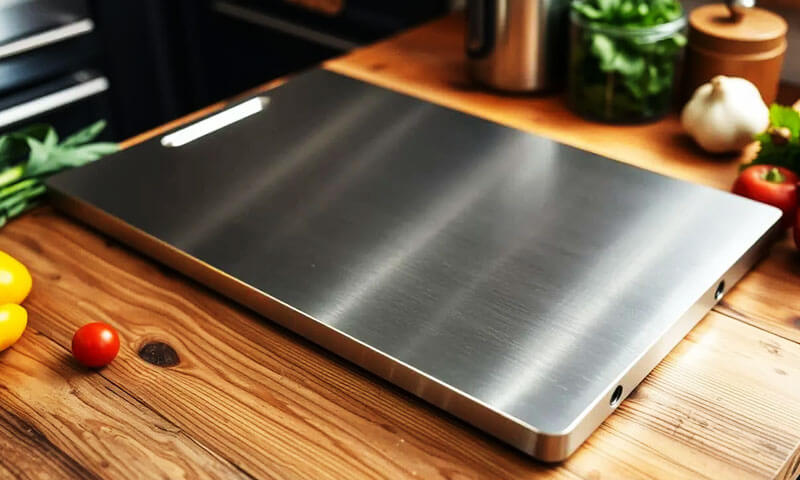
Տեխնիկական սպասարկումը պահանջում է ժամանակ առ ժամանակ փչացնել նուրբ քերծվածքները հեռացնելու համար. - Խոզանակ (Ատլասե): Ցուցադրում է միատեսակ գծային հատիկավոր գծեր, քողարկելով փոքր քերծվածքները, մինչդեռ փայլուն տեսք է հաղորդում, փայլատ տեսք.
Խոզանակով մակերեսները պահպանում են ա շփման գործակիցը (Սղոցել) մոտ 0,35 – ուժեղացնում է բռնումը խոնավ պայմաններում. - Bead-Blasted: Արտադրում է փափուկ, ցածր արտացոլող հյուսվածք. Այս ավարտը նվազեցնում է տեսանելի մատնահետքերը և ապահովում է մոտավորապես CoF 0.45, սննդի պատրաստման ժամանակ սայթաքելու դիմադրության բարձրացում.
Տիտղոս
- Բնական փայլատ: Բնական օքսիդի շերտը ներկայացնում է փափուկ մոխրագույն փայլատ, որը բացառիկ լավ թաքցնում է մաշվածությունը.
Դրա CoF-ը մոտ է 0.40 հավասարակշռում է սայթաքման դիմադրության և դանակի շարժման հեշտության միջև. - Անոդիզացված Գույներ: Էլեկտրաքիմիական անոդացումը կարող է տալ վառ երանգներ՝ կապույտ, մանուշակագույններ, ոսկիներ՝ առանց կոռոզիոն դիմադրության խախտման.
Գույնի ընտրանքները տատանվում են գունային սպեկտրում, հնարավորություն տալով պատվիրված խոհանոցային պարագաներ. - Նախշավոր հաստոցներ: CNC ֆրեզումը ստեղծում է միկրո-հյուսվածքային մակերեսներ (օր., խաչաձև կամ ակոսավոր) որոնք մեծացնում են ինչպես էսթետիկան, այնպես էլ ֆունկցիոնալ բռնակցումը, դանակի եզրերի վրա նվազագույն ազդեցությամբ.
Անհատականացման ընտրանքներ
Արտադրողները և արհեստավորները կարող են հարմարեցնել այս մետաղները դիզայնի ճշգրիտ պահանջներին:
- Ներդիրներ և ներդիրներ: Սիլիկոնե կամ փայտե ներդիրները ապահովում են դանակի բարձված վայրէջքի գոտիներ և ներկայացնում հակապատկեր շեշտադրումներ.
Երկու մետաղներն էլ ընդունում են ճշգրիտ գրպանային ֆրեզեր՝ ներդիրների ինտեգրման համար. - Եզրային պրոֆիլներ: Շեղված, ցուլ-քիթ, կամ թեքված եզրերը բարձրացնում են հարմարավետությունն ու անվտանգությունը.
Տիտանի գերազանց մեքենայություն (նույնիսկ ավելի բարձր կարծրության աստիճաններում) թույլ է տալիս ծայրերի բարդ երկրաչափություններ՝ առանց ճաքերի. - Լազերային փորագրություն & Փորագրություն: Բարձր էներգիայի լազերային համակարգերը արտադրում են մշտական փորագրություններ՝ լոգոներ, չափման կշեռքներ, կամ բաղադրատոմսերի ուղեցույցներ՝ ավելի նուրբ լուծումներով, քան 100 սուկ, ֆունկցիոնալ կամ բրենդային տարրերի ավելացում.
Օգտագործողի ընկալում: Քաշ, Զգալ, և Պրեմիում բողոքարկում
- Քաշի տարբերություններ:
-
- Էունք 30×30×0,5 սմ չժանգոտվող պողպատից տախտակ (խտություն 7.8 գ / սմ) կշռում է մոտավորապես 3.5 գդ, մինչդեռ նույնական տիտանի տախտակ (խտություն 4.5 գ / սմ) կշռում է միայն 2.0 գդ— ա 43% կրճատում.
Թեթև տիտանի տախտակները բարելավում են բեռնաթափումը, հատկապես զբաղված խոհանոցներում կամ բացօթյա միջավայրերում.
- Էունք 30×30×0,5 սմ չժանգոտվող պողպատից տախտակ (խտություն 7.8 գ / սմ) կշռում է մոտավորապես 3.5 գդ, մինչդեռ նույնական տիտանի տախտակ (խտություն 4.5 գ / սմ) կշռում է միայն 2.0 գդ— ա 43% կրճատում.
- Շոշափելի փորձ:
-
- Չժանգոտվող պողպատը սառը է, Կոշտ զգացողությունը շփման ժամանակ հաղորդում է ամրություն և պրոֆեսիոնալ գեղագիտություն.
Ի հակադրություն, Տիտանի մի փոքր ավելի տաք հպումը և նուրբ զսպանակային թիկունքը տալիս են ավելի արձագանքող, պրեմիում սենսացիա.
- Չժանգոտվող պողպատը սառը է, Կոշտ զգացողությունը շփման ժամանակ հաղորդում է ամրություն և պրոֆեսիոնալ գեղագիտություն.
- Տեսողական ազդեցություն:
-
- Հայելիով փայլեցված պողպատն արտացոլում է շրջակա միջավայրի գույները, անխափան կերպով ինտեգրվելով ժամանակակից չժանգոտվող խոհանոցներին.
Անոդացված տիտանն առաջարկում է համարձակ ընդգծված գույներ՝ թույլ տալով դիզայներներին համապատասխանեցնել կամ հակադրել կաբինետը, սարք, եւ խոհարարություն.
- Հայելիով փայլեցված պողպատն արտացոլում է շրջակա միջավայրի գույները, անխափան կերպով ինտեգրվելով ժամանակակից չժանգոտվող խոհանոցներին.
8. Օգտագործման դեպքերի սցենարներ & Առաջարկություններ
Չժանգոտվող պողպատից և տիտանի կտրող տախտակների միջև ընտրությունը կախված է օգտագործման կոնկրետ համատեքստից, Բյուջեի սահմանափակումներ, և կատարողականի առաջնահերթությունները.
Ներքեվ, մենք նախանշում ենք չորս ընդհանուր սցենար՝ պրոֆեսիոնալ խոհանոցներ, տնային խոհարարություն, բացօթյա օգտագործում, և մեծածավալ սննդի սպասարկում՝ հետևելով համապատասխան առաջարկություններին.
Պրոֆեսիոնալ Խոհանոցներ
Ռեստորանային և սննդի միջավայրում, խոհարարները պահանջում են երկարակեցություն, սանիտարական, և ամենօրյա ինտենսիվ օգտագործման դեպքում մաքրման հեշտությունը.
- Առաջարկություն:Դասարան 316 Չժանգոտվող պողպատ տախտակներ, 0.5- 1,0 սմ հաստություն
-
- Ռացիոնալ: Մոտ ~ 4 դոլար մեկ կգ-ի համար, դասարան 316 ապահովում է գերազանց կոռոզիոն դիմադրություն թթվային մթերքների և ախտահանող նյութերի հաճախակի ազդեցության նկատմամբ.
Անվտանգ է ավտոկլավի և աման լվացող մեքենայի համար, այս տախտակները պահանջում են նվազագույն սպասարկում. - Կատարումը: Դիմանում է 500+ ամենօրյա լվացման ցիկլեր և դիմադրում է փորվածքներին սովորական խոհարարի դանակի ուժերով (մինչեւ 600 Ն).
- Ռացիոնալ: Մոտ ~ 4 դոլար մեկ կգ-ի համար, դասարան 316 ապահովում է գերազանց կոռոզիոն դիմադրություն թթվային մթերքների և ախտահանող նյութերի հաճախակի ազդեցության նկատմամբ.
Տնային խոհարարներ
Տնային խոհարարները հավասարակշռում են կատարողականությունը ծախսերի և գեղագիտության հետ. Նրանք հաճախ պատրաստում են տարբեր բաղադրիչներ, բայց ավելի ցածր ծավալներով.
- Առաջարկություն:Խոզանակ 304 Չժանգոտվող պողպատ կամ կոմերցիոն մաքուր տիտան տախտակներ, 0.5 սմ հաստությամբ
-
- Ռացիոնալ: Խոզանակ 304 չժանգոտվող ծախսեր $3- 5 դոլար մեկ կգ-ի համար, դիմակայում է լոլիկի և ցիտրուսների ներկմանը, և անխափան կերպով ինտեգրվում է խոհանոցի դեկորներին.
Մաքուր տիտանի տախտակների արժեքը $12- 15 դոլար մեկ կգ բայց կշռել 43% ավելի քիչ (≈2 կգ ընդդեմ. 3.5 կգ 30×30 սմ տախտակի համար). - Կատարումը: Չժանգոտվող պողպատն առաջարկում է գերազանց հիգիենա և դանակի եզրերի պահպանում չափավոր տնային օգտագործման համար.
Titanium-ն ավելացնում է պրեմիում զգացողություն և հեշտ վարում փոքր խոհանոցների համար.
- Ռացիոնալ: Խոզանակ 304 չժանգոտվող ծախսեր $3- 5 դոլար մեկ կգ-ի համար, դիմակայում է լոլիկի և ցիտրուսների ներկմանը, և անխափան կերպով ինտեգրվում է խոհանոցի դեկորներին.
Բացօթյա և Արշավ
Դյուրատարություն, կոռոզիայից դիմադրություն անկանխատեսելի եղանակին, և բազմաֆունկցիոնալ օգտագործման շարժիչ տախտակի ընտրություն ճամբարականների և ուսապարկերի համար.
- Առաջարկություն:Առեւտրային զուտ տիտան, 0.3- 0,5 սմ հաստություն
-
- Ռացիոնալ: Տիտան 4.5 գ / սմ խտությունը տալիս է տախտակ կշռող 1.2– 2,0 կգ, չժանգոտվող պողպատի 2,6–3,5 կգ-ի համեմատ.
Նրա օքսիդային շերտը դիմադրում է անձրևին, գետի ջուր, և թթվային խարույկի մնացորդները. - Կատարումը: Տիտանը դիմանում է ջերմային ցնցումների, օրինակ., տաք տապակները ուղղակիորեն դնելով տախտակի վրա, և այն չի պահանջում ծածկույթներ կամ մշակումներ՝ կոռոզիայից իմունիտետը պահպանելու համար.
- Ռացիոնալ: Տիտան 4.5 գ / սմ խտությունը տալիս է տախտակ կշռող 1.2– 2,0 կգ, չժանգոտվող պողպատի 2,6–3,5 կգ-ի համեմատ.
Բարձր ծավալով սննդի սպասարկում
Հասարակական սննդի սրահներ, ինստիտուցիոնալ ճաշարաններ, և սննդամթերքի արտադրության գծերը պահանջում են ծանր աշխատանքային տախտակներ, որոնք դիմանում են արագ թողունակությանը և շարունակական սանիտարական մաքրմանը.
- Առաջարկություն:Ti-6Al-4V խառնուրդ տախտակներ, 0.8- 1,2 սմ հաստություն, համակցված չժանգոտվող պողպատից պահուստային տախտակների հետ
-
- Ռացիոնալ: Չնայած $20- 30 դոլար մեկ կգ-ի համար, Ti-6Al-4V-ն դիմանում է մինչև 800 Ն տեղայնացված ուժի առանց դեֆորմացիայի և գոյատևում է 1,000+ ամենօրյա մաքրումներ.
Չժանգոտվող պողպատի հիմքի հետ զուգակցումը ապահովում է ծախսարդյունավետ աջակցություն և լրացուցիչ աշխատանքային մակերես. - Կատարումը: Այս տախտակները նվազագույնի են հասցնում փոխարինման ժամանակը, կյանքի ցիկլի ծախսերի կրճատում՝ չնայած ավելի բարձր նախնական ներդրումներին.
- Ռացիոնալ: Չնայած $20- 30 դոլար մեկ կգ-ի համար, Ti-6Al-4V-ն դիմանում է մինչև 800 Ն տեղայնացված ուժի առանց դեֆորմացիայի և գոյատևում է 1,000+ ամենօրյա մաքրումներ.
Բյուջեի և կատարողականի հավասարակշռում
Երբ բյուջեները սուղ են, Ընտրեք խոզանակ 304 Չժանգոտվող պողպատ որպես բազմակողմանի, միջին գնի լուծում.
Եթե Ձեզ անհրաժեշտ է թեթև շարժունակություն կամ պրեմիում երկարակեցություն, և բյուջեն թույլ է տալիս,տիտղոս կամ Titanium խառնուրդ տախտակները արդարացնում են իրենց արժեքը՝ սպասարկման կրճատման և օգտագործողների փորձի բարելավման միջոցով.
Համառոտ առաջարկությունների աղյուսակ
| Սցենար | Նյութի ընտրություն | Հաստություն | Մոտ. Ծախս | Հիմնական օգուտ |
|---|---|---|---|---|
| Պրոֆեսիոնալ Խոհանոցներ | 316 Չժանգոտվող պողպատ | 0.5- 1,0 սմ | $4 / գդ | Կոռոզիիոն & սանիտարական ճկունություն |
| Տնային խոհարարներ | 304 Չժանգոտվող պողպատ կամ մաքուր տիտան | 0.5 սմ | $3- $5 / գդ (Ss); $12- $15 / գդ (Է) | Ծախսերի արդյունավետ կամ թեթև քաշ |
| Բացօթյա & Արշավ | Մաքուր տիտան | 0.3-0,5 սմ | $12- $15 / գդ | Դյուրատարություն & դիմացկունություն բոլոր եղանակներին |
| Բարձր ծավալով սննդի սպասարկում | Ti-6Al-4V խառնուրդ + SS Back-up | 0.8- 1,2 սմ | $20- 30 դոլար / գդ | Ծայրահեղ ամրություն & երկարակեցություն |
9. Եզրափակում
Չժանգոտվող պողպատից և տիտանի կտրող տախտակներից յուրաքանչյուրն ապահովում է համոզիչ առավելություններ.
Չժանգոտվող պողպատն առաջարկում է մատչելիության հավասարակշռություն, Կոռոզիոն դիմադրություն, և հեշտ սպասարկում.
Տիտանը, մասնավորապես Ti-6Al-4V-ը գերազանցում է կարծրությամբ, թեթեվություն, և վերջնական կոռոզիայից իմունիտետ, թեև ավելի բարձր նախնական գնով.
Կշռելով կտրելու կատարումը, հիգիենայի պահանջներ, Բյուջեի սահմանափակումներ, և դիզայնի նախասիրությունները, Դուք կարող եք ընտրել այն նյութը, որը համապատասխանում է ձեր խոհարարական միջավայրին և օգտագործման պահանջներին.
Ի վերջո, երկու մետաղներն էլ զգալի առաջընթաց են ներկայացնում ավանդական փայտե կամ պլաստմասե տախտակներից, առաջարկելով անզուգական ամրություն և մաքրություն ժամանակակից խոհանոցների համար.