1. Introducción
Grado de titanio 2 is the most widely used commercially pure titanium grade in general engineering service.
It is unalloyed titanium, identified in common specifications as UNS R50400, and it appears in ASTM and implant-related standards such as ASTM B265, ASTM B348, ASTM B338, ASTM B861/B862/B863, and ASTM F67, as well as ISO 5832-2 for surgical implant materials.
En la práctica, it is the “balanced” titanium grade: not the softest, not the strongest, but often the most practical combination of corrosion resistance, fortaleza, soldadura, y formabilidad.
2. What Is Titanium Grade 2?
Titanio Calificación 2 is a commercially pure titanium, meaning its properties come primarily from tightly controlled impurity levels rather than intentional alloying additions.
At service temperature, CP titanium is a single-phase alpha titanium material with an hcp crystal structure; its behavior is governed by chemistry, especially oxygen, hierro, and other interstitials, plus grain size.
Características
Grado de titanio 2 is known for four practical characteristics:
- Excellent corrosion resistance in seawater, salmuera, oxidizing acids, and many chloride-containing environments.
- Buena ductilidad y formabilidad, with easier fabrication than higher-strength titanium grades.
- Reliable weldability when proper inert shielding is used.
- A strong strength-to-weight ratio, with low density and useful room-temperature strength.
3. Typical chemical composition of Titanium Grade 2
| Elemento | Maximum limit |
| Fe | 0.30% |
| C | 0.08% |
| O | 0.25% |
| norte | 0.03% |
| H | 0.015% |
| De | Balance |
These limits are not arbitrary. In commercially pure titanium, oxygen and other interstitials raise strength but gradually reduce ductility and ease of forming.
That is why Grade 2 occupies the middle ground between Grade 1’s maximum formability and Grade 4’s maximum CP strength.
ASTM F67 reflects this graded design clearly: the allowable oxygen and iron content rise from Grade 1 through Grade 4, while minimum yield strength increases in the same direction.
4. Metallurgy and Microstructure
At service temperature, Calificación 2 is essentially 100% alpha titanium.
Carpenter notes that pure titanium transforms from alpha (hexagonal lleno) to beta (cúbico centrado en el cuerpo) at 882.5°C, while at normal service temperatures CP titanium remains alpha phase.
Because Grade 2 is single-phase, its properties are controlled mainly by impurity content and grain size, rather than by phase fractions or precipitation hardening.
That metallurgical simplicity is one reason Grade 2 is so dependable.
There is no deliberate strengthening through complex alloy chemistry, so performance is relatively predictable across suppliers and product forms when the same specification and processing route are used.
The tradeoff is that Grade 2 cannot approach the high strength of alpha-beta titanium alloys such as Grade 5.
5. Physical and Mechanical Performance of Titanium Grade 2
Grado de titanio 2 combines low density, moderate stiffness, useful room-temperature strength, and high corrosion resistance.
In practical engineering terms, it is not a high-strength titanium alloy; bastante, it is a balanced commercially pure titanium grade whose performance is defined by its excellent specific properties and dependable fabrication behavior.
Propiedades físicas
| Propiedad | Típico / Representative Value | Importancia de la ingeniería |
| Densidad | 4.51 g/cm³ (0.163 lb/in³) | Low weight compared with steels; major advantage in mass-sensitive equipment. |
| Punto de fusión | 1668° C (3034° F) | higher than steel (1450° C) y aluminio (660° C), ensuring stability in high-temperature applications up to 300°C . |
| Módulo de elasticidad | 105–120GPa | Indicates moderate stiffness; lower than steel, so deflection must be considered in design. |
Conductividad térmica |
21.79 W/m · k | Relativamente bajo; heat dissipation is limited, affecting welding and machining. |
| resistividad eléctrica | 0.53 µΩ · m | Reflects limited electrical conductivity relative to copper or aluminum. |
| Comportamiento magnético | Nonmagnetic | Suitable for applications where magnetic neutrality is important. |
| Beta transus | ~915°C | Marks the temperature region where phase transformation becomes relevant in thermal processing. |
Propiedades mecánicas
| Propiedad | Mínimo / Representative Value | Importancia de la ingeniería |
| Resistencia máxima a la tracción | 345 MPA | Adequate for moderate-load structural and corrosion-service components. |
| Fuerza de rendimiento | 275 MPA | Defines the stress level before permanent deformation begins. |
| Alargamiento | 20% | Shows good ductility and usable forming capability. |
| Reducción de área | 30% | Indicates reasonable toughness and post-necking deformation capacity. |
| Dureza | 160–200HV | Reflects moderate resistance to indentation and wear. |
6. Resistencia a la corrosión y biocompatibilidad
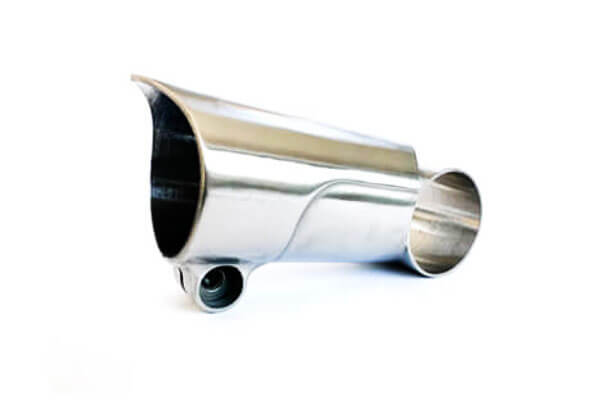
Grado de titanio 2 is valued most for its corrosion behavior. In air or moisture, it forms a strong, estable, protective oxide film that regenerates quickly when damaged.
That passive film is the core reason Grade 2 performs so well in many chemical and marine environments.
It is commonly used in seawater, salmuera, inorganic salts, wet chlorine, alkaline solutions, oxidizing acids, ácidos orgánicos, and sulfur-containing environments.
Environmental strengths
- Seawater and marine service.
- Brines and inorganic salts.
- Ácidos oxidantes y muchos ácidos orgánicos..
- Servicio de cloro húmedo en condiciones adecuadas..
Where caution is required
Calificación 2 no es una armadura anticorrosión universal. Las hojas de datos de los fabricantes advierten contra los ácidos reductores fuertes, cloro anhidro, soluciones cáusticas fuertes, fluoruros, y servicio de oxigeno puro.
Alleima también señala que el titanio sin alear no debe usarse con ácidos reductores fuertes., soluciones de fluoruro, oxígeno puro, o cloro anhidro, al mismo tiempo que muestra una buena resistencia a la corrosión en grietas en soluciones salinas por debajo de 80°C.
Biocompatibilidad
Grado de titanio 2 También es importante en medicina porque el titanio sin alear está reconocido en los estándares de implantes..
ISO 5832-2 especifica titanio no aleado para implantes quirúrgicos, y ASTM F67 establece que estos materiales se han utilizado con éxito en aplicaciones de implantes humanos en contacto con tejidos blandos y huesos., con una respuesta biológica aceptable esperada en aplicaciones apropiadas.
That is why Grade 2 appears in medical, dental, and biotechnology contexts.
7. Fabrication Behavior: Formación, Soldadura, y mecanizado
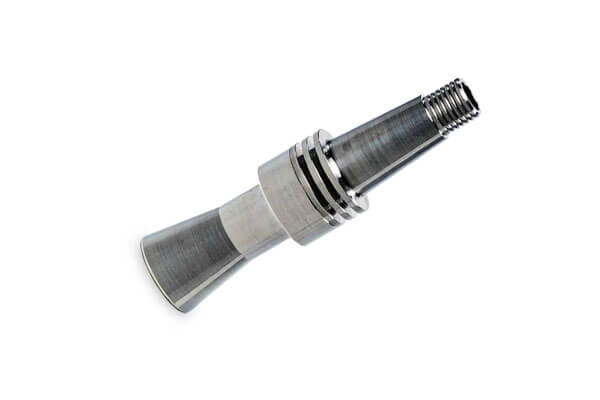
Grado de titanio 2 is widely regarded as one of the most fabricable commercially pure titanium grades, but it still demands process discipline.
Its corrosion resistance and ductility make it practical for forming and joining, while its low thermal conductivity, tendency to gall, and sensitivity to contamination require careful shop practice.
Formación
Calificación 2 can be formed by conventional cold-working methods, including bending, laminación, estampado, y dibujo.
Compared with stronger titanium grades, it offers a better balance of ductility and springback control, which makes it suitable for sheet, lámina, and tube fabrication.
Dicho esto, titanium is not as forgiving as mild steel. Its relatively low modulus of elasticity means springback can be significant, so bend allowances must be calculated carefully.
Tooling should be smooth and clean to avoid surface damage, and forming operations should be planned to minimize local strain concentration.
For tighter radii or more complex shapes, warm forming may be preferred because it reduces forming force and lowers the risk of cracking.
Soldadura
Calificación 2 has excellent weldability, which is one of the main reasons it is used in chemical processing, marine equipment, and biomedical hardware.
Los métodos de soldadura comunes incluyen:
- Soldadura de arco de tungsteno de gas (Gtaw / Tig)
- Plasma arc welding
- Electron beam welding
- Laser welding
- Resistance welding in selected applications
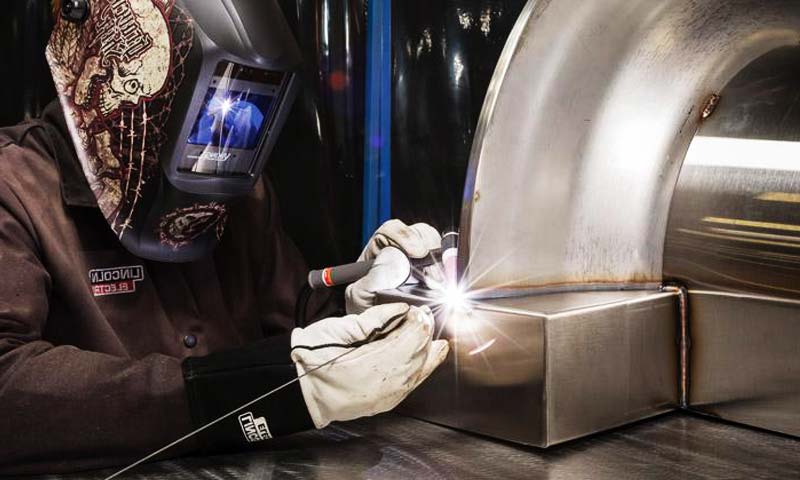
The critical requirement in titanium welding is shielding. Hot titanium reacts rapidly with oxygen, nitrógeno, e hidrógeno, and any exposure can embrittle the weld or discolor the heat-affected zone.
Por esa razón, weld quality depends on thorough inert-gas shielding not only at the arc, but also on the backside and trailing portions of the weld.
A properly welded Grade 2 La junta puede conservar una excelente resistencia a la corrosión e integridad mecánica..
Mal blindaje, en contraste, puede causar la formación de casos alfa, Ductilidad reducida, y fallo prematuro del servicio.
En la práctica, La limpieza de la soldadura no es opcional.; Es parte de la especificación del material en términos funcionales..
Mecanizado
Mecanizado Calificación 2 es factible, pero es más exigente que mecanizar aceros comunes o aleaciones de aluminio.. Las principales dificultades son:
- Baja conductividad térmica, que concentra el calor en el filo
- Desgaste de herramientas, especialmente si las condiciones de corte son demasiado agresivas
- Formación de bordes irritados y acumulados.
- Endurecimiento por trabajo o daño superficial si los avances y las velocidades se eligen mal
Buenas prácticas de mecanizado para Grado 2 generalmente incluye velocidades de corte bajas, velocidades de avance relativamente altas, Herramientas de carburo afiladas, fijación rígida, y abundante líquido de corte.
El objetivo es eliminar el calor rápidamente y evitar que la herramienta roce en lugar de cortar.. Siempre que sea posible, se deben evitar cortes interrumpidos y herramientas desafiladas..
El acabado de la superficie es particularmente importante cuando el componente será sometido a servicio corrosivo o uso biomédico..
Una superficie dañada puede convertirse en un sitio de iniciación para un ataque localizado., por lo que el mecanizado debe preservar la película pasiva del material y evitar la contaminación incrustada por herramientas o virutas..
8. Ventajas & Limitations of Titanium Grade 2
Grado de titanio 2 a menudo se describe como el grado de titanio comercialmente puro de "uso general".. Esa descripción es exacta., pero incompleto.
Su valor no reside en el rendimiento extremo, pero en una combinación cuidadosamente equilibrada de propiedades que lo hacen confiable en muchos entornos de ingeniería..
Ventajas
Excelente resistencia a la corrosión
Calificación 2 Funciona excepcionalmente bien en muchos ambientes corrosivos., especialmente agua de mar, cloruros, salmuera, y una variedad de medios oxidantes.
Its naturally forming oxide film provides strong passive protection, which is one of the main reasons it is so widely used in chemical processing and marine systems.
Good strength-to-weight ratio
Although it is not a high-strength alloy, Calificación 2 offers respectable mechanical strength at very low density.
This makes it attractive in applications where reducing weight matters without sacrificing too much structural integrity.
Buena formabilidad
Compared with stronger titanium grades, Calificación 2 es más fácil de doblar, forma, and cold work. That gives designers and fabricators more flexibility during manufacturing.
Excelente soldadura
Calificación 2 can be welded reliably when proper shielding procedures are followed.
This is a major practical advantage in pressure equipment, tubería, intercambiadores de calor, and custom fabricated assemblies.
Biocompatibilidad
Calificación 2 is well suited to medical and dental use because it is generally well tolerated by the human body and appears in recognized implant standards.
Nonmagnetic and chemically stable
Su comportamiento no magnético y su superficie de óxido estable lo hacen útil en equipos especializados donde se debe minimizar la interferencia magnética o la contaminación..
Limitaciones
Lower strength than alloyed titanium
Calificación 2 es mucho más débil que las aleaciones de titanio como Grade 5. Cuando se requiere una capacidad de carga muy alta o resistencia a altas temperaturas, puede que no sea la elección correcta.
Not ideal for all chemical environments
Es resistente a muchos medios corrosivos., pero no a todo. Ácidos reductores fuertes, soluciones que contienen fluoruro, cloro anhidro, y algunas condiciones cáusticas pueden causar problemas graves..
More demanding machining
Calificación 2 No es fácil de mecanizar de la misma manera que el acero o el aluminio ordinarios.. Requiere herramientas correctas., velocidad de corte, enfriamiento, y rigidez de la máquina.
Cost higher than common metals
Aunque es un grado comercialmente puro, Sigue siendo más caro que el acero al carbono., acero inoxidable, y muchas aleaciones de aluminio. Por tanto, su uso debe estar justificado por las necesidades de rendimiento..
Lower stiffness than steel
Como todos los grados de titanio., Calificación 2 has a lower modulus of elasticity than steel. Structural designs may need thicker sections or geometric reinforcement to control deflection.
9. Typical Applications of Titanium Grade 2
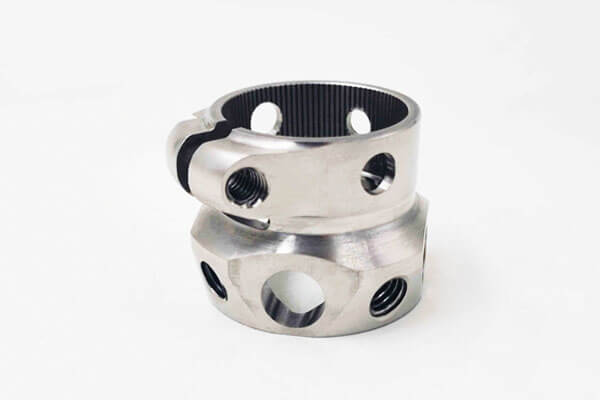
Calificación 2 is used wherever corrosion resistance and manufacturability matter more than maximum strength.
Common applications include chemical and marine engineering, plate heat exchangers, recipientes de reacción, evaporadores, condensadores, electroplating fixtures, equipo de desalinización, seawater heaters,
componentes marinos, hardware aeroespacial, medical and pharmaceutical equipment, and some power-generation and oil-and-gas service components.
Typical application areas
- Equipo de procesamiento químico.
- Marina and desalination systems.
- Intercambiadores de calor, condensadores, and evaporators.
- Médico, farmacéutico, and biotechnology equipment.
10. Comparison with Other Titanium Grades: Calificación 1, 4, and Alloyed Grade 5
| Aspecto | Calificación 1 | Calificación 2 | Calificación 4 | Calificación 5 |
| tipo metalúrgico | Titanio comercialmente puro (CP TI), lowest impurity level in the CP family. | Titanio comercialmente puro (CP TI), balanced CP grade. | Titanio comercialmente puro (CP TI), strongest of the common CP grades. | Alpha-beta titanium alloy, TI-6Al-4V; not commercially pure titanium. |
| Relative strength | Lowest strength among the main CP grades. | Fuerza moderada; minimum yield strength 275 MPA (40 KSI). | Highest CP strength; minimum yield strength 480 MPA (70 KSI). | Much higher strength than CP grades; El Ti-6Al-4V recocido muestra un límite elástico a la compresión de 825 a 895 MPa y se puede tratar térmicamente.. |
Ductilidad / Formabilidad |
La mejor ductilidad y el conformado en frío más sencillo de la familia CP. | Excelente conformabilidad con un buen equilibrio entre resistencia y ductilidad.. | Buena ductilidad y conformabilidad moderada., pero menos indulgente que los grados 1 y 2. | La trabajabilidad en frío es limitada.; El conformado en caliente se usa comúnmente porque el retorno elástico a temperatura ambiente es significativo.. |
| Resistencia a la corrosión | Muy alta resistencia a la corrosión, especialmente en ambientes oxidantes y marinos. | Resistencia a la corrosión superior; excelente en agua de mar, salmuera, cloruros, oxidizing acids, y muchos medios de proceso. | Excelente resistencia a la corrosión y a la fatiga por corrosión.; fuerte en oxidación, neutral, y cloruros ligeramente reductores. | Excelente resistencia a la corrosión general, especialmente en agua de mar y muchos entornos marinos/offshore; Más versátil químicamente que los grados CP en algunos entornos reducidos., pero aún depende del entorno. |
Soldadura / fabricación |
Muy buena soldabilidad y fabricación general más sencilla entre los grados CP. | Excellent weldability and widely used where forming plus welding are both needed. | Buena soldadura, but the higher oxygen level increases sensitivity to hydrogen embrittlement and fabrication discipline. | Weldable, but shielding discipline is critical; machining is relatively difficult and galling is a concern. |
| Typical role in selection | Chosen when maximum ductility and corrosion resistance matter more than strength. | The general-purpose CP titanium choice: the balance point between strength, Formabilidad, y resistencia a la corrosión. | Used when the highest CP strength is required and the design can tolerate reduced ductility relative to Grades 1–2. | Chosen when very high strength is required and the designer accepts an alloyed titanium system instead of CP titanium. |
11. Conclusión
Grado de titanio 2 is the classic commercially pure titanium for serious engineering use.
It combines a simple alpha-titanium microstructure, carefully limited impurity chemistry, strong corrosion resistance, respectable strength, buena soldadura, and practical formability.
It is not the strongest titanium grade, and it is not universally corrosion-proof, but it is one of the most intelligently balanced materials available when the design problem demands durability in aggressive environments.
The reason it remains so widely used is not mystique; it is fit. Calificación 2 offers a rare combination of attributes that engineers can actually manufacture, soldar, inspect, and trust in service.
That is why it sits at the center of the commercially pure titanium family and continues to serve chemical, marina, médico, and process industries with exceptional consistency.
Preguntas frecuentes
What is the difference between Titanium Grade 2 and Grade 2H?
Grado de titanio 2 and Grade 2H are identical in chemical composition (EE.UU. R50400) but differ in mechanical requirements:
El grado 2H especifica una resistencia máxima a la tracción mínima más alta. (400 MPA, o 58 KSI) comparado con el grado 2 (345 MPA).
El grado 2H se utiliza principalmente para aplicaciones de recipientes a presión donde se requiere mayor resistencia. .
Is Titanium Grade 2 suitable for medical implants?
Sí, Grado de titanio 2 (Norma ASTM F67, ISO 5832-2) Es ampliamente utilizado para implantes médicos debido a su excelente biocompatibilidad., no toxicidad, y osteointegración.
Se utiliza comúnmente para implantes dentales., placas de huesos, y articulaciones artificiales, con una vida útil superior 20 años.
Can Titanium Grade 2 be welded?
Sí, Grado de titanio 2 es soldable usando GTAW (Tig), PATA, y procesos EBW.
La soldadura debe realizarse en un gas inerte. (argón, helio) atmósfera para evitar la oxidación del titanio fundido, lo que degradaría la resistencia de la soldadura y la resistencia a la corrosión..
Las uniones soldadas generalmente logran 90%+ de la resistencia del material base .
What is the maximum service temperature for Titanium Grade 2?
Grado de titanio 2 Se puede utilizar indefinidamente a temperaturas inferiores a 300 °C..
Puede soportar una exposición breve a 350°C. (con retención de fuerza >85%) pero pierde fuerza significativa a temperaturas superiores a 400°C, making it unsuitable for high-temperature applications .
How does Titanium Grade 2 comparar 316 stainless steel in corrosion resistance?
Grado de titanio 2 supera 316 stainless steel in most corrosive environments, particularly seawater, oxidizing acids (ácido nítrico), and chlorinated solutions.
En agua de mar, Calificación 2 has a corrosion rate <0.001 mm/año, mientras 316 stainless steel may corrode (boquiabierto, corrosión de grietas) in saltwater environments .
Is Titanium Grade 2 magnético?
No, Grado de titanio 2 es no magnético, making it suitable for applications where magnetic interference is a concern, como dispositivos médicos, electronic equipment, y componentes aeroespaciales .
Can Titanium Grade 2 be used in hydrogen applications?
Sí, Grado de titanio 2 is suitable for hydrogen production, almacenamiento, y transporte,
as it resists hydrogen embrittlement when properly processed (strict hydrogen control during melting) and is compatible with hydrogen gas and liquid hydrogen at cryogenic temperatures .