1. 介绍
AISI 310 stainless steel and Inconel 617 both belong to the class of high-temperature metallic materials, but they solve different engineering problems.
AISI 310 is an austenitic chromium-nickel stainless steel developed for oxidation resistance and high-temperature service,
而inconel 617 is a nickel-chromium-cobalt-molybdenum alloy specifically engineered for exceptional strength and oxidation resistance at very high temperatures.
实际上, 310 is often the economical and versatile heat-resistant stainless option, 然而 617 is a premium high-temperature alloy chosen when creep resistance and structural stability become more demanding.
2. Material Identity
AISI 310 is not just a single grade but a family that includes 310, 310s, and 310H.
These grades are all austenitic 不锈钢, with 310H intended for high-temperature service and 310S used where lower carbon content improves resistance to sensitization in certain corrosive conditions.
相比之下, inconel 617 is a solid-solution-strengthened nickel alloy with substantial nickel, 铬, 钴, 和钼含量.
This difference in alloy family is the root cause of their different performance envelopes.
A quick identity check
| 物品 | AISI 310 不锈钢 | inconel 617 |
| 合金族 | 奥氏体不锈钢 | Nickel-based superalloy |
| Primary design goal | Oxidation resistance at high temperature | High-temperature strength plus oxidation resistance |
| Typical service niche | 炉, 燃烧器, radiant tubes, thermal equipment | 燃气轮机, hot-section components, severe high-temperature corrosion service |
| Standard form | 310 / 310s / 310h | 美国N06617 / 合金 617 |
3. 化学组成: 310 不锈钢与. inconel 617
Chemistry is the first major dividing line.
| 元素 | AISI 310 不锈钢 | inconel 617 |
| 镍 | 19.0–22.0% | 44.5% 最小. |
| 铬 | 24.0–26.0% | 20.0–24.0% |
| 钴 | - | 10.0–15.0% |
| 钼 | - | 8.0–10.0% |
| 铝 | - | 0.8–1.5% |
| 碳 | 到 0.08% in common 310 data | 0.05–0.15% |
| 铁 | 平衡 | 到 3.0% 最大限度. |
4. 高温氧化, 化石化化体, and Creep
AISI 310 is designed for high-temperature oxidation resistance and performs very well in mildly cyclic service.
Manufacturer data state that it resists oxidation up to 2010°f (1100°C) under mildly cyclic conditions, with good resistance to sulfidation and moderately carburizing atmospheres.
It is widely used in furnaces, 燃烧器, and other thermal-process equipment, but more severe carburizing environments often push engineers toward nickel alloys instead.
inconel 617 goes further. Special Metals describes it as having an exceptional combination of 高温强度和氧化抗性, with strong resistance to reducing and oxidizing media and excellent resistance to high-temperature corrosion.
The same source emphasizes its suitability at temperatures above 1800°f (980°C) and its usefulness in applications such as gas-turbine ducting, combustion cans, and transition liners.
实践, this means 617 is not merely oxidation-resistant; it is also designed to keep carrying load when 310 is approaching the edge of its comfort zone.
Practical interpretation
- 选择 310 when the environment is hot, 氧化性, and moderately carburizing.
- 选择 617 when the environment is hot, chemically aggressive, and mechanically demanding over long durations.
- Do not treat them as equivalent just because both are heat-resistant alloys. Their creep envelopes are materially different.
5. Physical and Mechanical Properties Comparison
The physical and mechanical comparison between AISI 310 stainless steel and Inconel 617 is where the practical separation between the two materials becomes most visible.
Both are high-temperature alloys, 但 310 is a heat-resistant austenitic stainless steel, 尽管 617 is a nickel-based superalloy designed to retain strength and stability under more severe thermal loading.
| 性能特性 | AISI 310 不锈钢 | inconel 617 | Practical significance |
| 密度 | 0.285 lb/in³; 7.89 g/cm³ | 0.302 lb/in³; 8.36 Mg/m³ | 617 is heavier, 所以 310 has a slight weight advantage in large fabricated structures. |
| 弹性模量 | 196 GPA | 211 GPa at 25°C | 617 is stiffer at room temperature, which improves resistance to elastic deflection. |
| 抗拉强度 | 515 MPa minimum | 734–769 MPa depending on product form | 617 starts with a substantially higher room-temperature strength level. |
| 产生强度 | 205 MPa minimum | 318–383 MPa depending on product form | 617 resists permanent deformation more effectively under initial loading. |
伸长 |
40% 最低限度 | 50–62% depending on product form | 两者都具有延展性, 但 617 can also combine ductility with higher strength. |
| 融化范围 | 1354–1402°C | 1332–1380°C | The melting ranges are similar, so the key difference is not melting point but hot-strength behavior. |
| 热膨胀 | 15.9–17.0 µm/m/°C | 11.6 µm/m/°C at 100°C; 12.6 µm/m/°C at 200°C | 617 generally expands less, which helps reduce thermal stress in coupled assemblies. |
| 导热率 | 10.8 w/m·k | 14.7 在100°C下w/m·k | 617 conducts heat somewhat better at comparable reference temperature, affecting heat flow and thermal gradients. |
| 比热 | 502 j/kg·k | 419 J/kg·°C at 26°C | 310 stores more heat per unit mass near room temperature, which can influence thermal response. |
6. Corrosion Performance in Different Environments
High-temperature oxidation resistance
Both AISI 310 stainless steel and Inconel 617 are designed for elevated-temperature service, but they do not achieve their corrosion resistance in the same way.
AISI 310 is a heat-resistant austenitic stainless steel whose high chromium content forms a protective oxide scale that helps it resist oxidation in hot, oxidizing atmospheres.
This makes it highly effective in furnace components, 燃烧器, radiant tubes, and other thermal equipment where dry heat is the dominant challenge.
inconel 617, 相比之下, is a nickel-based superalloy engineered for even more severe thermal exposure.
Its oxidation resistance is reinforced by a nickel-rich matrix, substantial chromium content, and a small but important aluminum addition.
The result is a material that not only resists oxidation, but also retains structural integrity under conditions where oxidation and mechanical loading occur simultaneously.
实际上, 310 is excellent for high-temperature oxidation service, 尽管 617 is more capable when the environment becomes more extreme and the service life requirement is more demanding.
碳化力抗性
Carburization is one of the most important differentiators between these two alloys.
AISI 310 performs well in moderately carburizing atmospheres and is often selected for thermal equipment exposed to carbon-bearing gases. 然而, its resistance has limits.
In severe carburizing environments, carbon diffusion into the alloy can gradually degrade performance, especially when exposure is prolonged.
inconel 617 offers a stronger solution. Its nickel-rich base and alloying system provide excellent resistance to carburization, making it more suitable for environments where carbon pickup is a significant degradation mechanism.
This advantage matters in processes such as high-temperature gas handling, 热处理设备, and certain petrochemical applications.
When carburization is a primary concern rather than a secondary one, 617 has a clear technical edge.
Sulfidation and mixed chemical attack
Sulfidation can be especially destructive in hot industrial systems because it often occurs in combination with oxidation, 还原气氛, or carbon-rich environments.
AISI 310 offers useful resistance to sulfidation and is widely trusted in thermal service, but its performance is best understood as good rather than universal.
It is effective in many high-temperature air-based applications, but it is not the most robust option for chemically aggressive hot-service combinations.
inconel 617 is more resilient in mixed-environment exposure because its corrosion resistance is not narrowly tied to a single mechanism.
Its performance is more balanced across oxidizing, 减少, 化石, and chemically active conditions.
That broader resistance envelope is one of the reasons it is used in more critical hot-section systems.
Wet corrosion and aqueous environments
AISI 310 is fundamentally a high-temperature stainless steel, not a general-purpose wet-corrosion alloy.
It can perform acceptably in some aqueous environments, but prolonged exposure to moisture, 氯化物, or condensates is not where it is strongest.
尤其, long-term high-temperature service can produce microstructural changes that reduce corrosion resistance in certain situations.
inconel 617 has a more versatile corrosion profile. It is better suited to environments where high temperature is accompanied by wet corrosive exposure, condensate formation, or mixed chemical attack.
In this sense, 617 provides a broader corrosion safety margin, especially when the operating environment is not purely dry and thermal.
Long-term thermal exposure and metallurgical stability
Another important issue is what happens after long periods at elevated temperature.
AISI 310 can suffer from microstructural changes such as sigma-phase precipitation during prolonged exposure in certain temperature ranges.
These changes do not automatically make the material unusable, but they can reduce toughness and make corrosion behavior less predictable.
inconel 617 is specifically designed to preserve high-temperature performance over long service periods.
Its metallurgical stability and creep resistance make it more reliable in applications where both temperature and time are severe.
This is one of the key reasons it is used in advanced energy systems and hot-section components rather than only in general furnace equipment.
The corrosion difference between these alloys can be summarized in one sentence: AISI 310 is an excellent high-temperature oxidation-resistant stainless steel,
而inconel 617 is a more broadly capable high-temperature alloy with stronger resistance to carburization, mixed chemical attack, and long-duration severe service.
7. 制造, 焊接, and Manufacturing Considerations
AISI 310: practical and familiar in standard fabrication
AISI 310 is generally straightforward to fabricate using standard stainless-steel shop practice.
It can be cut, 形成, and welded with conventional equipment and procedures, which makes it highly practical for thermal-process equipment and industrial components.
Its ductility and workability are strong enough to support bending, 成型, and welding without excessive process complexity.
This manufacturing familiarity is one of the alloy’s major advantages. Many fabrication shops already understand how to handle austenitic stainless steels, 所以 310 often fits smoothly into existing production workflows.
That makes it appealing not only from a technical standpoint, but also from a logistical one.
Welding behavior of 310
AISI 310 is weldable by common processes such as TIG, 我, Smaw, 锯, and FCAW.
一般来说, it responds well to ordinary stainless-steel welding practice, though thermal management still matters.
Because the alloy is intended for high-temperature service, weld procedures should be chosen to avoid excessive distortion and to preserve the desired high-temperature performance of the finished assembly.
For applications involving repeated heating and cooling, weld quality becomes especially important.
Sound welds help maintain oxidation resistance and structural integrity, while poor thermal control can introduce residual stress or undesirable microstructural changes.
Hot forming and thermal processing of 310
当需要热形成时, 310 can be processed at elevated temperatures within a controlled window.
Uniform heating and rapid cooling after final heat treatment are important to maintain consistency in microstructure and performance.
The alloy is not difficult to process, but it benefits from disciplined temperature control, especially in parts that will see cyclic service.
这 310 family also includes variants tailored to different priorities. Low-carbon versions are often preferred for improved weldability and resistance to sensitization, while higher-carbon versions are used when creep resistance becomes more important.
This means fabrication strategy should always be matched to the exact grade, not just to the alloy family name.
inconel 617: manufacturable, but with tighter process discipline
inconel 617 is also weldable and formable, but it is not as forgiving as 310 in routine fabrication.
Its greater strength and more complex alloying system make the material more sensitive to processing conditions.
因此, forming and welding require more deliberate control, particularly in thick sections or highly stressed parts.
The alloy’s work-hardening tendency is also more pronounced than that of common stainless steels.
This means cold forming may require intermediate annealing, and machining may require more careful tool selection and cutting strategy.
These are not barriers to fabrication, but they do raise the process burden compared with AISI 310.
Welding considerations for 617
inconel 617 is designed to be welded successfully with conventional methods, but the welding procedure must be chosen with greater care.
Matching filler metals are commonly used to preserve mechanical compatibility and to maintain high-temperature performance in the weld zone.
因为 617 is often selected for hot-section or high-integrity components, weld quality is not merely a fabrication issue; it is a performance issue.
Post-weld treatment may also be important depending on component geometry, service requirement, and code basis.
In high-performance assemblies, the objective is not just to join metal pieces together, but to preserve the alloy’s elevated-temperature strength and resistance to long-term degradation.
Heat treatment and post-processing
AISI 310 usually requires less demanding post-processing than Inconel 617.
It can often be brought into service with relatively standard annealing and stress-management practices, provided the final product meets the intended duty cycle.
相比之下, 617 is frequently treated as a controlled-performance alloy.
热处理, 解决方案退火, and cooling rate control are more central to achieving the desired final properties.
This reflects the alloy’s role in severe environments: the manufacturing process must support the performance envelope, not simply produce a shape.
简单地: 310 is easier to make; 617 is harder to make, but stronger in service.
8. Industrial Application and Selection Logic
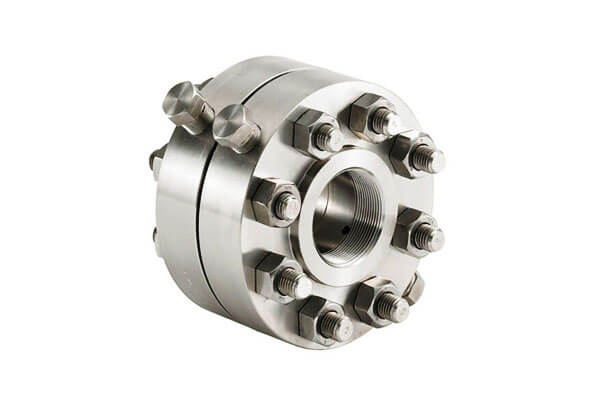
AISI 310 广泛使用 furnaces, 燃烧器, radiant tubes, thermal-processing equipment, annealing covers and boxes, recuperators, and similar high-temperature stainless applications.
It is a strong fit when oxidation resistance, 织造性, and reasonable cost all matter.
inconel 617 用于进 aircraft and land-based gas turbines, 管道, combustion cans, transition liners, nitric-acid catalyst-grid supports, heat-treating baskets, reduction boats, and power-generating plant components.
These applications indicate a more extreme duty cycle: sustained high temperature, structural loading, 热疲劳, and long-life creep resistance.
9. Cost Comparison: 310 不锈钢与. inconel 617
On material cost, AISI 310 is usually the more economical option. inconel 617 contains far more nickel and also significant cobalt and molybdenum, which generally push both raw-material cost and supply-chain cost upward.
相比之下, 310 is a stainless-steel grade that can often be procured through standard stainless channels.
The cost gap is therefore not just about price per kilogram; it is about the alloying bill and the performance you are buying.
就是说, the right comparison is lifecycle value, not purchase price alone. 如果 617 avoids creep failure, reduces maintenance, or extends replacement intervals in a hot-section assembly, its higher cost can be rational.
In many industrial settings, 310 is the value choice; in severe hot-service systems, 617 is the performance choice. This conclusion follows from the published property envelopes and application guidance.
10. 全面比较: AISI 310 不锈钢与. inconel 617
The table below consolidates the most important differences between the two alloys using typical published datasheet values and standard engineering interpretations.
It is intended as a selection aid, not as a substitute for a project-specific materials specification.
| 类别 | AISI 310 不锈钢 | inconel 617 | Practical Interpretation |
| 合金族 | 奥氏体不锈钢 | Nickel-based superalloy | 310 is a heat-resistant stainless steel; 617 is a severe-duty high-temperature alloy. |
| Core design purpose | Oxidation resistance at high temperature | High-temperature strength plus oxidation resistance | 310 is optimized for furnace-type service; 617 is optimized for hotter, more mechanically demanding environments. |
| Typical chemistry | About 24–26% Cr, 19–22% Ni, 余额铁 | 关于 44.5% min Ni, 20–24% Cr, 10–15% Co, 8–10%mo | 617 is much more heavily alloyed, which drives its higher hot-strength capability and higher cost. |
密度 |
关于 7.89 g/cm³ | 关于 8.36 g/cm³ | 617 is heavier, 所以 310 has a small but real weight advantage in large fabricated parts. |
| 弹性模量 | 关于 196 GPA | 关于 211 GPa at room temperature | 617 is stiffer and resists elastic deflection slightly better. |
| Room-temperature tensile strength | 关于 515 MPa minimum | About 734–769 MPa depending on product form | 617 begins with a substantially higher strength reserve. |
| Room-temperature yield strength | 关于 205 MPa minimum | About 318–383 MPa depending on product form | 617 resists permanent deformation more effectively. |
| 延性 | 高的 | 高的 | 两者都具有延展性, 但 617 combines ductility with a higher strength baseline. |
氧化抗性 |
Excellent up to about 1100°C in mildly cyclic service | Excellent at very high temperature, including service above about 980°C | Both are strong in oxidation, 但 617 is the more severe-duty option. |
| 碳化力抗性 | Good in moderately carburizing atmospheres | 出色的, including more severe carburizing service | 617 offers a wider safety margin where carbon pickup is a concern. |
| Wet corrosion resistance | Limited compared with dedicated corrosion alloys | Broad resistance to many wet corrosive environments | 617 is the better choice when moisture or condensate is part of the problem. |
| 蠕变阻力 | Useful, but limited versus superalloys | Excellent at elevated temperature | This is one of the clearest differentiators in favor of 617. |
热膨胀 |
Higher than 617 | 低于 310 | 617 generally creates less differential-expansion stress in hot assemblies. |
| 导热率 | 低于 617 | Higher than 310 at comparable reference temperature | 617 can conduct heat somewhat more effectively, affecting thermal gradients. |
| 制造 | Easier and more familiar in standard stainless practice | 要求更高, with tighter process control | 310 is simpler to manufacture; 617 is manageable but less forgiving. |
焊接 |
Good with common stainless-steel methods | Good with conventional methods, but procedure control matters more | Both are weldable, 但 617 usually requires a more disciplined welding approach. |
| 成本 | 降低 | 更高 | 310 is the value-oriented choice; 617 is the performance-oriented choice. |
| 典型的应用 | 炉, 燃烧器, radiant tubes, annealing equipment, thermal hardware | 燃气轮机, combustion cans, transition liners, severe high-temperature equipment | The application split reflects the gap between general heat resistance and severe hot-strength service. |
11. 结论
AISI 310 和inconel 617 occupy different points on the high-temperature materials spectrum.
AISI 310 is the more accessible, cost-effective heat-resistant stainless steel, with excellent oxidation resistance and practical manufacturability.
inconel 617 is the more advanced high-temperature alloy, with a much stronger combination of room-temperature strength, 蠕变阻力, and oxidation resistance under severe service conditions.
The decisive issue is not which alloy is “better” in the abstract, but which one is better for the operating envelope.
If the design is hot but not brutally loaded, 310 is often enough.
If the design must survive sustained high temperature, 热循环, and structural stress, 617 is the more robust engineering solution. That is the real comparison.
常见问题解答
是不合情的 617 better than AISI 310?
For severe high-temperature structural service, 是的.
inconel 617 offers higher strength retention and better creep resistance, 尽管 310 is more economical and sufficient for many furnace-type applications.
Which alloy is better for gas turbines?
inconel 617 is the stronger candidate, because its published use cases explicitly include ducting, combustion cans, and transition liners in gas turbines, along with excellent creep resistance at very high temperature.
Which alloy is better for furnace parts?
AISI 310 is often the better value choice for furnace components such as burners, radiant tubes, and recuperators, especially when the environment is hot and oxidizing but not extreme enough to require a superalloy.
Which material is more corrosion-resistant?
inconel 617 is far more corrosion-resistant than AISI 310.
It offers superior resistance to sulfidation, 化石化化体, strong acids, and high-chloride environments, while AISI 310 is only resistant to mild oxidation and moderate corrosion .
Are AISI 310 和inconel 617 可回收?
是的, both materials are recyclable. AISI 310 is widely recycled (recycled stainless steel retains its properties), while Inconel 617’s high value makes it economically viable to recycle, even in small quantities .