1. Zavedenie
Plug valve is a versatile quarter-turn valve widely used for isolation, odklon, and occasional throttling in industrial systems.
Its simple design—a cylindrical or conical plug rotating within a valve body—offers fast operation, low-pressure drop, and robust reliability.
Understanding its principles, materiál, výkonnostné metriky, and industrial applications is essential for selecting the right valve for high-pressure, drsný, or space-constrained services.
2. Čo je plug ventil?
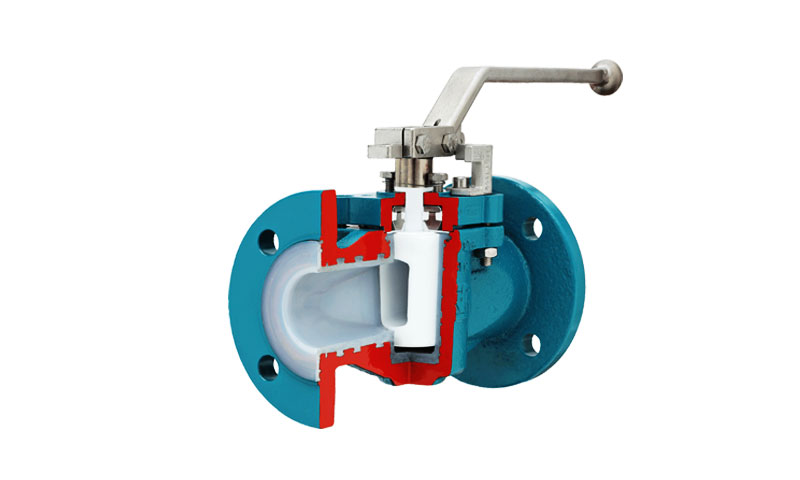
A plug valve is a specialized quarter-turn rotary valve widely utilized in industrial piping systems for flow isolation, odklon, and occasional throttling.
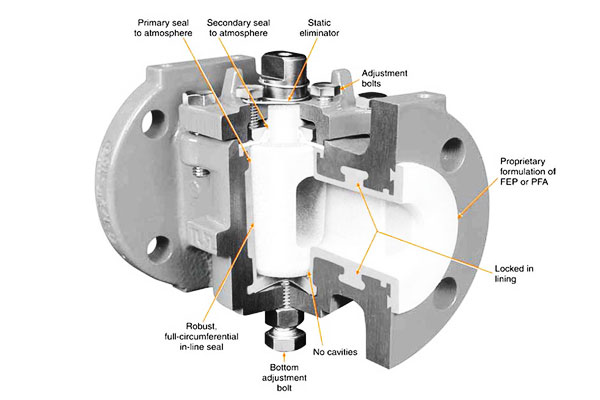
The core operating principle relies on a cylindrical or conical plug housed within a valve body, which rotates to either align its internal port with the pipeline for unrestricted flow or to block the passage completely.
This simple yet robust mechanism allows rapid 90° operation, offering both efficiency and reliability in critical applications.
Core Features
- Quarter-turn Operation
Fast actuation (typically 90°) — ideal for emergency isolation, diverter duties and applications where rapid on/off action is required. - Jednoduchý, Low-Obstruction Flow Path
Full-port configurations provide virtually pipe-bore flow with minimal pressure drop; reduced-port options trade flow capacity for lower torque and cost. - Multiple Port Configurations
Two-, three- and four-way plug arrangements allow diversion, Miešanie, sampling and complex routing without multiple valves. - Sealing Versatility
Available with metal-to-metal seats for high-temperature/abrasive services, odolný (PTFE/RPTFE, elastoméry) seats for bubble-tight shutoff and low torque, alebo lubricated systems that extend seat life in dirty or erosive media.
3. Classification of Plug Valves by Design
Plug valves are categorized based on mechanický dizajn, metóda tesnenia, and flow configuration.
Understanding these classifications helps engineers select the right valve for pressure, teplota, pretekať, and service requirements.
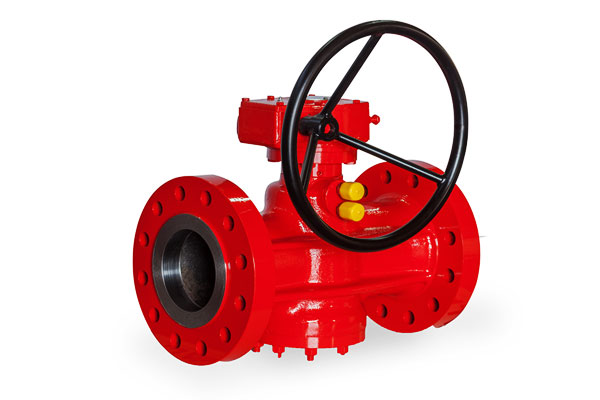
Based on Plug Type
| Typ | Popis | Výhody | Typické aplikácie |
| Cylindrical Plug Valve | Straight cylindrical plug rotates inside a matching body cavity; simplest design. | Kompaktný, nákladovo efektívny, low-pressure drop. | Vodná voda, plyn, low-pressure chemical lines. |
| Kónický (Tapered) Plug Valve | Conical plug wedged into the body for tighter sealing. | Excellent sealing; handles higher pressure and temperature. | Petrochemický, olej & plyn, parné linky. |
Based on Port Configuration
| Port Type | Popis | Výhody | Typické aplikácie |
| Through Port (Full Port) | Port matches pipeline diameter; flow path straight through. | Pokles tlaku; high-flow capacity. | Bulk fluid transport, potrubia, slurry handling. |
| Reduced Port | Port smaller than pipe bore. | Lower operating torque; nákladovo efektívny. | Moderate-flow systems, instrument lines. |
| Viacerých portov (Three- or Four-Way) | Allows flow diversion, Miešanie, or sampling through multiple ports. | Replaces multiple valves; flexible routing. | Sampling, diverter duties, chemické reaktory. |
Based on Plug Support
| Support Type | Popis | Výhody | Obmedzenia |
| Floating Plug | Plug rests between seats and rotates freely. | Self-aligning; simple construction. | Higher torque on large sizes; limited high-pressure use. |
| Trunnion-Mounted Plug | Plug anchored with top and/or bottom bearings. | Reduces operating torque; stable in high-pressure or large-size applications. | Zložitejší dizajn; vyššie výrobné náklady. |
Based on Sealing Design
Extended seat life; smooth operation in dirty or erosive fluids.
Periodic maintenance; not ideal for sanitary applications.
lymer seats provide tight sealing.
| Sealing Type | Popis | Výhody | Obmedzenia |
| Metal-to-Metal | Hard seat directly contacts plug. | Vysoká teplota, vysoký tlak, abrasive service. | Requires higher torque; potential for galling without lubrication. |
| Resilient Seats (Ptfe, Rptfe)
</td> |
Elastomer or po | Low torque; bubble-tight shutoff; chemický odpor. | Limited temperature range; potential degradation with aggressive media. |
| Lubr |
4. Main Components and Materials of Plug Valve
A plug valve’s performance, trvanlivosť, and suitability for specific applications depend on its components and materials.
Each part is engineered to withstand pressure, teplota, korózia, and erosion while ensuring smooth operation and leak-tight sealing.
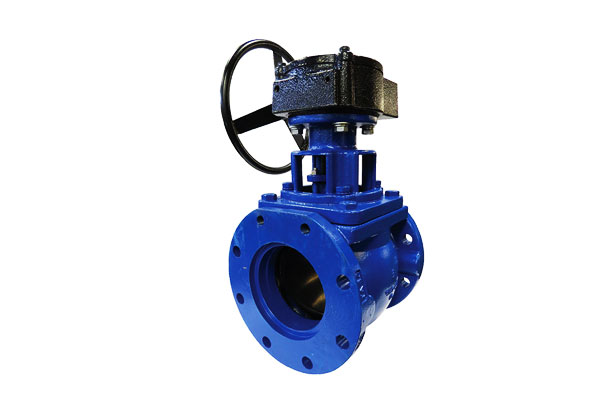
Main Components
| Komponent | Popis | Funkcia |
| Teleso ventilu | The external housing that contains the plug and ports. | Supports pressure loads, provides the flow path, and connects to the pipeline. |
| Zátk | Cylindrical or conical rotating element with one or more ports. | Controls flow by aligning or blocking the port(siež); primary flow-control element. |
| Sedadlá | Metal or resilient surfaces against which the plug seals. | Ensures bubble-tight shutoff and maintains long-term sealing integrity. |
| Kmeň / Handle | Shaft or lever used to rotate the plug. | Transfers torque from manual or automated actuator to plug. |
| Lubricant Chamber (voliteľný) | A reservoir between plug and body filled with lubricant (for lubricated plug valves). | Reduces friction, prolongs seat life, and prevents galling or corrosion. |
| Ložiská / Trunnions (for trunnion-mounted plugs) | Supports at top and/or bottom of plug. | Reduces operating torque and stabilizes the plug in large or high-pressure valves. |
| Žľaza / Balenie | Sealing element around the stem or handle interface. | Prevents leakage along the stem/handle; allows smooth rotation. |
Materials Selection
| Komponent | Typické materiály | Kľúčové vlastnosti |
| Tela & Kapota | Uhlíková oceľ (A216 WCB), Nerezová oceľ (304, 316), Duplexný, Zliať 20, Zliatiny niklu | Pevnosť, odpor, tolerancia teploty |
| Zátk | Same as body or hardfaced (Hviezdny, WC overlay) | Odpor, dimenzionnosť, chemická kompatibilita |
| Sedadlá | Kov (Hviezdny, Monel), PTFE/RPTFE, UHMWPE | Sealing tightness, chemický odpor, nízky trenie |
| Kmeň / Handle | Nerezová oceľ, Zliatinová oceľ | Pevnosť, torznosť, odpor |
| Lubricant | Mineral oil, synthetic grease, or FDA-approved lubricants | Reduces friction and protects against corrosion in lubricated valves |
5. Flow characteristics and hydraulic behavior

Flow capability (Životopis) — typical ranges
- Small instrument-sized plug valves (¼ – 1) may have Cv ~ 0.1–5.
- Common process sizes (2–6) typically range Cv ~ 5–200 depending on port design (full port vs. reduced port).
- Large diameter plug valves (8+) can achieve very high Cv values, comparable to ball valves and often exceeding globe valves for the same size.
Pressure drop and throttling
- Plug valves are primarily designed for zapnúť/vypnúť alebo diverter služby.
While they can be used for throttling, sú less ideal than globe valves for precise modulation because of potential nonlinear flow characteristics and seat wear when throttled under high ΔP. - Pressure drop increases with flow and decreases with port size; high ΔP service requires special trims (multi-stage or pressure-reducing plugs) to avoid noise and erosion.
6. Performance metrics and classes
| Metrika | Typical concern / rozsah |
| Pressure class | ANSI 150–2500 common; higher with forged designs |
| Temperature range | Kryogénny (with suitable materials) up to ≈400–600°C in common alloys; specialty alloys extend range |
| Únik | Kovové sedadlá: low leakage but not bubble-tight in all cases; resilient seats: bubble-tight (practically zero leakage) |
| Cycle life | Lubricated metal seats: long life in clean service; resilient seats: thousands to tens of thousands of cycles |
| Fugitive emissions | Mitigate with bellows, live-loaded packing, and compliant stem seals |
| Normy & skúšky | Shell/seat pressure testing, seat leakage testing, NDT on critical parts (rádiografia, MPI) |
7. Manufacturing Process of Plug Valve
The manufacturing of plug valves involves precise odlievanie, obrábanie, montáž, and testing to ensure durability, leak-tight sealing, and reliable operation under various industrial conditions.

Casting or Forging the Body and Plug
The valve body and plug form the structural core of the plug valve. They can be produced via:
- Odlievanie piesku: Common for medium- to large-sized valves. Provides flexibility in complex geometries, including multi-port bodies, and allows embedded features such as trunnion supports.
Post-casting heat treatment reduces residual stress. - Investičný casting (Stratený vosk): Offers exceptional dimensional accuracy and smooth surfaces, ideal for precision or smaller valves with tight tolerances.
- Kovanie: Produkuje husté, high-strength components for high-pressure or critical applications. Forged valves have fewer voids and superior fatigue resistance, suitable for API 6D pipeline standards.
Presné obrábanie
After casting or forging, komponenty podstúpiť CNC and manual machining to achieve exact tolerances and smooth surface finishes:
- Plug Boring and Grinding: Ensures the plug rotates freely while maintaining a tight seal against the seat.
- Seat Machining: Metal or resilient seats are machined to micron-level tolerances to ensure bubble-tight shutoff.
- Port Alignment: Critical for multi-port valves to guarantee correct flow paths and minimize pressure drop.
- Povrchová úprava: Lapovanie, leštenie, or honing reduces friction, prevents galling, and improves long-term sealing reliability.
Hardfacing and Coatings
To enhance durability in drsný, erosive, or corrosive media, plugs and seats may be:
- Hardfaced s Hviezdny, karbid volfrámu, or nickel-based alloys, increasing wear resistance and prolonging service life.
- Coated with corrosion-resistant layers such as PTFE, výtvarné pokovovanie, or epoxy.
- Lubricated in specialized valves to maintain low torque operation, prevent galling, and extend seal life, particularly in high-pressure slurry applications.
Assembly and Fitment
Assembly is a precision operation that ensures proper vyrovnanie, smooth actuation, and sealing integrity:
- Plug Insertion: Carefully placed in the body; lubricated if required.
- Stem and Trunnion Installation: Bearings and trunnion supports are fitted to reduce operating torque and stabilize large plugs under high pressure.
- Packing and Gland Adjustment: Prevents leakage along the stem while ensuring smooth rotation.
- Seal and Seat Verification: Metal or resilient seats are checked for correct compression, vyrovnanie, and surface contact.
Testovanie a kontrola kvality
Every plug valve undergoes rigorous testing to meet API, ISO, and ASTM standards:
- Hydrostatic and Pneumatic Pressure Tests: Validate body and seat integrity under rated working pressures and maximum allowable pressures.
- Seat Leakage Tests: Confirm bubble-tight closure according to ISO 5208 or API 598.
- Rozmerové overenie: CNC coordinate measuring machines (Cmm) ensure conformance to design specifications.
- Operational Torque Measurement: Ensures smooth rotation without excessive force, critical for automated or remote-actuated valves.
- Nedeštruktívne testovanie (Ndt): Techniques such as dye penetrant, magnetické častice, or ultrasonic testing detect micro-cracks, pórovitosť, or casting defects.
8. Výhody a obmedzenia
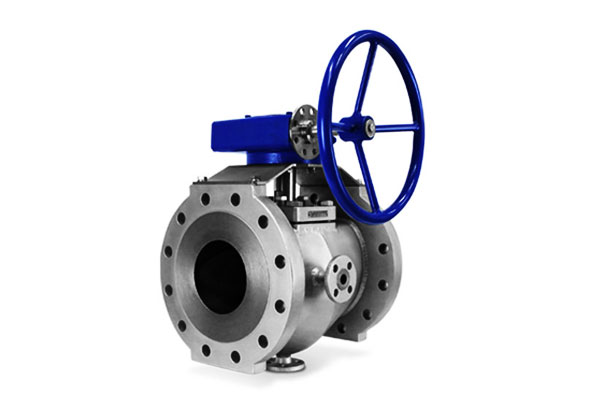
Key Advantages of Plug Valve
- Abrasive Fluid Resistance: Eccentric plugs with tungsten carbide seats last 300% longer than ball valves in mining slurries (per Mining Engineering Journal).
- Pokles: Fully open plug valves reduce pump energy use by 10–15% vs. glóbusové ventily (EPA Energy Star data).
- Fast Operation: Quarter-turn design (0.5–2s for automated valves) – critical for emergency shutdowns (Napr., oil well blowouts).
- Všestrannosť: Handles liquids, plyny, and slurries across -196°C to 815°C – one valve type for multiple process streams.
- Netesný výkon: Soft-seated valves achieve Class VI leakage (≤0.00001%) – prevents loss of expensive/toxic fluids.
Limitations of Plug Valve
- High Torque Requirements: Non-lubricated and metal-seated valves need 2–3x more torque than ball valves – larger valves require costly pneumatic/hydraulic actuators.
- Údržba: Lubricated valves require quarterly grease injection – missed maintenance causes plug binding (downtime 4–8 hours per incident).
- High-Temperature Limits: Mäkké sedadlá (Ptfe) degrade above 260°C – limited to low-temperature service (Napr., spracovanie potravín).
- Náklady: Eccentric and high-performance plug valves cost 20–50% more than ball valves – justified only for harsh conditions.
- Slurries with Large Solids: Multi-port and cylindrical plugs clog with solids >5 mm – require strainers or eccentric designs.
9. Application of Plug Valve
Plug valves excel in harsh industrial environments where other valves fail.
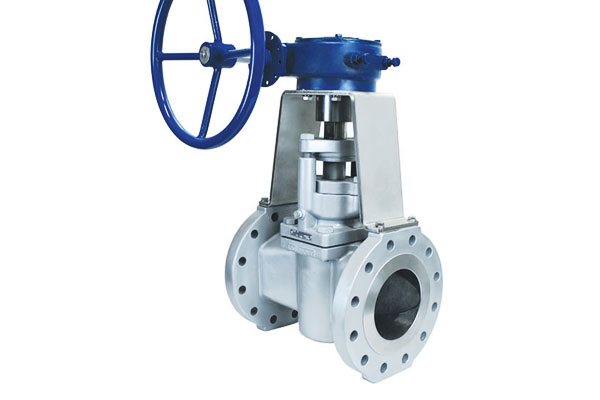
Below are key sectors and use cases:
Olej & Plyn
- Upstream (Wellheads): API 6A lubricated plug valves (1000 bar, 350° C) regulate crude oil and sour gas – NACE MR0175 compliance resists H₂S corrosion.
- Midstream (Potrubia): Eccentric plug valves (6D oheň) act as block valves for natural gas (flow rates up to 10,000 m³/h) – low pressure drop reduces compressor energy use.
- Downstream (Rafinéria): Metal-seated plug valves handle heavy oil and asphalt (400° C) – Tungsten carbide plugs resist coke particle abrasion.
Water and Wastewater Treatment
- Sludge Handling: Eccentric plug valves (mäkké sedadlá, Trieda VI) handle sludge with 20–30% solids – no clogging, 60% less downtime than ball valves.
- Chemical Dosing: Non-lubricated plug valves (Sedadlá PTFE) control chlorine/fluoride dosing – Class VI leakage prevents water contamination.
- Odsoľovanie: 316L plug valves handle saltwater (538° C) – corrosion resistance ensures 10+ year service life.
Chemical and Pharmaceutical
- Acid Processing: Hastelloy C276 plug valves handle 98% kyselina sírová (650° C) – zero corrosion, spĺňa ISO 15848-1 Class AH.
- Farmaceutiká: PTFE-lined plug valves (ASME BPE) regulate API dosing – Class VI leakage and CIP capability prevent cross-contamination.
Generovanie energie
- Thermal Plants: Metal-seated plug valves control superheated steam (540° C, 200 bar) – used in turbine bypass systems.
- Nuclear Plants: 316L plug valves with metal bellows packing handle borated coolant – zero leakage (Trieda VI) prevents radiation release.
Mining and Minerals
- Slurry Transport: Eccentric plug valves (tungsten carbide seats) handle mining tailings (30% tuhá látka) - 300% longer life than rubber-lined ball valves.
- Flotation Processes: Rubber-seated plug valves control froth flotation chemicals – low cost and easy maintenance for remote sites.
10. Comparison with Other Valves
Plug valves are one of several valve types used in industrial fluid control.
Understanding their relative strengths and limitations helps engineers select the most appropriate valve for a specific application.
The table below compares plug valves with other commonly used valves:
| Typ ventilu | Návrh & Činnosť | Kľúčové výhody | Obmedzenia | Typické aplikácie |
| Plug Valve | Rotating cylindrical or conical plug with port; quarter-turn operation | Jednoduchý, kompaktný, bubble-tight shutoff; low-pressure drop; versatile for multi-port flow | Manual operation torque can be high for large sizes; lubrication often required; obmedzené škrtenie | Kal, olej & plyn, chemical process lines, diverting flow, vzorkovanie |
| Guľový ventil | Spherical ball with bore; štrbina | Rýchla prevádzka; bubble-tight sealing; good for high-pressure/temperature; low torque | Limited multi-port configurations; not ideal for erosive media | Vodná voda, plynovody, chemical lines, on/off applications |
| Brána | Sliding gate between seats; linear motion | Minimálny pokles tlaku, keď je úplne otvorený; obojsmerný; Vhodné pre veľké priemery | Pomaly; úbohý škrtíč; bulky; potential vibration or chatter | Pary, vodná voda, ropovodné potrubia; isolation duties |
Glóbusový ventil |
Plug/seat or disc/seat linear motion; throttling design | Excellent flow regulation; presná kontrola; robust sealing | Pokles vyššej tlaku; zložitejší; pomalšia prevádzka; vyššie náklady | Riadenie procesu, chemické rastliny, generovanie energie, throttling duties |
| Motýľový ventil | Rotating disc; štrbina | Ľahký, kompaktný; moderate throttling; nákladovo efektívne pre veľké priemery | Limited sealing tightness under high pressure; not suitable for abrasive fluids | HVAC, úpravy vody, low-pressure chemical lines |
| Ihlové ventil | Tapered needle and seat; linear motion | Fine flow control; precise metering | Not for high flow; pomaly; small size | Prístrojové vybavenie, vzorkovanie, laboratory applications |
Kľúčové postrehy:
- Tesniaci výkon: Plug valves provide bubble-tight shutoff similar to ball valves but can handle multi-port flow more efficiently.
- Throttling Capability: Linear valves like globe and needle valves excel in precise flow control; plug valves are better suited for on/off and diversion duties rather than fine throttling.
- Pokles tlaku: Plug and ball valves have nízka Δp in fully open positions; globe and gate valves can introduce significant pressure drop.
- Maintenance and Durability: Lubricated plug valves require regular inspection in abrasive or corrosive media; metal-seated plug valves provide long-term reliability in harsh conditions.
- Všestrannosť: Plug valves with multi-port configurations can replace several valves in diverter, mixer, or sampling systems, reducing piping complexity.
11. Záver
Plug valves are rugged, compact quarter-turn devices ideal for on/off, diverting and many isolation duties.
Their performance depends on careful selection of plug support (plávajúce vs), seat type (metal vs resilient), materials and actuation.
They are not the best choice for precision throttling, but when fast action, simple construction and robust handling of dirty or abrasive fluids are required, plug valves are often the most practical solution.
Modern materials, coatings and digital actuators continue to expand their applicability.
Custom Valve Assemblies from LangHe
LangHe ponuka custom valve assembly solutions, specializing in tailored components to meet specific industrial requirements.
Leveraging advanced casting, precízne obrábanie, and material expertise, LangHe provides plug valves, kontrolné ventily, and other valve assemblies with:
- Custom Materials: Uhlíková oceľ, nehrdzavejúca oceľ, duplexný, zliatiny niklu, and high-performance materials for corrosive or high-temperature applications.
- Tailored Designs: Single-port, multi-port, lubricated, or metal-seated plug valves engineered to client specifications.
- Presné obrábanie: CNC-finished bodies and plugs with tight tolerances for smooth operation and leak-tight sealing.
- Montáž a testovanie: Fully assembled valves, hydrostatically and functionally tested to meet ISO, API, or client standards.
LangHe’s customized services enable industries such as olej & plyn, chemické spracovanie, úpravy vody, a generácia energie to integrate valves that meet unique operational, spatial, and performance constraints, ensuring reliability, účinnosť, a dlhá životnosť.
Contact LangHe today to design and manufacture valve components tailored to your exact specifications.
Časté otázky
What is the difference between a plug valve and a ball valve?
Plug valves use a cylindrical/tapered plug (eccentric designs reduce wear), while ball valves use a spherical ball.
Plug valves excel in abrasive/corrosive fluids (300% longer life in slurries), while ball valves are cheaper for non-abrasive, high-flow applications.
Which plug valve type is best for abrasive slurries?
Eccentric plug valves with tungsten carbide seats (85–90 HRC) are best.
The eccentric design lifts the plug off the seat (no sliding contact), and tungsten carbide resists wear from solids—extends life to 1–2 years vs. 3–6 months for ball valves.
How often should lubricated plug valves be lubricated?
Quarterly under normal service (olej & plyn, vodná voda); monthly for abrasive fluids (ťažba). Automatic lubrication systems (pneumatic injectors) can extend intervals to 6–12 months.
Can plug valves handle high temperatures?
Áno. Metal-seated plug valves (Hviezdny 6, Hastelloy C276) handle up to 815°C (nuclear/power plants). Soft-seated valves (Ptfe) are limited to 260°C.
What is the leakage class of plug valves?
Soft-seated plug valves (PTFE/Viton) achieve ANSI FCI 70-2 Trieda VI (≤0.00001% leakage) – critical for toxic/expensive fluids.
Metal-seated valves achieve Class IV (≤0.01% leakage) – suitable for high-temperature service.
How do I reduce torque requirements for plug valves?
Use lubricated plugs (graphite-PTFE grease reduces friction by 50%); select eccentric designs (lifts plug off seat); ensure proper piping alignment (avoids binding).